The Machine in the Bureau: How the USPTO Is Rewriting the AI Patent Playbook
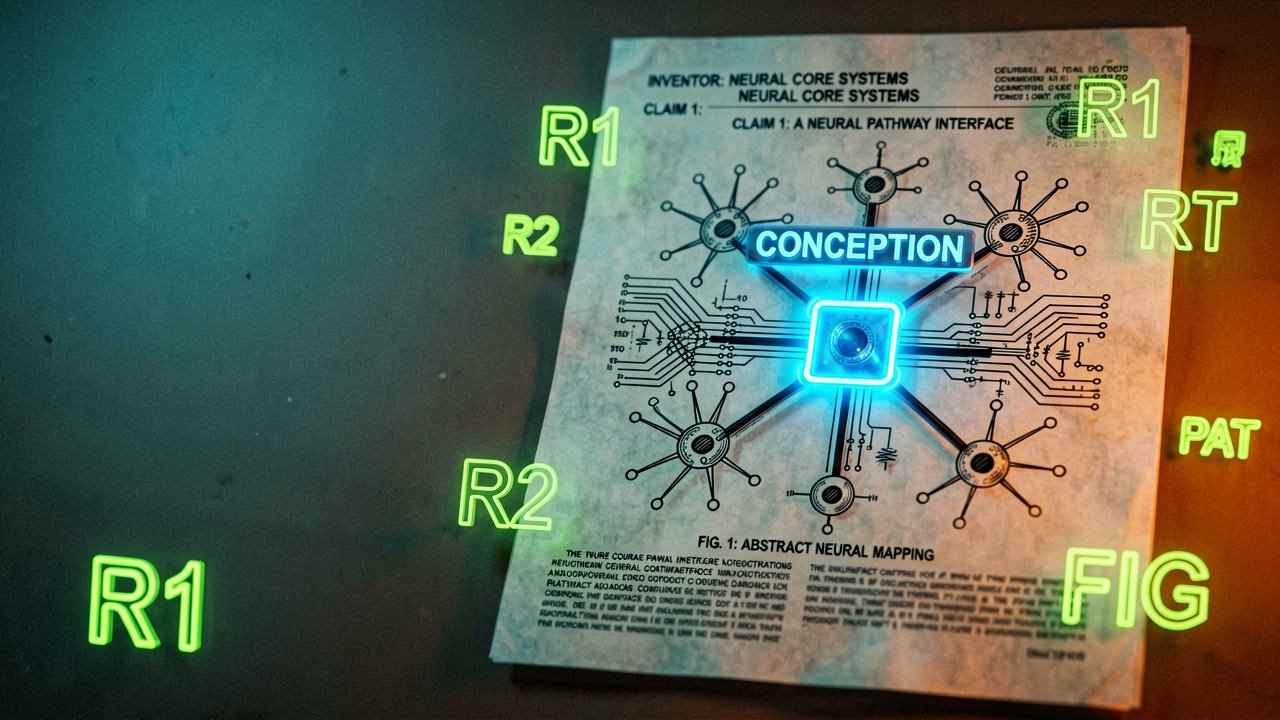
For years, the intersection of artificial intelligence and patent law felt like a high-stakes game of Calvinball, where the rules changed as fast as the code. But as we move into 2026, the United States Patent and Trademark Office (USPTO) has finally started laying down some hard pavement. The headline news isn't just that they're issuing more patents—though AI grants did surge by 56% between 2020 and 2024—it’s that they've drastically shifted their stance on who (or what) gets the credit. In late 2025, the Office effectively hit the reset button, rescinding previous 2024 standards to reaffirm a core, human-centric principle: AI is a tool, not an inventor. According to the USPTO, while you can use a Large Language Model to help refine your breakthrough, a "natural person" must still provide the significant mental spark, or "conception," that makes the invention tick.
This isn't just philosophical hair-splitting; it’s a practical roadmap for anyone trying to protect software-driven IP in an increasingly automated world. The updated 2024 Subject Matter Eligibility Guidance has become the new bible for practitioners, emphasizing that AI inventions must solve technical problems with technical solutions to survive the dreaded Section 101 rejections. It’s no longer enough to claim "an AI that predicts X"; you've got to show an improvement to the computer’s functionality or a specific technological field. Experts at Caldwell Law point out that the Office is now looking for "non-abstract" terms like neural networks or real-time data transmission to ensure the claim doesn't just read like a human mental process. Essentially, if a person could do the math on a whiteboard, the USPTO isn't interested in giving it a patent just because it's running on a GPU.
Examining the Examiners: AI on the Other Side of the Desk
While applicants are busy drafting, the USPTO is busy upgrading its own arsenal. The agency has moved aggressively to integrate AI into the examination process itself, aiming to clear the notorious backlog that has long plagued patent pendency. In July 2025, the Office launched DesignVision, an AI-powered image search tool that helps examiners find "prior art" in industrial design collections worldwide. It’s a massive leap from manual searching, but it’s a double-edged sword for inventors: better search tools mean examiners are finding more reasons to reject applications based on existing designs. As noted by Griffith Barbee, the Office intended to make its "Similarity Search" tool mandatory for all utility patent examiners by late 2025, fundamentally changing how novelty is assessed.
The Practice of the Future and the Risks of the Present
For the patent attorneys in the trenches, the "unchecked use of AI" has become the latest cautionary tale. While AI can draft a specification in seconds, the USPTO has issued stern reminders about the duty of "reasonable inquiry" and the risks of "burying" examiners under mountains of AI-generated Information Disclosure Statements (IDS). There's also the very real danger of data leakage; feeding a client’s trade secrets into a public AI to draft a response can lead to accidental disclosure, a nightmare scenario the USPTO warned against in its 2024 practitioner guidance. Moving forward, the goal isn't just to use AI, but to use it responsibly enough to keep the "human" in the loop—and the patent in the portfolio.
The Human Toll of the Silicon Surge
Behind the Scenes: While the public discourse often centers on high-level legal theory, the actual machinery of the USPTO is straining under a "gold rush" of AI-related filings that threaten to clog the system for years. Patent examiners, already burdened by rigorous production quotas, are now facing applications containing hundreds of pages of AI-generated technical jargon that looks sophisticated but often lacks the specific "how-to" required for enablement. This influx has created a quiet crisis of quality control, where the pressure to move cases through the system clashes with the duty to prevent "junk patents" from stifling competition. Senior examiners often find themselves acting as amateur computer scientists, trying to parse whether a claimed invention is a legitimate breakthrough or merely a clever prompt-engineered variation of existing tech.
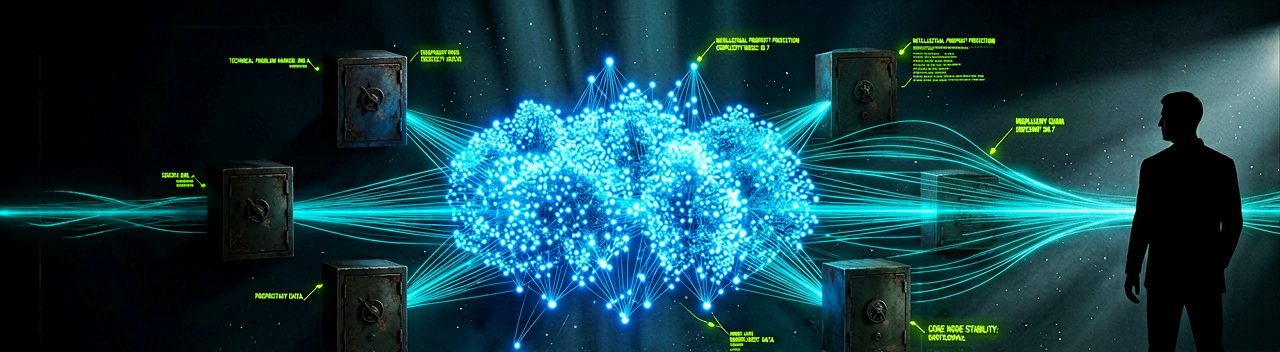
The tension isn't just internal; it’s a battle of the "big versus the small." Tech giants with massive R&D budgets are flooding the Office with thousands of incremental AI patents, effectively building "patent thickets" that make it nearly impossible for smaller startups to innovate without risking infringement. This defensive posturing has led to a historical shift in practitioner strategy, where many firms are now opting for trade secret protection over patenting to avoid revealing their training datasets. By keeping the specific weights and architectures of their models under lock and key, they avoid the disclosure requirements of a patent system that may not even grant them protection under current eligibility standards.
Historically, the USPTO has struggled to keep pace with rapid technological shifts, from the 1990s dot-com boom to the mid-2000s biotech explosion. However, the AI wave is different because it changes the nature of the "person of ordinary skill in the art" (PHOSITA). In traditional law, an invention is compared to what an average human expert would know. But if an average expert now has access to powerful generative tools, the bar for what is considered "obvious" must logically rise. This creates a paradox where the very tools used to create inventions make it harder for those inventions to be deemed legally "non-obvious."
Stakeholders from the American Intellectual Property Law Association have noted that the 2024 and 2025 guidance updates were essentially a "firefighting" measure intended to stabilize a market that was becoming increasingly unpredictable. Before these updates, the lack of clarity led to wildly inconsistent rulings across different technology centers within the Office. Now, the emphasis on the "Significant Contribution" test serves as a gatekeeper, ensuring that while AI can do the heavy lifting of data processing, the legal title remains firmly in human hands. This helps prevent a scenario where automated bot-farms could theoretically claim millions of patents a day, effectively "parking" on the future of innovation.
Looking at the international landscape, the USPTO’s insistence on human inventorship puts it at odds with some jurisdictions but in alignment with the recent "Thaler" rulings in the UK and Australia. This global divergence creates a massive headache for multinational corporations who must now draft their patent applications with a "lowest common denominator" approach to ensure they can be enforced in multiple countries. As the USPTO continues to refine its "Similarity Search" AI tools, the definition of what constitutes "prior art" is expanding to include virtually everything ever posted on the public web, making the path to a granted patent narrower than ever before.
Ultimately, the current era of AI patenting is defined by a return to basics. The Office is signaling that the more complex the technology becomes, the more important it is to document the human fingerprints on the process. Attorneys are now advising clients to keep meticulous logs of their creative sessions, documenting exactly where a human intervened to fix an AI error or pivot a strategy. In this high-tech environment, the most valuable piece of evidence in a patent dispute might not be the code itself, but the human's scratchpad that proves they were the one actually in control of the machine.
The Paradox of Automated Innovation
Reading Between the Lines: The USPTO’s insistence on a "significant human contribution" creates a fragile legal fiction that may not survive the next decade of Moore’s Law. By anchoring patentability to the "mental spark" of a natural person, the Office is essentially betting that human intuition possesses a je ne sais quoi that silicon cannot replicate. This assumption ignores the reality of modern R&D, where the line between a human "directing" an AI and the AI "suggesting" a solution has become invisibly thin. We are approaching a point where the human in the loop is less an inventor and more a curator, yet the current guidance forces practitioners to perform a sort of legal theater, emphasizing human agency to satisfy a bureaucratic requirement that feels increasingly decoupled from the actual creative process.
There is a glaring contradiction in the Office’s dual-track strategy: it is aggressively adopting AI to reject patents while simultaneously raising the bar for applicants to use AI to secure them. The USPTO’s AI-powered "prior art" tools can scan millions of documents to find obscure reasons for a rejection, effectively giving the examiner a superhuman memory. Meanwhile, if an applicant uses similar tools to bridge a gap in their own invention, they risk being told the result was "obvious" or lacked human conception. This creates an asymmetrical battlefield where the government uses the machine to defend the public domain, but penalizes the private sector for using the same machine to expand it.
Furthermore, the "technical solution to a technical problem" requirement—the current litmus test for AI eligibility—is a moving target. As AI becomes the standard tool for solving technical problems, what was once considered a "breakthrough" technical solution yesterday becomes "routine and conventional" tomorrow. This accelerates the "obviousness" treadmill to a frantic pace. If every engineer in a field is using the same foundational models to optimize circuit designs or drug formulations, then the "person of ordinary skill" effectively becomes an AI-augmented super-user. In this environment, the patent system risks becoming a race to see who can click "generate" first, followed by a decade of litigation over who actually understood what the machine produced.
The long-term implication is a potential "innovation dark age" where companies stop filing patents altogether. If the path to a granted patent is too narrow, and the risk of it being invalidated due to "insufficient human involvement" is too high, the incentive structure shifts toward extreme secrecy. We may see a bifurcated economy where the only things patented are trivial mechanical tweaks, while the truly transformative AI architectures are buried in private servers, shielded from the public disclosure that is supposed to be the "quid pro quo" of the patent system. By trying to save the system for humans, the USPTO might inadvertently push the most important human discoveries into the shadows.
"The patent office is currently a place where we spend thousands of dollars to prove a human did the thinking, while the human in question spent the entire afternoon trying to remember their ChatGPT password."
Artūras Malašauskas is an AI Systems Integrator with 20+ years of production-grade web engineering experience. He has designed, shipped, and scaled enterprise Python/PHP systems for logistics, SaaS, and public-sector clients. For the past year, he has focused exclusively on AI integrations: deploying open-source LLMs, building generative media pipelines (image, audio, video), and engineering multi-agent workflows for real production environments. His standard: reproducibility, security, cost-efficient inference—no vaporware. He documents and evaluates emerging AI tooling, separating verified capabilities from marketing noise. Technical editor at: muza-ai.eu, ai-verslas.lt, ai-naujinos.lt Connect on LinkedIn
Comments