Google Unveils Android CLI 1.0 as AI Agents Get Deeper Dev Access
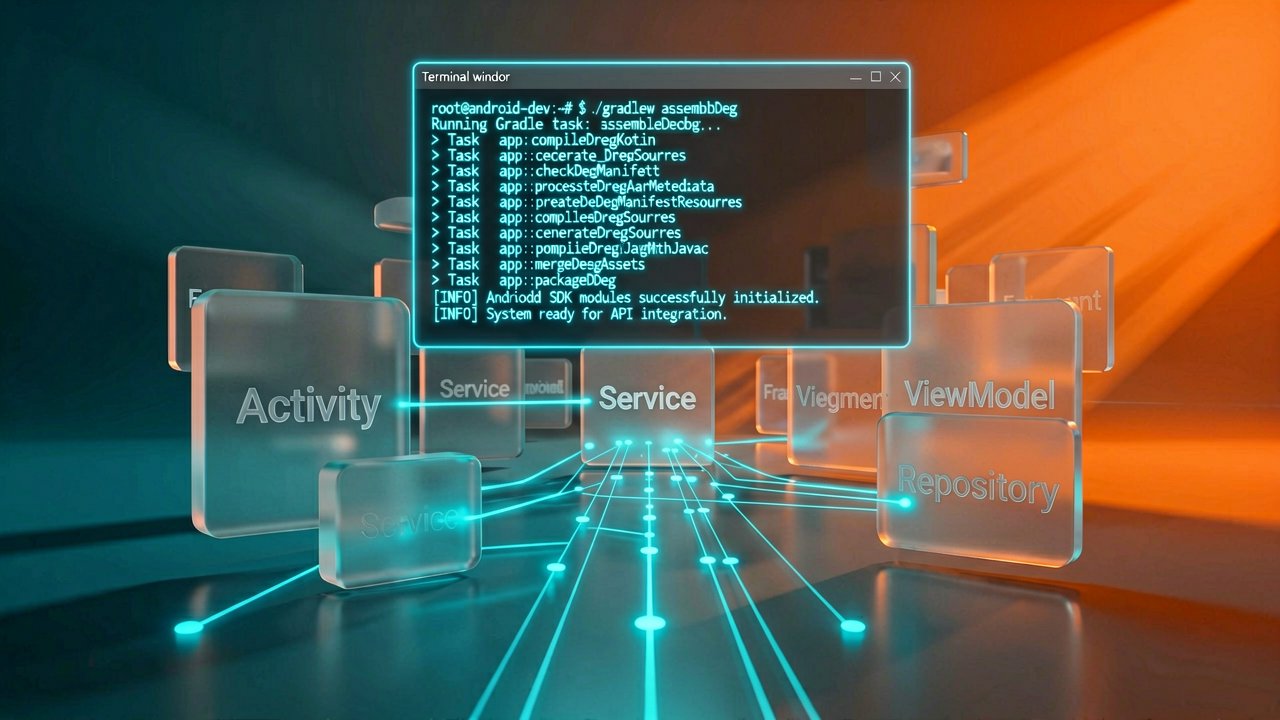
Google has officially graduated its Android Command Line Interface (CLI) to version 1.0, a move that signals a fundamental shift in how mobile applications are built in the age of generative AI. Announced at Google I/O 2026, the stable release provides a machine-readable "front door" for AI coding agents like Claude Code and Google’s own Antigravity, allowing them to interact with the Android toolchain with far greater precision than previously possible through standard human-centric interfaces.
By moving beyond the traditional UI-heavy workflows of Android Studio, the new CLI enables agents to execute core tasks—such as environment setup, SDK management, and project scaffolding—directly via terminal commands. This programmatic bridge doesn't just save time; it’s a direct response to the "token tax" developers face when forced to feed massive amounts of documentation into LLMs just to bridge the gap between code and local execution environments. According to the Android Developers Blog, internal tests showed that this streamlined access improved setup speeds by 3x while reducing token consumption by over 70%.
Bridging the Gap Between Agents and the IDE
While the CLI offers a lean interface for automation, Google isn't abandoning its flagship IDE. Android CLI 1.0 introduces "Android Skills," specialized knowledge sets that allow agents to tap into Android Studio’s heavy-lifting capabilities, such as semantic symbol resolution and Jetpack Compose previews, without leaving the terminal. This allows a developer to prompt an agent to build a prototype via the CLI and then seamlessly transition to Android Studio for high-fidelity visual tuning and deep debugging.
What Most Reports Miss: The Industrialization of "Journeys"
Behind the Scenes: The most significant, yet understated, part of this release is the introduction of "Journeys." This isn't just about writing code; it’s about autonomous verification. For years, mobile testing has been a manual or highly rigid scripted process. By exposing these UI interaction protocols through a stable CLI, Google is effectively handing AI agents a pair of "virtual hands" to navigate apps exactly like a human user would. This moves us from an era where AI merely suggests a button's color to one where an agent can independently verify if a checkout flow actually works across a dozen different virtual device configurations.
Veteran developers will recognize this as the missing link in the "agentic development lifecycle." Historically, the bottleneck for AI coding assistants hasn't been the generation of code, but the inability of the model to see the results of its work without a human acting as the middleman. With the CLI 1.0, an agent can now spawn an emulator, deploy its own build, take screenshots for visual regression, and adjust its code based on real-time feedback from the Android runtime. This level of autonomy transforms the agent from a sophisticated autocomplete tool into a semi-autonomous junior engineer.
From a stakeholder perspective, this is Google’s play to maintain dominance in a fragmenting ecosystem. As competitors like Microsoft and JetBrains rush to build "agent-first" IDEs, Google is leveraging the underlying Android toolchain as its primary moat. By making the CLI the "source of truth" for agent interactions, they ensure that whether a developer is using Gemini, Claude, or a custom-built agent, the core logic of Android development remains anchored in Google’s official best practices and knowledge bases. This strategy effectively commoditizes the LLM while keeping the developer locked into the Android-native stack.
The historical context here is hard to ignore. We are seeing a "back to the future" moment where the terminal—once considered a relic by those who championed the rise of the GUI—is becoming the most modern part of the stack again. It turns out that for an AI, a text-based terminal is a far more natural habitat than a complex visual editor. By revitalizing the CLI, Google is admitting that the future of software isn't just about making tools easier for humans to see; it's about making them easier for machines to "read."
Ultimately, the release of Android CLI 1.0 reflects a broader industry trend toward "headless" development. We are moving toward a world where the IDE is no longer a mandatory workspace but an optional visual layer. As agents gain deeper access to the metal, the barrier between an idea and a production-ready APK continues to thin, provided developers are willing to trust the "digital assembly lines" Google is so aggressively building.
Google has officially graduated its Android Command Line Interface (CLI) to version 1.0, a move that signals a fundamental shift in how mobile applications are built in the age of generative AI. Announced at Google I/O 2026, the stable release provides a machine-readable "front door" for AI coding agents like Claude Code and Google’s own Antigravity, allowing them to interact with the Android toolchain with far greater precision than previously possible through standard human-centric interfaces.
By moving beyond the traditional UI-heavy workflows of Android Studio, the new CLI enables agents to execute core tasks—such as environment setup, SDK management, and project scaffolding—directly via terminal commands. This programmatic bridge doesn't just save time; it’s a direct response to the "token tax" developers face when forced to feed massive amounts of documentation into LLMs just to bridge the gap between code and local execution environments. According to the Android Developers Blog, internal tests showed that this streamlined access improved setup speeds by 3x while reducing token consumption by over 70%.
Bridging the Gap Between Agents and the IDE
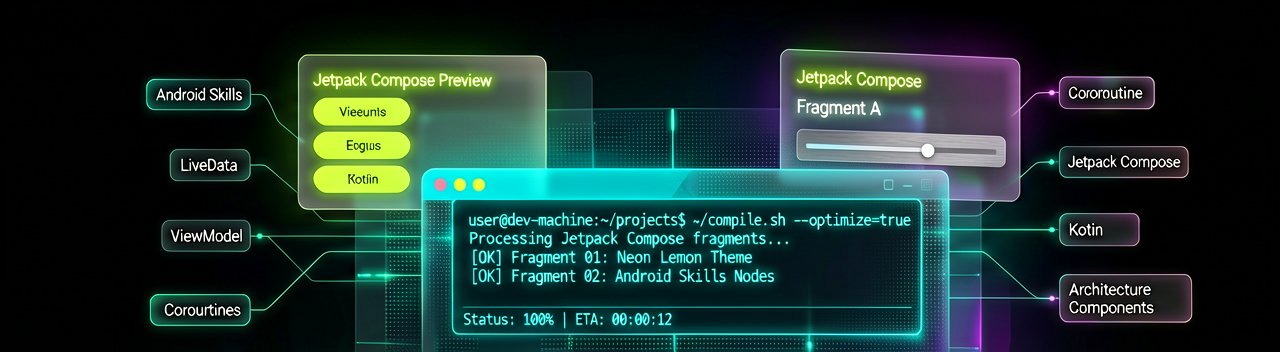
While the CLI offers a lean interface for automation, Google isn't abandoning its flagship IDE. Android CLI 1.0 introduces "Android Skills," specialized knowledge sets that allow agents to tap into Android Studio’s heavy-lifting capabilities, such as semantic symbol resolution and Jetpack Compose previews, without leaving the terminal. This allows a developer to prompt an agent to build a prototype via the CLI and then seamlessly transition to Android Studio for high-fidelity visual tuning and deep debugging.
What Most Reports Miss: The Industrialization of "Journeys"
Behind the Scenes: The most significant, yet understated, part of this release is the introduction of "Journeys." This isn't just about writing code; it’s about autonomous verification. For years, mobile testing has been a manual or highly rigid scripted process. By exposing these UI interaction protocols through a stable CLI, Google is effectively handing AI agents a pair of "virtual hands" to navigate apps exactly like a human user would. This moves us from an era where AI merely suggests a button's color to one where an agent can independently verify if a checkout flow actually works across a dozen different virtual device configurations.
Veteran developers will recognize this as the missing link in the "agentic development lifecycle." Historically, the bottleneck for AI coding assistants hasn't been the generation of code, but the inability of the model to see the results of its work without a human acting as the middleman. With the CLI 1.0, an agent can now spawn an emulator, deploy its own build, take screenshots for visual regression, and adjust its code based on real-time feedback from the Android runtime. This level of autonomy transforms the agent from a sophisticated autocomplete tool into a semi-autonomous junior engineer.
From a stakeholder perspective, this is Google’s play to maintain dominance in a fragmenting ecosystem. As competitors like Microsoft and JetBrains rush to build "agent-first" IDEs, Google is leveraging the underlying Android toolchain as its primary moat. By making the CLI the "source of truth" for agent interactions, they ensure that whether a developer is using Gemini, Claude, or a custom-built agent, the core logic of Android development remains anchored in Google’s official best practices and knowledge bases. This strategy effectively commoditizes the LLM while keeping the developer locked into the Android-native stack.
The Real Cost of Autonomy
Reading Between the Lines: While Google frames the Android CLI 1.0 as a liberating force for developers, there is a distinct irony in returning to the terminal to move "forward." We spent three decades building increasingly complex Graphical User Interfaces (GUIs) to make development more intuitive for humans, only to realize that these very interfaces are now a hindrance to the machines we’ve hired to do the work. The CLI 1.0 isn't just a new tool; it is a concession that the "human-in-the-loop" model is becoming a throughput bottleneck that Google is eager to bypass.
There is also the matter of "hallucination at scale." When a human developer makes a mistake in a terminal command, the feedback loop is immediate and visceral. When an AI agent manages the environment, dependencies, and deployment via CLI, errors can propagate through a CI/CD pipeline with terrifying speed. Google’s promise of "3x faster setup" assumes the agent is acting on perfect intent, but the reality of agentic workflows often involves a "recursive loop of doom" where the agent tries to fix a CLI error by generating more CLI errors, eventually burning through those saved tokens anyway.
Furthermore, this move deepens the "black box" nature of mobile development. By encouraging developers to hand off environment management to an agent via a programmatic interface, Google is further distancing the average coder from the underlying mechanics of the Android OS. We are effectively training a generation of developers who can describe a feature to an agent but cannot manually configure a Gradle file if their life depended on it. This creates a fragile ecosystem where the developer’s value is shifted entirely to "prompt engineering" while the foundational knowledge of the platform becomes the sole province of the AI and the vendor providing the CLI.
Finally, we must look at the data privacy implications that come with "deeper dev access." For an agent to use the CLI effectively, it needs permissions that touch every corner of a developer's local machine and cloud repositories. Google is essentially asking for a universal key to the developer's workshop. While the efficiency gains are undeniable, the trade-off is a massive expansion of the attack surface, where a compromised agent doesn't just suggest bad code, but can actively dismantle an entire development environment through the very CLI designed to empower it.
"We’ve finally reached the pinnacle of engineering: spending decades building beautiful windows so we could look at our code, only to realize the AI preferred the basement door and a command prompt all along. It turns out the future of 'low code' is just 'high volume code' written by someone who never has to worry about carpal tunnel or getting a coffee break."
Google has officially graduated its Android Command Line Interface (CLI) to version 1.0, a move that signals a fundamental shift in how mobile applications are built in the age of generative AI. Announced at Google I/O 2026, the stable release provides a machine-readable "front door" for AI coding agents like Claude Code and Google’s own Antigravity, allowing them to interact with the Android toolchain with far greater precision than previously possible through standard human-centric interfaces.
By moving beyond the traditional UI-heavy workflows of Android Studio, the new CLI enables agents to execute core tasks—such as environment setup, SDK management, and project scaffolding—directly via terminal commands. This programmatic bridge doesn't just save time; it’s a direct response to the "token tax" developers face when forced to feed massive amounts of documentation into LLMs just to bridge the gap between code and local execution environments. According to the Android Developers Blog, internal tests showed that this streamlined access improved setup speeds by 3x while reducing token consumption by over 70%.
Bridging the Gap Between Agents and the IDE
While the CLI offers a lean interface for automation, Google isn't abandoning its flagship IDE. Android CLI 1.0 introduces "Android Skills," specialized knowledge sets that allow agents to tap into Android Studio’s heavy-lifting capabilities, such as semantic symbol resolution and Jetpack Compose previews, without leaving the terminal. This allows a developer to prompt an agent to build a prototype via the CLI and then seamlessly transition to Android Studio for high-fidelity visual tuning and deep debugging.
What Most Reports Miss: The Industrialization of "Journeys"
Behind the Scenes: The most significant, yet understated, part of this release is the introduction of "Journeys." This isn't just about writing code; it’s about autonomous verification. For years, mobile testing has been a manual or highly rigid scripted process. By exposing these UI interaction protocols through a stable CLI, Google is effectively handing AI agents a pair of "virtual hands" to navigate apps exactly like a human user would. This moves us from an era where AI merely suggests a button's color to one where an agent can independently verify if a checkout flow actually works across a dozen different virtual device configurations.
Veteran developers will recognize this as the missing link in the "agentic development lifecycle." Historically, the bottleneck for AI coding assistants hasn't been the generation of code, but the inability of the model to see the results of its work without a human acting as the middleman. With the CLI 1.0, an agent can now spawn an emulator, deploy its own build, take screenshots for visual regression, and adjust its code based on real-time feedback from the Android runtime. This level of autonomy transforms the agent from a sophisticated autocomplete tool into a semi-autonomous junior engineer.
From a stakeholder perspective, this is Google’s play to maintain dominance in a fragmenting ecosystem. As competitors like Microsoft and JetBrains rush to build "agent-first" IDEs, Google is leveraging the underlying Android toolchain as its primary moat. By making the CLI the "source of truth" for agent interactions, they ensure that whether a developer is using Gemini, Claude, or a custom-built agent, the core logic of Android development remains anchored in Google’s official best practices and knowledge bases. This strategy effectively commoditizes the LLM while keeping the developer locked into the Android-native stack.
The Real Cost of Autonomy
Reading Between the Lines: While Google frames the Android CLI 1.0 as a liberating force for developers, there is a distinct irony in returning to the terminal to move "forward." We spent three decades building increasingly complex Graphical User Interfaces (GUIs) to make development more intuitive for humans, only to realize that these very interfaces are now a hindrance to the machines we’ve hired to do the work. The CLI 1.0 is isn't just a new tool; it is a concession that the "human-in-the-loop" model is becoming a throughput bottleneck that Google is eager to bypass.
There is also the matter of "hallucination at scale." When a human developer makes a mistake in a terminal command, the feedback loop is immediate and visceral. When an AI agent manages the environment, dependencies, and deployment via CLI, errors can propagate through a CI/CD pipeline with terrifying speed. Google’s promise of "3x faster setup" assumes the agent is acting on perfect intent, but the reality of agentic workflows often involves a "recursive loop of doom" where the agent tries to fix a CLI error by generating more CLI errors, eventually burning through those saved tokens anyway.
Furthermore, this move deepens the "black box" nature of mobile development. By encouraging developers to hand off environment management to an agent via a programmatic interface, Google is further distancing the average coder from the underlying mechanics of the Android OS. We are effectively training a generation of developers who can describe a feature to an agent but cannot manually configure a Gradle file if their life depended on it. This creates a fragile ecosystem where the developer’s value is shifted entirely to "prompt engineering" while the foundational knowledge of the platform becomes the sole province of the AI and the vendor providing the CLI.
Finally, we must look at the data privacy implications that come with "deeper dev access." For an agent to use the CLI effectively, it needs permissions that touch every corner of a developer's local machine and cloud repositories. Google is essentially asking for a universal key to the developer's workshop. While the efficiency gains are undeniable, the trade-off is a massive expansion of the attack surface, where a compromised agent doesn't just suggest bad code, but can actively dismantle an entire development environment through the very CLI designed to empower it.
"We’ve finally reached the pinnacle of engineering: spending decades building beautiful windows so we could look at our code, only to realize the AI preferred the basement door and a command prompt all along. It turns out the future of 'low code' is just 'high volume code' written by someone who never has to worry about carpal tunnel or getting a coffee break."
Artūras Malašauskas is an AI Systems Integrator with 20+ years of production-grade web engineering experience. He has designed, shipped, and scaled enterprise Python/PHP systems for logistics, SaaS, and public-sector clients. For the past year, he has focused exclusively on AI integrations: deploying open-source LLMs, building generative media pipelines (image, audio, video), and engineering multi-agent workflows for real production environments. His standard: reproducibility, security, cost-efficient inference—no vaporware. He documents and evaluates emerging AI tooling, separating verified capabilities from marketing noise. Technical editor at: muza-ai.eu, ai-verslas.lt, ai-naujinos.lt Connect on LinkedIn
Comments