Beyond the Hype: The Reality of Australia’s AI Ambitions

Australia is currently walking a tightrope between rapid consumer enthusiasm and a more cautious, sometimes sluggish, corporate reality. While everyday Aussies are diving headfirst into generative tools—ranking third globally for Claude usage—the boardroom sentiment is markedly more sober. We’re seeing a classic "trough of disillusionment" moment where the initial thrill of AI pilots has hit the hard wall of ROI. According to the ADAPT State of the Nation 2025 report, a staggering 72% of Chief Data and AI Officers admit that AI hasn't quite hit their financial expectations yet. It turns out that plugging a shiny new chatbot into a legacy system isn't the instant productivity fix many had hoped for.
Despite these growing pains, the "lucky country" isn't exactly falling behind. The capital is still flowing, though it’s becoming more selective. In 2025, about 61% of all venture capital in the local startup scene—roughly $3.1 billion—found its way into companies with AI baked into their DNA. We aren't just talking about pure AI firms either; the tech is bleeding into everything from "agtech" to mining, where autonomous drills and predictive maintenance are already standard kit in the Pilbara. The message from the market is clear: if you aren't using AI to solve a specific, gritty problem, the checkbook is staying closed.
The ROI Gap and Data Readiness
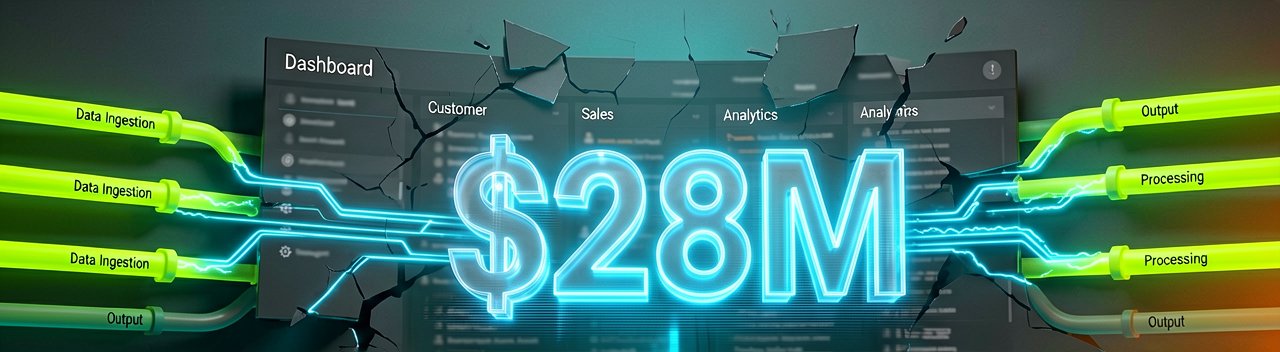
The biggest hurdle right now isn't the AI itself; it's the mess we’re trying to feed it. Only about 24% of tech leaders reckon their data is actually "AI-ready." Most organizations are finding that their internal architecture looks more like a digital junk drawer than a streamlined engine. This "data debt" is the primary reason why adoption is stalling at the pilot stage. While budgets have swelled to an average of $28 million for AI and data platforms, the money is often being spent on the engine without checking if there's any petrol in the tank. Without modernizing the underlying architecture, these expensive pilots are destined to stay just that—experiments that never quite make it to the frontline.
Regulation Without the Red Tape?
Canberra is playing a long game, choosing a path that favors flexibility over the heavy-handed legislative approach seen in the EU. Instead of a "one-size-fits-all" AI Act, the government’s National AI Plan leans heavily on existing sector-specific laws and voluntary standards. The updated "Voluntary AI Safety Standard" has been streamlined into six essential practices designed to keep things safe without strangling innovation in its crib. It’s a gamble that relies on industry "doing the right thing" through transparency statements and accountable officials, specifically within the public service where a new AI Plan for 2025 is already setting the pace for responsible use.

The Talent Crunch and the "AI Divide"
The human element remains the most volatile part of the equation. We’re staring down a massive skills shortage, with industry needing upwards of 160,000 specialist AI workers by the end of the decade. But there’s a silver lining for the average worker: early data suggests that AI isn't the job-killer it was prophesied to be. In fact, firms leaning into AI are actually posting 36% more non-AI job ads than those staying on the sidelines. The real risk isn't replacement—it's the widening gap between those who can navigate this new world and those who can't, as nearly half of Australian workers still report receiving zero formal AI training from their employers.
The Hidden Architecture: What Most Reports Miss
Beneath the Surface: While the headlines fixate on the flashy interface of generative AI, the real story in Australia is unfolding in the unglamorous world of sovereign infrastructure. We are currently witnessing a massive pivot toward "sovereign AI," a movement born from a deep-seated anxiety about data residency and the vulnerability of relying on overseas hyperscalers. Local tech titans and government agencies are increasingly wary of sending sensitive proprietary data to servers in Northern Virginia or Dublin. This has triggered a surge in local data center construction and a newfound respect for localized LLMs that can run entirely within the "Great Southern Firewall," ensuring that Australian intellectual property stays exactly where it belongs.
The boardroom conversation has also shifted from "What can AI do?" to "Who is responsible when it breaks?" This isn't just about ethics; it's about the cold, hard reality of professional indemnity. Experienced industry observers note that the initial "wild west" phase of 2023 and 2024 has been replaced by a rigorous, almost stifling, focus on governance. General Counsels are now just as involved in AI procurement as the CTOs. This friction is slowing down deployment, but it’s also preventing the kind of high-profile legal disasters that could set the industry back years. The Australian market is maturing by embracing caution, prioritizing a "safety-first" framework that, while frustrating for developers, is winning the trust of institutional investors.
Historically, Australia has a track record of being an enthusiastic early adopter of technology but a laggard in original R&D. We saw this with cloud computing and mobile payments. However, the current AI wave feels different because of the "domain expertise" factor. Instead of trying to build a better ChatGPT, local players are fine-tuning models for the specific complexities of Australian law, healthcare, and environmental management. These "vertical AI" applications are where the real value lies. By layering specialized Australian datasets over foundational models, local firms are creating defensible moats that global giants can't easily replicate without the same boots-on-the-ground context.
The stakeholder perspective is also fragmenting. There is a growing divide between the "AI-haves" in the ASX 200 and the "AI-have-nots" in the SME sector. Large banks and telcos are already reaping the rewards of automated customer service and fraud detection, but the average Aussie small business is struggling to find an entry point that doesn't require a six-figure consulting fee. This digital divide is the silent threat to the government's productivity targets. Without a concerted effort to democratize access to these tools, the productivity gains promised by the National AI Plan risk being concentrated in the hands of a few dominant players.
Finally, we cannot ignore the "brain drain" versus "brain gain" paradox. Australia has long been a net exporter of top-tier academic talent to Silicon Valley, but the lifestyle appeal of cities like Sydney and Melbourne is starting to lure seasoned engineers back home. This "reverse migration" is bringing much-needed experience in scaling large-scale machine learning systems. These returning experts are not just bringing technical skills; they are bringing a Silicon Valley "fail fast" mentality that is slowly beginning to erode the traditional risk-aversion of the Australian corporate sector, fostering a more aggressive and experimental approach to AI implementation.
The Productivity Paradox: Reading Between the Lines
Reading Between the Lines: The prevailing narrative suggests that AI will be the ultimate tonic for Australia’s sagging productivity, yet this assumption ignores the "implementation debt" currently stifling the enterprise sector. There is a glaring contradiction between the billions being poured into AI infrastructure and the actual output on the ground. We are essentially buying Ferraris to sit in Sydney’s peak-hour traffic. While the federal government’s projections paint a rosy picture of a $315 billion economic windfall by 2030, these figures often fail to account for the massive energy costs and the "shadow AI" problem, where employees use unmanaged consumer tools to mask inefficiency rather than solve it.
There is also a misplaced confidence in the idea that "sovereign AI" is a silver bullet for national security. While building local data centers is a prudent move for data residency, the underlying silicon—the H100s and B200s—still comes from a single geographic bottleneck. Australia isn't building a self-sufficient ecosystem; we are merely building a local garage for imported engines. Measured skepticism is required when leaders talk about "AI independence." True sovereignty requires more than just local cooling fans; it requires a domestic semiconductor strategy that currently doesn't exist. Without it, our high-tech ambitions remain entirely at the mercy of global supply chain whims.
Furthermore, the push for "soft-touch" regulation might be a double-edged sword. By opting for voluntary standards over the EU’s rigid mandates, Australia risks creating a "compliance vacuum" that larger multinational firms will exploit while smaller local startups hesitate, paralyzed by the lack of clear legal boundaries. This regulatory limbo often results in "innovation theater," where companies announce AI initiatives to appease shareholders but refuse to integrate them into core operations for fear of future litigation. The result is a landscape littered with half-baked chatbots that offer little more than a polished veneer over aging, fragmented legacy systems.
We are also seeing a significant disconnect in the labor market. While we hear constant talk of "reskilling," the reality on the ground is that most corporate training is a mile wide and an inch deep. Many organizations are ticking the "AI literacy" box with a few mandatory webinars, but they aren't redesigning workflows to actually leverage human-machine collaboration. This superficial approach creates a workforce that knows how to prompt a model but doesn't understand the statistical hallucinations that can lead to disastrous business decisions. The implication is a looming "competency crisis" where the speed of deployment far outstrips the speed of critical oversight.
Ultimately, the "State of Play" in Australia is one of frantic motion without a clear destination. We are witnessing a gold rush where most participants are selling shovels—consultancy hours and cloud credits—rather than digging for actual gold. The long-term winners won't be the companies that deployed AI the fastest, but those that had the discipline to fix their data architecture before hitting the "on" switch. Until the hype cycle burns off, we will continue to see a lot of expensive smoke and very little transformative fire in the Australian corporate landscape.
"In the end, Australia's AI revolution looks remarkably like its coffee culture: we’ve spent a fortune on the most sophisticated machines and the most expensive beans, only to realize that half the office still prefers the instant reliability of a legacy spreadsheet."
Artūras Malašauskas is an AI Systems Integrator with 20+ years of production-grade web engineering experience. He has designed, shipped, and scaled enterprise Python/PHP systems for logistics, SaaS, and public-sector clients. For the past year, he has focused exclusively on AI integrations: deploying open-source LLMs, building generative media pipelines (image, audio, video), and engineering multi-agent workflows for real production environments. His standard: reproducibility, security, cost-efficient inference—no vaporware. He documents and evaluates emerging AI tooling, separating verified capabilities from marketing noise. Technical editor at: muza-ai.eu, ai-verslas.lt, ai-naujinos.lt Connect on LinkedIn
Comments