Sony AI Debuts Woosh: The SFX Foundation Model Designed to Cut Through the Noise
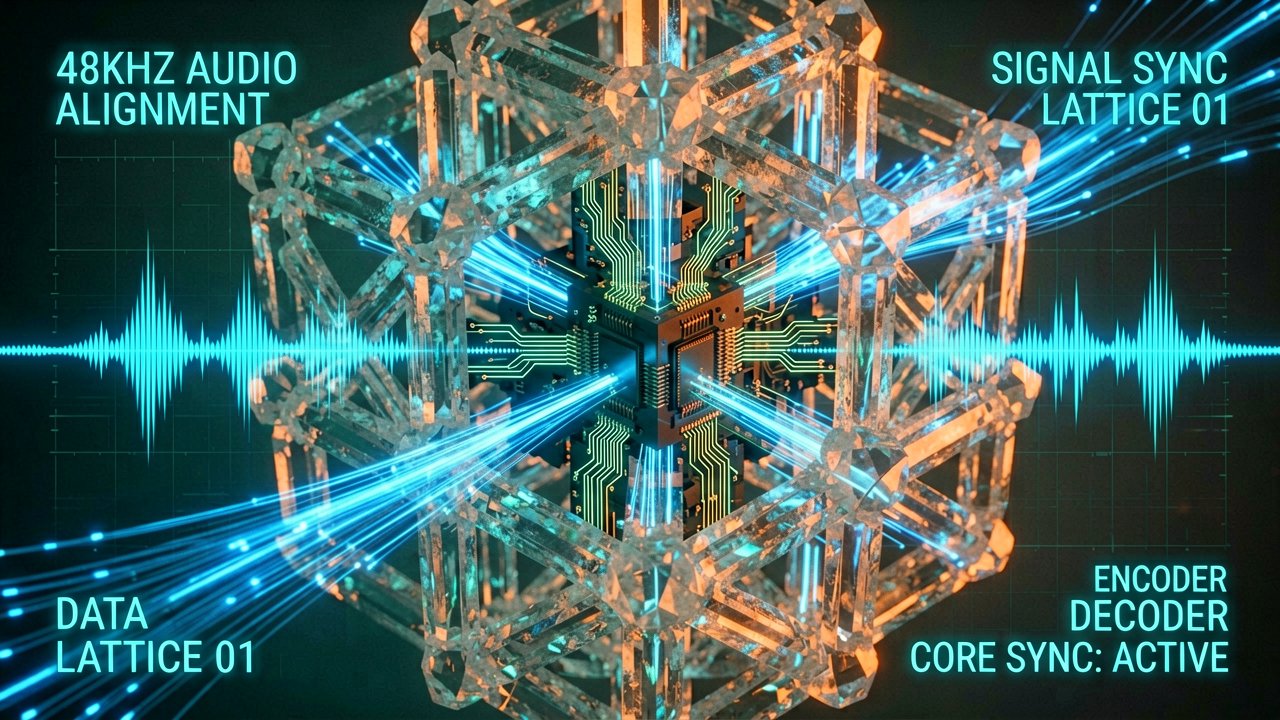
Sony AI has officially pulled the curtain back on Woosh, a generative foundation model built specifically to solve the "sound effect gap" in professional production. While general audio AI has historically fixated on music or speech, Sony’s new tool targets the hyper-specific, isolated sounds—the creaks, bangs, and atmospheric layers—that give films and games their texture. By releasing both open-weights research versions and studio-optimized private models, Sony AI is positioning itself as the bridge between raw generative research and the granular demands of professional Foley stages.
The model architecture is a sophisticated triple-threat, featuring a high-quality 48kHz audio encoder/decoder (Woosh-AE), a multimodal text-audio alignment system (Woosh-CLAP), and latent diffusion models for generation. Unlike many competitors that struggle with the "mushy" artifacts common in AI audio, Woosh-AE utilizes a GAN-based vocoder that avoids the aliasing issues typically found in standard upsampling. According to technical documentation on arXiv, the system is optimized for instantaneous inference, with distilled versions capable of generating high-fidelity results in as few as four steps—a critical requirement for real-time creative iteration.
The Professional Edge: Private vs. Public Training
The real story here lies in the data strategy. Sony trained its private, studio-grade model on over 5,500 hours of premium, commercially licensed audio from industry titans like BOOM Library and Pro Sound Effects. This curated data allows the model to understand the nuance of professional metadata—the difference between a "heavy metal door slam" and a "distressed wooden latch." While the public version of Woosh, available via GitHub, relies on open datasets, it still reportedly benchmarks favorably against existing open-source alternatives like StableAudio-Open, particularly in video-to-audio synchronization tasks.
Behind the Scenes: The launch of Woosh marks a tactical shift in how tech giants approach the creative industries. For years, the industry’s knee-jerk reaction to AI sound generation was one of skepticism, largely because early models lacked the "temporal precision" required to match a frame of video. If an explosion happens at frame 24, the sound cannot arrive at frame 26. Sony’s video-to-audio (V2A) module, Woosh-VFlow, addresses this head-on by using visual cues to guide the audio envelope, effectively acting as an automated Foley artist that respects the laws of physics—or at least the laws of the edit suite.
What seasoned sound designers will find most intriguing isn't just the "prompt-to-bang" capability, but the ecosystem Sony is building around it. Reports from Mixonline suggest the roadmap includes direct integration into digital audio workstations (DAWs) through dedicated plugins. This move suggests Sony isn't trying to replace the sound designer, but rather replace the tedious hours spent scrolling through massive local libraries looking for a "slightly more metallic" version of a sword clink. By allowing for inpainting—completing or modifying a segment of an existing file—the tool becomes an extension of the existing workflow rather than a disruptive outlier.
This development also signals a deepening of Sony's "audio-first" AI strategy, which began with their Similar Sound Search collaboration with Audiokinetic. By focusing on sound effects—an area McKinsey notes as being historically underserved by AI research compared to music—Sony is carving out a niche that is essential to the $10 billion worth of content spend expected to be influenced by AI by 2030. The emphasis on "distilled" models also hints at a future where these tools run locally on production hardware, alleviating the privacy and latency concerns that often haunt cloud-based generative platforms.
Stakeholder perspectives highlight a delicate balance between automation and authorship. While the efficiency gains are undeniable, the use of high-quality licensed data in the private model serves as a defensive moat against the "AI slop" often generated by models trained on unvetted web scrapes. Professional libraries are purpose-recorded and isolated; web audio is often noisy and poorly labeled. Sony’s decision to bifurcate their release—giving the research community the architecture while keeping the highest-octane data "in-house"—is a savvy corporate move that protects their commercial interests while still earning goodwill in the open-source community.
Ultimately, the success of Woosh will depend on how well it handles the "semantic gap"—the ability to translate a director's vague request for a "haunting but mechanical" atmosphere into a usable waveform. Early demos on Sony’s research pages show promising results, but the true test will be in the hands of professionals who need five variations of a laser blast by 5:00 PM. As the technology moves toward "world models" that understand character and environment, Woosh represents a significant first step in making the machines listen before they speak.
The Algorithmic Foley Paradox
Reading Between the Lines: While Sony AI frames Woosh as a liberation from library-scrolling drudgery, it fundamentally challenges the artisanal gatekeeping that has defined high-end sound design for decades. The marketing focuses on "efficiency," yet there is a glaring contradiction in the promise of a foundation model that can "create anything." Professional Foley is not just about producing a sound that matches an action; it is about the intentional, often non-literal psychological manipulation of the audience. A machine trained on the "perfect" slam from a BOOM Library pack may lack the ability to understand why a designer might choose a wet, organic crunch over a high-fidelity mechanical thud to convey a specific character's vulnerability.
There is also the matter of the "Closed-Loop Ecosystem." By training the most capable version of Woosh on elite, licensed libraries and then potentially gating that model behind subscription-based plugins or Sony-proprietary hardware, the company is effectively commodifying the very archives sound designers have spent thousands of dollars to own. We are witnessing a shift from a "buy-and-own" asset model to a "pay-to-generate" service model. This transition risks creating a tiered creative landscape where the most evocative, high-fidelity AI textures remain accessible only to those within the Sony-Audiokinetic orbit, potentially stifling the grassroots innovation that often comes from the "messy" open-source community.
Furthermore, the technical brilliance of "one-second inference" ignores the reality of the creative feedback loop. In a production environment, a sound is rarely "finished" on the first pass; it is layered, pitched, and equalized. If Woosh generates a "flat" sound that is difficult to manipulate after the fact—due to the inherent limitations of latent diffusion artifacts—it may actually add more work to a designer’s plate than it saves. The industry has a long history of "time-saving" tools that eventually require a secondary "clean-up" phase, and until we see how Woosh handles the complex phase relationships of multi-layered environments, the claim of a "revolution" remains a well-funded hypothesis.
Looking ahead, the long-term implication is the potential homogenization of cinema and gaming. When everyone has access to a model that predicts the "most likely" sound for a visual cue, we risk entering an era of sonic predictability. If every futuristic door in every indie game sounds like a variation of the same Woosh-generated latent space, the unique "sonic thumbprint" of a franchise could become a relic of the past. Sony’s move into V2A (Video-to-Audio) is undoubtedly a masterclass in engineering, but it places the burden on the human artist to fight against the model’s desire to be average.
"We’ve spent forty years trying to make digital sounds feel like they were recorded in the real world, only to build an AI that makes the real world sound like it was generated in a server rack; at least now when the director asks for the sound of 'blue electricity with a hint of sadness,' you can blame the GPU instead of your own imagination."
Artūras Malašauskas is an AI Systems Integrator with 20+ years of production-grade web engineering experience. He has designed, shipped, and scaled enterprise Python/PHP systems for logistics, SaaS, and public-sector clients. For the past year, he has focused exclusively on AI integrations: deploying open-source LLMs, building generative media pipelines (image, audio, video), and engineering multi-agent workflows for real production environments. His standard: reproducibility, security, cost-efficient inference—no vaporware. He documents and evaluates emerging AI tooling, separating verified capabilities from marketing noise. Technical editor at: muza-ai.eu, ai-verslas.lt, ai-naujinos.lt Connect on LinkedIn
Comments