Manhattan Associates Bets Big on the Agentic Economy
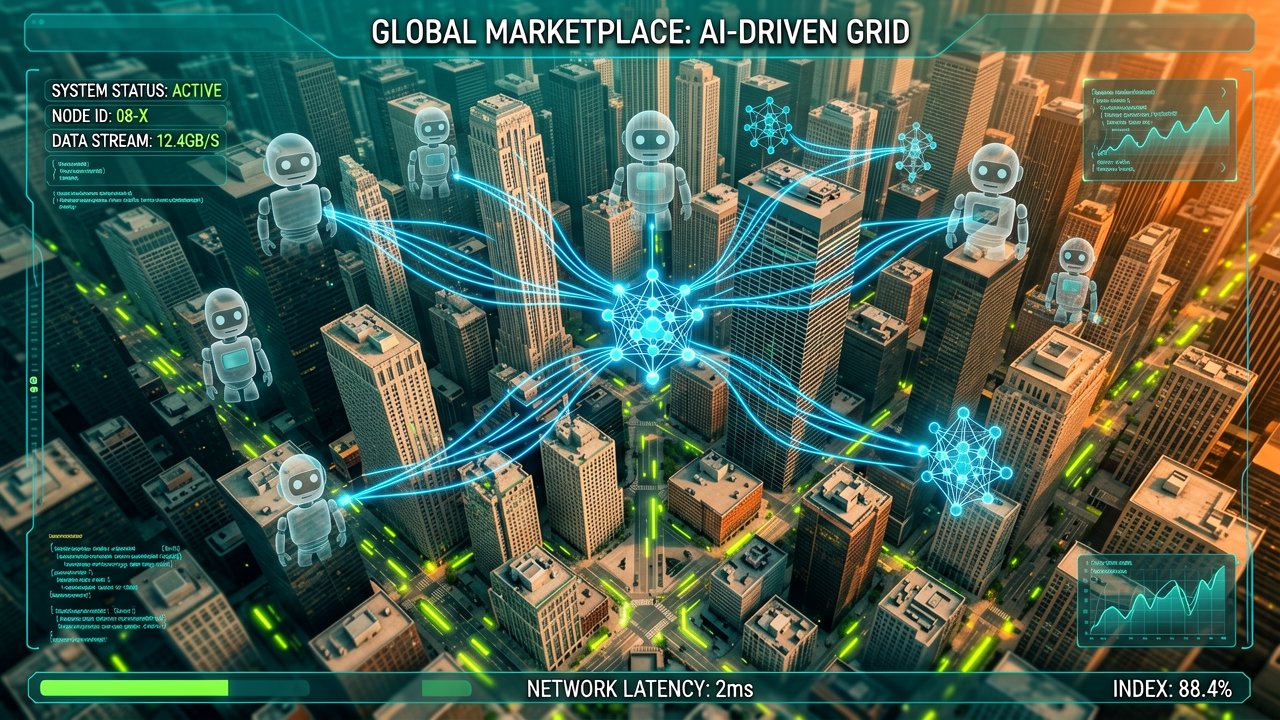
In the high-stakes world of supply chain logistics, the "next big thing" usually involves a forklift or a faster conveyor belt. But Manhattan Associates is pivoting toward a brainier upgrade. At their recent Manhattan Exchange event, the company pulled the curtain back on a dedicated marketplace of AI agents designed to handle the messy, unpredictable nuances of global trade. These aren't your typical chatbots that hallucinate poetry; they are specialized, "agentic" tools built to sit inside the Manhattan Active Platform and actually execute tasks, from reconciling inventory discrepancies to smoothing out lumpy distribution schedules. It's a clear signal that the company wants to move past simple automation and into the realm of autonomous decision-making.
The move feels like a direct response to the "efficiency fatigue" hitting most warehouse managers. By opening up a marketplace, Manhattan isn't just selling a product; they’re building an ecosystem where specific AI personas can be plugged into existing workflows. Think of it as an App Store for the supply chain, where an agent might spend its entire existence obsessing over yard management or carrier negotiations. By offloading these cognitively taxing—but repetitive—decisions to AI, the hope is that human operators can finally stop putting out fires and start looking at the bigger picture. It’s a bold play to see if the industry is ready to let an algorithm take the wheel on the warehouse floor.
The Shift from Automation to Agency
What makes this pivot noteworthy is the focus on "agency." Most legacy systems require a human to trigger a process based on an alert. Manhattan’s new agents are designed to observe, reason, and act within set guardrails. This reduces the "swivel-chair" effect where employees jump between screens to verify data. According to reports from the floor at Manhattan Exchange, the integration is seamless enough that these agents function as digital coworkers rather than external plugins. As the labor market for logistics remains tight, the value proposition here isn't just about speed—it's about institutional memory and consistency that doesn't quit at 5:00 PM. You can find the deeper technical breakdown of the announcement via Manhattan Associates.
Industry analysts are already weighing the implications for the broader SaaS landscape. By providing a marketplace, Manhattan is essentially future-proofing its platform against the rapid-fire evolution of LLMs. If a better model comes along, it simply becomes a new agent in the store. This modularity is a savvy hedge against the "black box" problem that plagues many AI implementations. While the tech is still in its early deployment phase, the sheer scale of Manhattan’s footprint means this marketplace could quickly become the gold standard for how enterprise AI is bought and sold in the logistics sector. The era of the general-purpose AI is fading, replaced by these hyper-specialized digital experts.

Deep Dive: The Engine Under the Hood
What Most Reports Miss: While the headline focus remains on the "Marketplace," the true structural breakthrough is Manhattan’s Agent Foundry—a low-code assembly line that allows developers to bake complex business logic directly into these digital entities. Historically, supply chain software was a rigid monolith; if you wanted to change how a warehouse prioritized high-value shipments, you were often looking at weeks of custom coding and brittle integrations. By providing a "deterministic operational spine," as executives noted at the Manhattan Associates blog, the company is ensuring that these agents don't just "guess" based on a Large Language Model’s probability but actually follow strict enterprise guardrails where "almost correct" is treated as an operational failure.
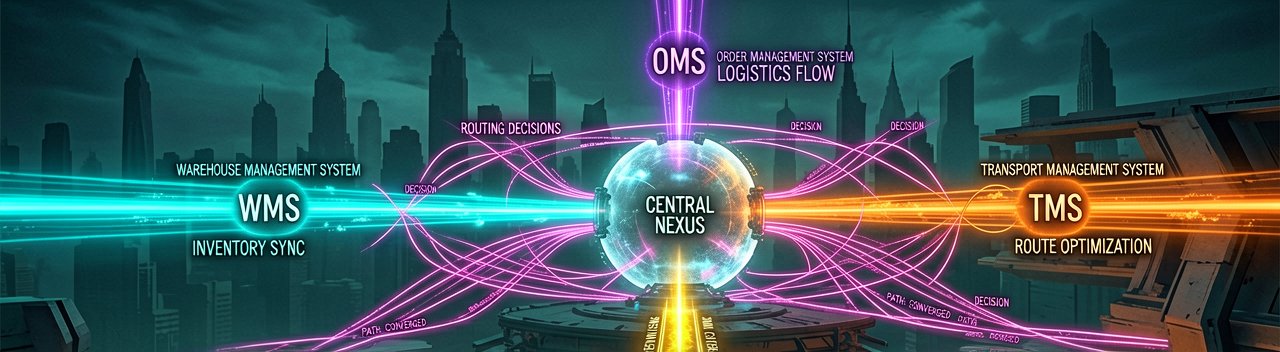
This pivot toward agentic AI is as much a competitive defensive maneuver as it is a forward-looking innovation. Tech rivals like Blue Yonder have recently doubled down on their own specialized AI models, emphasizing "Model Training Factories" built in collaboration with heavyweights like NVIDIA. Manhattan’s counter-strategy rests on its cloud-native, unified architecture. Because their Warehouse Management (WMS), Transportation Management (TMS), and Omni-channel (OMS) systems all live on the same "Manhattan Active" platform, their agents have a unique ability to see across functional silos—meaning a customer service agent can instantly understand if a shipping delay in the yard will impact a specific high-priority order in the storefront.
From a stakeholder perspective, the marketplace model addresses a critical bottleneck: the scarcity of AI talent in the logistics sector. Small to mid-sized retailers rarely have the internal data science teams required to build bespoke autonomous agents. By opening a shared ecosystem, Manhattan is effectively democratizing access to high-end automation. Partners like Veridian are already building localized solutions that can be plugged into the platform in a fraction of the time a traditional implementation would take. This shift from "build" to "deploy" marks a significant evolution in how supply chain leaders view their digital workforce, moving away from tools that simply record data toward partners that actively manage it.
Ultimately, the success of this agentic marketplace will hinge on trust and transparency. Manhattan CTO Sanjeev Siotia has been vocal about the need for "human ingenuity" to remain at the helm, emphasizing that humans manage the intent while the AI manages the machinery. This philosophy is reflected in the platform's execution tracing and structured logging, which allow managers to audit exactly why an agent made a specific decision. As the supply chain industry moves toward more autonomous operations, this balance between high-speed AI execution and human-led strategic oversight will likely become the definitive blueprint for the next decade of logistics technology.
The Friction of Autonomy: A Reality Check
Reading Between the Lines: The industry’s rush toward "agentic" everything often ignores a fundamental truth: supply chains are built on a house of cards made of legacy data. Manhattan Associates is pitching a world where digital agents seamlessly negotiate and execute, but this assumes that the underlying data—inventory levels, transit times, and labor availability—is pristine. In reality, most enterprise resource planning systems are littered with "ghost" inventory and clerical errors. Dropping a high-speed AI agent into a low-fidelity data environment is like putting a Ferrari engine in a lawnmower; you’ll get more power, but you’re likely to tear the whole machine apart faster than before.
There is also a palpable tension between the promise of "autonomous decision-making" and the reality of corporate liability. Manhattan’s marketplace allows for modularity, but it also introduces a fragmented responsibility model. If an agent sourced from a third-party developer in the marketplace makes a catastrophic routing error that costs a retailer millions during peak season, the finger-pointing will be legendary. While the platform provides guardrails, the legal and operational frameworks for "algorithmic malpractice" in the warehouse are still being written in real-time. This suggests that for all the talk of autonomy, the "human-in-the-loop" will remain a stressed-out supervisor who is now responsible for auditing a machine they may not fully understand.
Furthermore, the democratization of AI through a marketplace could ironically lead to a new form of vendor lock-in. As companies bake these hyper-specialized agents into their daily workflows, the cost of switching platforms grows exponentially. It’s no longer just about moving data from one database to another; it’s about retraining an entire digital workforce that has been fine-tuned to Manhattan’s specific "operational spine." For the C-suite, the allure of immediate efficiency gains must be weighed against the long-term strategic flexibility of their tech stack. The marketplace is a brilliant ecosystem for Manhattan, but for the customer, it’s a gilded cage that makes the "exit cost" of their software nearly insurmountable.
Despite these hurdles, the momentum is undeniable because the alternative is stagnation. The supply chain sector has reached a tipping point where the sheer volume of data has outpaced human cognitive limits. We are entering an era of "managed chaos," where the goal isn't perfect precision but rather a more resilient form of messiness. Manhattan is betting that even a flawed agent is better than a paralyzed human. As Forbes notes, the introduction of these "Maven" agents is a bid to make the supply chain smarter, yet the ultimate test will be whether they can survive the first contact with the unpredictable reality of a global logistics meltdown.
The dream of the "lights-out" warehouse is finally within reach, provided we don't mind that the AI occasionally tries to optimize the janitor out of existence because his broom wasn't connected to the Internet of Things.
Artūras Malašauskas is an AI Systems Integrator with 20+ years of production-grade web engineering experience. He has designed, shipped, and scaled enterprise Python/PHP systems for logistics, SaaS, and public-sector clients. For the past year, he has focused exclusively on AI integrations: deploying open-source LLMs, building generative media pipelines (image, audio, video), and engineering multi-agent workflows for real production environments. His standard: reproducibility, security, cost-efficient inference—no vaporware. He documents and evaluates emerging AI tooling, separating verified capabilities from marketing noise. Technical editor at: muza-ai.eu, ai-verslas.lt, ai-naujinos.lt Connect on LinkedIn
Comments