Interstellar Industry: Why Solo-Dev Project Starvester Is One to Watch This May
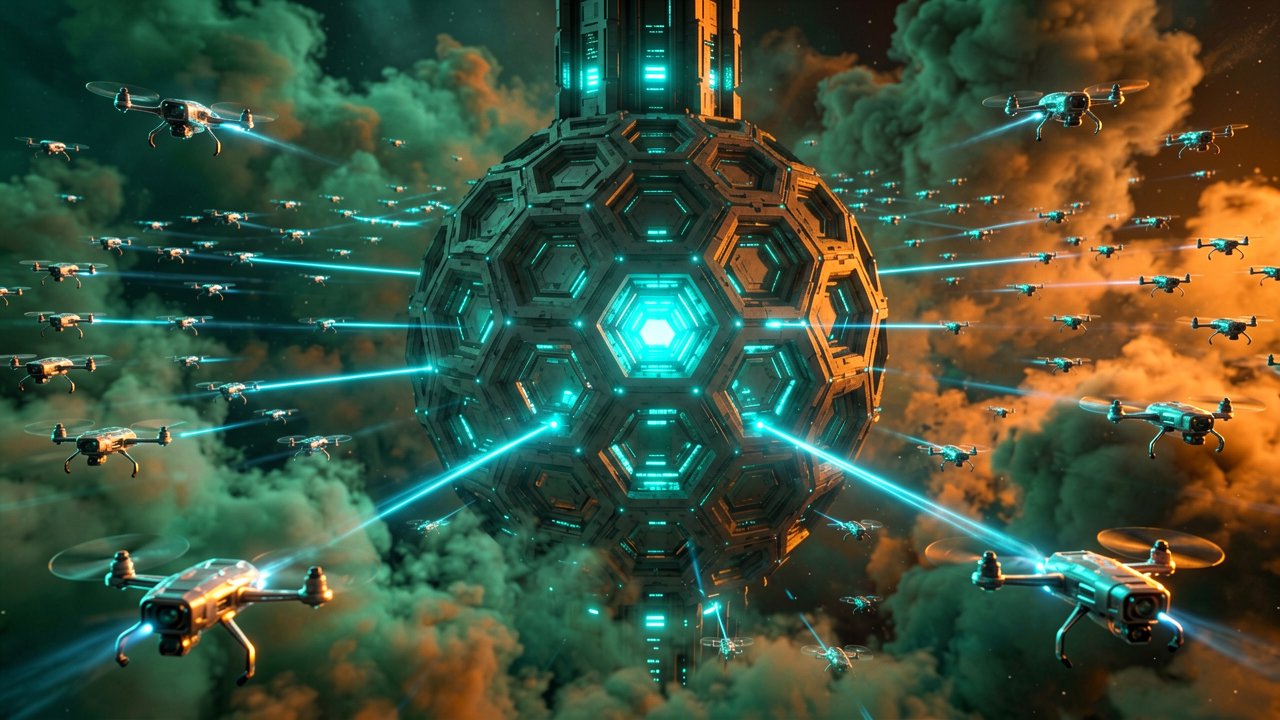
There’s something uniquely hypnotic about the "number go up" philosophy of incremental games, and Starvester seems to have cracked the code for a space-age audience. Developed by solo indie creator Shaun under the moniker Syphono4, this compact factory-builder has managed to amass over 50,000 wishlists ahead of its May 29 launch. It’s a testament to the power of a tight gameplay loop and a clean aesthetic, proving you don't need a hundred-person team to capture the collective imagination of Steam’s simulation enthusiasts.
The game doesn't ask for a lifetime commitment—a rarity in a genre often defined by infinite grinds. Instead, it offers a focused five-hour campaign where players deploy drone swarms to strip-mine star systems and eventually construct massive megastructures. It’s a "snackable" approach to the grand-scale industrialism we usually see in titles like Factorio or Dyson Sphere Program. According to early reports from GameDaily, the game leans heavily into a "meditative flow," prioritizing atmosphere and satisfying progression over punishing complexity.
Interestingly, Shaun has taken a firm stance on modern development trends by confirming that Yahoo Tech reports no AI was used in the game’s creation. This handcrafted approach, paired with a prestige system designed to keep the five-hour loop feeling fresh, suggests a project built with deliberate intent. It’s a bold move for a solo developer to cap the experience so specifically, but in a market saturated with bloated "forever games," a well-paced, star-spanning factory might be exactly what players are looking for.
Building the Megastructures
The core of Starvester involves more than just clicking; it’s about managing the logistics of drone swarms across a star-system wide factory. Players mine varied resources to unlock upgrades, scaling their operations until they can literally harvest the power of the stars themselves. The visual payoff of watching hundreds of drones navigate toward a burgeoning megastructure provides that visceral sense of progress that keeps the incremental genre alive.
Launch Details and Expectations
Expect to see the full release hit Steam on May 29. While a demo has been available for some time—helping to drive those impressive wishlist numbers—the final version will include the full campaign and refined prestige mechanics. Given the momentum it’s gathered through viral social media posts and a strong showing at recent digital festivals, this little engine that could is positioned to be a sleeper hit for the end of the month.
The Solo-Dev Surge: Beyond the Numbers
What Most Reports Miss: The climb to 50,000 wishlists is rarely just a stroke of algorithmic luck; for a solo developer like Shaun, it represents a grueling marathon of community management and iterative design. In the modern Steam ecosystem, "factory builders" are a high-stakes niche where players have little patience for clunky UI or inefficient pathfinding. By leaning into a "compact" experience, the developer has strategically bypassed the "feature creep" that often sinks one-person projects, focusing instead on a polished, high-fidelity loop that respects the player’s time.
Historically, the automation genre has been dominated by behemoths that demand hundreds of hours of mental overhead. Starvester enters the fray as part of a growing counter-culture of "short-form" sims. This pivot isn't just about development constraints; it's a savvy response to a player base that is increasingly vocal about gaming burnout. By promising a definitive end-state after five hours, the game transforms from a potential digital chore into a digestible, rewarding weekend project, a distinction that has clearly resonated with the "work-from-home" demographic.
Stakeholders in the indie publishing space have noted that the success of Starvester’s marketing campaign relied heavily on visual "eye candy"—specifically the synchronized movement of drone swarms. In an industry where TikTok and Reels have become primary discovery engines, having a game that "looks" satisfying in a five-second clip is often more valuable than a hundred-page design document. The developer’s commitment to a strictly handcrafted, no-AI workflow further bolsters this appeal, tapping into a burgeoning consumer desire for authentic, human-authored digital art.
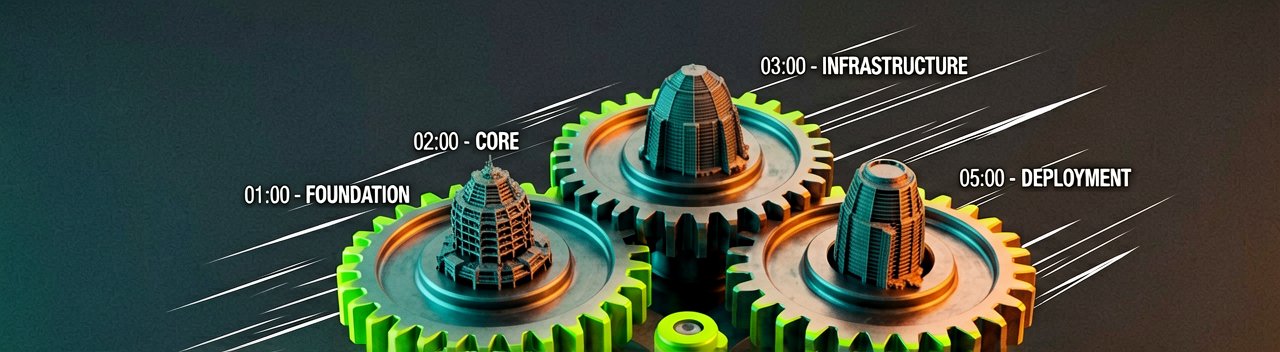
The prestige system serves as the structural backbone that prevents the game from feeling like a mere tech demo. This mechanic, borrowed from the world of idle games, allows players to reset their progress in exchange for permanent buffs, effectively stretching the content without adding unnecessary bulk. It’s a delicate balancing act that requires a deep understanding of dopamine triggers. For a journalist observing the space, it’s fascinating to see how these mobile-adjacent mechanics are being elevated into a premium, desktop-class experience with full 3D graphics.
As we look toward the May 29 release, the pressure is on to see if the "meditative flow" translates to long-term Steam reviews. Many solo projects stumble at the finish line due to last-minute bug cascades or server issues, but the extended demo period for Starvester suggests a level of stability that is rare for a first-time launch of this scale. The industry is watching closely, as this launch could serve as a blueprint for how future solo creators can capture massive audience interest by narrowing their scope rather than widening it.
Ultimately, the narrative surrounding this game isn't just about space or factories; it's about the democratization of game development tools. When one person can generate enough hype to rival mid-sized studios, it shifts the power balance of the platform. Starvester represents a lean, mean approach to game design where every mechanic is intentional and every wishlist is a vote for specialized, auteur-driven experiences over mass-produced corporate products.
The Paradox of the Five-Hour Factory
Reading Between the Lines: The meteoric rise of Starvester’s wishlist count highlights a fascinating contradiction in the PC gaming market. While the "factory" subgenre is traditionally defined by the pursuit of infinite scale and "the factory must grow" ethos, 50,000 players are seemingly lining up for an experience that explicitly promises to end. This suggests that the real demand isn't for more complexity, but for an escape from it. However, the skepticism lies in whether a community raised on the thousand-hour complexity of competitors will actually be satisfied with a "snackable" alternative or if they will inevitably demand the very feature creep the developer is trying to avoid.
There is also the matter of the prestige system, a mechanic that inherently relies on repetition to create value. On paper, it is a clever way to extend a short campaign; in practice, it can often feel like a transparent attempt to mask a lack of content depth. If the core loop isn't varied enough to justify three or four "prestige" runs, the five-hour campaign risks feeling like a one-hour loop repeated until the player hits a wall. The solo-dev narrative is compelling, but it puts an enormous amount of pressure on the balancing act—one miscalculation in resource scaling and the "meditative flow" becomes a tedious slog.
Furthermore, the developer’s "No AI" stance, while commendable from a craft perspective, creates a unique set of technical hurdles for a solo project of this scale. In an era where procedurally generated assets and AI-assisted coding are becoming the standard for one-person studios to compete with larger teams, eschewing these tools is a gamble on the value of "human-authored" imperfections. The risk here is that the polished aesthetic seen in promotional clips might not scale across the entire five-hour experience, potentially leading to visual or mechanical repetition that AI-driven variety might have mitigated.
Projecting forward, the success of Starvester could signal a shift in how Steam’s algorithm treats "focused" games versus "forever" games. If a solo developer can convert 50,000 wishlists into strong Day One sales for a five-hour title, it might encourage a wave of "micro-sims" that prioritize atmosphere over longevity. Yet, this trend carries the risk of a "race to the bottom" where the definition of a full game becomes increasingly thin, leading to a marketplace where players feel hesitant to invest in premium experiences that offer less runtime than a standard Netflix binge.
Ultimately, the industry’s obsession with wishlist numbers often overlooks the "conversion problem." Converting a passive click on a "coming soon" page into a deliberate purchase is the hardest hurdle for any indie dev. While the hype is palpable, the true test will be the two-hour refund window. If Starvester doesn't hook its audience within the first thirty minutes of its short lifespan, that impressive wishlist count might just be a testament to a great trailer rather than a sustainable game model.
Success in solo development is the art of convincing 50,000 people that your five-hour passion project is a vital life event, while secretly hoping they don't finish it so quickly they start wondering if they could have built a real-life shed in the same amount of time.
Artūras Malašauskas is an AI Systems Integrator with 20+ years of production-grade web engineering experience. He has designed, shipped, and scaled enterprise Python/PHP systems for logistics, SaaS, and public-sector clients. For the past year, he has focused exclusively on AI integrations: deploying open-source LLMs, building generative media pipelines (image, audio, video), and engineering multi-agent workflows for real production environments. His standard: reproducibility, security, cost-efficient inference—no vaporware. He documents and evaluates emerging AI tooling, separating verified capabilities from marketing noise. Technical editor at: muza-ai.eu, ai-verslas.lt, ai-naujinos.lt Connect on LinkedIn
Comments