Google’s Gemini Spark: The 24/7 AI Overachiever That Never Hits the Snooze Button
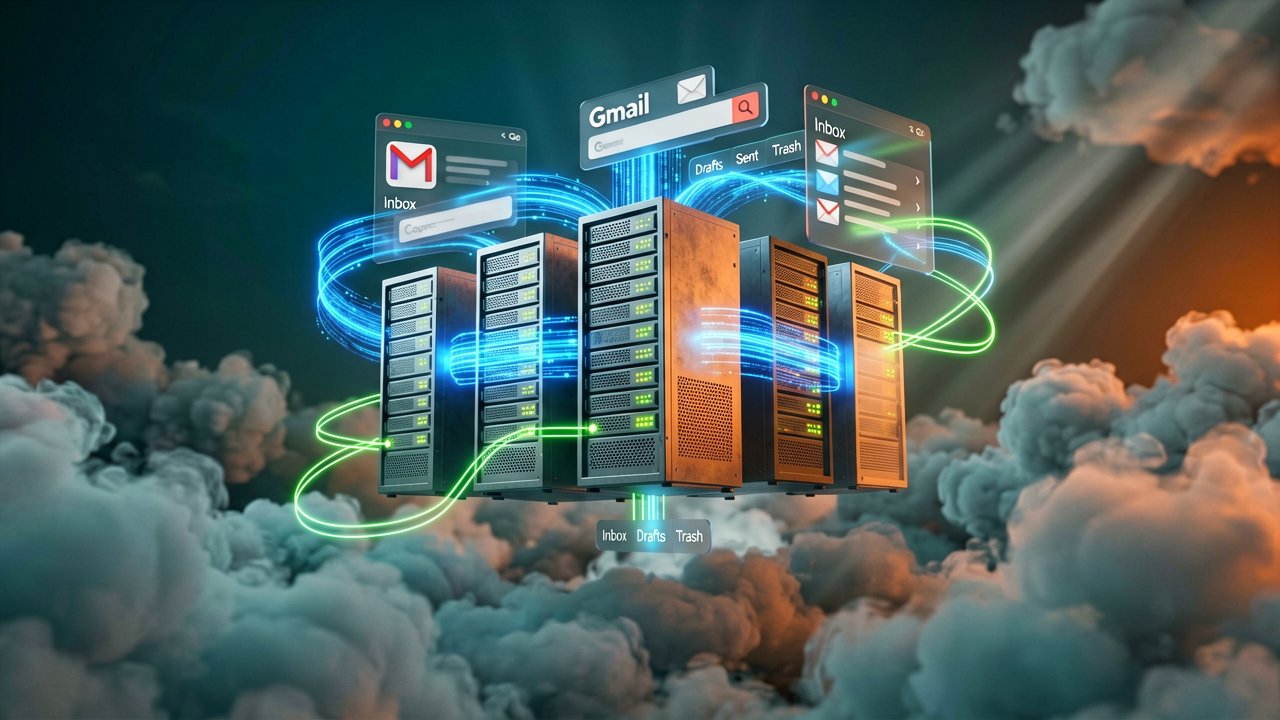
If you’ve ever wished for a digital clone to handle your mind-numbing administrative chores while you catch some shut-eye, Google just granted it. At this year’s I/O developer conference, the search giant unveiled Gemini Spark, a persistent AI agent designed to operate 24/7 in the cloud. Unlike the chatbots we’ve grown accustomed to—which sit idle until we poke them with a prompt—Spark is proactive. It lives inside the Gemini ecosystem, powered by the new Gemini 3.5 model and Google’s "Antigravity" infrastructure, allowing it to execute multi-step workflows even after you’ve closed your laptop and tossed your phone on the nightstand.
This isn't just a fancy version of Google Assistant; it's a fundamental shift toward "agentic" AI. According to reports from TechCrunch, Spark’s deep integration with Gmail and Workspace allows it to monitor your inbox, draft replies, and even coordinate schedules autonomously. Imagine waking up to find that a flight confirmation was automatically parsed, a calendar event created, and a dinner reservation booked—all without you lifting a finger. It’s the kind of background automation that makes the "AI as a partner" promise finally feel like more than just marketing fluff.
Under the Hood: Cloud-Based Autonomy
The "always-on" nature of Spark is its biggest selling point. Traditional AI agents often struggle because they rely on local device processing, meaning if your laptop goes to sleep, so does the agent. Google has bypassed this hurdle by running Spark on dedicated virtual machines in the cloud. As noted by Business Insider, this allows for continuous background execution, a feat Google CEO Sundar Pichai highlighted as a major milestone for proactive digital assistance. It essentially acts as a persistent digital layer that keeps the gears turning on your projects while you're offline.
Safety, Subscriptions, and the Road Ahead
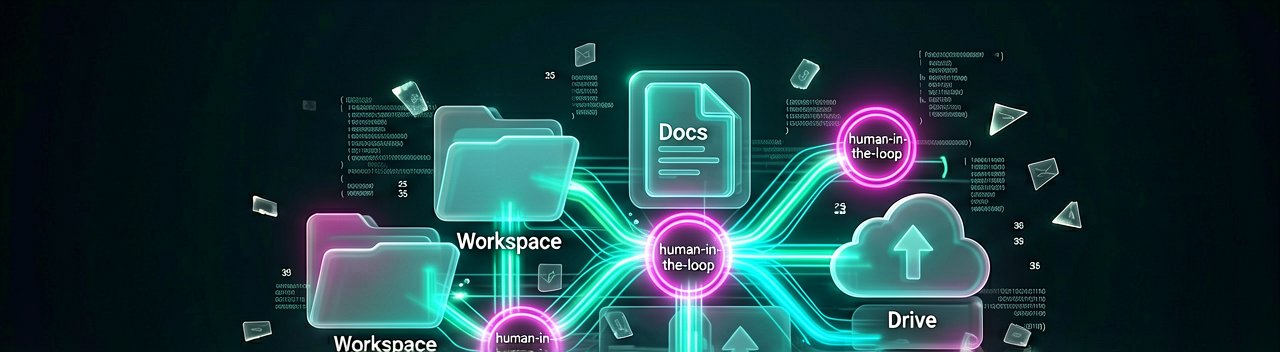
Of course, giving an AI the keys to your inbox raises some eyebrows. Google is pitching Spark with "human-in-the-loop" safeguards, particularly for high-stakes actions like making purchases or sending sensitive emails. Currently, the agent is rolling out to trusted testers and will eventually be a perk for Google AI Ultra subscribers. While it starts within the walled garden of Google apps, there are plans to expand its reach to third-party tools via the Model Context Protocol (MCP) later this summer. We’re moving into an era where our software doesn't just wait for us; it anticipates us.
Behind the Scenes: The Proactive Pivot
The shift from reactive chatbots to proactive agents marks the end of the "prompt era" as we know it. For the last two years, the burden of AI utility has rested squarely on the user's ability to craft the perfect sentence. Gemini Spark flips this dynamic by utilizing what engineers call "asynchronous reasoning." Instead of waiting for a ping, Spark constantly audits the delta between your current digital state and your stated goals. It’s a move that echoes Google’s historical obsession with "predictive search," but with the added muscle of execution. When Sundar Pichai speaks about an AI that works while you sleep, he isn’t just talking about a script running in a loop; he’s describing a system that can handle the nuance of a changing schedule without a human supervisor.
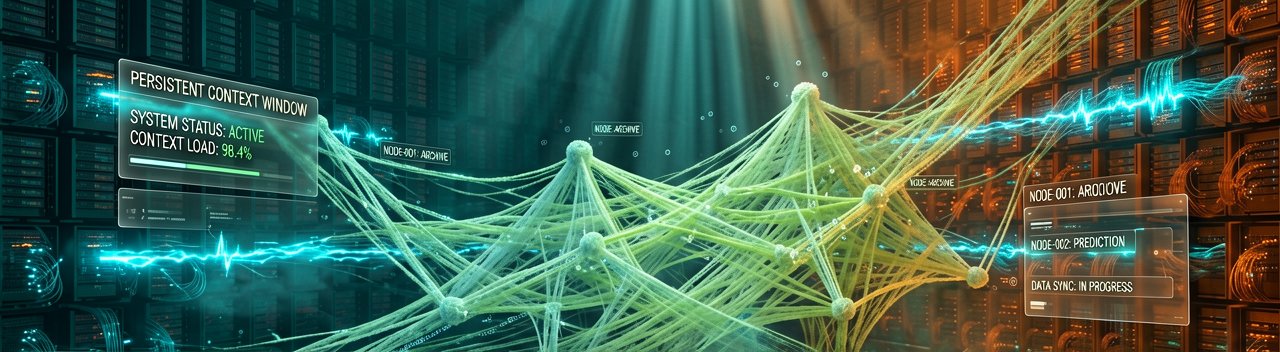
Industry insiders suggest that the real breakthrough here isn't just the LLM, but the "memory fabric" underlying Spark. Most AI models suffer from a sort of digital amnesia once a session ends, but according to technical deep-dives from The Verge, Spark utilizes a persistent context window that spans weeks of activity. This allows the agent to understand that a "follow-up on that project" refers to a specific thread from Tuesday, even if you haven't mentioned it in days. It’s the difference between a temp worker who needs constant instruction and a chief of staff who already knows how you like your coffee and your calendar.
The competitive landscape makes this launch even more pointed. While OpenAI has teased "Operator" and Apple has integrated Siri deeper into the OS, Google’s advantage lies in the sheer gravity of its Workspace ecosystem. By embedding Spark directly into the plumbing of Gmail, Docs, and Drive, Google is effectively creating a moat that competitors will struggle to bridge. Market analysts at Bloomberg note that this move is a direct shot at Microsoft’s Copilot, which has focused heavily on the enterprise side but hasn't yet mastered the kind of seamless, consumer-level background autonomy that Spark promises.
However, the "Antigravity" infrastructure mentioned during the keynote is where the technical rubber meets the road. This specialized cloud architecture is optimized for low-wattage, long-running processes, ensuring that millions of these agents can run simultaneously without melting down Google's data centers. It’s a massive logistical bet. If Spark succeeds, it transforms the smartphone from a tool we use into a dashboard for a system that is already several steps ahead of us. The friction of modern life—the endless emails, the booking of appointments, the sorting of files—is being outsourced to a ghost in the machine that never gets tired.
Privacy advocates are already sounding the alarm, and rightfully so. A 24/7 agent requires 24/7 access to your data streams to be effective. Google is countering this by emphasizing that Spark’s data stays within the user’s "Personal Cloud Partition," a siloed environment that supposedly prevents your private habits from training the global model. Whether users will trade their digital privacy for the luxury of a cleared inbox remains the central tension of the Gemini era. For now, the tech community is watching closely to see if Spark can actually deliver on the promise of reclaiming our time or if it will simply add another layer of digital noise to filter through.
Reading Between the Lines: The Autonomy Paradox
The seductive promise of a "hands-off" digital existence conveniently ignores the fact that delegation is, in itself, a form of labor. While Google frames Gemini Spark as a liberation from the mundane, the reality for early adopters will likely involve a new, invisible tax: the "verification cycle." An AI agent that works while you sleep is an agent that can hallucinate while you sleep, making decisions based on misinterpreted sarcasm in an email or an outdated calendar entry. We aren't necessarily reclaiming our time; we are simply shifting our job description from "doer" to "editor-in-chief" of our own lives, spent nervously auditing the logs of a machine that might have accidentally declined a wedding invitation because it looked like a marketing blast.
There is also a glaring contradiction in the "Antigravity" infrastructure’s promise of efficiency versus the sheer environmental cost of persistent compute. Google’s sustainability reports often highlight carbon neutrality, yet maintaining millions of "always-on" virtual instances creates a massive, constant energy draw that goes beyond the burst-processing of traditional search. According to a report by Reuters, the surge in agentic AI could force a reckoning with the tech industry’s green energy pledges. It is a strange irony that to save a human ten minutes of scheduling, we might be burning enough electricity to power a small neighborhood for the same duration.
Beyond the logistics, the social implications of "agent-to-agent" communication suggest a future of profound digital sterility. If my Gemini Spark is negotiating a meeting time with your Gemini Spark, the human element—the subtle "I’m too busy but I’ll make time for you" or the "let's push this back because I'm overwhelmed"—is flattened into a series of optimized data points. We risk creating a frictionless world where the only people actually talking are the ones who don't have the subscription tier required to automate their relationships. This could lead to a two-tier social hierarchy: those who are present, and those who are represented by a curated, cloud-hosted ghost.
Furthermore, the "Personal Cloud Partition" is a masterclass in corporate rebranding of data harvesting. While Google insists Spark stays within your silo, the very nature of a proactive agent requires it to be deeply enmeshed in the broader Gemini ecosystem to function. As noted by Wired, the boundary between "personal data" and "system improvement" is increasingly porous. If Spark learns that you prefer certain flight times, that preference is a valuable data point that inevitably informs the commercial machinery of Google Travel, regardless of which "partition" it technically sits in.
The end game for Spark isn't just convenience; it’s a bid for total ecosystem lock-in. By making the AI the primary interface for your digital life, Google is betting that you’ll never switch to a competitor, because the cost of "training" a new agent on ten years of your habits would be too high. We are moving toward a world where our software knows us better than our friends do, which is either the ultimate luxury or the ultimate surveillance trap, depending on how much you trust a corporation to watch over you while you dream.
In the near future, the most common morning realization won't be that you forgot to set your alarm, but that your AI spent the night successfully arguing with your landlord, unintentionally starting a flame war on LinkedIn, and buying three crates of artisanal kale because it misinterpreted your 'health kick' phase as a lifetime commitment.
Artūras Malašauskas is an AI Systems Integrator with 20+ years of production-grade web engineering experience. He has designed, shipped, and scaled enterprise Python/PHP systems for logistics, SaaS, and public-sector clients. For the past year, he has focused exclusively on AI integrations: deploying open-source LLMs, building generative media pipelines (image, audio, video), and engineering multi-agent workflows for real production environments. His standard: reproducibility, security, cost-efficient inference—no vaporware. He documents and evaluates emerging AI tooling, separating verified capabilities from marketing noise. Technical editor at: muza-ai.eu, ai-verslas.lt, ai-naujinos.lt Connect on LinkedIn
Comments