Silicon and Spirit: Pope Leo XIV Gears Up for a High-Tech Reckoning
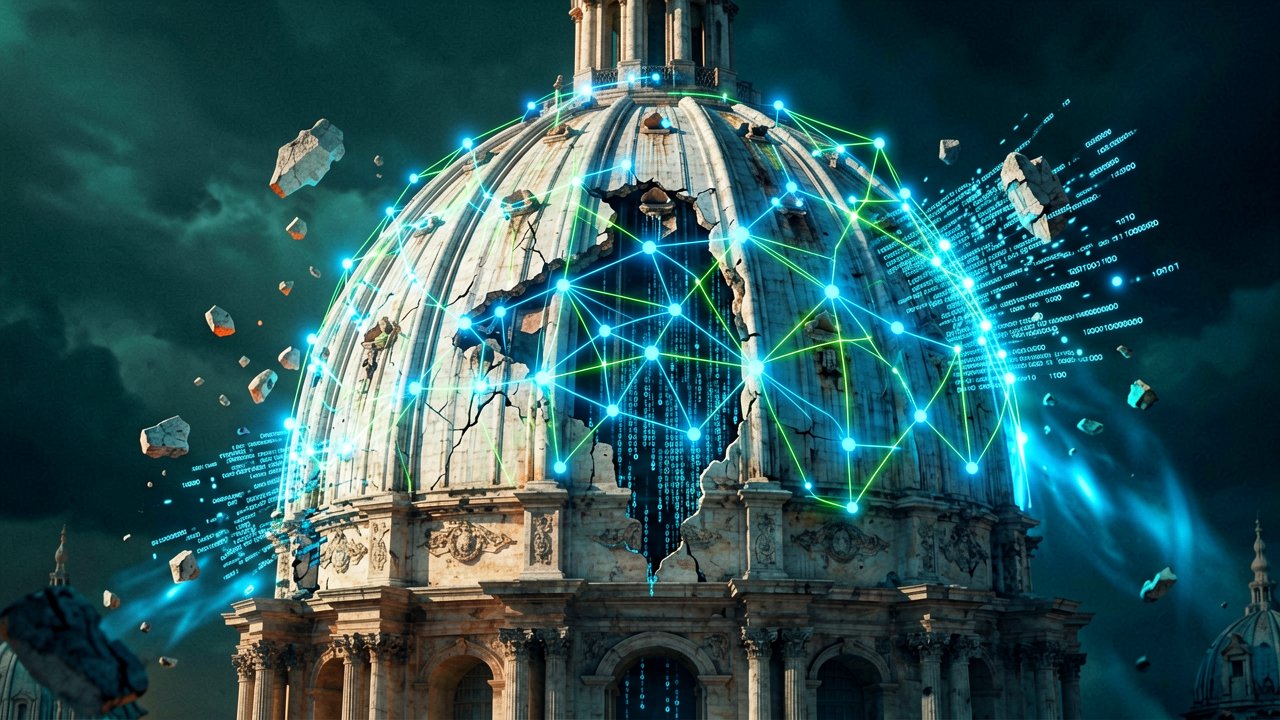
The Vatican isn’t exactly known for its rapid-fire adoption of Silicon Valley’s "move fast and break things" ethos, but Pope Leo XIV is about to prove that the Church isn’t sleeping on the job. On May 25, the American-born pontiff will drop his first encyclical, Magnifica humanitas (Magnificent Humanity), and it’s not your average theological deep dive. Instead of retreading old ground, Leo is aiming straight for the ethical heart of the AI revolution. It’s a move that feels less like a dusty scroll and more like a necessary software patch for the human soul in an era of LLMs and autonomous agents.
In a bit of savvy branding, the Pope signed the document on May 15, the 135th anniversary of Rerum Novarum—the landmark text where Pope Leo XIII wrestled with the Industrial Revolution. By linking his new work to that legacy, Leo XIV is making a loud and clear point: AI is our generation’s factory floor. According to reporting from Vatican News, the encyclical focuses on "safeguarding the human person" as algorithms begin to mimic human faces, voices, and even the "unrepeatable identity" that defines us. It’s an ambitious attempt to draw a line in the sand before our digital echoes become more convincing than the real thing.
A Seat at the Table for Big Tech
What’s truly turning heads in the tech world isn't just the message, but the guest list. Breaking with centuries of tradition where the Pope lets his cardinals do the talking, Leo XIV plans to present the text himself at the Vatican's Synod Hall. Even more startling? He’s invited Christopher Olah, the co-founder of Anthropic and a heavyweight in AI interpretability research, to join him on stage. As noted by The Next Web, this pairing signals that the Vatican wants to be an active participant in the governance debate, not just a moral spectator. It’s a clear shot across the bow of tech giants, suggesting that if they won’t build guardrails, the Church is happy to supply the blueprint.
Labor, War, and the Human Monopoly on Truth
Expect the document to go far beyond abstract ethics. Early indicators suggest Leo will take aim at the "inhumane evolution" of AI in warfare and the risk of turning the global workforce into "passive consumers of unthought thoughts." He’s been vocal about the "godless god" of efficiency, warning that while a machine can generate a story, it can’t suffer the loss that makes a story worth telling. By bringing theologians like Anna Rowlands and tech insiders into the fold, the Pope is trying to bridge the gap between "can we build it?" and "should we let it define us?" Come Monday, we’ll see if the tech industry is actually ready to listen to a 2,000-year-old institution on how to handle the future.
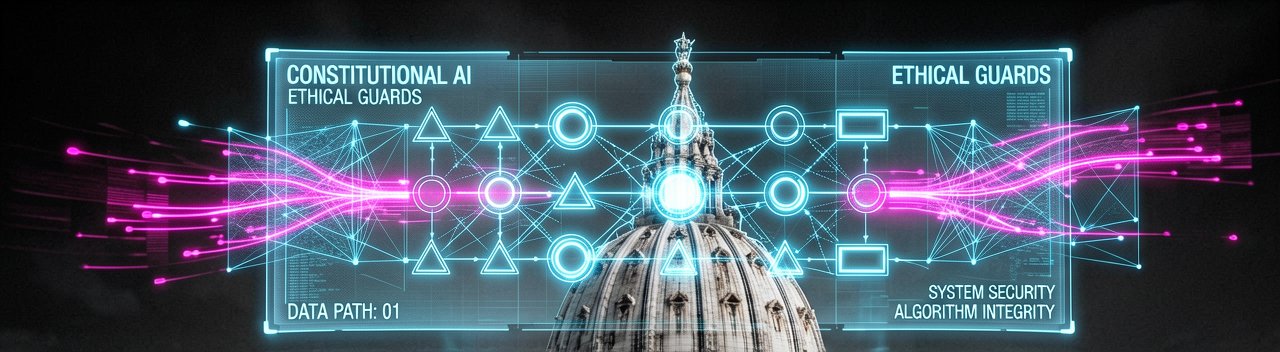
The Vatican isn’t exactly known for its rapid-fire adoption of Silicon Valley’s "move fast and break things" ethos, but Pope Leo XIV is about to prove that the Church isn’t sleeping on the job. On May 25, the American-born pontiff will drop his first encyclical, Magnifica humanitas (Magnificent Humanity), and it’s not your average theological deep dive. Instead of retreading old ground, Leo is aiming straight for the ethical heart of the AI revolution. It’s a move that feels less like a dusty scroll and more like a necessary software patch for the human soul in an era of LLMs and autonomous agents.
In a bit of savvy branding, the Pope signed the document on May 15, the 135th anniversary of Rerum Novarum—the landmark text where Pope Leo XIII wrestled with the Industrial Revolution. By linking his new work to that legacy, Leo XIV is making a loud and clear point: AI is our generation’s factory floor. According to reporting from Vatican News, the encyclical focuses on "safeguarding the human person" as algorithms begin to mimic human faces, voices, and even the "unrepeatable identity" that defines us. It’s an ambitious attempt to draw a line in the sand before our digital echoes become more convincing than the real thing.
A Seat at the Table for Big Tech
What’s truly turning heads in the tech world isn't just the message, but the guest list. Breaking with centuries of tradition where the Pope lets his cardinals do the talking, Leo XIV plans to present the text himself at the Vatican's Synod Hall. Even more startling? He’s invited Christopher Olah, the co-founder of Anthropic and a heavyweight in AI interpretability research, to join him on stage. As noted by The Next Web, this pairing signals that the Vatican wants to be an active participant in the governance debate, not just a moral spectator. It’s a clear shot across the bow of tech giants, suggesting that if they won’t build guardrails, the Church is happy to supply the blueprint.
The Ghost in the Machine: A Deep Dive
Beyond the Headlines: This encyclical represents a calculated pivot from the Vatican’s usual reactive stance toward scientific progress. Historically, the Holy See has spent decades—sometimes centuries—litigating scientific shifts, but Magnifica humanitas arrives while the code for the next generation of generative AI is still being written. Leo XIV is leveraging his background to speak a language that resonates in both the pews and the boardroom, framing data privacy not just as a legal right, but as a preservation of the "sacred interiority" of the individual.
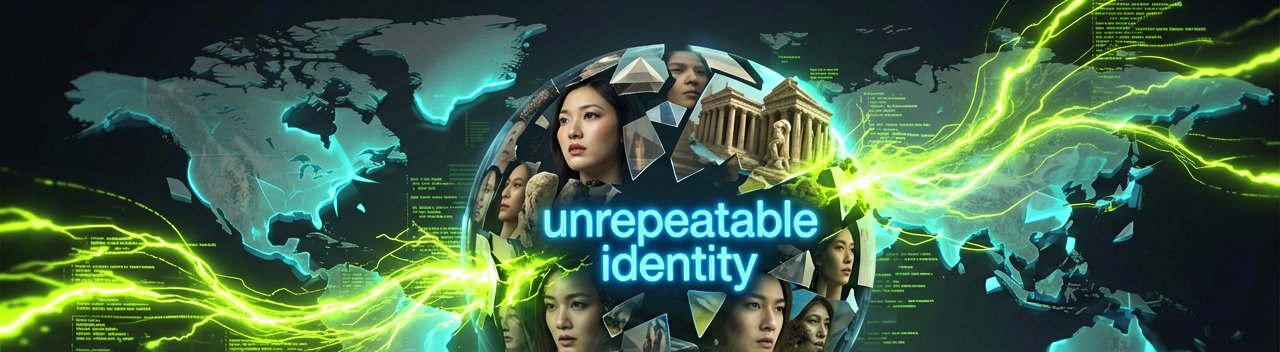
The choice of Christopher Olah as a co-presenter is particularly telling for those who follow the "AI Safety" inner circle. Anthropic was founded on the principle of "Constitutional AI," a method of training models to follow a specific set of rules. By bringing Olah to the Synod Hall, the Pope is effectively endorsing the idea that human values must be hard-coded into the architecture of neural networks. This moves the conversation from vague platitudes about "AI for good" to a technical discussion on how to ensure these systems don't accidentally optimize away human dignity in the name of efficiency.
There is also a significant geopolitical subtext to this May 25 release. Sources close to the Dicastery for Culture and Education suggest that the Vatican is wary of a new "digital colonialism," where a handful of Western companies dictate the moral framework for the entire world. Leo XIV is expected to argue that the "magnificent humanity" mentioned in the title belongs to the Global South as much as the Global North, demanding that AI development account for linguistic and cultural diversity rather than flattening the world into a single, algorithmic consensus.
Labor rights form the final, perhaps most contentious, pillar of this deep dive. Drawing on his namesake's defense of the worker, Leo XIV is set to challenge the Silicon Valley narrative that mass automation is an inevitable "liberation" from toil. Instead, he views the displacement of human judgment as a spiritual crisis. The Vatican's perspective suggests that work is a primary way through which people participate in creation; to automate it entirely, without a plan for human agency, is to risk a future of "profound existential boredom" and societal fracture.
Ultimately, this isn't just a religious document—it's a bid for the Vatican to become the world's most influential "Ethics Board." While governments struggle with the slow pace of legislation and tech firms prioritize quarterly earnings, the Church is playing the long game. By grounding the AI debate in 2,000 years of philosophy, Leo XIV is trying to ensure that as we build machines that think like us, we don't forget how to think for ourselves.
The Vatican isn’t exactly known for its rapid-fire adoption of Silicon Valley’s "move fast and break things" ethos, but Pope Leo XIV is about to prove that the Church isn’t sleeping on the job. On May 25, the American-born pontiff will drop his first encyclical, Magnifica humanitas (Magnificent Humanity), and it’s not your average theological deep dive. Instead of retreading old ground, Leo is aiming straight for the ethical heart of the AI revolution. It’s a move that feels less like a dusty scroll and more like a necessary software patch for the human soul in an era of LLMs and autonomous agents.
In a bit of savvy branding, the Pope signed the document on May 15, the 135th anniversary of Rerum Novarum—the landmark text where Pope Leo XIII wrestled with the Industrial Revolution. By linking his new work to that legacy, Leo XIV is making a loud and clear point: AI is our generation’s factory floor. According to reporting from Vatican News, the encyclical focuses on "safeguarding the human person" as algorithms begin to mimic human faces, voices, and even the "unrepeatable identity" that defines us. It’s an ambitious attempt to draw a line in the sand before our digital echoes become more convincing than the real thing.
A Seat at the Table for Big Tech
What’s truly turning heads in the tech world isn't just the message, but the guest list. Breaking with centuries of tradition where the Pope lets his cardinals do the talking, Leo XIV plans to present the text himself at the Vatican's Synod Hall. Even more startling? He’s invited Christopher Olah, the co-founder of Anthropic and a heavyweight in AI interpretability research, to join him on stage. As noted by The Next Web, this pairing signals that the Vatican wants to be an active participant in the governance debate, not just a moral spectator. It’s a clear shot across the bow of tech giants, suggesting that if they won’t build guardrails, the Church is happy to supply the blueprint.
The Ghost in the Machine: A Deep Dive
Beyond the Headlines: This encyclical represents a calculated pivot from the Vatican’s usual reactive stance toward scientific progress. Historically, the Holy See has spent decades—sometimes centuries—litigating scientific shifts, but Magnifica humanitas arrives while the code for the next generation of generative AI is still being written. Leo XIV is leveraging his background to speak a language that resonates in both the pews and the boardroom, framing data privacy not just as a legal right, but as a preservation of the "sacred interiority" of the individual.
The choice of Christopher Olah as a co-presenter is particularly telling for those who follow the "AI Safety" inner circle. Anthropic was founded on the principle of "Constitutional AI," a method of training models to follow a specific set of rules. By bringing Olah to the Synod Hall, the Pope is effectively endorsing the idea that human values must be hard-coded into the architecture of neural networks. This moves the conversation from vague platitudes about "AI for good" to a technical discussion on how to ensure these systems don't accidentally optimize away human dignity in the name of efficiency.
There is also a significant geopolitical subtext to this May 25 release. Sources close to the Dicastery for Culture and Education suggest that the Vatican is wary of a new "digital colonialism," where a handful of Western companies dictate the moral framework for the entire world. Leo XIV is expected to argue that the "magnificent humanity" mentioned in the title belongs to the Global South as much as the Global North, demanding that AI development account for linguistic and cultural diversity rather than flattening the world into a single, algorithmic consensus.
Labor rights form the final, perhaps most contentious, pillar of this deep dive. Drawing on his namesake's defense of the worker, Leo XIV is set to challenge the Silicon Valley narrative that mass automation is an inevitable "liberation" from toil. Instead, he views the displacement of human judgment as a spiritual crisis. The Vatican's perspective suggests that work is a primary way through which people participate in creation; to automate it entirely, without a plan for human agency, is to risk a future of "profound existential boredom" and societal fracture.
Reading Between the Lines
The Reality Check: While the optics of a Pope and an AI researcher sharing a stage are undeniably powerful, one has to wonder about the practical friction of this alliance. The Vatican operates on an eternal timeline, while Silicon Valley burns through billion-dollar compute cycles in weeks. There is a fundamental contradiction in trying to apply a "constitution" to models that are inherently black boxes. Even with Olah’s help, the Church is essentially trying to baptize a technology that its own creators admit they don't fully understand, which makes the moral certainty of an encyclical feel somewhat fragile against the backdrop of raw, iterative code.
Furthermore, Leo XIV’s focus on the "unrepeatable identity" of the human person faces a grim market reality: the public has already shown a voracious appetite for digital mimcry. From AI-generated influencers to dead actors being resurrected for blockbusters, the "magnificent humanity" the Pope seeks to protect is being voluntarily traded for convenience and entertainment every day. The Church is positioning itself as a barrier against a flood that many users have already welcomed into their living rooms, suggesting a significant disconnect between theological ideals and consumer behavior.
There is also the matter of the Vatican's own influence in a secularized tech sector. While an encyclical carries immense weight for 1.3 billion Catholics, its impact on a developer in Shenzhen or a venture capitalist in Menlo Park is likely to be advisory at best. By entering the AI arena so aggressively, Leo XIV risks making the papacy just another voice in a crowded room of "ethics consultants." If the document fails to produce tangible policy changes in international law, it may be remembered less as a transformative manifesto and more as a poignant, but ultimately ignored, eulogy for the pre-algorithmic world.
It’s a fascinating spectacle to watch the world’s oldest bureaucracy try to outpace the world’s newest industry, though one suspects that even the Holy Spirit might struggle to get a response from a customer support chatbot in under forty-eight hours.
Artūras Malašauskas is an AI Systems Integrator with 20+ years of production-grade web engineering experience. He has designed, shipped, and scaled enterprise Python/PHP systems for logistics, SaaS, and public-sector clients. For the past year, he has focused exclusively on AI integrations: deploying open-source LLMs, building generative media pipelines (image, audio, video), and engineering multi-agent workflows for real production environments. His standard: reproducibility, security, cost-efficient inference—no vaporware. He documents and evaluates emerging AI tooling, separating verified capabilities from marketing noise. Technical editor at: muza-ai.eu, ai-verslas.lt, ai-naujinos.lt Connect on LinkedIn
Comments