Business Schools Are Doubling Down on Quant AI to Stay Relevant

There’s a quiet arms race happening in higher education, and it isn't about better dorms or bigger stadiums. As the financial sector gets swallowed whole by automation, business schools are scrambling to hire the architects of that change. The latest move comes from a growing cohort of institutions, like the Liechtenstein Business School, which are aggressively recruiting leading quant finance experts to spearhead AI-driven curriculum expansions. It's a survival tactic; when industry titans like Ken Griffin note that AI agents are now doing in hours what used to take a team of PhDs months to complete, the ivory tower has to move fast or risk becoming a museum.
The new "AI for Markets and Quantitative Investment" programs aren't just about teaching students how to code. They're about bridging the gap between traditional stochastic calculus and the "black box" nature of modern large language models. Experts joining these faculties are tasked with a difficult balancing act: keeping the intellectual discipline of market theory alive while embracing the sheer horsepower of generative tools. It’s a shift that veteran quants warn is essential, noting that the future of finance belongs to those who can treat AI as an "analytical aid" rather than a total replacement for human hypothesis testing.
The Rise of the "AI-Quant" Hybrid
The push for these high-level hires reflects a broader trend where elite institutions are rebranding themselves as tech hubs. Schools like École Polytechnique are launching specialized masters programs specifically designed to position their graduates at the center of the AI-driven investment age. By pulling experts directly from the trading floors of global sovereign wealth funds and top-tier quant desks, these schools are betting that real-world scars from the algorithmic trenches are the best teaching tools for the next generation of financial leaders.
This isn't just academic posturing; it's a direct response to the "brain drain" occurring between Wall Street and Silicon Valley. With AI labs now actively poaching quant researchers to build the next generation of superhuman systems, business schools are forced to offer a competitive, tech-forward education to keep students from skipping the degree entirely. The result is a new breed of curriculum that prioritizes proprietary data access and "agentic AI" literacy, ensuring that tomorrow's quants don't just know how to run a model, but how to interrogate the machines that are increasingly running the markets themselves.
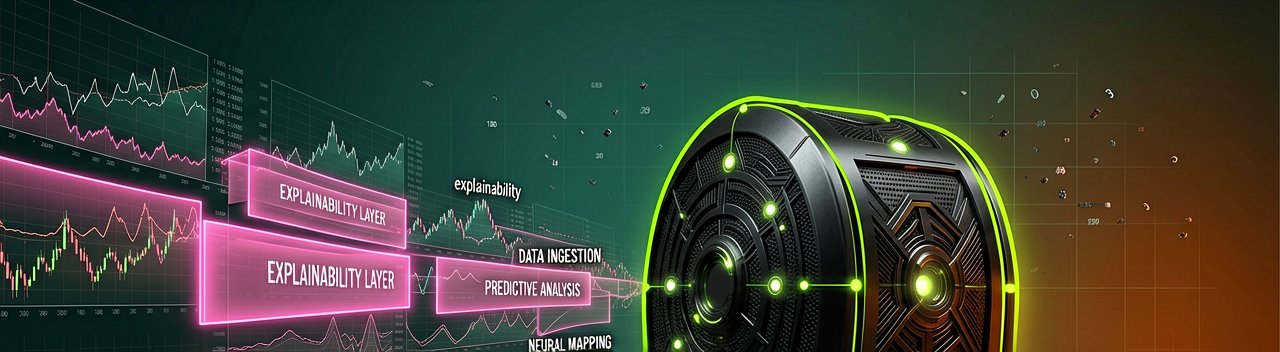
The Algorithmic Arms Race in the Classroom
What Most Reports Miss: The recruitment of high-level quants into academia isn't just about polishing a school’s prestige; it’s a desperate attempt to solve the "lag time" problem that has plagued business education for decades. Traditionally, by the time a financial theory made it into a textbook, the street had already milked it for alpha and moved on. By bringing in practitioners who have spent the last eighteen months wrestling with transformer models and high-frequency data pipelines, institutions are trying to shorten the distance between the trading floor and the lecture hall to nearly zero.
From the perspective of the industry veterans making this jump, the move into the classroom offers a rare chance to experiment without the immediate pressure of a quarterly P&L. Many of these experts view the current state of AI in finance as a "Wild West" where the guardrails haven't been built yet. They aren't just teaching students to use tools; they are attempting to codify an ethical and technical framework for automated decision-making that current regulatory bodies are still struggling to understand. It is a transition from making money to defining the very rules of the game.
Historically, the "quant" was a back-office figure, a mathematician hidden away to crunch numbers for the flashy traders out front. That dynamic has flipped entirely. Today’s lead quant experts are the rockstars of the business world, and their integration into faculty positions signals a fundamental shift in what a "business leader" looks like. We are seeing the death of the charismatic generalist and the rise of the technical specialist who can translate complex neural networks into actionable board-room strategy.
Stakeholders at top-tier firms are watching this academic shift with a mix of relief and anxiety. On one hand, they need a pipeline of talent that doesn't require two years of retraining upon hiring. On the other, there is a growing concern that the "democratization" of these high-level quant strategies through specialized MBA and Master's programs will lead to increased market fragility. When every graduate is trained on the same sophisticated AI models, the risk of "crowded trades" and synchronized algorithmic flash crashes becomes a systemic reality rather than a theoretical threat.
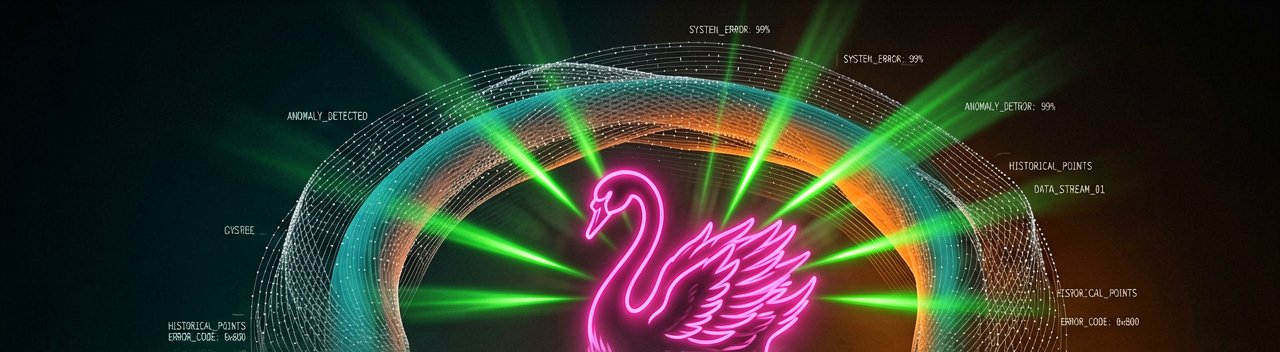
Ultimately, this educational pivot reflects a broader recognition that the financial sector is now a branch of the technology industry. The expertise being imported into business schools focuses heavily on "explainability"—the ability to prove why an AI made a specific investment choice. As global regulators begin to demand transparency in automated trading, the experts who can teach the next generation how to "peek under the hood" of a black-box model are becoming the most valuable assets on any university payroll.
The Paradox of Predictability
Reading Between the Lines: The prevailing wisdom suggests that flooding the market with AI-literate quants will lead to a more efficient financial system, but this assumption ignores the basic physics of the "zero-sum" game. If every elite business school successfully churns out a thousand graduates using the same high-frequency transformer models and the same synthetic datasets, the competitive advantage—the "alpha"—evaporates. We are essentially watching a high-stakes simulation where the smartest people in the room are spending six-figure tuitions to learn how to cancel each other out with increasingly expensive math.
There is also a glaring contradiction in the push for "explainable AI" within these new curricula. Academic institutions are hiring experts to teach transparency, yet the very nature of the most effective deep learning models is their opacity. There is a palpable tension between the pedagogical need for a clear, step-by-step syllabus and the reality of modern finance, where a model might succeed precisely because it identifies patterns that are fundamentally non-linear and unintuitive to the human mind. Schools are effectively promising to shine a light into a room that was designed to be dark.
Furthermore, the heavy reliance on historical data to train these "next-gen" quants creates a dangerous feedback loop. Most AI models are inherently backward-looking, optimized to find patterns in what has already occurred. By institutionalizing these methods in the world's leading business schools, we risk creating a generation of financial leaders who are brilliantly equipped to navigate the 2008 or 2020 crises, but are completely blind to the "black swan" events that don't fit the training set. It is the digital equivalent of driving a car at 200 miles per hour while staring exclusively into the rearview mirror.
The projection for the job market is equally skeptical. While schools tout these programs as the golden ticket to high-finance longevity, the very technology they are teaching is designed to reduce headcount. We are witnessing the strange spectacle of universities training students to build the tools that will ultimately automate their own entry-level roles. The "AI-driven education" might not be preparing students for a career in finance as much as it is preparing them to be the last humans to turn off the lights on the trading floor.
The ultimate irony of the modern quant degree is that after three years of mastering multi-modal neural networks and stochastic calculus, the most valuable skill a graduate can possess is still the ability to explain to a panicked client why the computer just lost ten million dollars in a heartbeat—and doing it with a straight face.
Artūras Malašauskas is an AI Systems Integrator with 20+ years of production-grade web engineering experience. He has designed, shipped, and scaled enterprise Python/PHP systems for logistics, SaaS, and public-sector clients. For the past year, he has focused exclusively on AI integrations: deploying open-source LLMs, building generative media pipelines (image, audio, video), and engineering multi-agent workflows for real production environments. His standard: reproducibility, security, cost-efficient inference—no vaporware. He documents and evaluates emerging AI tooling, separating verified capabilities from marketing noise. Technical editor at: muza-ai.eu, ai-verslas.lt, ai-naujinos.lt Connect on LinkedIn
Comments