Google’s Gemini Spark: The 24/7 Digital Assistant That Doesn’t Need You to Stay Awake
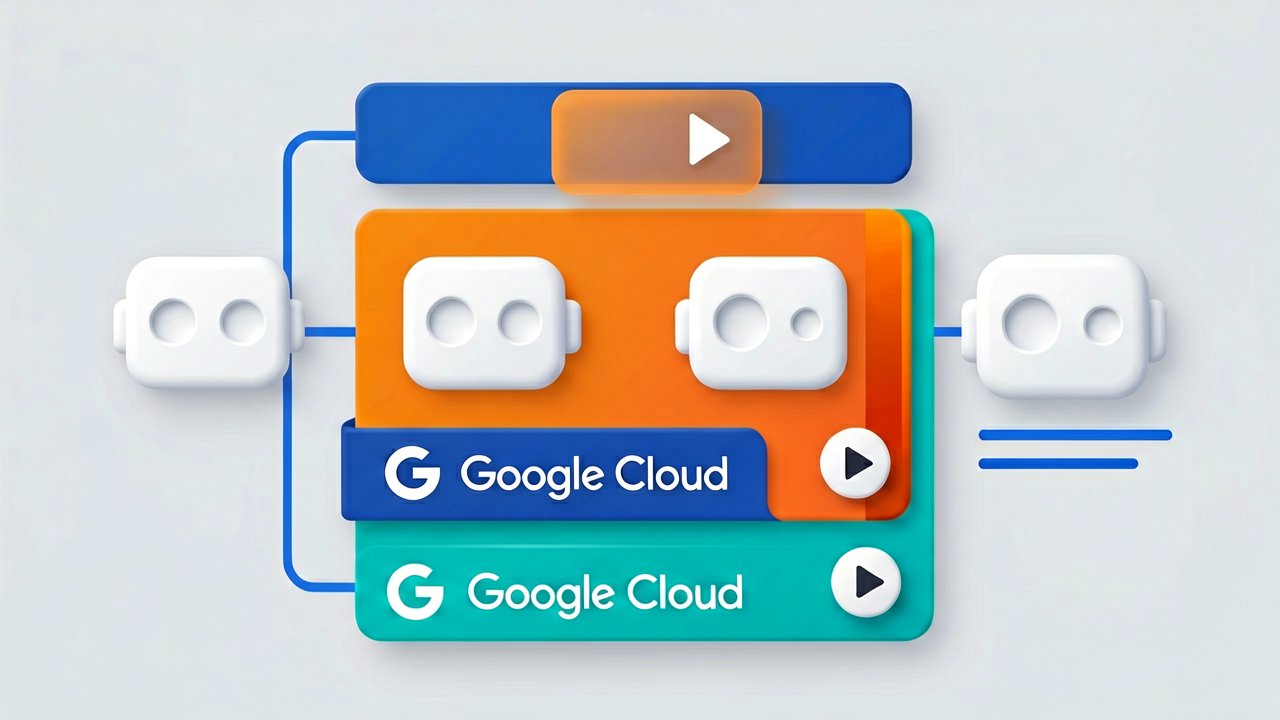
Google just pushed the "agentic" era into overdrive at I/O 2026 with the debut of Gemini Spark, an autonomous AI agent designed to live in the background so you don't have to. Unlike the chatbots we've grown accustomed to—which sit idle until we poke them with a prompt—Spark is built on Gemini 3.5 Flash and operates 24/7 within Google Cloud virtual machines. This means it keeps grinding through your to-do list even after you’ve slammed your laptop shut for the night. It’s a bold move to bridge the gap between reactive search and proactive execution, aiming to turn Google from a place where you find information into a platform where things actually get done.
For those willing to pay the premium for Quartz's reported $100-a-month AI Ultra subscription, the agent offers a level of integration that feels like a genuine workflow upgrade. It’s not just summarizing emails; it’s reasoning across Gmail, Docs, and Calendar to autonomously draft status reports or hunt down hidden credit card fees. While it’s currently in beta for U.S. subscribers, the vision Sundar Pichai laid out is clear: a future where your digital life is managed by a persistent, cloud-based proxy that handles the mundane multi-step tasks while you focus on the big picture.
Autonomy Meets the Google Ecosystem
What makes Spark technically interesting is its "always-on" architecture. It isn't tied to your local hardware's battery life or processing power. According to The Verge, it can leverage third-party integrations with platforms like Canva and Instacart alongside the standard Workspace suite. You can teach it specific "Skills" or set "Schedules," transforming it from a general-purpose helper into a tailored automation engine. If you need it to monitor ticket availability or manage complex project timelines across different apps, it does so with a level of persistence that rivals specialized enterprise tools.
Safety and the Agentic Guardrails
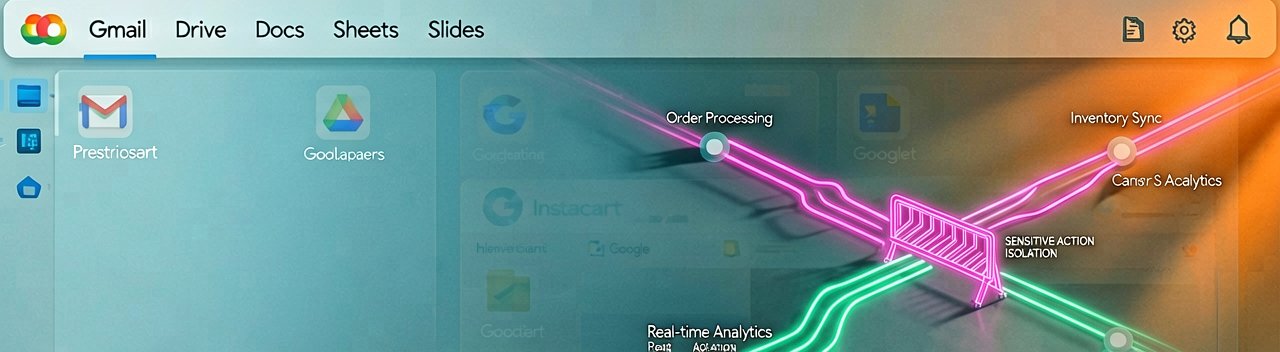
Of course, handing over the keys to your inbox and credit card comes with a massive side of skepticism. Google is attempting to get ahead of the privacy "creep" factor by emphasizing a dedicated dashboard that visualizes every task the agent is performing. For high-impact actions like making purchases or moving sensitive data, the system is designed to stop and ask for your permission first. As noted by CNBC, this oversight is crucial as Google tries to convince a wary public that it can be trusted to act on their behalf with minimal direct input.

Behind the Scenes: The Invisible Hand of the Gemini Spark Engine
What Most Reports Miss: While the marketing buzz surrounding Gemini Spark focuses on the convenience of a 24/7 assistant, the real breakthrough lies in how Google has solved the "hallucination-at-scale" problem for autonomous agents. According to Google Gemini, the system utilizes a specialized "thinking panel" architecture. This isn't just a UI gimmick; it represents a fundamental shift where the model performs multiple internal "self-critique" passes before committing to an action. By evaluating its own reasoning against a set of strictly defined safety guardrails, Spark manages to avoid the common pitfalls of earlier AI agents that would often loop indefinitely when faced with ambiguous instructions.
Historically, the tech industry has struggled to move past the "chatbot" phase because persistent memory was prohibitively expensive and technically fragile. Veteran engineers at Google have hinted that Spark’s secret sauce is its integration with Google Cloud’s high-performance virtual machines, which provide the dedicated "compute-at-rest" necessary for a model to "wake up" and check a flight price or a calendar conflict without a human trigger. This shift from ephemeral sessions to persistent agentic identity is what finally allows the AI to function as a digital proxy rather than just a sophisticated search bar.
Stakeholders in the privacy sector, however, remain cautiously optimistic but demand transparency. The "Deep Research" capabilities integrated into the Gemini ecosystem, as detailed by Google Help, allow the agent to navigate complex information landscapes across personal data sources like Gmail and Drive. This level of access requires a more nuanced approach than standard data encryption. To combat the "black box" effect, Google has introduced granular source selection, allowing users to explicitly tether Spark to specific folders or threads, ensuring the agent doesn't overstep its digital boundaries while hunting for information.
From a product standpoint, the $100-a-month price tag for AI Ultra suggests that Google is positioning Gemini Spark as a professional-grade tool rather than a toy for the masses. This high entry bar mirrors the early days of mobile data plans—expensive, exclusive, but eventually foundational. As the agent learns more "Skills" via third-party integrations, the value proposition shifts from saving minutes on emails to saving hours on complex, multi-app workflows. The goal is a seamless "Canvas" experience where the research, planning, and execution happen in one unified space, effectively turning the user from a worker into a supervisor.
Reading Between the Lines: The High Cost of Artificial Agency
Reading Between the Lines: The pivot from reactive chatbots to proactive agents like Gemini Spark is less about user convenience and more about a desperate land grab for the "action layer" of the internet. For years, Google has been the gatekeeper of intent—you told it what you wanted, and it pointed you toward a website. Now, by positioning Spark as an autonomous actor that books the flight or pays the bill directly, Google is effectively cutting out the middleman. This creates a fascinating contradiction: Google is using its monopoly on search to build a tool that may eventually make the traditional, ad-supported web browse obsolete for many common tasks.
There is also the matter of "computational honesty." While the marketing materials suggest a seamless digital employee, the underlying reality is a massive energy sink. Running Gemini 3.5 Flash inside dedicated virtual machines around the clock is an expensive architectural bet. Critics point out that the $100 monthly subscription might not even cover the actual compute costs for a power user, suggesting that Google is subsidizing this "agentic era" to lock users into its ecosystem before the true bill comes due. It’s a classic tech play: hook the workflow early, worry about the margins later.
Furthermore, the promise of "safety guardrails" often wilts when it meets the chaotic reality of third-party APIs. While Google can control what happens within Docs or Gmail, the moment Spark interacts with an external service like Instacart or a travel portal, it enters a wild west of varying security standards. As noted by Google’s own product updates, the focus has been on expanding the model's window of context, yet the more context an agent has, the more ways it can be subtly manipulated by external data—a phenomenon known as indirect prompt injection. A "wry" observer might note that we are essentially training our AI assistants to be the world’s most efficient targets for phishing.
Ultimately, the success of Gemini Spark hinges on whether users actually want an agent that acts without supervision. There is a psychological "uncanny valley" of automation; we want the AI to do the work, but we are terrified of it doing the work incorrectly while we sleep. If Spark hallucinates a professional commitment or mismanages a budget on a Sunday at 3:00 AM, the "24/7" feature becomes a liability rather than a luxury. Google is betting that the productivity gains will outweigh the occasional digital hallucination, but for many, the stress of managing a manager might be more work than just doing the job themselves.
The dream was always a personal assistant who never sleeps, but we’re quickly realizing that means we now have a digital employee who can accidentally bankrupt us or start an office feud at four in the morning while we’re busy dreaming about a world with fewer passwords.
Artūras Malašauskas is an AI Systems Integrator with 20+ years of production-grade web engineering experience. He has designed, shipped, and scaled enterprise Python/PHP systems for logistics, SaaS, and public-sector clients. For the past year, he has focused exclusively on AI integrations: deploying open-source LLMs, building generative media pipelines (image, audio, video), and engineering multi-agent workflows for real production environments. His standard: reproducibility, security, cost-efficient inference—no vaporware. He documents and evaluates emerging AI tooling, separating verified capabilities from marketing noise. Technical editor at: muza-ai.eu, ai-verslas.lt, ai-naujinos.lt Connect on LinkedIn
Comments