Siemens Hands the Keys to the Algorithms with New Autonomous Building Tech
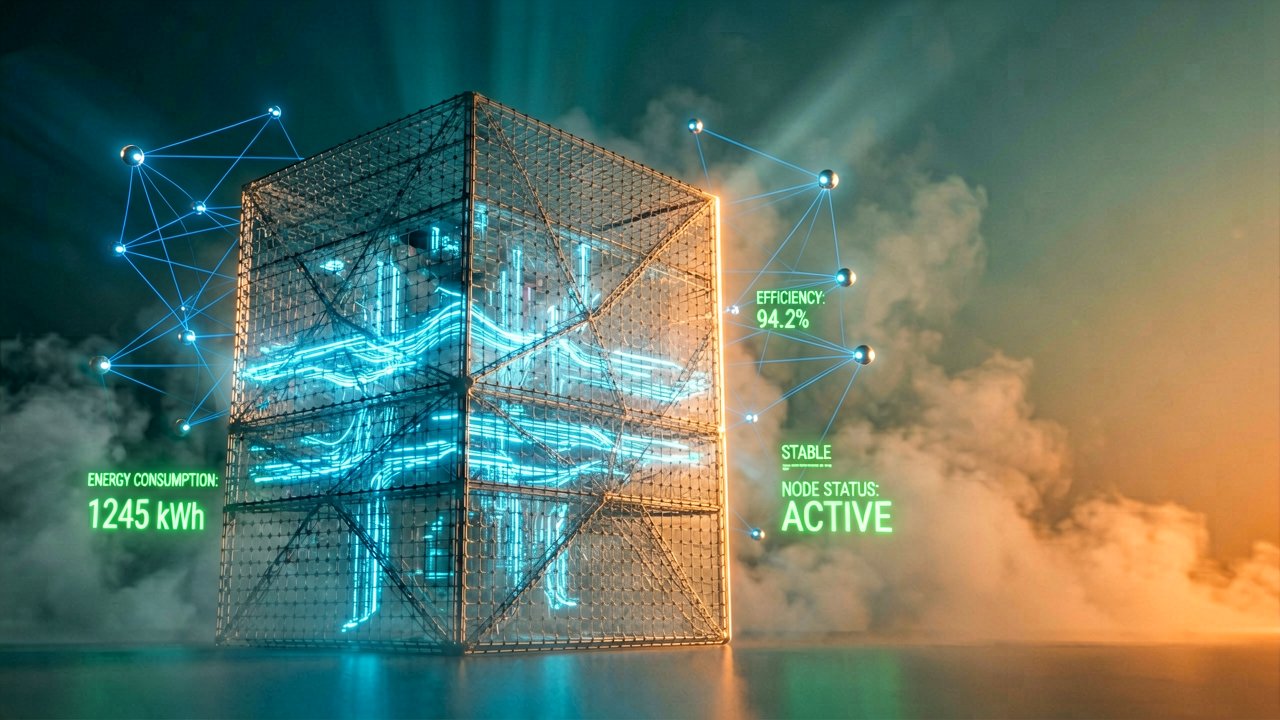
Siemens isn’t just dipping its toes into the AI pool; they’re diving headfirst into the deep end with the launch of Building X, a suite designed to take the guesswork out of facility management. By leveraging "Autonomous Building" operations, the tech giant is moving past simple automation—where a system follows a rigid schedule—and into a world where the building itself decides how to breathe, heat, and cool based on real-time data. It’s a bold play to tackle the dual headaches of skyrocketing energy costs and the pressure to hit net-zero targets without making life miserable for the people inside.
What makes this shift interesting isn't just the "cool factor" of a self-managing HVAC system; it’s the sheer volume of data being crunched under the hood. The platform acts as a digital twin of sorts, integrating disparate systems that usually don't talk to each other. By breaking down these data silos, Siemens claims they can slash energy consumption by up to 30%. In an era where commercial real estate is under the microscope for its carbon footprint, moving from reactive maintenance to proactive, AI-driven adjustments feels less like a luxury and more like a survival strategy for modern landlords.
Breaking the Silos of Property Management
The genius of the new AI tool lies in its ability to learn from occupant behavior and external weather patterns simultaneously. Most old-school building management systems are frustratingly linear, but this new iteration uses machine learning to predict peak loads before they happen. It’s the difference between turning on the AC because it’s already 80 degrees and cooling the floor an hour early because the system knows a heatwave—and three hundred employees—are on the way. According to reports from Siemens, the goal is to make the infrastructure nearly invisible to the end user while keeping the balance sheet in the green.
Of course, the hardware still matters, but the software is clearly the star of the show here. By offering this as a cloud-based service, Siemens is betting that companies are tired of heavy on-site installations and would rather subscribe to a system that gets smarter with every software update. As these autonomous features roll out globally, the industry is watching closely to see if the AI can truly deliver on its promise of a "hands-off" future for the world's most complex structures.
What Most Reports Miss: The Quiet Revolution of the Semantic Digital Twin
Behind the slick marketing of "autonomous buildings" lies a sophisticated structural shift that seasoned observers recognize as the death of the data silo. For decades, building management was a fragmented mess; the HVAC system didn't speak the same language as the lighting, and the security sensors were essentially on a different planet. Siemens' Building X platform addresses this by utilizing a semantic digital twin—a virtual representation that doesn't just store data but understands the context of every sensor and valve. This allows the AI to recognize that a spike in energy consumption in the west wing isn’t just a random anomaly, but a logical result of a scheduled conference combined with a 10-degree outdoor temperature jump.
From the perspective of a facility manager, this transition is less about "replacing" humans and more about offloading the cognitive burden of micro-adjustments. Historically, a technician might spend half their morning chasing "hot and cold" tickets from disgruntled tenants. With tools like Comfort AI, the system recalculates optimal setpoints every 15 minutes, factoring in weather forecasts and occupancy trends to preempt those complaints before they’re even voiced. According to details from the Siemens Blog, this shift toward "closed-loop" supervisory control means the building is no longer just smart—it’s proactive, acting on insights without waiting for a human to click 'approve'.
This evolution also reflects a broader industry pivot toward "SaaS-ified" infrastructure. By moving the heavy lifting to the cloud, Siemens is tackling the "technical debt" of legacy hardware. Most commercial buildings today are energy-inefficient relics, yet the cost of a full physical retrofit is often a non-starter for investors. The "Asset Performance Advanced" service allows owners to overlay high-level AI intelligence onto existing systems, effectively teaching old boilers and chillers new tricks. This "digital-first" retrofitting is becoming a critical tool for real estate portfolios scrambling to meet looming net-zero deadlines and regulatory requirements like the GDPR, which complicates the large-scale collection of occupant data.
The stakes for this technology extend far beyond simple convenience. In the current economic climate, where commercial real estate faces fluctuating occupancy and rising operational costs, a 30% reduction in energy spend can be the difference between a profitable asset and a liability. Industry analysts from ABI Research highlight that with less than 5% of buildings globally currently classified as "smart," the untapped potential for autonomous operations is massive. As these systems move from "crawling" (data gathering) to "running" (fully autonomous action), the buildings themselves are becoming active partners in the corporate sustainability journey.

The Friction Between Algorithmic Efficiency and Human Reality
Reading Between the Lines: While the marketing narrative paints a picture of a seamless, self-correcting utopia, the reality of autonomous building operations often collides with the messy unpredictability of human behavior and aging infrastructure. There is a persistent assumption in the tech world that data is inherently clean and systems are inherently responsive. However, any seasoned engineer knows that a "semantic digital twin" is only as good as the sensors feeding it. In many older commercial properties, those sensors are prone to drift, failure, or being blocked by a stray filing cabinet, leading an AI to make perfectly logical decisions based on fundamentally flawed information.
There is also the paradox of the "black box" in facility management. As Siemens pushes for closed-loop supervisory control, we are moving toward a scenario where the building’s "brain" makes decisions that a human supervisor might not understand or be able to override easily in a pinch. This creates a new kind of technical dependency. If the cloud connection stutters or the algorithm prioritizes energy metrics over a specific tenant's comfort due to a weighted carbon goal, the resulting friction isn't just a digital glitch—it’s a physical discomfort that can lead to lease disputes and workplace dissatisfaction. The industry is effectively betting that the AI’s "average" success rate will be high enough to justify the loss of granular human agency.
Furthermore, the economic promise of a 30% reduction in energy consumption assumes a level of system integration that remains elusive for the average property owner. Subscribing to a cloud-based AI suite like Building X is the easy part; ensuring that three different generations of hardware from five different manufacturers can actually execute those AI-driven commands is a different beast entirely. We run the risk of creating a "two-tier" real estate market: premium, data-rich towers that run like clockwork, and a vast sea of "dumb" buildings that are too expensive to upgrade and too inefficient to compete, regardless of how many software subscriptions their owners buy.
Finally, we must consider the long-term implications of removing the human "in the loop" for the sake of decarbonization. While hitting net-zero targets is a non-negotiable global priority, the aggressive optimization of airflow and temperature by an algorithm could lead to buildings that feel sterile or "over-engineered." If the AI decides that the most efficient way to run a floor is to keep it at the absolute edge of human tolerance, we might find that we’ve saved the planet only to make the office a place where everyone perpetually wears a sweater in July. Balancing the cold logic of the kilowatt-hour against the warm reality of human comfort remains the ultimate hurdle for any autonomous system.
The dream of the self-managing building is finally here, promising a world where your office is smarter than your boss and arguably more attentive to your needs—provided, of course, that your needs perfectly align with the local utility’s peak-shaving schedule and the building doesn't decide that the most efficient way to save energy is to simply stop everyone from coming inside.
Artūras Malašauskas is an AI Systems Integrator with 20+ years of production-grade web engineering experience. He has designed, shipped, and scaled enterprise Python/PHP systems for logistics, SaaS, and public-sector clients. For the past year, he has focused exclusively on AI integrations: deploying open-source LLMs, building generative media pipelines (image, audio, video), and engineering multi-agent workflows for real production environments. His standard: reproducibility, security, cost-efficient inference—no vaporware. He documents and evaluates emerging AI tooling, separating verified capabilities from marketing noise. Technical editor at: muza-ai.eu, ai-verslas.lt, ai-naujinos.lt Connect on LinkedIn
Comments