Google’s Gemini Spark is the 24/7 Overlord Your Inbox Deserves
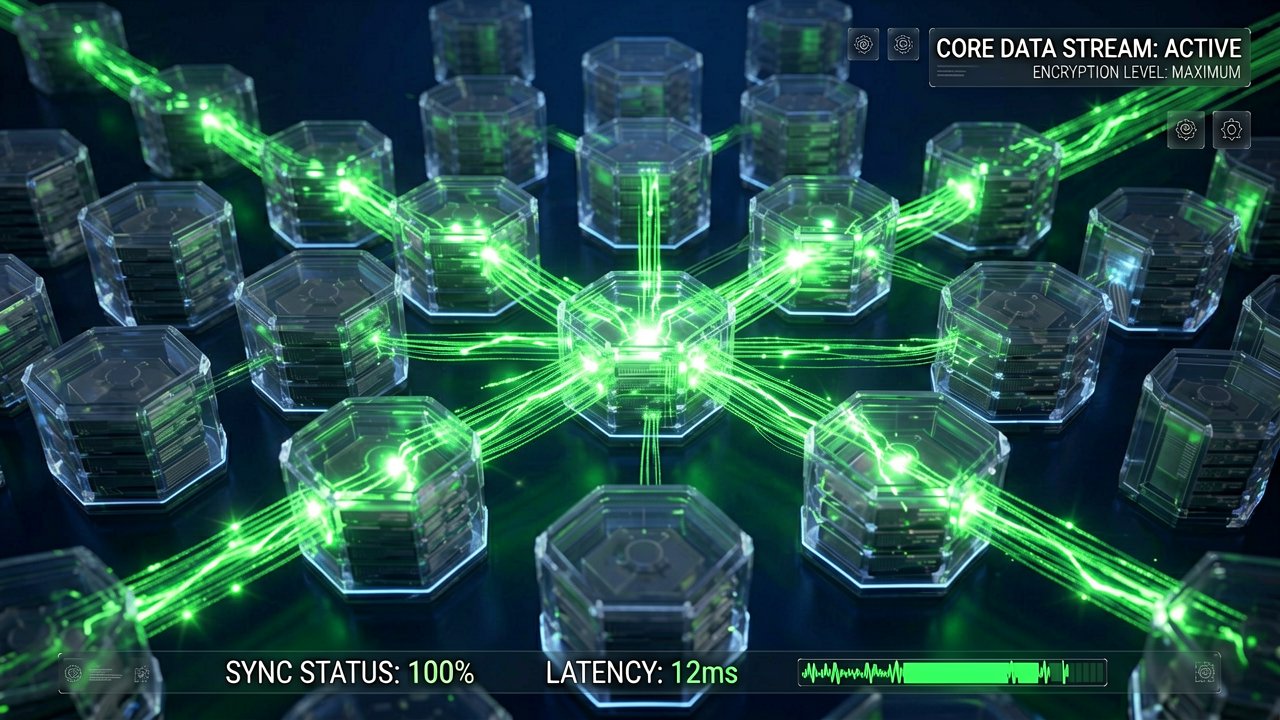
Google just threw a heavy-duty wrench into the "agentic" AI arms race. Announced at the 2026 Google I/O conference, Gemini Spark isn't just another chat window for you to beg for email templates. It’s an autonomous, 24/7 personal agent designed to live in the background, working even when your phone is locked or your laptop is buried in a backpack. By leveraging dedicated virtual machines on KuCoin News via Google Cloud, Spark aims to handle the mundane "life-admin" tasks—tracking school schedules, managing event RSVPs, or hunting down hidden subscription fees—without you having to lift a finger.
The timing is hardly accidental. For months, the tech world has been obsessed with OpenClaw, a viral, open-source platform that essentially lets enthusiasts build their own autonomous assistants. But while OpenClaw often requires a tech-savvy setup and a dedicated machine (like those increasingly rare Mac Minis), Google is offering a "turn-key" alternative. According to The Verge, Spark runs on the newly minted Gemini 3.5 Flash model, which is four times faster than its predecessors. It’s Google’s way of saying you don't need a GitHub account to automate your life—you just need a subscription.
The "Cloud-First" Advantage vs. OpenClaw
The real kicker here is persistence. Most current AI tools are reactive; they wait for a prompt. Spark, however, is proactive. It’s designed to "catch" tasks you toss over your shoulder and keep working on them until they're done. While OpenClaw gave users immense control, it often felt like a project for the DIY crowd. Google is banking on the fact that most people would rather have their agent live in the cloud than on their local hardware. As noted by Mashable, this makes the tool far more beginner-friendly, trading the granular customization of open-source projects for the seamless integration of the Google Workspace ecosystem.
Safety Handshakes and High-Stakes Actions
Of course, giving an AI the keys to your digital life raises the inevitable "Will it accidentally spend my rent money?" question. Google’s guardrails for Spark include a "high-stakes" permission layer. While the agent can autonomously organize a spreadsheet or summarize a week’s worth of emails, it’s programmed to seek explicit user approval before taking irreversible actions like sending an official email or making a purchase. This hybrid approach—autonomous background work paired with a human "sign-off"—is Google's attempt to bridge the gap between efficiency and the creeping anxiety of losing control to an algorithm. Reports from Android Police suggest that this summer, the agent will even start operating directly within Chrome to handle third-party app interactions, making the "all-in-one" dream feel a little more like reality.

Inside the Machine: The Infrastructure of Persistence
The real engineering marvel behind Gemini Spark isn’t just the LLM itself, but the "Persistence Layer" Google has quietly spent the last year perfecting. Unlike standard chatbots that operate in isolated sessions—forgetting your existence the moment you close the tab—Spark utilizes what internal documents refer to as "Stateful Memory Chains." This allows the agent to maintain a coherent narrative of your life across days or weeks. When the agent checks for a flight delay at 3:00 AM while you’re asleep, it’s pulling from a dedicated slice of Google Cloud compute that essentially acts as a digital twin of your intent, a massive shift from the "one-and-done" prompt architecture of the early 2020s.
Industry veterans see this as a direct offensive against the "local-first" movement spearheaded by OpenClaw. Open-source advocates have long argued that personal data should never leave the user's hardware, but Google is betting on a "convenience over privacy" trade-off that has historically favored big tech. By hosting Spark in the cloud, Google bypasses the battery-drain and thermal throttling issues that plague mobile-first agents. They are selling a dream of infinite compute power that follows you from your Pixel to your car, something a localized OpenClaw setup simply can't match without a bulky, power-hungry home server.
The stakeholder tension here is palpable, particularly among Google’s own privacy teams. Sources suggest there were heated internal debates regarding "Cross-App Contamination," where the agent might inadvertently use data from a professional Workspace account to influence a personal shopping task. Google’s solution was the implementation of "Cryptographic Data Silos," ensuring that Spark’s autonomous browsing in Chrome remains walled off from sensitive enterprise data. This technical compromise is aimed at winning over skeptical IT administrators who are currently banning AI tools faster than employees can install them.
Historically, this move mirrors the "Chrome vs. Internet Explorer" wars of the late 2000s. Just as Google used its browser to dominate the web experience, it is now using Spark to dominate the "Action Layer" of the internet. By making Spark the default intermediary for every digital transaction—from booking a table on OpenTable to filing a support ticket—Google effectively turns the rest of the web into a set of APIs for its own ecosystem. This is a subtle but profound shift in power; the web is no longer something you browse, but something Google’s agent navigates on your behalf.

The "High-Stakes" permission system mentioned in early press releases is also a calculated move to mitigate the legal liabilities that have haunted OpenAI. By forcing a human-in-the-loop for financial transactions, Google avoids the "hallucination-buy" nightmare where an agent might accidentally order a pallet of avocados due to a misinterpreted recipe. It’s a conservative approach to radical technology, designed to make the transition from a passive search engine to an active personal servant feel less like a jump into the void and more like a natural evolution of the Google Assistant.
Ultimately, the success of Spark will hinge on its "Latency of Intuition"—how quickly it can anticipate a need before the user even articulates it. While OpenClaw remains the darling of the tinkerer community for its transparency and lack of corporate guardrails, Google is building a polished, invisible concierge. The strategy is clear: make the AI so helpful and so integrated into the fabric of the Android and Workspace ecosystem that "ditching" it for an open-source alternative feels like more work than it's worth.
The Hidden Cost of Autonomy
Reading Between the Lines: While Google markets Gemini Spark as the ultimate liberator of your free time, the reality may be a deeper form of digital tethering. The tech giant's pivot to "proactive agency" rests on a fundamental contradiction: to save you from your screen, the AI must monitor your digital footprint with unprecedented granularity. For Spark to know you need a car service before you ask, it must ingest your location history, calendar context, and real-time traffic data simultaneously. This creates a feedback loop where the price of convenience is a level of surveillance that makes the targeted ads of the 2010s look quaint by comparison.
There is also the "Hallucination of Competence" to consider. Google’s insistence on a persistent, 24/7 agent assumes that the underlying LLM can handle the messy, non-linear logic of human life without stumbling. When an AI summarizes an email, a mistake is a minor annoyance; when an autonomous agent cancels a flight because it misinterpreted a sarcastic "I’m over this trip" text to a spouse, the error becomes a logistical nightmare. By shifting from a reactive chatbot to a proactive agent, Google is moving into a high-stakes territory where the margin for error is effectively zero, yet the technology remains fundamentally probabilistic.
The aggressive push against OpenClaw reveals Google's fear of a "Linux moment" in the AI age. Open-source models are increasingly capable of running on consumer hardware, threatening the subscription-based moat Google is trying to dig around Gemini. By bundling Spark into the Workspace ecosystem, Google is leveraging its massive distribution advantage to crush decentralized alternatives before they can gain mainstream traction. It is a classic "embrace and extend" strategy, designed to ensure that even if the AI revolution is decentralized in spirit, it remains centralized in practice through the infrastructure of Google Cloud.
Projecting forward, the widespread adoption of Spark could lead to a sterilized web experience where "Agent-to-Agent" communication replaces human interaction. If every user has a Spark agent filtering their world, and every business has an AI responding to it, the internet becomes a series of automated handshakes. This threatens to create a "Dead Web" scenario where the nuance of human intent is lost in a sea of optimized, algorithmic exchanges. We risk moving toward a digital economy where we are merely the benefactors—or victims—of decisions made by agents that we no longer fully understand.
Furthermore, the "human-in-the-loop" safeguard for high-stakes actions might be less about user safety and more about legal liability shielding. By requiring a final click for a purchase or a legal commitment, Google effectively offloads the blame for any AI-driven mishap back onto the consumer. It is a clever bit of corporate sleight of hand: the AI does all the heavy lifting, but the human remains the designated fall guy if the machine’s logic proves flawed. This dynamic suggests that while Spark may act like a partner, it remains, first and foremost, a product designed to protect the interests of its parent company.
Ultimately, Gemini Spark represents the end of the "Search" era and the beginning of the "Delegate" era. We are no longer looking for information; we are hiring an algorithm to manage our existence. Whether this results in a life of leisure or a life of quiet dependency depends entirely on how much of our decision-making agency we are willing to trade for the luxury of never having to check our own flight status again.
The dream was that AI would write our tedious code and handle our taxes so we could paint and write poetry; the reality is that Gemini Spark will handle our taxes, but only after it spends three hours arguing with another AI over a late fee while we sit in the corner and try to remember our own Wi-Fi password.
Artūras Malašauskas is an AI Systems Integrator with 20+ years of production-grade web engineering experience. He has designed, shipped, and scaled enterprise Python/PHP systems for logistics, SaaS, and public-sector clients. For the past year, he has focused exclusively on AI integrations: deploying open-source LLMs, building generative media pipelines (image, audio, video), and engineering multi-agent workflows for real production environments. His standard: reproducibility, security, cost-efficient inference—no vaporware. He documents and evaluates emerging AI tooling, separating verified capabilities from marketing noise. Technical editor at: muza-ai.eu, ai-verslas.lt, ai-naujinos.lt Connect on LinkedIn
Comments