Humans, If You Like Artificial Intelligence, You’ll Love the Artificial Egg
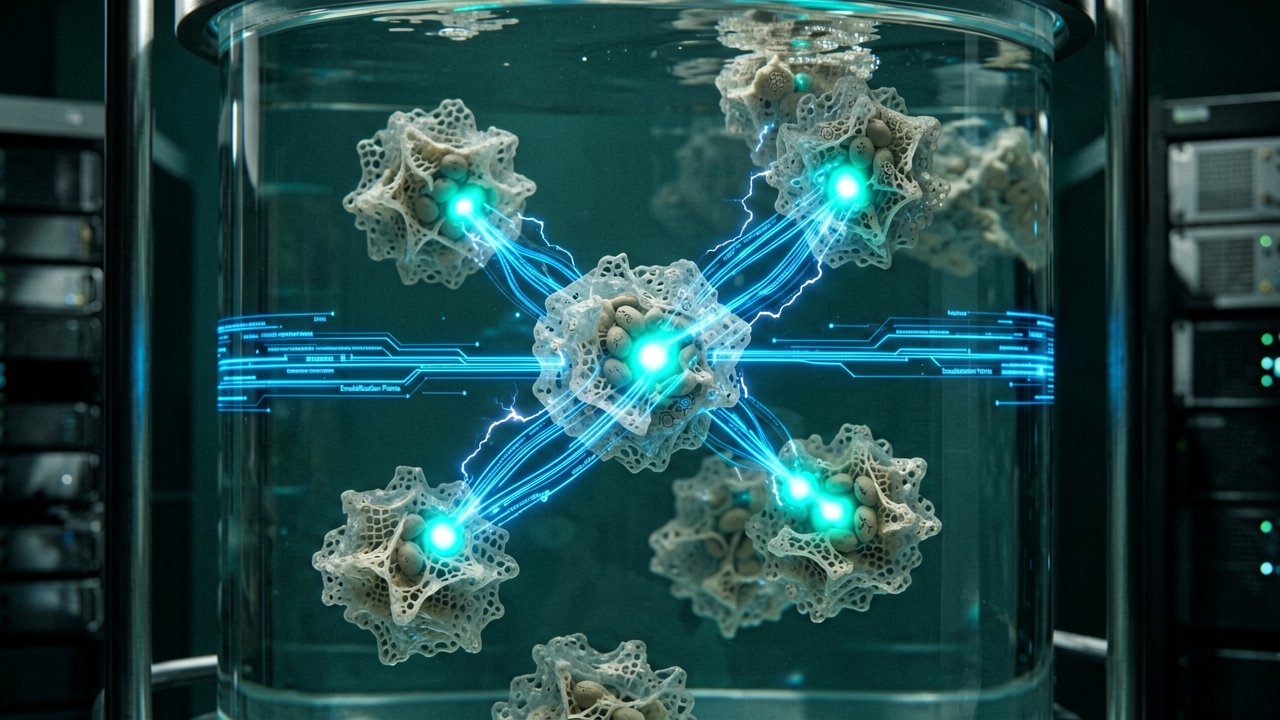
We’ve spent the last few years obsessing over silicon-based brains, but the most disruptive "AI" might actually be sizzling in a frying pan right now. While Large Language Models were busy learning how to write poetry, a group of food scientists and Silicon Valley renegades was teaching machines to do something far more practical: decode the molecular biology of the chicken egg. The result isn't just a "fake" egg; it’s a high-tech overhaul of an ingredient that has remained unchanged since the dawn of agriculture. If you think ChatGPT changed how you work, wait until you see how machine learning is changing how you brunch.
The tech industry’s pivot to the pantry makes perfect sense. Traditional egg production is, from an engineering standpoint, incredibly inefficient. You have to feed a bird massive amounts of soy and corn just to get a tiny fraction of that energy back in protein form. According to Eat Just, their plant-based alternative uses roughly 98% less water and 93% less land than conventional egg farming. By treating the egg not as a biological given, but as a series of functional challenges—emulsification, aeration, and coagulation—startups are using databases like "Orchard" to scan hundreds of thousands of plant species for the perfect molecular match. It turns out the humble mung bean was holding the secret to the perfect scramble all along.
What Most Reports Miss: The Algorithm in the Kitchen
Behind the Scenes: The evolution of the artificial egg wasn't sparked by a chef’s intuition, but by a massive data-mining operation that would look more at home in a pharmaceutical lab than a test kitchen. Early pioneers like Josh Tetrick and the team at Hampton Creek (now Eat Just) didn't just play with recipes; they built an automated screening platform to analyze the molecular properties of over 390,000 plant species. They were hunting for "functional" proteins—the specific bits of biology that make an egg white stiffen into a meringue or a yolk bind oil and vinegar into mayo. According to reports from CNBC, it took nearly five years of R&D and hundreds of millions in funding from the likes of Bill Gates to finally "crack" the code on a scramble that didn't just taste like beans.
The tension in the industry isn't just about taste; it’s a full-blown battle over the definition of food. While tech journalists often focus on the "cool factor" of mung bean isolates, the traditional poultry industry has been anything but welcoming. The American Egg Board once saw these startups as such a threat that they were caught in a lobbying scandal attempting to block "Just Mayo" from retail shelves. This cultural friction highlights a significant shift in consumer sentiment. Younger, urban buyers are increasingly prioritizing animal welfare and pandemic resilience over traditional farming methods. As notes, the recurring volatility of avian flu outbreaks makes the steady, lab-controlled price of plant proteins look like a safer bet for the global supply chain.

However, the "Uncanny Valley" of food remains a formidable hurdle. Tech veterans know that "almost right" can be worse than "totally different," and the same applies to your breakfast. Early iterations of artificial eggs were criticized for being too salty or lacking the complex sulfurous aroma of the real thing. Today, the focus has shifted from mere replication to optimization. Food tech firms are now using precision fermentation and machine learning to "bio-identicalize" the experience. They aren't just making a substitute; they are engineering a superior ingredient that is cholesterol-free and significantly more shelf-stable than anything a hen could produce. For the tech-savvy consumer, the appeal isn't just the lack of a shell—it's the promise of a smarter, more resilient protein.
Looking ahead, the goal for these "artificial" pioneers is price parity with the cheapest battery-cage eggs. Historically, being the ethical choice meant being the expensive choice, but the math is changing. As the cost of software and automated processing drops, the cost of feeding and housing millions of living creatures only goes up. Stakeholders in the food-tech space argue that within the next decade, we won't be calling these "fake eggs" any more than we call a smartphone an "artificial letter." They will simply be the most efficient way to deliver the protein we crave. The infrastructure of our dinner plate is being rewritten, one line of code—and one mung bean—at a time.
We’ve spent the last few years obsessing over silicon-based brains, but the most disruptive "AI" might actually be sizzling in a frying pan right now. While Large Language Models were busy learning how to write poetry, a group of food scientists and Silicon Valley renegades was teaching machines to do something far more practical: decode the molecular biology of the chicken egg. The result isn't just a "fake" egg; it’s a high-tech overhaul of an ingredient that has remained unchanged since the dawn of agriculture. If you think ChatGPT changed how you work, wait until you see how machine learning is changing how you brunch.
The tech industry’s pivot to the pantry makes perfect sense. Traditional egg production is, from an engineering standpoint, incredibly inefficient. You have to feed a bird massive amounts of soy and corn just to get a tiny fraction of that energy back in protein form. According to Eat Just, their plant-based alternative uses roughly 98% less water and 93% less land than conventional egg farming. By treating the egg not as a biological given, but as a series of functional challenges—emulsification, aeration, and coagulation—startups are using databases like "Orchard" to scan hundreds of thousands of plant species for the perfect molecular match. It turns out the humble mung bean was holding the secret to the perfect scramble all along.

What Most Reports Miss: The Algorithm in the Kitchen
Behind the Scenes: The evolution of the artificial egg wasn't sparked by a chef’s intuition, but by a massive data-mining operation that would look more at home in a pharmaceutical lab than a test kitchen. Early pioneers like Josh Tetrick and the team at Hampton Creek (now Eat Just) didn't just play with recipes; they built an automated screening platform to analyze the molecular properties of over 390,000 plant species. They were hunting for "functional" proteins—the specific bits of biology that make an egg white stiffen into a meringue or a yolk bind oil and vinegar into mayo. According to reports from CNBC, it took nearly five years of R&D and hundreds of millions in funding from the likes of Bill Gates to finally "crack" the code on a scramble that didn't just taste like beans.
The tension in the industry isn't just about taste; it’s a full-blown battle over the definition of food. While tech journalists often focus on the "cool factor" of mung bean isolates, the traditional poultry industry has been anything but welcoming. The American Egg Board once saw these startups as such a threat that they were caught in a lobbying scandal attempting to block "Just Mayo" from retail shelves. This cultural friction highlights a significant shift in consumer sentiment. Younger, urban buyers are increasingly prioritizing animal welfare and pandemic resilience over traditional farming methods. As Plant Based Foods Association notes, the recurring volatility of avian flu outbreaks makes the steady, lab-controlled price of plant proteins look like a safer bet for the global supply chain.
However, the "Uncanny Valley" of food remains a formidable hurdle. Tech veterans know that "almost right" can be worse than "totally different," and the same applies to your breakfast. Early iterations of artificial eggs were criticized for being too salty or lacking the complex sulfurous aroma of the real thing. Today, the focus has shifted from mere replication to optimization. Food tech firms are now using precision fermentation and machine learning to "bio-identicalize" the experience. They aren't just making a substitute; they are engineering a superior ingredient that is cholesterol-free and significantly more shelf-stable than anything a hen could produce. For the tech-savvy consumer, the appeal isn't just the lack of a shell—it's the promise of a smarter, more resilient protein.
Reading Between the Lines: The Silicon Valley Diet
Reading Between the Lines: There is a certain irony in the fact that we are using the world's most advanced computing power to replicate something a bird does by accident while looking for worms. The narrative arc of the "artificial egg" follows the classic venture capital playbook: find a trillion-dollar industry that hasn't changed since the 19th century, label it "broken," and propose a software-defined solution. But while the environmental stats are impressive, the industry conveniently glosses over the "ultra-processed" label that plagues these products. We are essentially trading a biological black box—the chicken—for a technological one, where the list of stabilizers and isolates required to mimic a yolk is long enough to require its own glossary.
The projection that these products will achieve price parity often relies on a "Moore’s Law for Food" that hasn't quite materialized yet. Unlike software, which scales with negligible marginal costs, physical food production still requires massive stainless steel bioreactors and complex logistics. Critics point out that despite the hype, many plant-based startups have struggled with the reality that human taste buds are far more conservative than their LinkedIn profiles might suggest. We might say we want to save the planet, but history shows we rarely choose the planet over a texture that feels slightly like rubberized mung bean paste.
Furthermore, the long-term implications of "precision fermentation" and machine-designed proteins introduce a new kind of centralization into our food system. If the "source code" for the perfect egg is patented by a handful of firms in San Francisco or Tel Aviv, we aren't just innovating; we are shifting the power from farmers to IP lawyers. The promise of food security through technology is compelling, but it assumes that a proprietary algorithm is more reliable than a decentralized network of farms. As we move closer to a world where our omelets are "v0.8 Beta," we should probably consider whether we are actually fixing the food chain or just making it more prone to a software crash.
It’s a truly modern miracle: we’ve spent billions to develop an algorithm that can perfectly simulate the taste of a chicken, yet we still haven't figured out how to stop the "Apply Update" notification from ruining our morning toast.
Artūras Malašauskas is an AI Systems Integrator with 20+ years of production-grade web engineering experience. He has designed, shipped, and scaled enterprise Python/PHP systems for logistics, SaaS, and public-sector clients. For the past year, he has focused exclusively on AI integrations: deploying open-source LLMs, building generative media pipelines (image, audio, video), and engineering multi-agent workflows for real production environments. His standard: reproducibility, security, cost-efficient inference—no vaporware. He documents and evaluates emerging AI tooling, separating verified capabilities from marketing noise. Technical editor at: muza-ai.eu, ai-verslas.lt, ai-naujinos.lt Connect on LinkedIn
Comments