The Class of 2026 Isn’t Buying Your AI Optimism
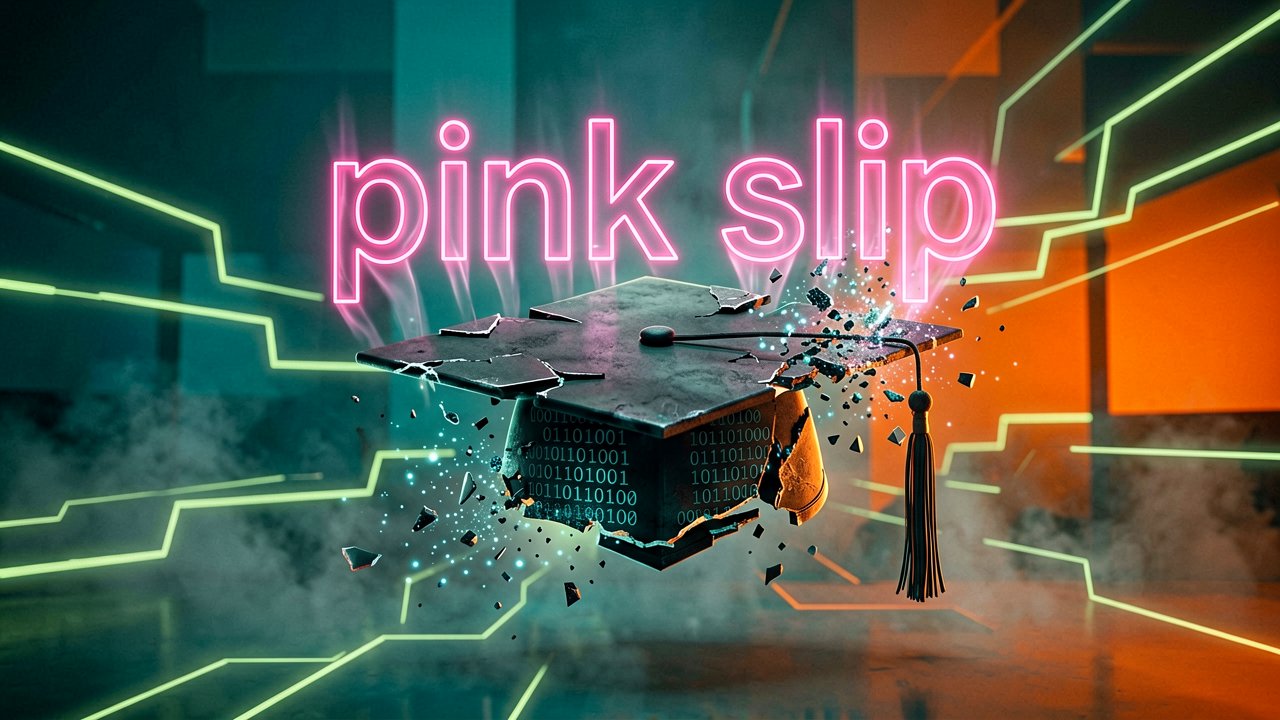
There’s a specific kind of silence that usually settles over a football stadium during a commencement speech—a polite, slightly bored hush as graduates wait for the inevitable "climb every mountain" platitude. But this year, that silence has been replaced by a chorus of boos. From the University of Arizona to Central Florida, the tech world’s favorite buzzword has become the quickest way to lose a crowd. It turns out that when you tell a room full of debt-laden 22-year-olds that their future is being "disrupted" by algorithms, they don’t see a rocket ship; they see a pink slip.
The backlash isn't just about a few hecklers in the back row. We’re seeing a profound disconnect between the high-flying executives at the podium and the students sitting in the folding chairs. At the Washington Post, reports highlight how former Google CEO Eric Schmidt was drowned out by jeers at the University of Arizona when he tried to pitch AI as a tool that would touch "every person and every relationship." To a generation that has spent four years being told by their professors that using ChatGPT is a terminable offense, hearing a billionaire praise it as the ultimate career hack feels less like advice and more like a cruel joke.
The "Industrial Revolution" That Nobody Asked For
One of the most viral moments of this season came from the University of Central Florida, where real estate executive Gloria Caulfield called AI the "next Industrial Revolution." The response was immediate and visceral. Students didn't just boo; they cheered when she mentioned that AI wasn't a factor in their lives just a few years ago. According to CBS News, this sentiment is backed by a grim reality: the unemployment rate for 20- to 24-year-olds has ticked up to 7.6%, while job listings increasingly demand "AI collaboration"—a term many graduates find baffling after years of academic bans on the technology.
Anxiety in the Front Row
It’s easy for speakers to dismiss this as Gen Z being "sensitive," but the numbers tell a different story of rational anxiety. A 2025 poll by the Harvard Kennedy School’s Institute of Politics found that 70% of college students view AI as a direct threat to their job prospects. When speakers like music executive Scott Borchetta tell graduates to "deal with it" regarding AI's role in the industry, they’re ignoring the fact that entry-level roles—the very ones these students are chasing—are the first on the automation chopping block. As noted by Tom's Hardware, the tech industry itself laid off nearly 80,000 employees in just the first quarter of 2026, making the "pep talk" feel more like a eulogy for the traditional career path.
The Great Disconnect: Why the Podium is Losing the Field
What Most Reports Miss: The friction in these stadium seats isn't born from a fear of robots; it’s a reaction to the staggering hypocrisy of the messenger. For four years, these students have operated under an academic regime where an AI-generated paragraph could trigger an immediate ethics board hearing or an "F" grade. Now, they are being told by the very architects of those systems that their degree is merely a preamble to a life of subservience to the machine. It’s a classic case of cognitive dissonance where the rules of the classroom are being flipped on their head the moment the diploma is signed, leaving graduates feeling like they’ve been trained for a world that the speakers at the podium are actively dismantling.
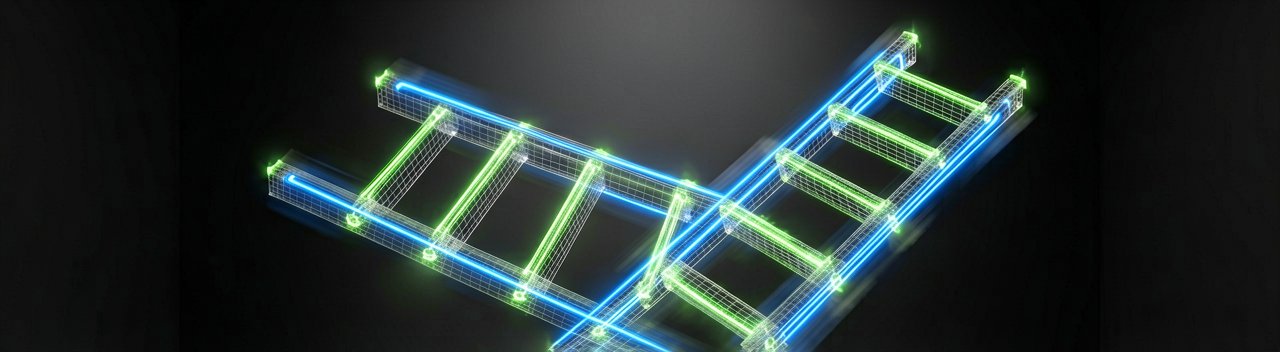
The historical context here is impossible to ignore. Every generation faces a "disruptor," from the steam engine to the internet, but those shifts typically promised a liberation of human labor or a massive expansion of new industries. The current AI pitch, however, feels suspiciously like a zero-sum game. When executives talk about "efficiency," students hear "redundancy." The traditional entry-level ladder—the grunt work of junior analysts, copywriters, and coders—is being eroded. For a student who has just spent six figures on an education, hearing that their hard-won skills are now a "legacy feature" of the human brain is a bitter pill to swallow.
Stakeholders in the tech sector often argue that AI will create more jobs than it destroys, but they rarely specify who those jobs are for. Industry veterans like Eric Schmidt view the technology through the lens of global productivity and geopolitical competition, where the "boo" from a few thousand students is just noise in the machine. But for the graduate, the perspective is granular. They see the job boards filling up with "AI Whisperer" roles that didn't exist six months ago, while the stable, predictable career paths their parents followed are vanishing in real-time. This is a crisis of identity as much as it is an economic one.
There is also a growing resentment toward the "adapt or die" rhetoric that has become the standard commencement trope. When speakers tell graduates to "embrace the change," they are often speaking from a position of insulated wealth. These are the same leaders who have already cashed out or secured their place in the new hierarchy. The students, meanwhile, are entering a market where the "entry-level" bar has been raised to include mastery of tools that were in beta testing when they were freshmen. The boos are a collective refusal to accept that their human effort is already outdated.

Ultimately, these ceremonies are supposed to be a celebration of human achievement, yet they have been hijacked by a sales pitch for a technology that many feel devalues that very achievement. By focusing on the "miracles" of generative models, speakers are inadvertently telling graduates that their personal growth, their late-night study sessions, and their unique creative voices are secondary to a statistical probability engine. The backlash is a demand for a different narrative—one that places the person, not the processor, at the center of the future.
The Myth of the Seamless Pivot
Reading Between the Lines: There is a persistent, almost religious assumption among the Silicon Valley elite that every worker can simply "re-skill" into an AI supervisor overnight. This narrative conveniently ignores the reality of human capital. We are witnessing a fundamental contradiction where the tech industry demands "human-centric" design while simultaneously advocating for the removal of the humans who understand the nuances of the crafts being automated. The assumption that a junior architect or a paralegal can find equal fulfillment—or equal pay—as a "prompt engineer" is a fantasy designed to soothe investors rather than support a workforce.
The skepticism from the graduation stands is a measured response to the projection of a "frictionless" future. History shows that rapid technological shifts don't just shift job titles; they widen the gap between those who own the infrastructure and those who operate it. By positioning AI as an inevitable weather pattern rather than a series of corporate choices, commencement speakers are attempting to absolve themselves of the responsibility for the disruption they’ve funded. The implication is clear: the graduates are expected to be the shock absorbers for a transition they didn't vote for and won't necessarily profit from.
Furthermore, the long-term implications for institutional knowledge are grim. If entry-level roles are automated away, we lose the "apprenticeship phase" of professional development. The senior experts of today learned by doing the very tasks they are now assigning to bots. By removing the bottom rungs of the career ladder, the tech industry is effectively burning the bridge to future expertise. Graduates recognize this irony; they are being asked to cheer for the destruction of the training grounds that would have eventually allowed them to become the leaders currently lecturing them from the podium.
There is also the matter of "techno-gaslighting." When a speaker tells a group of liberal arts or engineering majors that their years of rigorous study are now simply a "foundation for AI collaboration," they are devaluing the intrinsic worth of the effort. This measured skepticism isn't a rejection of progress, but a rejection of a specific type of progress that treats human labor as a bug to be patched out. The chorus of boos suggests that the upcoming workforce is far more attuned to the nuances of corporate theater than the executives realize.
In the end, the pushback we’re seeing at commencements might be the first real sign of a organized, generational resistance to the "efficiency-at-all-costs" mindset. These students are the first to grow up in a world where their every digital move was monetized; they are uniquely equipped to spot when they are being sold a bill of goods. If the tech industry continues to ignore this friction, it risks losing not just the goodwill of the next generation, but the very talent it needs to keep the "revolution" from stalling out.
It’s a bit rich to spend four years learning how to think, only to be told at the finish line that a server farm in Oregon can do it better—and then being expected to clap for the server farm.
Artūras Malašauskas is an AI Systems Integrator with 20+ years of production-grade web engineering experience. He has designed, shipped, and scaled enterprise Python/PHP systems for logistics, SaaS, and public-sector clients. For the past year, he has focused exclusively on AI integrations: deploying open-source LLMs, building generative media pipelines (image, audio, video), and engineering multi-agent workflows for real production environments. His standard: reproducibility, security, cost-efficient inference—no vaporware. He documents and evaluates emerging AI tooling, separating verified capabilities from marketing noise. Technical editor at: muza-ai.eu, ai-verslas.lt, ai-naujinos.lt Connect on LinkedIn
Comments