Starvester: The Solo-Dev Space Factory Epic Launching on Steam May 29
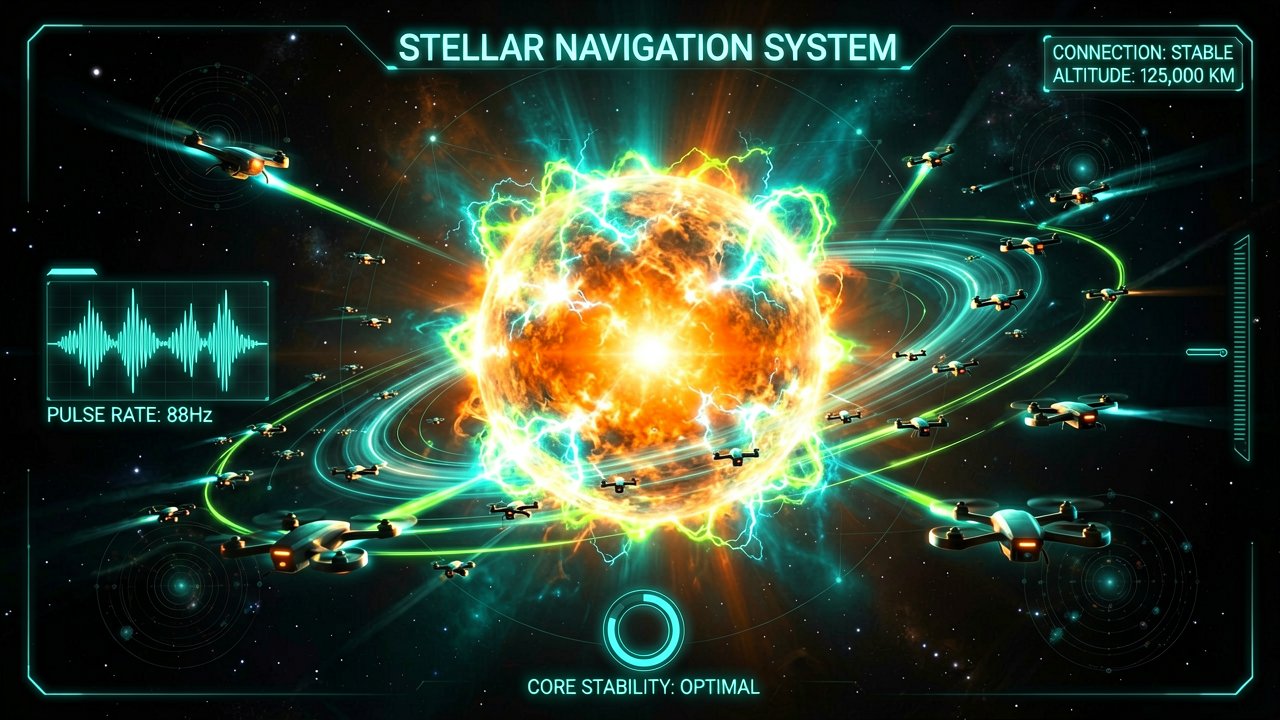
There’s something uniquely satisfying about watching a swarm of automated drones strip-mine a celestial body to fuel your growing interstellar empire. It’s even more impressive when that entire clockwork universe was built by just one person. Starvester, a highly anticipated incremental factory game from solo developer Syphono4, is officially landing on Steam on May 29, 2026. The game has already carved out a significant niche for itself, racking up over 50,000 wishlists from players eager to turn the vacuum of space into a productive assembly line.
While the factory-builder genre often feels like a full-time job of balancing spreadsheets, Starvester leans into a more focused, "incremental" experience. Instead of an endless, open-ended grind that swallows your social life, it offers a self-contained campaign designed to be completed in about five hours. This isn't just about clicking buttons to make numbers go up; you'll be managing resource gathering, deploying massive drone swarms, and eventually harvesting the raw energy of stars to construct colossal megastructures. It’s a tight, handcrafted loop that respects your time while still providing that "just one more upgrade" itch that defines the best indie gems.
Handcrafted Design in an AI Era
In a landscape where generative tools are becoming increasingly common, Syphono4 has taken a firm stance by confirming that no AI was used in the development of Starvester. According to reporting from , this "handcrafted" approach is a point of pride for the developer and a growing selling point for players who value human-led creative vision. The game’s mesmerizing drone animations and relaxing soundscapes are specifically tuned to put players into a meditative "flow state," making the expansion of your star-system-wide factory feel more like a zen garden than a chaotic industrial site.
A Partnership for Success
Solo development is a grueling marathon, but Syphono4 hasn’t been entirely alone in the final sprint. The project is being supported by Future Friends Games, a publisher known for spotting high-quality indie titles like Exo One and Laysara: Summit Kingdom. This partnership has helped Starvester reach a massive audience, with its demo frequently trending across social platforms. Between the polished prestige systems and the unique mechanics that prevent the gameplay from becoming stale, it’s clear that this space-faring factory sim is ready for its big moment later this month.
The Solo-Dev Grind: What Most Reports Miss
The true cost of a wishlist: While the headline figure of 50,000 wishlists suggests an easy path to viral success, the reality of Syphono4’s journey is rooted in a grueling multi-year development cycle that almost didn't make it to the finish line. In an industry increasingly dominated by massive teams and procedural generation, carving out a bespoke space-sim experience as a solo operator requires more than just coding skill; it demands a level of community management and transparency that most developers find exhausting. The sheer volume of pre-launch interest is actually a double-edged sword, placing immense pressure on a single pair of hands to deliver a bug-free experience for a launch day crowd larger than the capacity of many professional football stadiums.
Strategic positioning has been the secret sauce behind Starvester’s rise. By leaning into the "incremental" label rather than competing directly with the infinite-scale logistics of heavyweights like Factorio or Dyson Sphere Program, Syphono4 tapped into a specific demographic of "time-poor" gamers. These players crave the satisfaction of industrial mastery but lack the 100-hour window typically required to see a project through to the end. This intentional "five-hour campaign" design choice wasn't just a technical limitation; it was a savvy editorial decision to respect player schedules, turning what could be perceived as a lack of content into a premium, focused feature.
The "No AI" pledge mentioned by Yahoo Tech isn't just a marketing gimmick—it’s a response to a growing cultural rift within the indie dev community. As Valve updates its Steam policies to require disclosure of AI-generated assets, developers who stick to traditional craftsmanship are finding that their "human-made" status acts as a mark of quality. For Starvester, this means every drone flight path and every star’s glow was tuned by a person, a detail that resonates with a core audience that values the specific "soul" and artistic intent that can get lost in algorithmic generation.
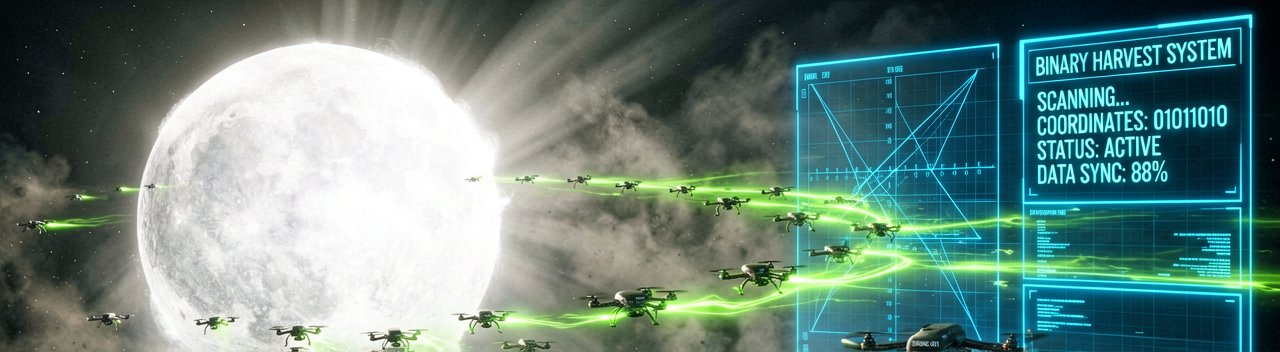
From a stakeholder perspective, the involvement of Future Friends Games provides the structural backbone that solo devs usually lack. Most one-person projects die in the "marketing void" where great games go unnoticed because the creator is too busy fixing code to write press releases. By handling the logistical heavy lifting, the publisher has allowed Syphono4 to focus entirely on the game’s "juice"—those small, tactile interactions like the way a star visibly dims as you harvest its energy. This division of labor is becoming the new gold standard for solo-dev success stories, balancing individual creativity with professional-grade outreach.

The historical context of the "factory" genre also plays a role here. We are currently seeing a shift away from complexity for complexity’s sake toward aesthetic-driven automation. Starvester represents the "Cozy-Industrial" subgenre, where the goal isn't just efficiency, but the beauty of the system itself. This shift mirrors the evolution of puzzle games a decade ago, moving from frustrating brain-teasers to atmospheric experiences. By prioritizing the visual payoff of massive megastructures, Syphono4 has ensured that his game feels like a reward for the player’s time rather than a series of chores to be optimized.
Ultimately, the May 29 launch is more than just a release date; it is a litmus test for the viability of the "compact epic." If Starvester converts its massive wishlist count into strong day-one sales, it will prove that there is a significant, underserved market for high-quality, short-form automation games. As the clock ticks down to launch, the indie scene is watching closely to see if this solo-dev gamble on brevity and craftsmanship pays off in an era of endless live-service distractions.
The Efficiency Paradox: Scaling Down the Infinite
Reading Between the Lines: The "compact epic" branding of Starvester presents a fascinating contradiction that challenges the very foundation of the automation genre. Traditionally, factory builders thrive on the promise of infinite expansion and the "forever game" model, where the player’s investment is measured in hundreds of hours. By intentionally capping the experience at a five-hour campaign, Syphono4 is making a risky bet that players will accept a ceiling on their productivity. There is a non-trivial chance that the hardcore logistics crowd, conditioned by the endless loops of industry titans, may find the sudden arrival of an endgame jarring rather than refreshing.
There is also the matter of the "Solo-Dev" narrative, which the gaming press often romanticizes as a pure heroic struggle. While the lack of AI assets is a commendable commitment to craft, it inherently limits the game’s ability to pivot or expand post-launch if the community demands more content. In a market where 50,000 wishlists can quickly turn into a mountain of "needs more content" Steam reviews, the decision to remain a one-person operation becomes a bottleneck. The pragmatic reality is that human-made polish takes time that a viral success story rarely affords, leaving a narrow window for the developer to capitalize on initial momentum before the hive mind moves on to the next shiny simulation.
Furthermore, the partnership with Future Friends Games suggests a shift in how "indie" these solo projects truly are. While the code is the work of one mind, the visibility is the result of a professional machine. This hybrid model—solo creation backed by institutional marketing—creates a high-pressure environment where the game must perform like a AA title despite its modest scope. If Starvester fails to satisfy the itch for complex optimization within its short runtime, it may inadvertently highlight the limitations of the "Cozy-Industrial" niche rather than validating it as a sustainable new subgenre.
Projecting forward, the success of Starvester could trigger a wave of "micro-factories," encouraging other developers to trim the fat off notoriously bloated genres. This would be a welcome relief for the aging gamer demographic, yet it risks devaluing the perceived price-to-hour ratio that still dominates much of the Steam ecosystem’s discourse. Skeptics will be watching to see if the audience values the quality of the five hours enough to justify the entry price, or if the "short and sweet" approach is seen as a lack of depth in a genre defined by its complexity.
Ultimately, the May 29 launch serves as a trial for the minimalist movement in space simulation. By stripping away the requirement for a second monitor and a degree in supply chain management, Starvester is either the future of accessible automation or a beautiful curiosity that players will finish in an afternoon and never touch again. The tension between its massive pre-launch hype and its modest mechanical footprint remains the most compelling variable in its journey to the digital shelf.
Building a galactic empire in five hours is the ultimate time-management flex; it’s just enough time to realize you’ve automated your way to total obsolescence without having to endure the mid-life crisis that usually follows.
Artūras Malašauskas is an AI Systems Integrator with 20+ years of production-grade web engineering experience. He has designed, shipped, and scaled enterprise Python/PHP systems for logistics, SaaS, and public-sector clients. For the past year, he has focused exclusively on AI integrations: deploying open-source LLMs, building generative media pipelines (image, audio, video), and engineering multi-agent workflows for real production environments. His standard: reproducibility, security, cost-efficient inference—no vaporware. He documents and evaluates emerging AI tooling, separating verified capabilities from marketing noise. Technical editor at: muza-ai.eu, ai-verslas.lt, ai-naujinos.lt Connect on LinkedIn
Comments