The End of AI Hallucinations? HERE Grounds Agents in Real-World Physics
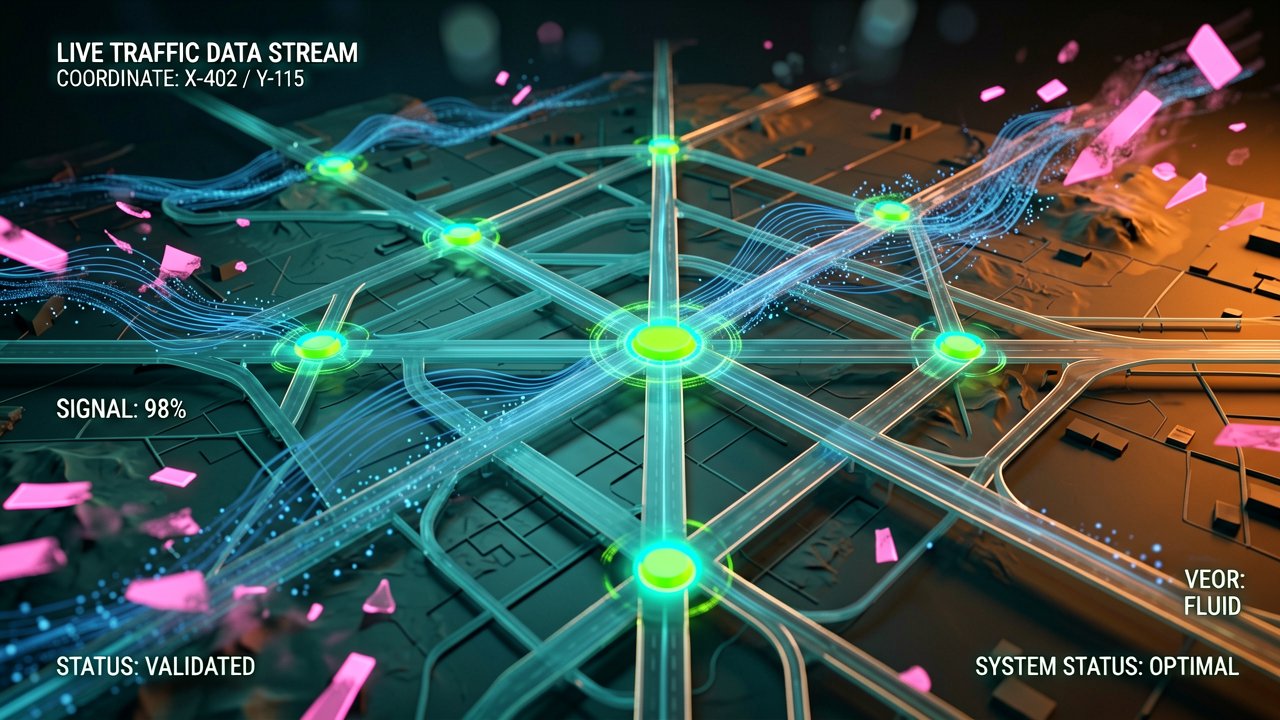
For all their linguistic flair, large language models (LLMs) have a glaring blind spot: they don't actually understand the physical world. Ask a bot to find a coffee shop, and it might confidently direct you to a closed establishment or a route blocked by roadwork. HERE Technologies is aiming to fix this fundamental disconnect with the launch of its Location Reasoning solution, a new execution layer designed to offload spatial computation from probabilistic models to a deterministic mapping engine.
The tech essentially acts as a "reality check" for AI agents. Instead of letting an LLM guess a destination's coordinates or predict travel times based on training data that might be years old, Location Reasoning converts these queries into structured execution flows. It taps into HERE’s massive repository of live traffic, road attributes, and network conditions to provide answers that aren't just likely, but accurate. It’s a shift from "what sounds right" to "what is physically possible," ensuring that an automated fleet or a virtual assistant doesn't suffer from the "geo-hallucinations" that have plagued earlier AI deployments.
Building the Spatial Reasoning Layer
This isn't just about adding a map plugin; it's about providing a governed execution layer that handles high-stakes decisions. For industries like logistics and field services, the stakes of an AI error are measured in missed deliveries and wasted fuel. By grounding AI in HERE’s enterprise-grade map data—which covers 68 million kilometers of roads—the system allows agents to handle complex scenarios, such as finding an EV charger reachable within five minutes or verifying if a pharmacy is still open by the time a driver arrives in current traffic. The result is a more reliable, low-latency, and cost-effective way to build production-ready agentic AI.
What most reports miss is that we are currently witnessing a pivot from the "creative" phase of AI to the "operational" phase. For years, the tech industry marveled at LLMs that could write poetry or code, but those same models frequently fail at the basic arithmetic of the physical world. A model might know the address of a warehouse, but it rarely understands that a five-ton truck cannot make a specific U-turn on a narrow street during peak hours. This gap between digital knowledge and physical reality is precisely where HERE Technologies is positioning itself, turning the map from a visual aid into a logic engine.

From a technical standpoint, this solution addresses "spatial hallucinations"—instances where AI models assign nonexistent relations to physical regions. While a standard AI might "hallucinate" a bridge because it's a likely feature in a certain terrain, HERE’s Location Reasoning forces the system to rely on a deterministic database. By offloading these calculations, developers can reduce token consumption and latency, making AI agents far cheaper to run at scale. This is a critical move as we transition toward "agentic AI," where bots don't just chat but actually book appointments, dispatch technicians, and manage supply chains autonomously.
The historical context here is worth noting. HERE has been building its digital representation of the world since the mid-1980s, long before AI was a household term. While Silicon Valley was focused on indexing the web, companies like HERE were indexing the pavement. This deep-stack expertise is now becoming the "missing execution layer" that modern AI desperately needs. By providing a governed, private-by-design environment, the platform allows enterprises to deploy AI without the risk of sharing sensitive query history or user identity data with third-party model providers.
Stakeholders in the automotive and logistics sectors are particularly keen on this "grounding" approach. As software-defined vehicles (SDVs) become more common, the car's cockpit is turning into a sophisticated AI assistant. If that assistant hallucinates a parking spot or an available charger, it doesn't just frustrate the user; it erodes the trust necessary for future autonomous features. HERE’s strategy leverages its pole position in the Counterpoint Research Location Platform Index to ensure that when an AI makes a spatial claim, it is backed by 238 million vehicles worth of real-world signals.
Ultimately, the release of Location Reasoning signals a maturation of the AI industry. We are moving away from monolithic models that try to do everything and toward specialized, modular architectures where the LLM handles language and a specialized engine handles the "hard" data. This modularity is what will allow AI to finally leave the screen and enter the street with confidence.
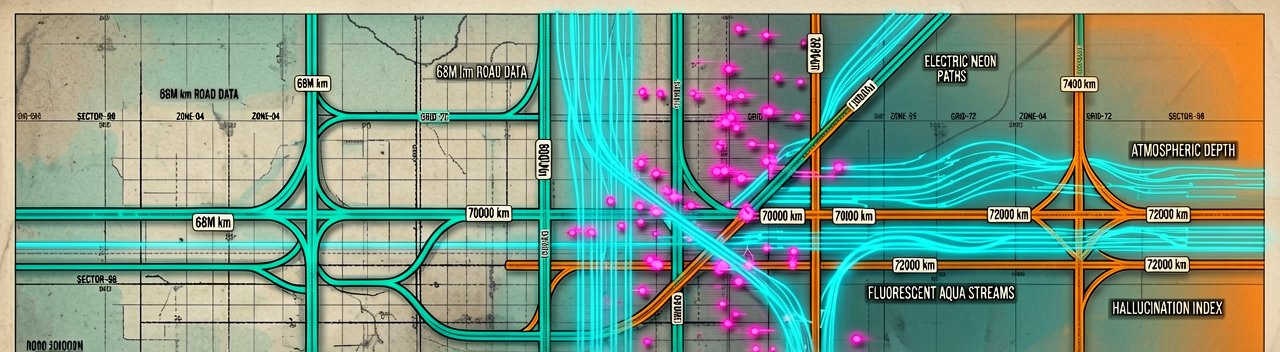
For all their linguistic flair, large language models (LLMs) have a glaring blind spot: they don't actually understand the physical world. Ask a bot to find a coffee shop, and it might confidently direct you to a closed establishment or a route blocked by roadwork. HERE Technologies is aiming to fix this fundamental disconnect with the launch of its Location Reasoning solution, a new execution layer designed to offload spatial computation from probabilistic models to a deterministic mapping engine.
The tech essentially acts as a "reality check" for AI agents. Instead of letting an LLM guess a destination's coordinates or predict travel times based on training data that might be years old, Location Reasoning converts these queries into structured execution flows. It taps into HERE’s massive repository of live traffic, road attributes, and network conditions to provide answers that aren't just likely, but accurate. It’s a shift from "what sounds right" to "what is physically possible," ensuring that an automated fleet or a virtual assistant doesn't suffer from the "geo-hallucinations" that have plagued earlier AI deployments.
Building the Spatial Reasoning Layer
This isn't just about adding a map plugin; it's about providing a governed execution layer that handles high-stakes decisions. For industries like logistics and field services, the stakes of an AI error are measured in missed deliveries and wasted fuel. By grounding AI in HERE’s enterprise-grade map data—which covers 68 million kilometers of roads—the system allows agents to handle complex scenarios, such as finding an EV charger reachable within five minutes or verifying if a pharmacy is still open by the time a driver arrives in current traffic. The result is a more reliable, low-latency, and cost-effective way to build production-ready agentic AI.
What most reports miss is that we are currently witnessing a pivot from the "creative" phase of AI to the "operational" phase. For years, the tech industry marveled at LLMs that could write poetry or code, but those same models frequently fail at the basic arithmetic of the physical world. A model might know the address of a warehouse, but it rarely understands that a five-ton truck cannot make a specific U-turn on a narrow street during peak hours. This gap between digital knowledge and physical reality is precisely where HERE Technologies is positioning itself, turning the map from a visual aid into a logic engine.
From a technical standpoint, this solution addresses "spatial hallucinations"—instances where AI models assign nonexistent relations to physical regions. While a standard AI might "hallucinate" a bridge because it's a likely feature in a certain terrain, HERE’s Location Reasoning forces the system to rely on a deterministic database. By offloading these calculations, developers can reduce token consumption and latency, making AI agents far cheaper to run at scale. This is a critical move as we transition toward "agentic AI," where bots don't just chat but actually book appointments, dispatch technicians, and manage supply chains autonomously.
The historical context here is worth noting. HERE has been building its digital representation of the world since the mid-1980s, long before AI was a household term. While Silicon Valley was focused on indexing the web, companies like HERE were indexing the pavement. This deep-stack expertise is now becoming the "missing execution layer" that modern AI desperately needs. By providing a governed, private-by-design environment, the platform allows enterprises to deploy AI without the risk of sharing sensitive query history or user identity data with third-party model providers.
Stakeholders in the automotive and logistics sectors are particularly keen on this "grounding" approach. As software-defined vehicles (SDVs) become more common, the car's cockpit is turning into a sophisticated AI assistant. If that assistant hallucinates a parking spot or an available charger, it doesn't just frustrate the user; it erodes the trust necessary for future autonomous features. HERE’s strategy leverages its pole position in the Counterpoint Research Location Platform Index to ensure that when an AI makes a spatial claim, it is backed by 238 million vehicles worth of real-world signals.
The Realities of the Execution Layer
Reading Between the Lines: While the narrative of "fixing hallucinations" is compelling, there is a distinct irony in using a deterministic database to save a probabilistic model from itself. We are effectively building a world where the AI is the charismatic front-of-house manager who knows how to talk, but the map engine is the overworked chef in the back actually doing the math. This creates a dependency loop: the AI is only as smart as the data API it can call, and if the integration between the two isn't seamless, the "reasoning" becomes a bottleneck rather than a breakthrough.
There is also the question of data latency versus model speed. AI agents are celebrated for their near-instantaneous (if often wrong) responses, whereas high-fidelity geospatial data requires constant refreshing to reflect the chaos of the real world. If HERE’s Location Reasoning promises to prevent a truck from hitting a low bridge, it must ensure its data updates are faster than the AI's decision-making cycle. The industry has a history of over-promising on "real-time" accuracy, and the friction between a static map and a dynamic road remains a hurdle that clever software can only partially mitigate.
Furthermore, this move highlights the growing "balkanization" of AI intelligence. Rather than one "God Model" that understands everything, we are moving toward a fragmented ecosystem where location is handled by HERE, finance by another specialist, and medical data by a third. For the developer, this means managing a sprawling web of permissions and APIs. It suggests that the future of AI isn't a single brilliant mind, but a committee of specialists constantly checking each other's work to ensure no one accidentally suggests driving into a lake.
"We’ve spent billions making AI sound like a human, only to realize that humans are actually terrible at directions; it seems the ultimate peak of computer science is building a machine that finally refuses to argue with the GPS."
Artūras Malašauskas is an AI Systems Integrator with 20+ years of production-grade web engineering experience. He has designed, shipped, and scaled enterprise Python/PHP systems for logistics, SaaS, and public-sector clients. For the past year, he has focused exclusively on AI integrations: deploying open-source LLMs, building generative media pipelines (image, audio, video), and engineering multi-agent workflows for real production environments. His standard: reproducibility, security, cost-efficient inference—no vaporware. He documents and evaluates emerging AI tooling, separating verified capabilities from marketing noise. Technical editor at: muza-ai.eu, ai-verslas.lt, ai-naujinos.lt Connect on LinkedIn
Comments