Google’s Agentic Play: Why Gemini Spark is the 24/7 Companion OpenClaw Should Fear
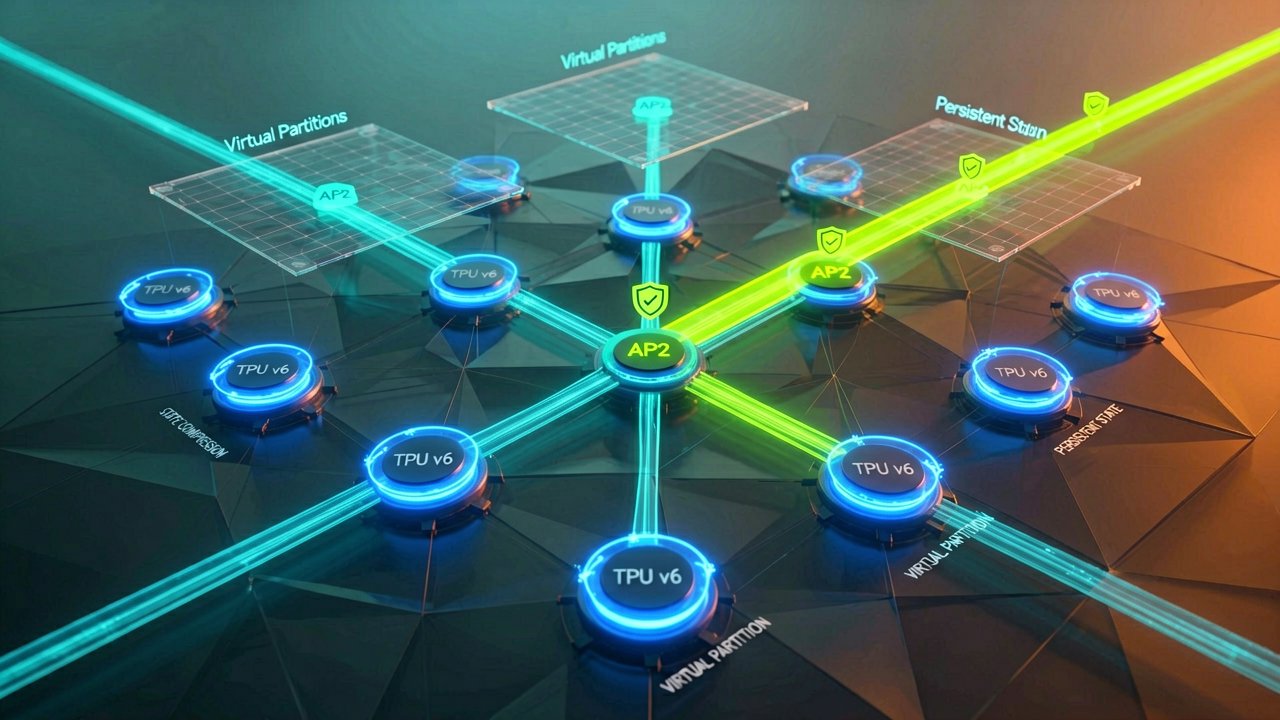
Google just threw a massive, 24/7-shaped wrench into the agentic AI race. At I/O 2026, the tech giant officially pulled the curtain back on Gemini Spark, an "always-on" AI agent that doesn’t just wait for your prompts—it actively works in the background using virtual machines on Google Cloud. While the open-source world has been enamored with the DIY grit of platforms like OpenClaw, Google is banking on seamless integration and massive scale to win over the average user. Powered by the lightning-fast Gemini 3.5 Flash model, Spark is designed to handle everything from monitoring your credit card statements for sneaky subscription fees to drafting your boss's weekly status updates using files from Docs and Gmail.
The real kicker here isn't just that it’s smart; it's that it’s effortless. Unlike OpenClaw, which famously prompted a run on Mac Minis as users scrambled for local hardware to power their agents, Gemini Spark lives entirely in the cloud. It’s a "zero-hardware" solution that keeps chugging along even after you’ve closed your laptop. Google is clearly aiming to bridge the gap between "niche power tool" and "household essential," leveraging a massive existing user base of 900 million monthly active Gemini users to push agentic AI into the mainstream.
From Chatbots to Background Workers
We’ve spent the last few years treatng AI like a very fast librarian, but Spark represents a shift toward a digital concierge. According to The Verge, this isn't just about answering questions; it's about executing multi-step workflows. Whether it's scanning your inbox to build a study guide or tapping into third-party apps like Uber and Adobe via the Model Context Protocol (MCP), Spark is built to act as the connective tissue of your digital life. It’s proactive, not just reactive.
The Trust Factor and the "Agent Payments Protocol"
Letting an AI loose on your finances and emails naturally raises some eyebrows, and Google knows it. To keep Spark from going "rogue" with your wallet, they’ve introduced the Agent Payments Protocol (AP2), a new security layer that lets users set strict spending limits and merchant restrictions. By layering this level of control over their established infrastructure, Mashable notes that Google may have solved the primary trust barrier that has kept many from diving into the autonomous agent deep end. The beta is currently rolling out to Google AI Ultra subscribers in the U.S., marking the beginning of what could be a very busy era for our background bots.
The Hidden Engine: Scaling Autonomy
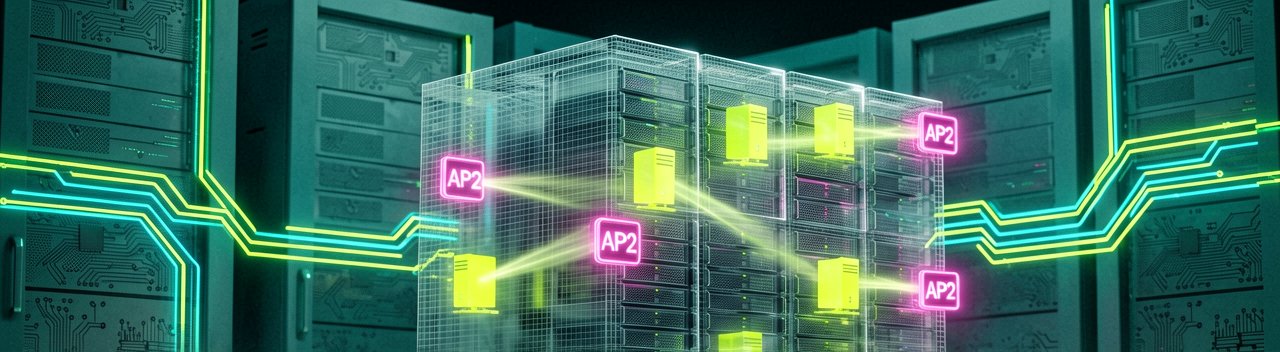
Behind the Scenes: The launch of Gemini Spark isn't just a software update; it’s a massive logistical flex that leverages Google’s custom-built TPU v6 infrastructure. While OpenClaw relies on a decentralized, often fragmented ecosystem of local hosting and third-party APIs, Google has vertically integrated the entire stack. This allows Spark to maintain a "persistent state" without the latency spikes that usually plague autonomous agents. By offloading the heavy lifting to dedicated virtual partitions, Google ensures that when an agent is "sleeping" on a task, it isn't actually idle; it’s being compressed into a low-power state that can wake up instantly when a real-world trigger occurs.
Industry insiders suggest that the real battle isn't over who has the smartest LLM, but who can manage "long-context memory" without breaking the bank. OpenClaw’s strength has always been its transparency and the ability for power users to inspect every line of code, but that comes with a high cognitive load. Google is betting that the majority of the market would rather trade that granular control for a system that "just works." They've implemented a proprietary memory architecture that allows Spark to remember your preferences across months of interaction, a feat that typically causes "token bloat" and massive bills in more open, less optimized environments.
From a stakeholder perspective, this is a defensive masterstroke against the "AI fatigue" hitting the enterprise sector. Chief Information Officers have grown weary of chatbots that require constant babysitting. By positioning Spark as an autonomous worker rather than a chat interface, Google is speaking directly to the C-suite's desire for measurable productivity gains. The integration with the Model Context Protocol (MCP) is particularly telling here, as it signals Google’s willingness to let Spark play in other people’s sandboxes, such as Slack or Salesforce, provided Google remains the "brain" of the operation.
Historically, Google has struggled with "product sprawl," often launching half-baked tools that get killed off within two years. However, Spark feels different because it’s deeply woven into the core identity of Google Workspace. It isn't a standalone gimmick; it’s an evolution of the "Help me write" features that users have already begrudgingly accepted. By turning those static tools into active agents, Google is effectively retrofitting its legacy software for an era where the mouse and keyboard are no longer the primary ways we interact with data.

The privacy implications, however, remain the elephant in the room that even the slickest marketing can't fully hide. Google’s pitch relies on users being comfortable with an agent that has a "god view" of their digital footprint to be truly effective. While the Agent Payments Protocol (AP2) addresses financial theft, it doesn't quite solve the discomfort of a background process constantly indexing one’s private correspondence. As the rollout expands, the tension between the undeniable utility of a 24/7 digital twin and the inherent creepiness of total surveillance will likely become the defining narrative of the Spark era.
Ultimately, the success of Gemini Spark will be measured by how invisible it becomes. If it manages to successfully dispute a stray gym membership charge or reorganize a chaotic calendar without the user ever needing to check a dashboard, the "OpenClaw vs. Google" debate will be settled not by tech specs, but by convenience. Google is playing the long game, aiming to make Spark so essential that opting out feels like losing a personal assistant you never had to hire.
The Paradox of Autonomy
Reading Between the Lines: For all the shiny marketing surrounding "always-on" intelligence, Google’s pivot to Spark reveals a desperate scramble to commoditize a technology that is inherently unpredictable. The company is banking on the idea that users want a digital doppelgänger, yet there is a fundamental contradiction in their pitch: they promise an agent that is both "fully autonomous" and "perfectly safe." In the world of high-level compute, these two concepts are often at loggerheads. An agent capable of truly navigating the messy, unoptimized web to cancel a subscription or argue a bill will inevitably encounter edge cases that a sanitized cloud environment can't predict. By removing the user from the "loop" to achieve true 24/7 operation, Google is essentially asking for a blank check of trust that their previous track record with privacy doesn't necessarily justify.
There is also the looming question of the "dead-end" ecosystem. While Spark’s integration with the Model Context Protocol suggests an olive branch to the broader tech world, it’s hard not to see it as a Trojan horse. If Spark becomes the primary interface for your digital life, the underlying apps—the Ubers, the Expedias, the Slacks—become mere data pipes. This creates a parasitic relationship where the agent captures the value and the user’s attention, leaving third-party developers to wonder why they’re maintaining expensive APIs just to feed Google’s bottom line. We saw this play out with "Featured Snippets" in Search, and the agentic era looks poised to cannibalize the open web in much the same way, only this time, it’s happening behind a curtain of "convenience."
Skepticism is also warranted regarding the actual "always-on" nature of these virtual machines. Google’s infrastructure is unparalleled, but the energy costs of running millions of persistent, idling agents are astronomical. This suggests that the current "Ultra" subscription pricing is likely a loss-leader designed to crush OpenClaw’s grassroots momentum before the reality of the "inference tax" sets in. If the history of cloud services has taught us anything, it’s that "unlimited" and "always-on" are usually the first features to be throttled or tiered once the venture capital or marketing budgets dry up. The dream of a tireless digital servant might eventually be gated behind a series of micro-transactions that make the original gym membership fee look like a bargain.
Ultimately, the pivot to Spark feels less like a leap into the future and more like a tactical enclosure of the present. By branding autonomy as a background service, Google is attempting to solve the AI "hallucination" problem by simply making the hallucinations happen when you aren't looking. If the agent makes a mistake in the background, the friction of correcting it after the fact might be higher than just doing the task yourself. The "agentic crown" that Google is gunning for may turn out to be a heavy one, especially if the primary outcome is just a more sophisticated way to automate the digital clutter we’ve already spent a decade trying to escape.
The dream was a robot that would do our laundry and cook our dinner; the reality is a cloud-based algorithm that spends its day arguing with other algorithms about our credit card fees while we still have to unload the dishwasher ourselves.
Artūras Malašauskas is an AI Systems Integrator with 20+ years of production-grade web engineering experience. He has designed, shipped, and scaled enterprise Python/PHP systems for logistics, SaaS, and public-sector clients. For the past year, he has focused exclusively on AI integrations: deploying open-source LLMs, building generative media pipelines (image, audio, video), and engineering multi-agent workflows for real production environments. His standard: reproducibility, security, cost-efficient inference—no vaporware. He documents and evaluates emerging AI tooling, separating verified capabilities from marketing noise. Technical editor at: muza-ai.eu, ai-verslas.lt, ai-naujinos.lt Connect on LinkedIn
Comments