Field-Testing the Future: The USDA’s High-Stakes Bet on AI
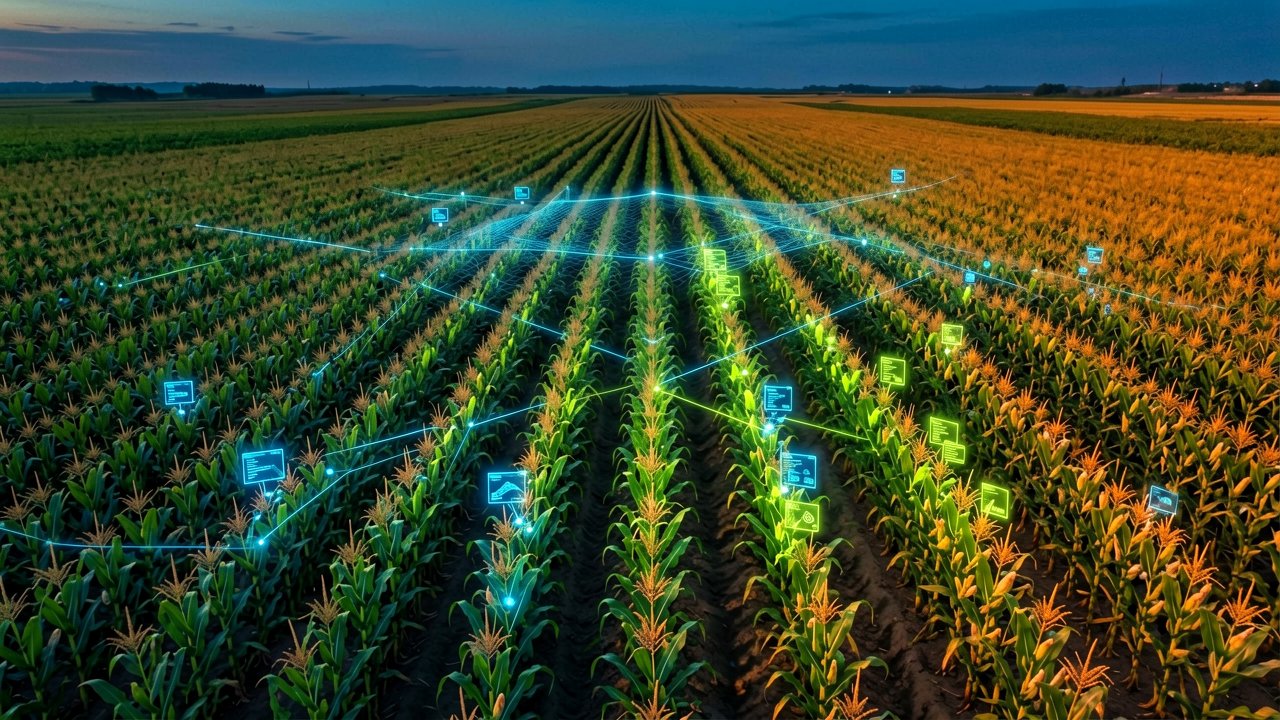
The U.S. Department of Agriculture isn't just about nutrition labels and farm subsidies anymore; it’s quietly evolving into a massive data-crunching enterprise. Under the guidance of its inaugural USDA AI Strategy, the agency is deploying machine learning to tackle everything from detecting invasive pests to predicting wildfire behavior. Secretary Tom Vilsack has framed this shift not as a replacement for human expertise, but as a necessary "augmentation" to keep American agriculture competitive as global population pressures mount toward the mid-century mark.
While the department has experimented with traditional analytics for years, the current push institutionalizes AI across its sprawling mission areas. This isn’t just back-office automation; we’re seeing computer vision systems in meat grading facilities and AI-driven predictive modeling within the USDA Intelligent Automation Center of Excellence to streamline loan processing for rural communities. It’s an ambitious roadmap aimed at cutting the environmental footprint of U.S. agriculture in half by 2050 while simultaneously boosting production by 40 percent.
The Realities of the High-Tech Harvest
What Most Reports Miss: Beyond the shiny promises of "smart farming," the USDA is currently navigating a treacherous middle ground between rapid innovation and bureaucratic risk management. A recent watchdog report from the Office of Inspector General revealed that while the agency has filled the mandatory Chief AI Officer role, it is struggling to rein in "shadow AI"—unsanctioned tools used by employees that haven't passed formal cybersecurity or bias reviews. This tension highlights a classic tech journalist’s dilemma: an agency moving fast enough to break things, yet slow enough to leave its digital flank exposed to intellectual property theft and data integrity issues.
Stakeholders on the ground, particularly small to mid-sized producers, are watching this rollout with a mix of cautious optimism and systemic dread. For these farmers, the hurdle isn't just the tech itself, but the "data divide." Large-scale industrial operations have the capital to integrate AI-ready hardware today, potentially widening the competitive gap. The USDA’s response has been to prioritize "equitable AI," emphasizing tools that assist with commodity grading and disaster recovery—areas where the federal government can act as a leveling force rather than just a silent observer of market consolidation.
Historically, the department’s digital shifts have often been reactive, but the FY 2025-2026 strategy suggests a more proactive stance toward national security. Protecting the agricultural supply chain from foreign interference is now a primary driver for AI adoption. By using predictive analytics to monitor trade patterns and soil health, the agency aims to turn the vast troves of data it already collects into a defensive asset against both climate-induced crop failures and deliberate economic espionage. The pivot to AI is essentially a recognition that in modern geopolitics, food security is increasingly a function of information superiority.
The road ahead is cluttered with "authority to operate" hurdles and the daunting task of upskilling a legacy workforce. To bridge this gap, the USDA is leaning on partnerships with land-grant universities and organizations like NIFA to cultivate a new generation of "ag-tech" experts. Success won't just be measured by the sophistication of the algorithms, but by whether a farmer in Iowa or a rancher in Montana feels that the federal government's digital brain actually understands the dirt under their fingernails.
The Algorithm vs. The Acre
Reading Between the Lines: The USDA’s pivot to AI rests on a paradox that any tech skeptic would find delicious: the agency is asking farmers—a demographic notoriously protective of their proprietary "secret sauce" for crop yields—to hand over the keys to their data in exchange for the promise of a more efficient bureaucracy. While the official line emphasizes seamless integration and predictive precision, the reality is a messy clash between Silicon Valley’s "move fast" ethos and the slow, seasonal rhythm of the American Heartland. There is a profound contradiction in claiming to empower small-scale farmers with AI while simultaneously building a system that requires a level of data-logging discipline that only multi-million-dollar corporate operations can realistically maintain.
There is also the matter of the "black box" in the barn. When an AI model determines a loan risk or predicts a drought-driven failure, the logic often remains opaque even to the technicians overseeing it. For a federal agency that operates on the basis of public trust and legal accountability, relying on non-transparent algorithms is a massive gamble. We are moving toward a future where a federal computer might deny a multi-generational farm's disaster assistance based on a data point the farmer can’t see and a bureaucrat can’t explain. This isn't just a technical hurdle; it’s a potential constitutional migraine for an agency that has spent decades trying to repair its reputation for fair dealing.
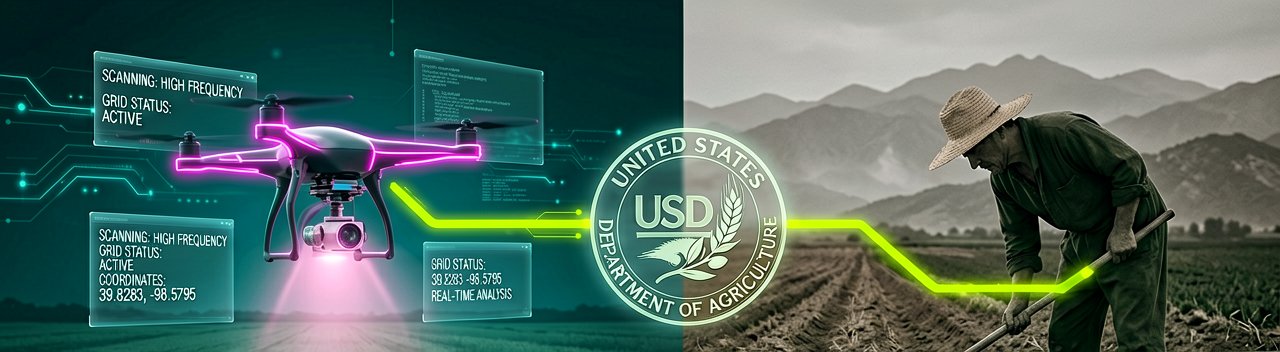
Looking ahead, the long-term implication is a subtle shift from land ownership to data ownership. As the USDA AI Strategy matures, the most valuable asset in the field might not be the soil quality, but the metadata generated by every tractor pass and sensor ping. If the government becomes the primary curator of this "ag-intel," they aren't just a regulator; they become a market-maker. The skepticism here isn't about whether the tech works—it’s about who truly captures the value when a government-owned AI optimizes a private-sector harvest. The risk is that we’ve traded the old-school weather vane for a digital crystal ball that requires a subscription fee and a waiver of privacy.
"In the end, we’re teaching computers to predict the unpredictable, which is a noble pursuit right up until the moment a localized cloudburst ignores the algorithm’s schedule and reminds us that Mother Nature doesn't actually read the USDA’s updated JSON files."
Artūras Malašauskas is an AI Systems Integrator with 20+ years of production-grade web engineering experience. He has designed, shipped, and scaled enterprise Python/PHP systems for logistics, SaaS, and public-sector clients. For the past year, he has focused exclusively on AI integrations: deploying open-source LLMs, building generative media pipelines (image, audio, video), and engineering multi-agent workflows for real production environments. His standard: reproducibility, security, cost-efficient inference—no vaporware. He documents and evaluates emerging AI tooling, separating verified capabilities from marketing noise. Technical editor at: muza-ai.eu, ai-verslas.lt, ai-naujinos.lt Connect on LinkedIn
Comments