Google Just Turned Gemini AI Studio into a Fast-Lane for Android Development

Google is leaning hard into the "vibe-coding" era, and its latest update to Gemini AI Studio for the web makes it surprisingly easy for developers to go from a hazy concept to a functional Android app. By integrating a dedicated Android project template directly within the browser-based environment, Google is essentially removing the friction of setting up a local development environment just to test an idea. It’s a move that signals a shift away from the heavy lifting of traditional IDEs toward a more conversational, iterative style of building software.
The new workflow allows developers to describe their app's requirements in plain English, which Gemini then translates into a structured project. This isn't just about spitting out snippets of code; the tool handles the scaffolding of the Android project, including the necessary UI components and logic, all within the Gemini interface. For those of us who have spent hours wrestling with Gradle sync errors before even writing a line of logic, this "vibe-and-build" approach feels like a breath of fresh air. You can find the full breakdown of these capabilities over at Android Developers Blog.
Streamlining the Sandbox Experience
What makes this particularly impactful is the seamless bridge to more robust tools. While you can do a lot of the initial heavy lifting in the web studio, Google hasn't forgotten that professional apps eventually need the horsepower of a full environment. The integration allows for a smooth handoff to Android Studio, meaning your experimental "vibe" session can instantly become the foundation of a production-ready application. It’s a clever way to keep developers within the Google ecosystem from the moment of inspiration to the final deployment on the Play Store.
By lowering the barrier to entry, Google is betting that the next wave of great apps will come from rapid experimentation rather than meticulous manual coding. This update isn't just a technical tweak; it's a statement about the future of how we interact with machines to create tools. More technical details and documentation on the API implementation are available via Google AI for Developers.
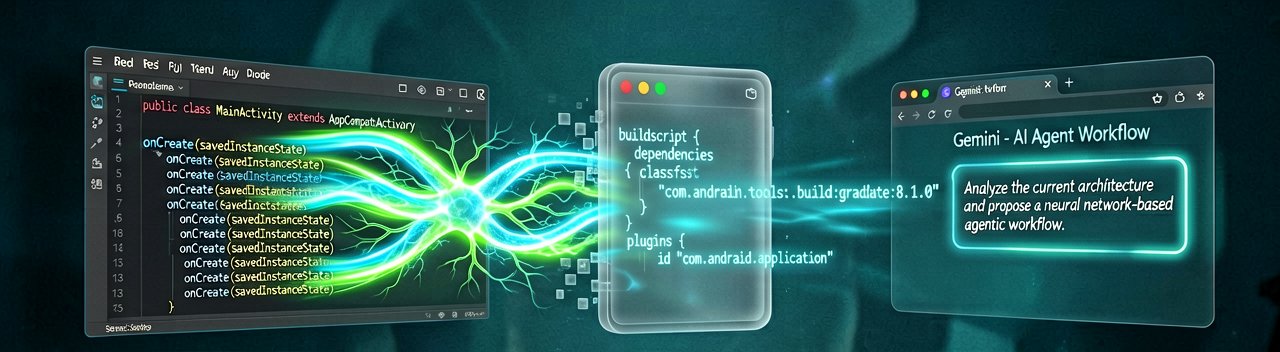
Google’s push to bring native Android development into Gemini AI Studio is more than just a convenient web shortcut; it’s a calculated strike at the traditional barriers of entry for software creation. By offering an in-browser environment that bypasses the complex, often resource-heavy installation of local developer tools, Google is effectively courting a new class of "builders" who may have the vision for an app but lack the patience for environment variables and SDK versioning. This shift toward "vibe-coding" leverages the multi-modal strengths of the Google AI Studio, allowing creators to pivot from textual descriptions to visual mockups and functional logic in a single conversation.
What Most Reports Miss: The Historical Pivot
Behind the Scenes: This move didn't happen in a vacuum, but rather marks the culmination of a multi-year strategy to simplify the Jetpack Compose and Kotlin ecosystem. Veteran developers might remember the early "Android Studio Bot" days, which were largely focused on fixing errors rather than generating entire projects from scratch. The transition to the agentic capabilities of Gemini 3 Pro represents a fundamental change: the AI has moved from being a junior debugger to an autonomous architect. Stakeholders within Google have hinted that this "vibe-first" approach is designed to mirror how modern designers think—focusing on the user experience and high-level logic first, while leaving the boilerplate to the model.
The nuance that seasoned reporters are tracking is the "fidelity gap." While AI Studio handles the initial zero-shot generation with impressive accuracy, the real power lies in its integration with the Android Studio ecosystem. For the first time, a prototype built "by vibe" can be exported with full project structure, maintaining the best practices of modern Android development like Jetpack Compose. This ensures that the "vibes" of a weekend hobbyist don't result in technical debt for the professional engineer who might eventually take over the project.
From a stakeholder perspective, this is a strategic move to boost the quantity of native apps in a competitive landscape. By making development "agentic," Google is reducing the task completion time by an estimated 20–30%, a metric supported by recent studies on AI-assisted development productivity. For the Android ecosystem, this means faster release cycles and a lower cost of experimentation for startups. More importantly, it signals that the era of the "standalone IDE" is giving way to a hybrid world where the browser is the sandbox and the local machine is the production line. Detailed guides on this iterative process are now available through Google Codelabs.
The Reality Check for AI-First Development
Reading Between the Lines: While the narrative of "vibe-coding" paints a picture of effortless creation, the reality often hits a wall when the "vibe" meets the rigorous requirements of a production environment. There is a glaring contradiction in the promise of AI Studio: it invites non-technical visionaries into the fold, yet the moment a generated app requires a custom API integration or a complex background service, the user is unceremoniously dumped back into the deep end of traditional software engineering. Google is effectively lowering the floor for entry, but the ceiling for truly sophisticated, high-performance Android applications remains as high—and as manually intensive—as ever.
There is also the looming specter of "technical hallucination" that seasoned reporters recognize as a significant hurdle. In a controlled demo, Gemini might perfectly align a UI, but in a sprawling project, AI-generated code can often include deprecated libraries or inefficient logic that looks correct but fails under stress. This creates a hidden tax for professional developers who choose to use these tools; they may find themselves spending more time auditing AI-generated boilerplate for subtle bugs than they would have spent writing the code from scratch. The reliance on the Android Developers documentation as a fallback highlights that the machine is still a student, not yet the master architect.
Projecting forward, the implication is a potential flood of "cookie-cutter" apps in the Play Store, built by individuals who may not fully understand the security or privacy implications of the code the AI has written for them. As Google pushes for quantity through accessibility, the burden of quality control shifts increasingly toward automated review systems and the end-user. We are moving toward a future where the ability to "prompt" becomes more valuable than the ability to "program," a transition that could atrophy the very deep-technical skills required to fix the AI when it inevitably breaks. More on the security implications of AI-assisted code can be explored through the Google AI Responsible Practices guidelines.
Building an entire app with just a 'vibe' is a lot like trying to assemble IKEA furniture using only a mood board; it looks fantastic in your head until you realize the AI forgot to include the hex key for the database connection.
Artūras Malašauskas is an AI Systems Integrator with 20+ years of production-grade web engineering experience. He has designed, shipped, and scaled enterprise Python/PHP systems for logistics, SaaS, and public-sector clients. For the past year, he has focused exclusively on AI integrations: deploying open-source LLMs, building generative media pipelines (image, audio, video), and engineering multi-agent workflows for real production environments. His standard: reproducibility, security, cost-efficient inference—no vaporware. He documents and evaluates emerging AI tooling, separating verified capabilities from marketing noise. Technical editor at: muza-ai.eu, ai-verslas.lt, ai-naujinos.lt Connect on LinkedIn
Comments