Google’s Agentic Pivot: Gemini 3.5 Flash and the Rise of the 'Spark'

Google’s I/O 2026 keynote wasn't just another predictable parade of incremental updates; it felt more like a hard pivot toward a future where AI doesn't just chat, but actually works. The star of the show was undoubtedly Gemini 3.5 Flash, a model that Google claims is its most potent weapon for coding and autonomous tasks to date. While previous iterations felt like polished librarians, this new version is being pitched as an "agentic" powerhouse capable of independently managing research projects or even spinning up an entire operating system from scratch. According to TechCrunch , the model isn't just answering questions anymore—it’s planning and iterating with minimal human hand-holding.
The consumer-facing manifestation of this shift is Gemini Spark, a personal AI agent that lives within the Google ecosystem 24/7. Built on the 3.5 Flash architecture, Spark isn't your typical chatbot waiting for a prompt; it's designed to take proactive action across Gmail, Calendar, and Drive. It operates under a "Tasks, Skills, and Schedules" framework, allowing users to define specific routines—like sorting an unruly inbox or drafting replies—without having to repeat instructions every single morning. As detailed by Google, this agent is currently rolling out to trusted testers and will soon hit the Beta stage for AI Ultra subscribers in the United States.
The Performance of "Agentic Loops"
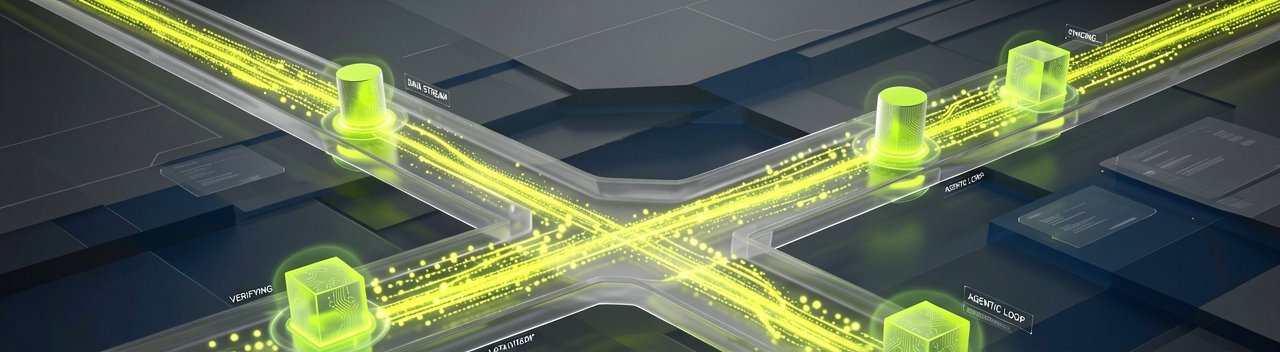
What makes 3.5 Flash particularly interesting from an editorial perspective is its efficiency. It manages to outclass the older 3.1 Pro on nearly all benchmarks, specifically excelling in what developers call "rapid agentic loops"—those moments where the AI must quickly think, act, and course-correct in a multi-step workflow. By leveraging the updated Antigravity platform, Google has essentially given the AI a more robust nervous system for orchestrating sub-agents that can work in parallel. For developers, this means the ability to tackle massive codebases at a fraction of the cost previously required for flagship-level performance.
Privacy and the Always-On Assistant
Naturally, an "always-on" agent raises some eyebrows regarding privacy. Google has been quick to clarify that while Gemini Spark is autonomous, it doesn't just read every email indiscriminately for the sake of it. Instead, it acts under specific directions to manage workloads, such as extracting action items from long threads or organizing a calendar. It’s a delicate balance to strike, but the tech giant is clearly betting that the sheer productivity gains—what they call "frontier intelligence with action"—will be enough to convince users to let Spark into their daily digital routines.
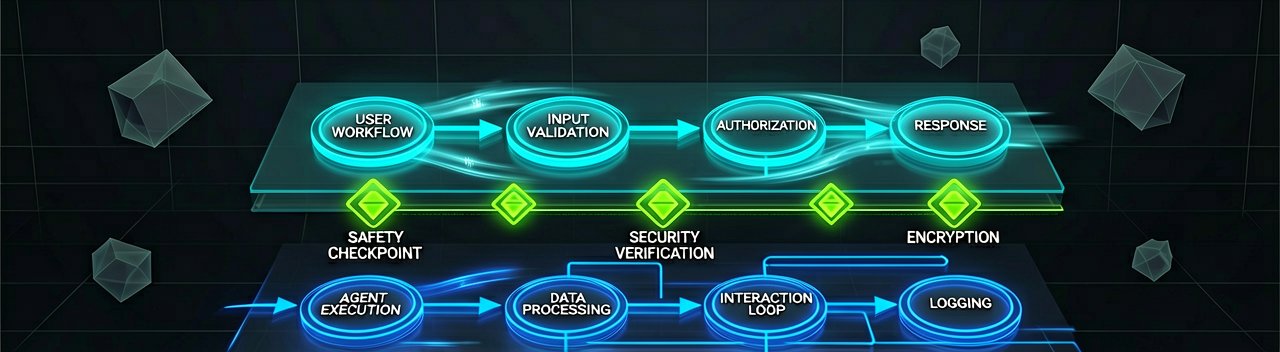
Under the Hood: While the flashy marketing focuses on productivity gains, the real story lies in the fundamental architectural shift toward "asynchronous reasoning." Unlike previous models that processed data in a linear, synchronous flow—essentially waiting for one thought to finish before starting the next—Gemini 3.5 Flash utilizes a decoupled execution layer. This allows the 'Spark' agent to perform background research or compute complex code structures while the primary user interface remains fluid and responsive. For those of us who have covered Google’s AI evolution since the early days of DeepMind, this feels like the moment the "brain" finally got its hands.
Industry insiders suggest that the development of Spark was a direct response to the "agentic fatigue" seen in earlier, more clunky implementations of AI assistants. Historical context matters here: Google spent years trying to make Assistant "helpful" through rigid, voice-activated commands, but the unpredictability of human schedules always proved too messy for simple logic trees. By moving to the Flash architecture, Google is betting on a probabilistic approach where the agent anticipates needs based on a multi-modal understanding of a user’s entire digital footprint. It is a high-stakes play for data dominance that rivals the launch of Gmail in 2004.
From a stakeholder perspective, the excitement is tempered by a healthy dose of skepticism from the developer community. While the reduced cost-per-token of the 3.5 Flash model is a win for startups, there is lingering concern about "hallucinatory action"—the risk of an agent performing a task incorrectly without the user realizing it until the damage is done. Google’s countermeasure, a feature called 'Verification Checkpoints,' requires the agent to pause and ask for confirmation before executing high-impact actions like deleting files or sending external calendar invites. This safety layer is what Google hopes will separate Spark from the more "reckless" autonomous agents seen in the open-source community over the last year.
The geopolitical angle shouldn't be ignored either, as this launch signals Google's attempt to reclaim the narrative from competitors who have dominated the "agent" conversation recently. By integrating Spark so deeply into the workspace suite, Google is creating a moat that isn't just about the quality of the LLM, but the friction of leaving an ecosystem that now does your work for you. It’s a strategy of stickiness; once an agent has spent months learning your specific filing system and tone of voice, the cost of switching to a rival platform becomes prohibitively high for most enterprises.
Looking ahead, the long-term viability of Gemini Spark will depend on its ability to handle the "edge cases" of human error. If a user gives a vague instruction, the agent must be savvy enough to interpret the nuance of the professional environment—recognizing, for instance, the difference between a "urgent" email from a CEO and a "urgent" newsletter. Google's engineers have reportedly spent thousands of hours fine-tuning the model on these social hierarchies. This level of contextual awareness is the true frontier of the 3.5 Flash generation, moving beyond mere syntax into the realm of professional intuition.
The Infrastructure of Autonomy
The technical backbone supporting this rollout is the new TPU v6 hardware, specifically optimized for the low-latency requirements of the Flash model. Unlike the massive, power-hungry training runs of the Ultra models, 3.5 Flash is designed for "hot" inference, meaning it can spin up and down in milliseconds to handle bursts of agentic activity. This efficiency is what allows Google to offer Spark as a 24/7 service without bankrupting their data centers. It’s a masterclass in balancing raw power with operational sustainability, a necessity in an era where AI’s environmental and financial costs are under constant scrutiny.
Reading Between the Lines: For all the talk of "agentic breakthroughs," there is a glaring contradiction in the promise of Gemini Spark that Google hasn’t quite squared away. On one hand, we’re told this AI is a hyper-efficient autonomous worker that frees us from the drudgery of digital management; on the other, the introduction of "Verification Checkpoints" suggests that Google doesn't fully trust its own creation to handle the nuances of a simple lunch invite without adult supervision. It’s a paradox of autonomy: an agent is only useful if it acts independently, yet the liability of an AI accidentally BCC’ing the wrong client on a sensitive thread is a ghost that still haunts Mountain View’s legal department. We are essentially being offered a self-driving car that still requires us to keep our hands on the wheel every ten seconds.
The "Flash" branding itself is a clever bit of linguistic gymnastics designed to distract from the fact that this is, at its core, a distilled model. While the efficiency gains on the TPU v6 architecture are impressive, there is a fundamental law of diminishing returns when it comes to model pruning. By prioritizing speed and "agentic loops," Google is inevitably sacrificing the deep, emergent reasoning capabilities found in its heavier Ultra models. There is a very real risk that Gemini Spark will become the digital equivalent of a high-speed intern: incredibly fast at filing papers, but prone to catastrophic misunderstandings of the bigger picture because it lacks the "compute-heavy" wisdom to know when a task shouldn't be done at all.
Furthermore, the move to integrate Spark 24/7 across the Workspace suite feels less like a feature and more like a land grab for the "last mile" of user data. By positioning an agent as the intermediary for every email and calendar event, Google effectively creates a proprietary layer between the user and their own information. If the agent becomes the primary way we interact with our data, the "ecosystem lock-in" becomes absolute. Skeptics should be wary of a future where moving to a competitor isn't just about exporting files, but about performing a lobotomy on the digital persona that has spent years learning how to mimic your professional life.
There is also the matter of the "productivity trap" that historically follows every major technological leap. If Gemini 3.5 Flash successfully automates the routine tasks of the modern office, the most likely outcome isn't that we all go home early; it’s that the baseline expectation for output will simply shift upward. We are entering an era where being "busy" is no longer an excuse, because your agent should have handled the busywork. In this light, the 'Spark' isn't just a tool for the employee—it’s a new metric for the employer, raising the stakes in a corporate arms race where the human element is increasingly seen as the bottleneck in the system.
The Skeptic’s Horizon
Ultimately, the success of this "agentic pivot" hinges on whether Google can move past the honeymoon phase of AI demos and into the gritty reality of enterprise-grade reliability. The history of tech is littered with "smart assistants" that ended up being little more than glorified timers and weather reporters. To avoid that fate, Gemini 3.5 Flash must prove it can handle the messy, illogical, and often contradictory nature of human communication without descending into a loop of "I'm sorry, I didn't quite catch that." For now, the tech looks revolutionary on paper, but the true test will be the first time it tries to reschedule a meeting for a human who famously never wakes up before their third coffee.
The dream of the AI agent is that it will finally do all the things we’re too bored to do ourselves, though there’s a distinct possibility we’ll just spend all that newly saved time watching the agent do the work incorrectly in real-time.
Artūras Malašauskas is an AI Systems Integrator with 20+ years of production-grade web engineering experience. He has designed, shipped, and scaled enterprise Python/PHP systems for logistics, SaaS, and public-sector clients. For the past year, he has focused exclusively on AI integrations: deploying open-source LLMs, building generative media pipelines (image, audio, video), and engineering multi-agent workflows for real production environments. His standard: reproducibility, security, cost-efficient inference—no vaporware. He documents and evaluates emerging AI tooling, separating verified capabilities from marketing noise. Technical editor at: muza-ai.eu, ai-verslas.lt, ai-naujinos.lt Connect on LinkedIn
Comments