AI Doesn’t Just See Data; It’s Starting to See ADHD Early
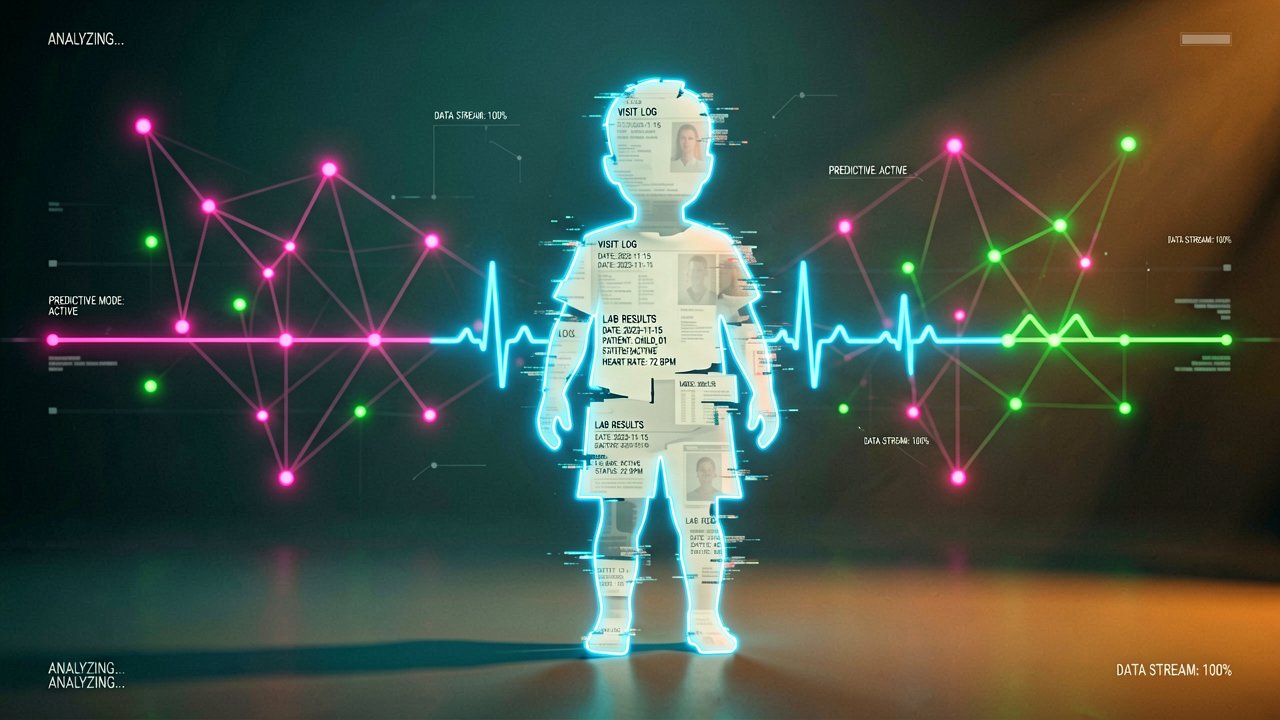
For decades, diagnosing pediatric ADHD has been a bit like trying to solve a jigsaw puzzle where half the pieces are hidden under the rug. Clinicians rely on a mix of subjective parent interviews, teacher observations, and behavioral assessments that, while thorough, often take years to coalesce into a formal diagnosis. But recent breakthroughs from suggest that we’ve been sitting on a goldmine of diagnostic clues all along. By training machine learning models on the "hidden patterns" found within routine electronic health records, researchers have demonstrated that AI can accurately flag at-risk children as young as five, often years before a human expert would typically make the call.
This isn't about replacing the pediatrician with a cold, calculating algorithm; it's about giving them a high-powered lens to spot the subtle "clinical breadcrumbs" left behind during routine check-ups. The study, which analyzed data from over 140,000 children, showed that the AI could synthesize a vast array of developmental and behavioral milestones to estimate risk with high precision. According to findings published in Duke Health, these models maintained their accuracy regardless of a child's race, sex, or insurance status, potentially closing the gap for families who might otherwise struggle with delayed interventions.
The Shift from Reactivity to Prediction
The beauty of this tech lies in its ability to scan the noise of everyday medical data—things like ear infections, motor skill delays, or sleep issues—and identify combinations that are statistically significant for ADHD. It’s a shift from waiting for a crisis in the classroom to proactively identifying which kids need a closer look. While the tool doesn't issue a "final verdict," it acts as an early warning system that allows families to access evidence-based support during those critical, formative years.
Precision Beyond the Paperwork
Beyond medical records, other researchers are pushing the envelope with even more specialized inputs. From South Korean teams using AI to analyze retinal scans with 96% accuracy to studies using functional MRI to map brain "connectomes," the consensus is clear: neurodiversity has biological signatures that software is uniquely equipped to decode. As reported by Euronews, these advancements are paving the way for a future where objective screening is a standard part of pediatric care, ensuring fewer children fall through the cracks of a traditionally slow and subjective system.

The Data Ghost in the Machine: While the headline-grabbing 90% accuracy rates of these AI models are impressive, the real story lies in the "digital exhaust" the algorithms are actually sniffing out. Most medical reporting glosses over the fact that ADHD isn't diagnosed via a single blood test or scan; it is a diagnosis of exclusion and observation. What the Duke Health researchers tapped into was the power of longitudinal data—specifically, how seemingly unrelated clinical visits for things like respiratory infections or minor injuries, when viewed over five years, form a predictive constellation that human clinicians simply aren't trained to synthesize in real-time.
From a stakeholder perspective, this shift is monumental for school systems and insurance providers who have historically been reactive. For years, the "wait and fail" model has dominated pediatric mental health, where a child must significantly struggle in a classroom setting before resources are unlocked. By moving the needle of identification down to age five, these AI tools essentially force a confrontation with the current scarcity of specialists. If we can suddenly identify twice as many at-risk children three years earlier, the bottleneck shifts from "who has ADHD?" to "who is going to treat them?"
Historical context reveals that our diagnostic criteria have always been somewhat fluid, moving from "minimal brain dysfunction" in the 1960s to the behavioral checklists used today. These new machine learning models represent the first major departure from behavioral observation toward a data-driven biological proxy. However, seasoned reporters note a lingering tension regarding "black box" algorithms. Many clinicians are hesitant to act on a "high-risk" flag if the AI cannot explain exactly which combination of factors triggered the alert, fearing that over-medicalization could become the new default for energetic but neurotypical children.
There is also the nuanced issue of data equity. While the Duke study showed promise in maintaining accuracy across different demographics, the tool is only as good as the electronic health records it feeds on. Children in "medical deserts" or those with limited access to consistent primary care will have thinner digital footprints, potentially leaving them invisible to the very algorithms designed to help them. This creates a paradox where the most vulnerable populations might be the last to benefit from the efficiency of automated screening.

Finally, the psychological impact on parents cannot be understated. Receiving a "predictive risk score" for a five-year-old who isn't yet showing overt symptoms creates a new category of "pre-symptomatic" neurodiversity. This requires a delicate evolution in how pediatricians communicate risk, moving away from binary "yes/no" diagnoses toward a spectrum of developmental monitoring. The goal is to use the AI as a compass, not a judge, ensuring that early intervention remains a supportive bridge rather than a premature label.
The Ethics of Early Algorithmic Intervention
As we move toward integrating these tools into standard practice, the conversation must pivot toward the "right to be forgotten" and data privacy. A child flagged by an algorithm at age five could carry that digital tag through their entire academic career, influencing teacher expectations and self-perception long before they have the agency to understand it. The challenge for the next decade will be balancing the undeniable benefits of early clinical support with the need to protect a child’s right to develop without a predetermined digital destiny.
Reading Between the Lines: The seductive promise of a "90% accuracy" rate often masks a fundamental misunderstanding of what these algorithms are actually measuring. We are effectively teaching machines to identify a condition that we ourselves haven't fully defined biologically. Because the AI is trained on historical diagnoses made by humans, it risks simply automating and scaling our own past biases rather than uncovering a more objective "truth." If the training data is skewed toward certain behavioral manifestations—like the classic hyperactive boy—the AI may become an incredibly efficient tool for perpetuating the underdiagnosis of girls or children with purely inattentive presentations.
There is also the uncomfortable contradiction between technological precision and the reality of clinical "gray areas." In a medical system already strained by 15-minute appointments, a high-risk AI flag may inadvertently become a shortcut to medication rather than a prompt for holistic intervention. The skepticism here isn't toward the math, but toward the implementation; there is a very real danger that the nuance of neurodiversity will be flattened into a binary digital signal. We must ask whether we are diagnosing a medical condition or simply identifying the children whose natural temperaments are most at odds with the rigid structure of modern schooling.
Projecting into the next decade, the widespread adoption of these predictive models could trigger a "diagnosis arms race." As parents learn that certain clinical markers in an electronic health record trigger early access to specialized support or academic accommodations, the pressure on pediatricians to "manage" the data trail will intensify. This shifts the role of the doctor from a healer to a sort of data-curator, navigating a landscape where the algorithm’s prediction carries more weight in a school board meeting than a parent’s lived experience. The technology is undoubtedly a leap forward, but it carries the heavy baggage of turning childhood development into a series of risk-mitigation milestones.
Furthermore, the long-term implications for the "pre-diagnosed" child are entirely unmapped territory. We are essentially creating a generation of "patients-in-waiting" who are monitored for symptoms that haven't yet manifested. While early intervention is the gold standard, there is a fine line between helpful scaffolding and a self-fulfilling prophecy. When a teacher or a parent is told an algorithm has flagged a child as high-risk, their perception of that child’s normal outbursts or lapses in focus inevitably shifts, potentially narrowing the child's freedom to simply grow out of a difficult phase without a permanent clinical label attached to their identity.
The Algorithmic Mirror
Ultimately, the success of AI in flagging ADHD reveals more about our data-driven society than it does about the human brain. The reason an algorithm can find patterns in ear infections and sleep cycles is that we have finally built a digital infrastructure vast enough to quantify the messiness of growing up. However, the risk remains that we will treat the algorithm’s output as an infallible oracle rather than a statistical suggestion. Moving forward, the most valuable skill for a pediatrician won't be the ability to out-calculate the machine, but the wisdom to know when the machine is looking at a "disorder" and when it is simply looking at a child who hasn't yet learned to sit still in a square room.
In our rush to give every child a digital crystal ball, we might find that the AI is excellent at predicting who will struggle in the third grade, but significantly less helpful at reminding us that some of history’s most brilliant minds would have been flagged as 'high-risk' before they’d even mastered the alphabet.
Artūras Malašauskas is an AI Systems Integrator with 20+ years of production-grade web engineering experience. He has designed, shipped, and scaled enterprise Python/PHP systems for logistics, SaaS, and public-sector clients. For the past year, he has focused exclusively on AI integrations: deploying open-source LLMs, building generative media pipelines (image, audio, video), and engineering multi-agent workflows for real production environments. His standard: reproducibility, security, cost-efficient inference—no vaporware. He documents and evaluates emerging AI tooling, separating verified capabilities from marketing noise. Technical editor at: muza-ai.eu, ai-verslas.lt, ai-naujinos.lt Connect on LinkedIn
Comments