Google Launches Gemini Spark: A 24/7 AI Agent That Wants to Make You Ditch OpenClaw
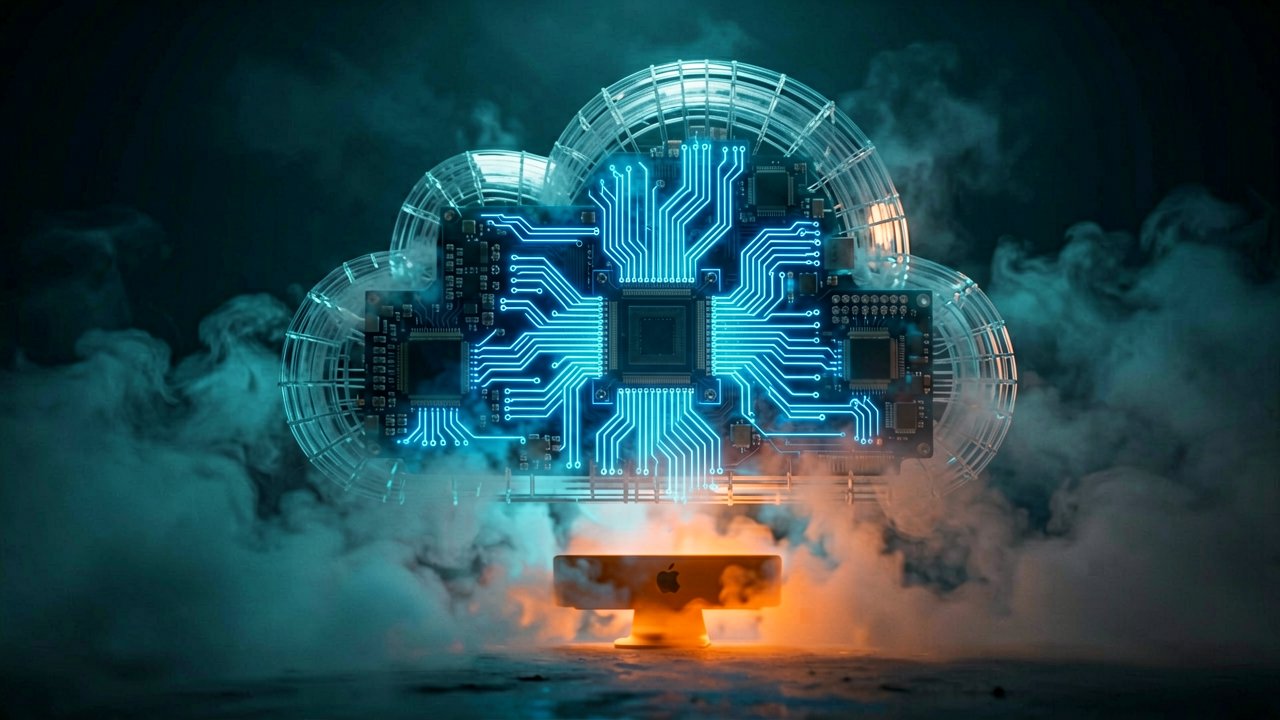
Google just dropped a bombshell at I/O 2026, and it’s called Gemini Spark. For months, power users have been flocking to OpenClaw for that "always-on" autonomous experience, often rigging up dedicated Mac Minis just to keep their AI workers alive. Spark changes the math entirely. It’s a 24/7 personal AI agent that lives in the cloud, meaning it doesn't care if your laptop is closed or your phone is dead; it stays on the clock, grinding through your digital chores while you’re off the grid. According to reports from Mashable, this marks Google’s most aggressive move into the "agentic" era, transforming Gemini from a reactive chatbot into a proactive employee that actually gets things done.
The tech itself is built on the brand-new Gemini 3.5 Flash model and the Antigravity 2.0 platform. Unlike the scrappy, local-first vibe of OpenClaw—which famously caused Mac Minis to sell out at retailers earlier this year—Spark is purely cloud-native and beginner-friendly. It’s designed to dive into your Gmail, monitor your Google Drive for updates, and even track subscription fees on your credit card statements. As noted by Wired, Google is positioning this as a "steroided-out assistant" that knows your life inside out, though it’s been tuned to ask for permission before it does anything "high-stakes," like firing off an email or spending your money.
The Death of the Local Server?
For the DIY crowd, OpenClaw has been a badge of honor, but Google is betting that most people don't want to manage their own hardware. By running Spark on dedicated Google Cloud virtual machines, the search giant offers 24/7 uptime without the electricity bill or the setup headache. It’s a classic Google play: take a viral, power-user trend and scale it for the masses. During the keynote, leadership emphasized that Spark would eventually operate directly within Chrome, effectively turning your browser into an autonomous workspace. Early access is already rolling out to trusted testers, with a wider U.S. beta for Google AI Ultra subscribers expected to land next week, as reported by BigGo News.
Safety, Integration, and the Agentic Era
Of course, an agent that "works while you sleep" raises plenty of eyebrows regarding privacy. Google’s answer is a dedicated dashboard that visualizes every task Spark is currently chewing on. Whether it’s planning a block party by scraping RSVPs from your inbox or building an internship tracker in Sheets, the agent is supposed to be transparent. While OpenClaw’s open-source nature still appeals to those who want total control, Google’s deep integration with the Workspace suite makes Spark a formidable rival. It’s clear that the race isn't just about who has the smartest model anymore; it’s about who can actually cross the finish line on your to-do list.
Behind the Scenes: The Invisible War for Your Desktop
The Great Orchestration Pivot: For the better part of the last decade, Google has been a search company trying to figure out how to be an assistant company. With Gemini Spark, the internal shift has finally moved away from simple natural language processing toward "agentic orchestration." This isn't just about a model that can write a poem; it's about a system that possesses the "state-memory" to remember a task started on Tuesday and finish it on Friday without being reminded. Insiders suggest this was the primary driver behind the recent organizational merge of the DeepMind and Google Research teams, a move designed to break the silos that previously prevented Gemini from interacting deeply with the OS layer.
What most reports miss is the sheer infrastructure cost Google is eating to make Spark a reality. Running a 24/7 cloud agent requires dedicated compute cycles that don't just "sleep" when the user logs off. By leveraging their custom TPU v6 architecture, Google is effectively subsidizing the massive energy footprint of autonomous agents to undercut the DIY community. OpenClaw’s rise was a wake-up call that users wanted autonomy, but Google realized that the average consumer would rather pay a $20 monthly subscription than troubleshoot a Python script on a home-brew server. This is a play for the "lazy" power user who wants the productivity gains without the technical debt.
The enterprise perspective adds another layer of complexity to this launch. Corporate IT departments have spent the last year banning "shadow AI" like OpenClaw because of the data leakage risks inherent in unmanaged local agents. Spark offers a centralized, "Safe for Work" alternative that integrates with Google Cloud’s existing compliance frameworks. This allows CIOs to greenlight autonomous agents because they can be audited, throttled, and shut down from a single admin console. It’s a classic move from the Big Tech playbook: take a disruptive, chaotic innovation from the fringe and wrap it in the safety blanket of corporate governance.
Historical context shows we’ve been here before with the transition from local software to SaaS. Just as Google Docs eventually marginalized local word processors for the majority of users, Spark aims to do the same for task management. The "always-on" nature of Spark creates a feedback loop where the AI learns the user's habits in real-time, making it harder for competitors like OpenAI to catch up once the user is locked into the ecosystem. The data isn't just being stored; it’s being used to refine the agent’s proactive logic, creating a personalized "digital twin" that becomes more valuable the longer it stays active.
Ultimately, the battle between Spark and OpenClaw is a battle of philosophies. OpenClaw represents the frontier of user agency and privacy-first local computing, while Spark represents the peak of convenience and cloud-scale integration. As we move into the second half of 2026, the success of Spark will likely be measured by how many "automated" tasks it can perform without a human in the loop. The technical hurdle isn't the intelligence of the model anymore; it’s the reliability of the execution. If Google can prove that Spark won't hallucinate a flight booking or accidentally delete a critical spreadsheet, the era of the autonomous agent will officially be mainstream.
Reading Between the Lines: The Illusion of Autonomy
The High Price of Convenience: While Google’s marketing machine paints a picture of a seamless digital butler, the reality of Gemini Spark likely involves a messier set of trade-offs. The primary assumption being sold is that "cloud-native" is synonymous with "better," yet this ignores the inherent latency and privacy bottlenecks that triggered the OpenClaw movement in the first place. By pulling the agent’s brain entirely into the Google Cloud, the company is effectively turning your personal productivity into a metered utility. The contradiction is glaring: Google promises to save you time, but it does so by making your most sensitive daily workflows entirely dependent on their uptime and their shifting Terms of Service.
There is also the persistent "hallucination gap" that remains unaddressed in the hype surrounding the Antigravity 2.0 platform. An AI that merely suggests an email draft is a low-stakes helper; an agent that autonomously fires off responses to your boss while you sleep is a liability waiting to happen. Measured skepticism suggests that Spark’s proactive nature will initially be heavily throttled, resulting in a user experience that feels more like a series of annoying "Do you want me to do this?" notifications rather than the fluid automation promised at I/O. The technical challenge isn't just execution—it is the impossible task of teaching a model the nuance of human social dynamics.
Furthermore, the move to undercut OpenClaw’s local-first community feels less like innovation and more like a defensive moat. By subsidizing the compute costs through TPU v6 architecture, Google is essentially buying market share to prevent a decentralized AI ecosystem from taking root. If Spark becomes the default, we risk a future where digital agency is rented rather than owned. The long-term implication is a narrowing of the "AI diversity" we’ve seen in the open-source world, as developers find it increasingly difficult to compete with a free or low-cost agent that has baked-in access to the world’s most dominant email and calendar suite.
Finally, we have to look at the "state-memory" claims with a jaded eye. History shows that Google is prone to sunsetting ambitious projects if they don't immediately achieve Gmail-scale dominance. For power users, the risk isn't just that Spark might fail, but that it might become indispensable before being unceremoniously killed off in two years. Entrusting your entire professional workflow to a 24/7 autonomous agent requires a level of institutional trust that Google has arguably spent the last decade eroding through inconsistent product cycles and data-hungry advertising models.
The dream was a digital butler that anticipated our every need; the reality will likely be an AI that accidentally replies 'Reply All' to a private thread with a perfectly formatted, 24/7 hallucination of our best intentions.
Artūras Malašauskas is an AI Systems Integrator with 20+ years of production-grade web engineering experience. He has designed, shipped, and scaled enterprise Python/PHP systems for logistics, SaaS, and public-sector clients. For the past year, he has focused exclusively on AI integrations: deploying open-source LLMs, building generative media pipelines (image, audio, video), and engineering multi-agent workflows for real production environments. His standard: reproducibility, security, cost-efficient inference—no vaporware. He documents and evaluates emerging AI tooling, separating verified capabilities from marketing noise. Technical editor at: muza-ai.eu, ai-verslas.lt, ai-naujinos.lt Connect on LinkedIn
Comments