Automation Anywhere Unchains the Agents: EnterpriseClaw Hits the Scene
Automation Anywhere is making a massive play for the "Autonomous Enterprise" title with the launch of EnterpriseClaw, a new framework designed to drag AI agents out of their experimental sandboxes and straight into the heart of corporate infrastructure. Announced at the Imagine 2026 conference, this isn't just another incremental update; it's a high-stakes collaboration with tech heavyweights like Cisco, NVIDIA, Okta, and OpenAI. By integrating these disparate technologies, the Investing.com report suggests that Automation Anywhere is solving the biggest headache for IT leads: how to let autonomous agents loose on sensitive data without losing control of the steering wheel.
The "claw-style" moniker refers to a specific breed of agentic AI that doesn't just suggest actions but actually reaches into applications, browsers, and local terminals to get work done—mimicking the way a human might pivot between a legacy spreadsheet and a modern cloud app. Until now, these agents were largely limited to single-user setups or isolated environments. EnterpriseClaw changes that math by providing a centralized command center where these "claws" can operate across teams and behind-the-firewall systems, all while remaining under the watchful eye of enterprise-grade governance and security protocols.
The Deep Dive: Why "Claw" Agents Are the New Corporate Workforce
Behind the Scenes: The launch of EnterpriseClaw signals a definitive shift from the era of "deterministic" automation—where bots followed rigid, brittle scripts—to an era of "reasoning-to-action" loops. For years, Robotic Process Automation (RPA) was criticized for breaking every time a website UI changed or a minor step in a process shifted. By contrast, these new agents use Automation Anywhere’s Process Reasoning Engine and a "Contextual Intelligence Graph" to figure out the "how" on the fly. Internal data from TipRanks highlights that this context-driven approach has already pushed accuracy levels 30% higher than standalone language models, specifically because the agents understand the specific enterprise environment they are operating within.
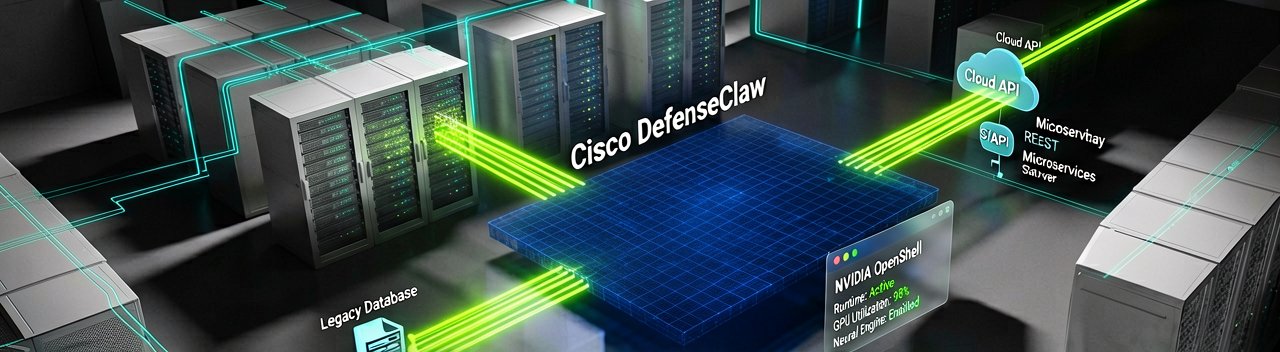
The heavy-hitter partnership provides the necessary muscle to make this palatable for risk-averse CIOs. Cisco contributes its AI Defense and DefenseClaw security layers, while Okta handles the "identity" of the agents, ensuring they only access the data they are authorized to see. Meanwhile, NVIDIA provides the OpenShell runtime and NIM microservices, which allow companies to run these agents on-premises if they aren't ready to trust the public cloud with their crown jewels. This hybrid flexibility is a direct response to the "sovereign AI" movement, where enterprises want the power of frontier models like OpenAI’s GPT-5.5 without the data-privacy trade-offs.
From a stakeholder perspective, the move is as much about market positioning as it is about technology. As Automation Anywhere pivots toward being an "AI Operating System," it is effectively trying to increase the switching costs for its customers. By embedding agents deep into regulated workflows—like investigating complex customer insurance claims that span healthcare and financial data—the platform becomes an indispensable layer of the corporate stack. It’s a strategy that moves the company beyond simple task-bot vendor status into the role of a mission-critical architect for the future of work.
The broader historical context reveals that we are witnessing the consolidation of the "Agentic Process Automation" (APA) sector. While early 2024 and 2025 were defined by "AI hype" and basic chatbots, the 2026 landscape is about "production-grade" autonomy. Early adopters, such as the University Hospitals of Leicester NHS Trust, are already targeting massive administrative savings by making up to 70% of their back-office work autonomous. This isn't just about saving hours; it’s about creating a workforce that doesn’t sleep, doesn't mind repetitive data entry, and—with the new EnterpriseClaw framework—finally plays by the rules of the enterprise.
The Reality Check: Sovereignty vs. Shadows
Reading Between the Lines: While Automation Anywhere markets EnterpriseClaw as the ultimate leash for autonomous agents, the technical reality of "governed autonomy" remains a paradox. The industry is currently obsessed with the idea that we can grant AI the agency to navigate local terminals and legacy databases while simultaneously maintaining a "zero-trust" security posture. However, the more freedom an agent has to reason through a process, the harder it becomes to map every potential edge case for a security audit. There is a fundamental friction between the "reasoning-to-action" loops that make these agents valuable and the rigid compliance frameworks that keep Fortune 500 companies out of legal trouble.
The reliance on a "Contextual Intelligence Graph" to boost accuracy also introduces a new kind of technical debt. By tethering agents so tightly to a specific enterprise environment, companies risk creating "Agentic Silos"—digital versions of the same departmental walls they’ve spent decades trying to tear down. If an agent’s intelligence is derived from a localized snapshot of corporate data, its ability to scale across global divisions or adapt to a merger becomes a massive engineering hurdle. We are effectively trading the fragility of RPA scripts for the opacity of neural network weights, which might just mean we are moving from "error-prone bots" to "hallucinating bureaucrats" with higher permissions.
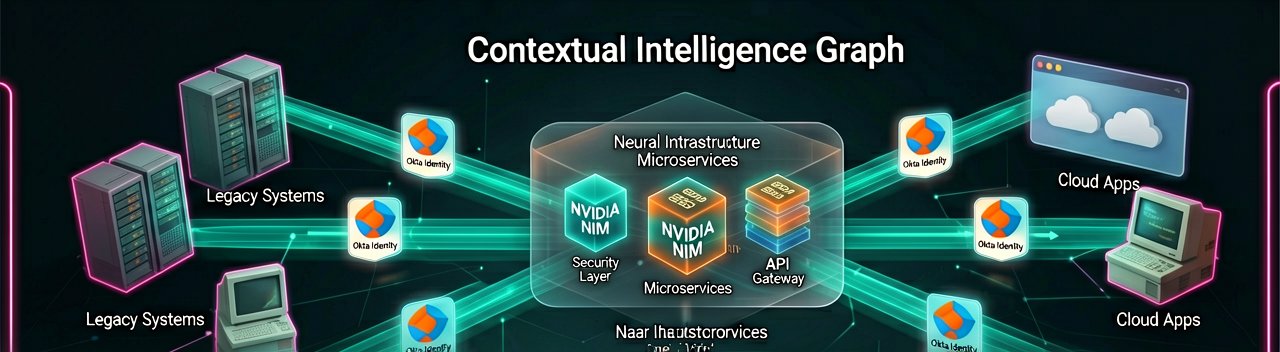
Furthermore, the collaboration with hardware and identity giants like NVIDIA and Okta highlights a growing dependency on a very narrow tech stack. For all the talk of "AI sovereignty," an enterprise running EnterpriseClaw is essentially signing a multi-generational lease on a specific vision of the future controlled by a handful of Silicon Valley gatekeepers. The cost of this autonomy isn't just the licensing fee; it's the surrender of the internal IT roadmap to the release cycles of frontier model providers. As these agents become the primary interface for work, the "human-in-the-loop" starts to look less like a supervisor and more like a glorified safety inspector for a system they no longer fully understand.
The corporate dream of a self-running office is finally within reach, though we may soon find that the hardest part of managing a digital workforce isn't the technical glitches, but realizing that the robots are better at following the rules than the humans who wrote them.
Artūras Malašauskas is an AI Systems Integrator with 20+ years of production-grade web engineering experience. He has designed, shipped, and scaled enterprise Python/PHP systems for logistics, SaaS, and public-sector clients. For the past year, he has focused exclusively on AI integrations: deploying open-source LLMs, building generative media pipelines (image, audio, video), and engineering multi-agent workflows for real production environments. His standard: reproducibility, security, cost-efficient inference—no vaporware. He documents and evaluates emerging AI tooling, separating verified capabilities from marketing noise. Technical editor at: muza-ai.eu, ai-verslas.lt, ai-naujinos.lt Connect on LinkedIn
Comments