The Machine-Scale Bias: Navigating the Shifting Legal Minefield of AI Hiring
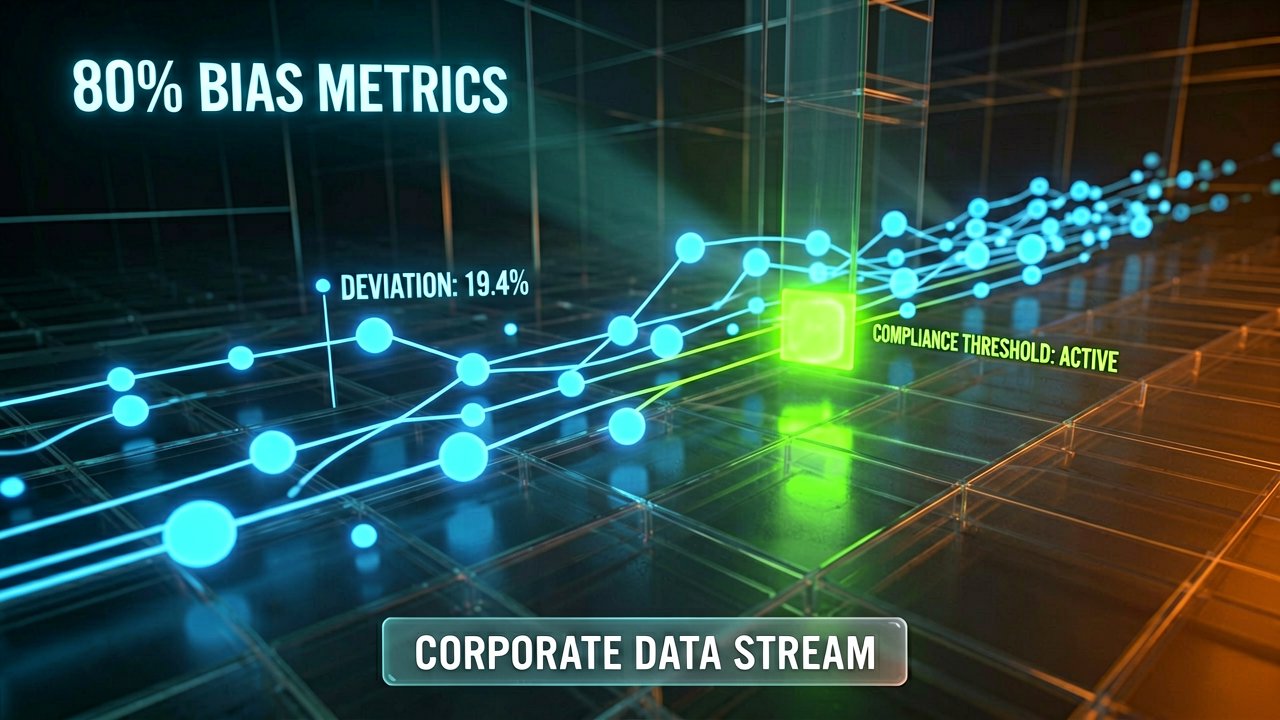
For years, the promise of AI in hiring was efficiency: a way to cut through the noise of thousands of resumes and find the "perfect" candidate without the messy interference of human prejudice. But as we've moved into 2026, that narrative has flipped. Instead of a shield against bias, many companies are finding that their automated tools are actually high-speed engines for discrimination, and the legal system is finally catching up. It’s no longer just a hypothetical risk; it’s a series of active, expensive headaches for HR departments that thought they could outsource their judgment to an algorithm.
The federal landscape is currently in a state of high-stakes flux. While the current administration has recently rolled back some Biden-era AI policy directives, the Equal Employment Opportunity Commission (EEOC) continues to emphasize that existing civil rights laws—like Title VII and the ADEA—apply to machine-learning tools just as strictly as they do to human managers. We aren't just talking about abstract warnings anymore, either. We’ve seen landmark settlements like the one involving iTutorGroup, which paid out $365,000 after its software was caught auto-rejecting older applicants. This sent a clear signal to the industry: "The software did it" is not a valid legal defense.
The State-Level Patchwork: Audits and Notifications
While federal guidance might feel like it's shifting with the political winds, several states have stepped into the vacuum with much more specific requirements. New York City led the charge with Local Law 144, which effectively forced companies to pull back the curtain on their hiring tech. Employers using "automated employment decision tools" (AEDTs) are now required to undergo annual independent bias audits and publicly post the results. It’s a move toward radical transparency that many tech vendors weren't prepared for, and the penalties for staying in the dark are quickly adding up.
Other states are carving out their own niches of regulation. Illinois, for instance, has doubled down on transparency through its AI Video Interview Act, requiring companies to tell candidates exactly what traits an algorithm is looking for before they even hit "record." Meanwhile, California’s Civil Rights Council recently finalized regulations that make it crystal clear: employers can be held liable for "algorithmic discrimination" even if they’re just using a third-party tool they didn't build themselves. This "vendor liability" is the new frontier of litigation, and it's putting the entire HR tech ecosystem on notice.
Class Actions and the "Black Box" Problem
The biggest threat on the horizon for 2026 isn't a government fine, but the massive collective action lawsuits now moving through the courts. The ongoing battle in Mobley v. Workday has become a bellwether for the industry. The case argues that when an AI platform systematically filters out applicants over 40 or those with disabilities, the platform itself acts as an "agent" of the employer and can be sued directly. A judge recently ordered the production of a list of all customers using certain AI features, which means a single lawsuit against a vendor could theoretically turn into a nightmare for thousands of companies overnight.
What makes these cases so difficult is the "black box" nature of modern AI. Often, an employer can’t explain why a specific candidate was rejected because the model’s decision-making process is too complex for human interpretation. However, courts are increasingly unsympathetic to this lack of transparency. If a company's "neutral" tool ends up creating a disparate impact—meaning it accidentally screens out protected groups—the burden of proof is landing squarely on the employer to justify that the tool is actually measuring job-related skills rather than just replicating historical biases. Relying on an algorithm to do the heavy lifting has never been riskier.
Beyond the Algorithm: The Human Cost of Automated Inequity
The Reality Behind the Interface: While C-suite executives often view AI as a "cleaner" way to manage human capital, the engineers behind these systems are increasingly sounding the alarm about data decay. The dirty secret of machine learning in recruitment is that these models are trained on historical hiring data, which is essentially a digital map of yesterday’s prejudices. If a company’s top performers for the last decade were predominantly graduates from a specific set of elite universities, the AI doesn't just learn to find talent; it learns to replicate that specific pedigree as a proxy for success. This creates a feedback loop where the software effectively automates the "culture fit" bias that HR departments have spent decades trying to dismantle.
Stakeholder perspectives are sharply divided, creating a friction point that legal teams are struggling to lubricate. On one side, vendors argue that their tools provide "objective" scoring that eliminates the fatigue and mood swings of human recruiters. However, disability advocates point out that many AI-driven video assessment tools are fundamentally unable to account for neurodiversity. A candidate with autism might not hit the "appropriate" eye contact or facial expression benchmarks set by an algorithm trained on neurotypical speakers, leading to an immediate, automated rejection before a human ever sees their resume. This isn't just a technical glitch; under the ADA, it’s a potential litigation goldmine.
From a historical vantage point, we are seeing a repeat of the "disparate impact" battles of the 1970s, but at a speed and scale that the legal system wasn't designed to handle. In the past, proving discrimination required finding a "smoking gun" email or witnessing a biased interview. Today, the smoking gun is buried in millions of lines of code and weighted variables. This has led to the rise of a new professional class: the algorithmic auditor. These third-party firms are being brought in not just to check for math errors, but to perform "adversarial testing"—essentially trying to trick the AI into being biased so the company can fix it before a plaintiff's attorney does it for them.
Labor unions and employee advocacy groups are also shifting their tactics, moving away from individual grievances toward demands for "algorithmic transparency" in collective bargaining agreements. They are pushing for the right to know exactly what data points are being used to score employees and the right to challenge an automated decision through a human appeal process. This pushback highlights a growing distrust in the "black box" philosophy. For many workers, the transition from a human boss to an invisible, unaccountable algorithm feels like a step backward in workplace rights, regardless of how efficient the software claims to be.
Corporate risk officers are now caught in a pincer movement between the efficiency gains promised by AI and the massive indemnification clauses being inserted into tech contracts. Many savvy employers are now demanding that AI vendors provide "legal "shields" or financial guarantees against bias lawsuits, but many startups simply don't have the capital to back those promises. This is leading to a consolidation in the HR tech market, where only the largest players—those who can afford the most rigorous compliance and insurance—are seen as safe bets for enterprise-level recruitment. The era of the "move fast and break things" HR startup is rapidly coming to a close as the legal stakes reach the stratosphere.
Ultimately, the evolution of AI hiring law is moving toward a standard of "meaningful human oversight." Regulators are increasingly skeptical of "human-in-the-loop" claims that are merely rubber-stamping whatever the machine suggests. To survive the next wave of audits and lawsuits, companies are finding they have to reinvest in the very thing they tried to automate: human judgment. The most successful firms in 2026 are those using AI as a broad-spectrum flashlight to illuminate a larger pool of talent, rather than a precision laser to cut people out based on invisible criteria.
The Compliance Paradox: Efficiency vs. Accountability
The Accountability Illusion: There is a pervasive myth in corporate circles that adopting "audited" AI tools creates a safe harbor from litigation. In reality, these audits are often more about optics than actual ethics. A "bias audit" under current standards frequently measures the 80% rule—a simple statistical check to see if one group is hired at a significantly lower rate than another. However, this metric is a blunt instrument that fails to capture "intersectional" discrimination. An algorithm might pass a general audit for gender and race independently, yet still systematically exclude Black women or older veterans through a combination of weighted variables that no auditor is specifically looking for. We are building a compliance culture around checklists while the actual harm remains hidden in the high-dimensional math of the models.
The industry is also grappling with a glaring contradiction: the demand for "explainability" vs. the proprietary nature of corporate intellectual property. Tech vendors treat their algorithms as trade secrets, guarded more fiercely than the data they process. When a court demands to know why a specific neural network favored a certain candidate profile, companies often hide behind the "proprietary" shield. This creates a legal stalemate where the employer is liable for the output, but the vendor refuses to reveal the input. As we move deeper into 2026, this tension is likely to snap, forcing a legislative choice between protecting a developer’s code or a citizen’s right to fair treatment. The middle ground is disappearing, and the "trust us, it works" era of software procurement is functionally dead.
Projecting forward, we should be skeptical of the "AI as a cure" narrative for the labor shortage. While these tools can process applications at light speed, they often suffer from a "reversion to the mean." By optimizing for high-probability success based on historical data, AI tends to favor the safe, conventional candidate over the outlier or the "diamond in the rough" who doesn't fit the standard template. In a rapidly changing economy, this is a strategic disaster. Companies are effectively automating the rejection of the very innovators and non-traditional thinkers they claim to need. The result is a corporate landscape filled with "perfect" hires who look exactly like the hires from five years ago, leaving organizations brittle and unadaptable in a world that is anything but stable.
Furthermore, the rise of "candidate-side AI"—tools designed to help job seekers bypass filters by keyword-stuffing resumes or generating perfect interview responses—is turning the hiring process into a war of the bots. We are rapidly approaching a scenario where one AI writes a resume to trick another AI that was hired to find it. This arms race creates a massive amount of noise that further degrades the quality of the data entering the system. When both the hunter and the hunted are using the same generative models, the "data signal" becomes a hall of mirrors. Instead of making hiring more precise, AI is threatening to make it entirely performative, where the only thing being measured is who has the better subscription to a resume-optimization service.
Ultimately, the legal risks aren't just about fines; they are about the erosion of the employer-employee relationship before it even begins. When a candidate feels they were rejected by a faceless machine, their trust in the brand evaporates. The legal system is now attempting to re-humanize a process that tech companies spent billions trying to dehumanize. The irony is that the more "advanced" our hiring tech becomes, the more we find ourselves pining for the days of a messy, biased, but at least arguably human interview. For general counsel, the message is clear: if you can't explain your hiring process to a jury of twelve reasonably intelligent humans, it doesn't matter how sophisticated your software is.
"We spent forty years trying to get the human out of the hiring process to avoid lawsuits, only to discover that the machines we replaced them with are even better at generating subpoenas—and they don’t even have the decency to feel guilty about it in the deposition."
Artūras Malašauskas is an AI Systems Integrator with 20+ years of production-grade web engineering experience. He has designed, shipped, and scaled enterprise Python/PHP systems for logistics, SaaS, and public-sector clients. For the past year, he has focused exclusively on AI integrations: deploying open-source LLMs, building generative media pipelines (image, audio, video), and engineering multi-agent workflows for real production environments. His standard: reproducibility, security, cost-efficient inference—no vaporware. He documents and evaluates emerging AI tooling, separating verified capabilities from marketing noise. Technical editor at: muza-ai.eu, ai-verslas.lt, ai-naujinos.lt Connect on LinkedIn
Comments