Quan2um Rewrites the Playbook with Tokenized Stocks and a Shariah-First Overhaul
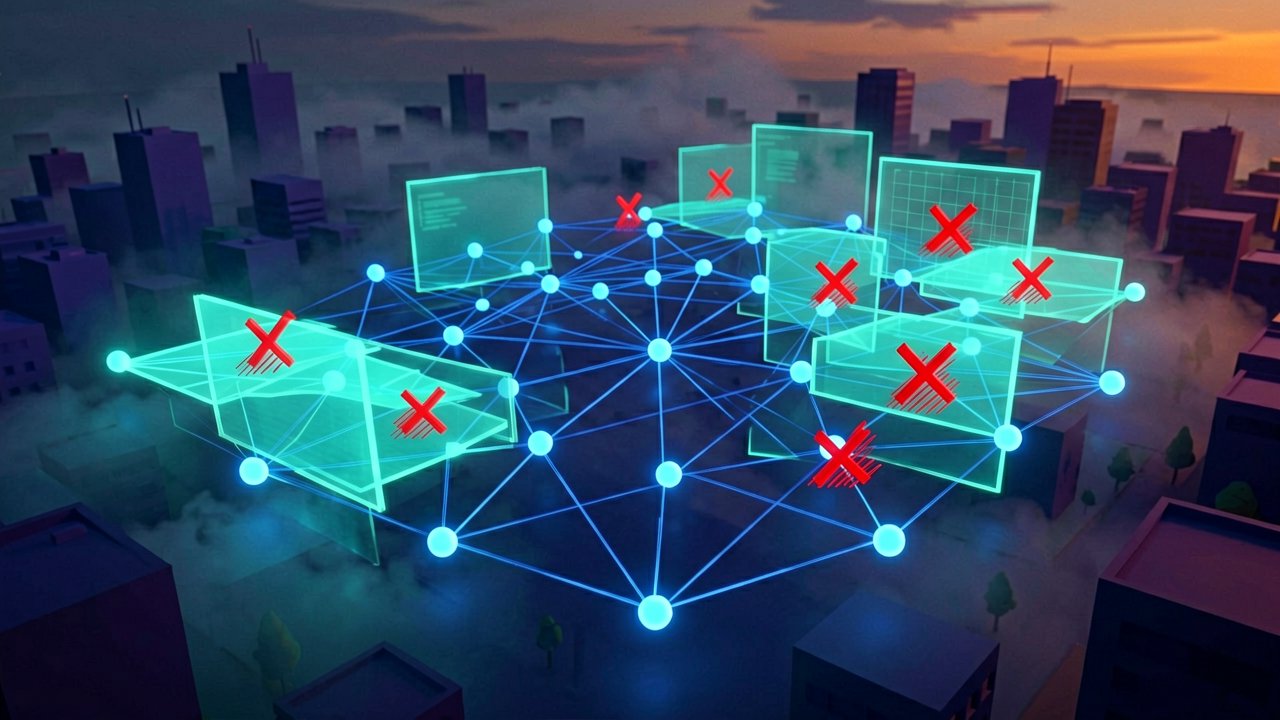
The intersection of faith and fintech just got a whole lot busier. Cryptocurrency exchange Quan2um has officially pulled the curtain back on a major platform update that does more than just move the pixels around. By introducing a decentralized exchange (DEX) tool for tokenizing stock shares, the company is effectively bridge-building between the high-octane world of digital assets and the established corridors of traditional equity. It’s an ambitious play to modernize Islamic finance, proving that sticking to Shariah principles doesn’t mean getting stuck in the past.
This isn't your standard UI refresh—though the interface has indeed been completely redesigned for better flow. The real meat of the update lies in how Business Insider reports the platform is now screening assets. Following standards set by organizations like AAOIFI, Quan2um is strictly gating its listings to exclude companies tied to interest-based mechanisms, gambling, or other prohibited industries. It’s a clean-room approach to investing that offers a level of digital-native transparency we haven't seen scaled quite like this before.
Halal Meets High-Tech: The Tokenization Edge
Tokenized stocks are essentially digital twins of real-world shares, and they bring some serious perks to the table, like 24/7 trading and fractional ownership. For the Muslim investor, however, the barrier hasn't just been technical—it's been ethical. By baking Shariah compliance directly into the listing process, Quan2um removes the guesswork. Users can interact with instruments representing real companies without the nagging doubt of whether they're inadvertently backing a haram enterprise.
A More Personal Touch for Charity
In a move that leans into the community-focused side of Islamic values, the platform has also retooled its charity section. It’s a clever bit of social integration: donors now have the option to publish their names, while aid recipients can respond with personalized thank-you videos and "duas" (prayers). According to reporting from The Manila Times , this shift toward a more transparent and interactive ecosystem is designed to foster a sense of direct impact that traditional, faceless zakat distribution often lacks.

Opening the Door for AI Agents
Perhaps the most forward-looking tweak is the new access granted to AI agents within the stock market ecosystem. While most retail traders are still getting used to the idea of tokenized equities, Quan2um is already prepping for an era where automated agents manage portfolios with high-speed precision. It’s a clear signal that the exchange isn't just looking to serve today’s market, but is actively laying the groundwork for a future where Shariah-compliant finance is as automated and efficient as any other corner of the tech world.
The Architectural Shift: Beyond the Buzzwords
The Strategic Pivot: What most reports miss is that Quan2um’s shift isn’t just a localized feature update; it is a calculated bet on the massive "Halal Economy," which is projected to reach trillions in the coming years. By moving toward a decentralized exchange (DEX) model for tokenization, the platform is solving a historical liquidity trap. Traditionally, Islamic finance has struggled with limited access to Shariah-compliant secondary markets, often forcing investors to hold assets longer than they might prefer. Tokenization breaks this bottleneck by allowing global retail investors to trade fractional interests in major companies with the same fluidity as Bitcoin, but with the legal and ethical backing of a vetted equity.
From a stakeholder perspective, the inclusion of AI agents is the real "silent" revolution here. While human traders often struggle to cross-reference real-time balance sheets against AAOIFI standards—which require a company’s debt-to-equity ratio to remain below specific thresholds—AI can do this in milliseconds. These automated agents act as digital guardians, ensuring that if a company’s financial health shifts toward interest-heavy debt, the "Halal" status can be flagged or adjusted immediately. This level of dynamic compliance was virtually impossible a decade ago, providing a safety net for institutional players who need to guarantee ethical adherence to their own board of directors.
Historical context matters here because we are seeing a convergence of two previously parallel worlds. For years, Fintech was viewed with skepticism by conservative scholars due to the volatility and speculative nature of "meme coins." By anchoring their digital assets to real-world stocks, Quan2um is essentially de-risking the perception of crypto for a demographic that values tangible utility. This move mirrors the early 2000s rise of Sukuk (Islamic bonds), but with the added layer of blockchain transparency that eliminates the need for expensive middle-man auditors to verify the underlying assets.
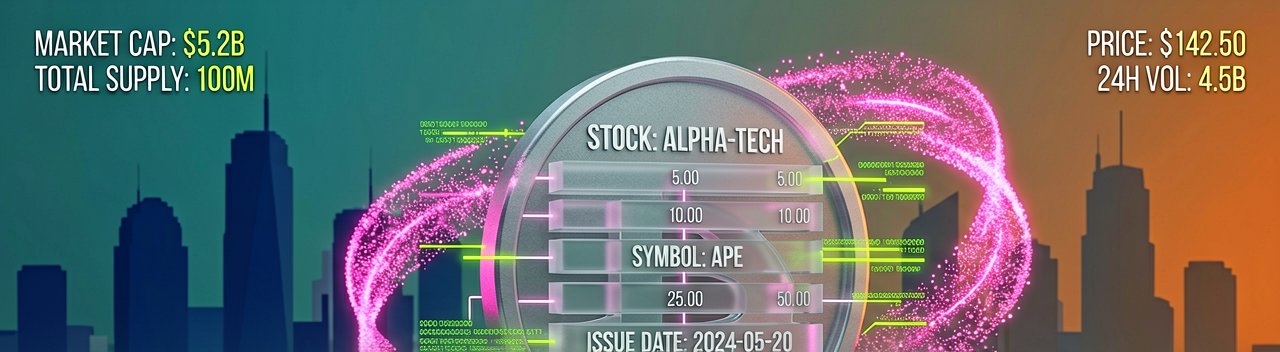
The redesign of the charity module also speaks to a deeper shift in user psychology within the MENA region and beyond. By introducing personalized video feedback and public recognition, the platform is moving away from the "black box" model of charitable giving. This transparency is designed to build the kind of trust that keeps users within an ecosystem. When a trader sees the direct result of their transaction fee going toward a verified cause through a video response, it creates a feedback loop that transforms a sterile financial transaction into a community-building event.
Looking at the broader market, this update places Quan2um in direct competition with traditional Islamic banks that have been slow to digitize. The platform’s ability to offer tokenized equities means it can bypass the heavy overhead of brick-and-mortar banking, offering better rates and more agile portfolio management. As more investors look for "values-based" portfolios—a trend that overlaps significantly with Western ESG (Environmental, Social, and Governance) standards—Quan2um is positioned to capture a segment of the market that isn't just looking for profit, but for proof of principle.
Ultimately, the marriage of Shariah compliance and tokenization is a test case for the future of regulated DeFi. By proving that a platform can maintain strict ethical boundaries while utilizing the most cutting-edge tools in the industry, Quan2um is providing a roadmap for others to follow. The success of this rollout will likely dictate whether other major exchanges begin to partition their offerings to cater to specific ethical and religious requirements, turning niche compliance into a mainstream gold standard.
The Friction Between Decentralization and Dogma
Reading Between the Lines: There is an inherent tension in trying to bake rigid religious jurisprudence into the "permissionless" ethos of a decentralized exchange. While Quan2um’s pivot toward Shariah compliance is a masterclass in market positioning, it raises uncomfortable questions about the definition of decentralization. If a DEX is truly decentralized, the ability to gatekeep or restrict certain trades based on ethical screening usually falls to the user, not the protocol. By acting as the moral arbiter of which stocks are "tokenizable," Quan2um is essentially creating a walled garden—a "halal-net" that offers the aesthetic of DeFi while maintaining the centralized control of a traditional brokerage.
Furthermore, the reliance on AI agents to maintain compliance introduces a technical paradox. Shariah law is famously nuanced, often relying on the interpretation of human scholars who weigh intent and social impact. Entrusting this to an algorithm assumes that religious ethics can be reduced to binary code and balance sheet ratios. There is a risk that "automated compliance" becomes a box-ticking exercise that satisfies the letter of the law while missing the spirit, especially when dealing with complex multinational corporations whose revenue streams are notoriously opaque and prone to shifting between quarterly reports.
We also have to look at the contradiction of "fractional" tokenized stocks in a Shariah context. Historically, Islamic finance emphasizes the sharing of risk and reward through direct ownership. When you tokenize a share and split it into a thousand pieces, the link between the investor and the underlying company becomes increasingly abstract. Skeptics might argue that this looks less like a partnership in a business and more like a derivative product, which could eventually draw the ire of the very scholars Quan2um is trying to appease. The platform is walking a razor-thin line between innovative accessibility and speculative engineering.
The long-term projection for this model depends entirely on whether it can survive a "secular" market downturn. It is easy to maintain ethical standards when the charts are green and liquidity is high, but the true test of any faith-based financial system is how it handles the pressure of a liquidity crunch. If the "halal" tokenized stocks underperform compared to their restricted counterparts, we will see exactly how much premium the modern investor is willing to pay for a clear conscience. For now, Quan2um is betting that the moral high ground is also the most profitable one.
It turns out that marrying ancient ethical codes with bleeding-edge blockchain is remarkably simple: you just have to convince the scholars that the 'ghost in the machine' is actually an underpaid digital auditor with impeccable morals and no taste for interest rates.
Artūras Malašauskas is an AI Systems Integrator with 20+ years of production-grade web engineering experience. He has designed, shipped, and scaled enterprise Python/PHP systems for logistics, SaaS, and public-sector clients. For the past year, he has focused exclusively on AI integrations: deploying open-source LLMs, building generative media pipelines (image, audio, video), and engineering multi-agent workflows for real production environments. His standard: reproducibility, security, cost-efficient inference—no vaporware. He documents and evaluates emerging AI tooling, separating verified capabilities from marketing noise. Technical editor at: muza-ai.eu, ai-verslas.lt, ai-naujinos.lt Connect on LinkedIn
Comments