Domino Data Lab Bridges the Chasm: Turning Fragile Models into Mission-Critical Powerhouses

It’s the classic enterprise headache: a data science team builds a brilliant model, yet it languishes in a "sandbox" because the jump to real-world production is too steep, too risky, or too slow. At its annual Rev 2026 conference in New York, HPCwire reports that Domino Data Lab has unveiled a suite of new capabilities designed to finally bridge that gap. By focusing on what they call "mission-critical applications," Domino is moving beyond the simple "deploy" button to offer a unified, governed framework that manages the entire lifecycle of agentic and traditional AI systems.
The update arrives at a pivot point for the industry. While experimental AI is everywhere, the PR Newswire coverage highlights that few organizations have successfully industrialized these models into the core of their operations. Domino’s answer is a series of features that streamline the "Agentic Development Lifecycle" (ADLC), including universal tracing, structured evaluation, and auto-scaling app hosting. This isn't just about making models run; it’s about making them reliable enough for highly regulated sectors like life sciences and financial services.
The Architecture of Reliability
What Most Reports Miss: The real story here isn't just "more features"—it’s the systemic removal of the "velocity tax" that currently cripples enterprise AI. For years, the industry has treated model development and application deployment as two separate worlds. Data scientists used their favorite notebooks, while IT teams rebuilt those ideas in production-hardened code. Domino is effectively merging these silos, allowing teams to deliver what they call "Domino Apps" directly to business stakeholders. This transition reduces the need for costly rewrites and ensures that a model’s original logic and governance remain intact as it scales.
Historically, the biggest bottleneck for "mission-critical" AI has been trust. If a bank uses an AI agent to handle customer trades or a pharmaceutical firm uses one to monitor clinical trials, the margin for error is zero. According to insights from , the new platform includes a "Governance Center" that makes policy enforcement actionable. Rather than checking for compliance at the end of the project, governance is now baked into the workflow where the data scientists actually work. This shift can reportedly reduce the governed model lifecycle by up to 70%, transforming a bureaucratic hurdle into a competitive advantage.
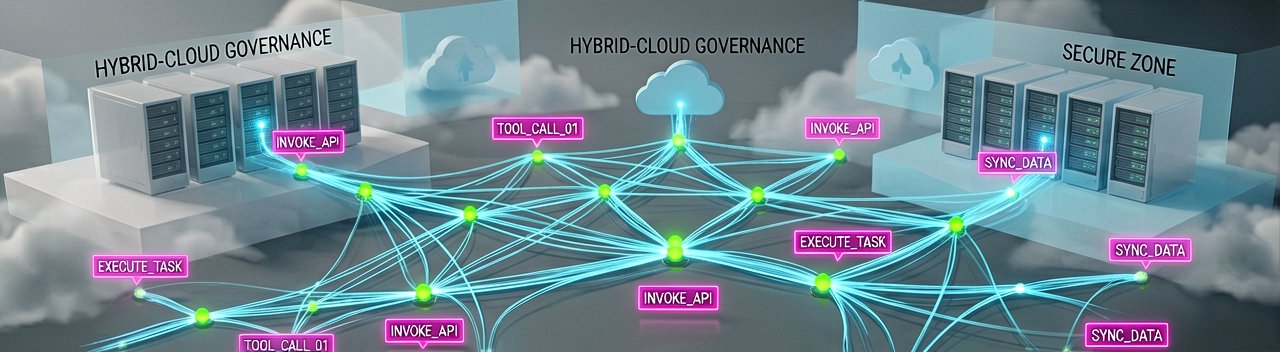
The timing of this release is clearly calibrated for the "agentic" era. We are seeing a move away from simple chatbots toward autonomous agents that can call tools and make decisions. However, these agents are notoriously difficult to monitor because their paths aren't linear. Domino’s new "universal tracing SDK" addresses this by capturing every prompt, tool call, and decision branch. By creating a transparent "system of record" for every action an agent takes, Domino provides the audit trail that regulators and executives have been demanding before green-lighting wide-scale rollouts.
Stakeholders are already looking at how this impacts the bottom line. With Computer Weekly noting that the new capabilities are moving toward general availability by Q3 2026, the pressure is on IT leaders to modernize their "industrial machinery." The shift from "artisanal" data science—where every project is a unique, hand-crafted effort—to an "AI factory" mindset is the central theme here. Companies that can't move an idea to a working, validated model in under two weeks are increasingly being viewed as laggards in a market that moves at the speed of silicon.
Ultimately, Domino is betting that the future of AI isn't just about who has the cleverest algorithm, but who has the most robust pipeline. By supporting NVIDIA NIM microservices and providing integrated model hosting on a hybrid-cloud infrastructure, they are giving enterprises the flexibility to keep their data where it is while still using the latest open-source models like Llama or Mistral. It’s a sophisticated play to capture the "middle" of the market: the space between the raw experimentation of research labs and the rigid, black-box solutions of the past.
It’s the classic enterprise headache: a data science team builds a brilliant model, yet it languishes in a "sandbox" because the jump to real-world production is too steep, too risky, or too slow. At its annual Rev 2026 conference in New York, HPCwire reports that Domino Data Lab has unveiled a suite of new capabilities designed to finally bridge that gap. By focusing on what they call "mission-critical applications," Domino is moving beyond the simple "deploy" button to offer a unified, governed framework that manages the entire lifecycle of agentic and traditional AI systems.

The update arrives at a pivot point for the industry. While experimental AI is everywhere, the PR Newswire coverage highlights that few organizations have successfully industrialized these models into the core of their operations. Domino’s answer is a series of features that streamline the "Agentic Development Lifecycle" (ADLC), including universal tracing, structured evaluation, and auto-scaling app hosting. This isn't just about making models run; it’s about making them reliable enough for highly regulated sectors like life sciences and financial services.
The Architecture of Reliability
What Most Reports Miss: The real story here isn't just "more features"—it’s the systemic removal of the "velocity tax" that currently cripples enterprise AI. For years, the industry has treated model development and application deployment as two separate worlds. Data scientists used their favorite notebooks, while IT teams rebuilt those ideas in production-hardened code. Domino is effectively merging these silos, allowing teams to deliver what they call "Domino Apps" directly to business stakeholders. This transition reduces the need for costly rewrites and ensures that a model’s original logic and governance remain intact as it scales.
Historically, the biggest bottleneck for "mission-critical" AI has been trust. If a bank uses an AI agent to handle customer trades or a pharmaceutical firm uses one to monitor clinical trials, the margin for error is zero. According to insights from Domino Data Lab, the new platform includes a "Governance Center" that makes policy enforcement actionable. Rather than checking for compliance at the end of the project, governance is now baked into the workflow where the data scientists actually work. This shift can reportedly reduce the governed model lifecycle by up to 70%, transforming a bureaucratic hurdle into a competitive advantage.
The timing of this release is clearly calibrated for the "agentic" era. We are seeing a move away from simple chatbots toward autonomous agents that can call tools and make decisions. However, these agents are notoriously difficult to monitor because their paths aren't linear. Domino’s new "universal tracing SDK" addresses this by capturing every prompt, tool call, and decision branch. By creating a transparent "system of record" for every action an agent takes, Domino provides the audit trail that regulators and executives have been demanding before green-lighting wide-scale rollouts.
Stakeholders are already looking at how this impacts the bottom line. With Computer Weekly noting that the new capabilities are moving toward general availability by Q3 2026, the pressure is on IT leaders to modernize their "industrial machinery." The shift from "artisanal" data science—where every project is a unique, hand-crafted effort—to an "AI factory" mindset is the central theme here. Companies that can't move an idea to a working, validated model in under two weeks are increasingly being viewed as laggards in a market that moves at the speed of silicon.
The Reality of the "Agentic" Promise
Reading Between the Lines: While the promise of "mission-critical" AI sounds like the ultimate corporate safety net, there is a fundamental contradiction in the industry’s current obsession with agents. Domino is pitching a framework for "predictable" results from systems that are, by their very nature, probabilistic and non-deterministic. No matter how many tracing SDKs or evaluation frameworks are layered on top, an LLM-based agent still operates in a realm of "best guesses." We are essentially witnessing an arms race to build the world’s most sophisticated leash for a dog that occasionally decides to bark in a completely different language.
The "Governance Center" as a concept also invites a degree of healthy skepticism regarding the human element. Domino provides the rails, but the enterprise must still decide where those rails lead. There is a persistent risk that these tools will be used as a "compliance theatre" where boxes are checked within the platform while the underlying data quality remains questionable. Large-scale automation often masks fundamental architectural rot; a "70% faster governed lifecycle" only matters if the governance itself is substantive rather than just a digital rubber stamp.
Furthermore, the integration with NVIDIA NIM and the focus on hybrid-cloud infrastructure highlights the growing "infrastructure tax." Domino is attempting to simplify the stack, but the stack itself is becoming more fragmented. As companies balance on-premises data with multiple cloud providers to avoid vendor lock-in, the complexity of managing these environments may eventually outpace the efficiency gains promised by the platform. The dream of a single, unified "AI factory" often runs head-first into the messy reality of legacy databases and shadow IT departments that refuse to consolidate.
Projecting forward, the real test for Domino won't be the technology itself, but the cultural shift it demands. Moving from experimental sandboxes to mission-critical applications requires a level of rigor that many data science teams aren't yet culturally equipped for. The "move fast and break things" ethos of the last decade is fundamentally at odds with the "mission-critical" label. If Domino succeeds, it will be because they’ve forced a professionalization of the field that data scientists may find stifling, even if it is exactly what the CFO ordered.
"Ultimately, we are building tools that allow us to trust robots to do things we wouldn't trust ourselves to do on a Friday afternoon. It’s a bold bet that the best way to handle AI’s unpredictability is to surround it with so much paperwork that the model eventually gives up and starts behaving out of pure exhaustion."
Artūras Malašauskas is an AI Systems Integrator with 20+ years of production-grade web engineering experience. He has designed, shipped, and scaled enterprise Python/PHP systems for logistics, SaaS, and public-sector clients. For the past year, he has focused exclusively on AI integrations: deploying open-source LLMs, building generative media pipelines (image, audio, video), and engineering multi-agent workflows for real production environments. His standard: reproducibility, security, cost-efficient inference—no vaporware. He documents and evaluates emerging AI tooling, separating verified capabilities from marketing noise. Technical editor at: muza-ai.eu, ai-verslas.lt, ai-naujinos.lt Connect on LinkedIn
Comments