Google’s Antigravity 2.0 Is Here to Prove the 'Agentic' Hype Is Real
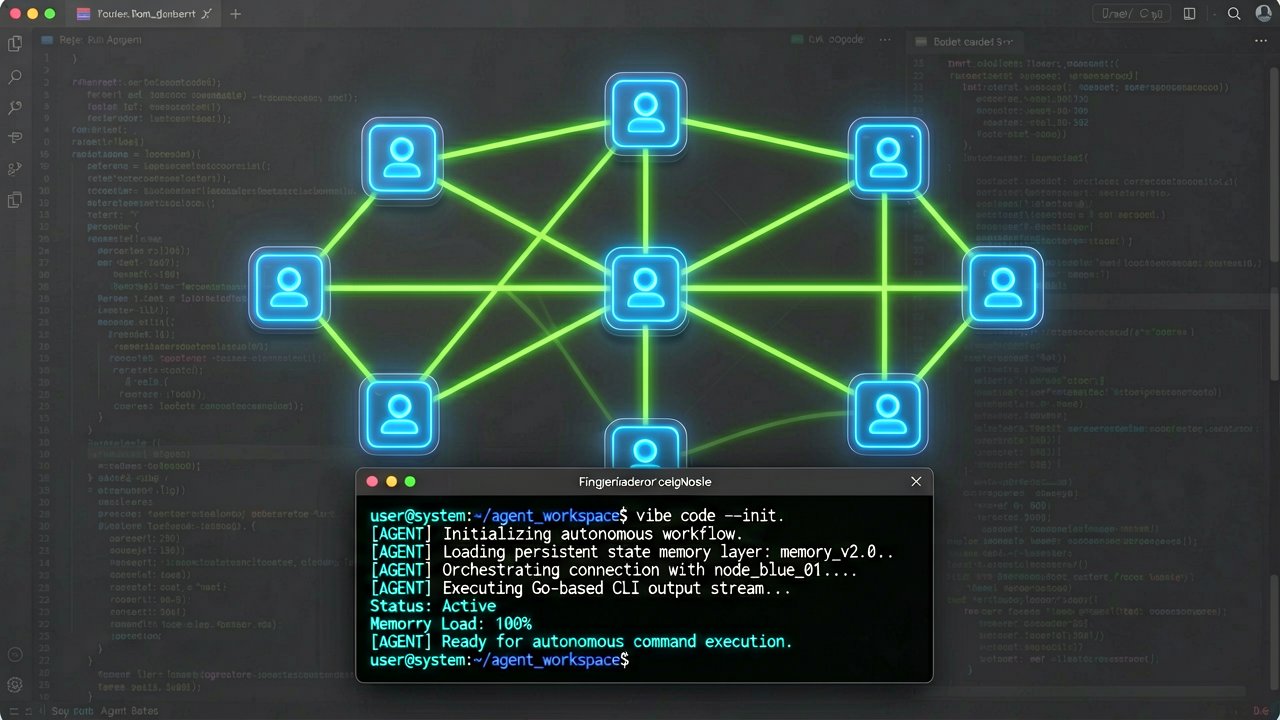
Google isn't just dipping its toes into the AI-assisted coding pool anymore; it’s diving headfirst into the deep end with the launch of Antigravity 2.0. Announced at I/O 2026, this isn't just a minor patch for the VS Code fork we saw last year. It’s a full-blown declaration of war on traditional IDEs, pivoting from a simple "assistant" model to a comprehensive "agentic" platform. If the first version was about having a helpful sidekick, 2.0 is about hiring a small army of digital engineers to do the heavy lifting while you play architect.
The centerpiece of this update is a revamped desktop application designed to handle what Google calls "multi-agent orchestration." Essentially, the app lets you spin up several subagents to work on different parts of a project simultaneously—think one agent handling your unit tests while another refactors a messy API module. According to reports from , the new environment is built to let these agents execute tasks in the background, allowing developers to schedule complex workflows that keep running even when the primary window isn't active.
Power to the Terminal: The New CLI and SDK
For those of us who live in the terminal, the most significant shift might be the death of the Gemini CLI, which is being unceremoniously retired in favor of the new Antigravity CLI. Rebuilt in Go for speed, this tool allows for "vibe coding" at scale, letting you trigger autonomous agents directly from your command line. There's also a new SDK in the mix, giving developers the hooks they need to build their own custom agents or integrate Antigravity’s brainpower into existing CI/CD pipelines. It’s clear Google wants this to be more than a standalone app; they’re building an ecosystem that hooks deep into Firebase, Android, and AI Studio as noted by The Next Web.
The Price of Progress
Of course, all this "agentic" power doesn't come for free once you scale past the hobbyist phase. Google has redrawn its pricing lines, introducing a new $100/month "AI Ultra" tier that sits between the standard Pro plan and the high-end Enterprise options. This middle-ground tier offers five times the usage limits of the Pro plan, targeting the "power user" who needs more than a casual chat but isn't ready for a full corporate contract. For those looking to jump in early, the company is even dangling $100 in bonus credits for new Ultra subscribers through May 25, a move clearly intended to lure users away from competitors like Cursor or OpenAI's latest offerings.

The Architectural Shift: From Assistant to Autonomy
What Most Reports Miss: The true soul of Antigravity 2.0 isn't the flashy UI or the desktop wrapper; it is the fundamental divorce from the "chatbot" paradigm that has defined AI coding for the last two years. While early iterations required a human to prompt, review, and manually merge every single line of code, the 2.0 engine operates on a persistent state model. This means the agent doesn't just forget who it is once the chat window closes. It maintains a long-term memory of the codebase’s tribal knowledge—those weird quirks in your legacy CSS or the specific way your team handles error logging—which it uses to make autonomous decisions across multiple files without being explicitly told to "remember" them every time.
Industry insiders suggest this pivot is Google’s direct response to the "context window" fatigue currently hitting the dev community. Even with massive windows, feeding an entire repository into a prompt is an expensive, often hallucination-prone chore. By moving to a multi-agent orchestration model, Google is effectively sharding the mental load. One agent acts as a project manager, breaking down a high-level goal into technical tasks, while specialized sub-agents execute those tasks in parallel. This is a massive departure from the "single-threaded" assistance we’ve seen in the past, and it signals a future where a developer’s primary skill shifts from writing syntax to managing digital workforces.
Historical context matters here, especially considering Google’s somewhat fragmented history with developer tools. For years, the Mountain View giant struggled to find a cohesive identity between Android Studio, Firebase, and various cloud-native IDEs. Antigravity 2.0 feels like the "unification event" the company has been chasing. By anchoring the experience in a dedicated desktop app and a Go-based CLI, as highlighted by TechCrunch, they are finally meeting developers where they actually live: in the terminal and the local file system, rather than forcing them into a browser-only workflow that feels disconnected from the hardware.
From a stakeholder perspective, this is a high-stakes gamble on the "Prosumer" market. The introduction of the $100/month "AI Ultra" tier is a clear shot across the bow of boutique AI labs. Google is betting that professional developers are willing to pay a premium for deep integration with the Google Cloud ecosystem, even if it means moving away from more open-source alternatives. For the independent contractor or the small startup team, the promise of "agentic" power that can handle a week's worth of unit testing in an afternoon is a value proposition that makes a hundred-dollar subscription look like a rounding error compared to the cost of a junior dev's salary.

The technical implementation of the new SDK also reveals a strategic play for the enterprise. By allowing teams to build custom agents, Google is effectively creating a marketplace for institutional knowledge. A large corporation could, in theory, train a specialized "Compliance Agent" that automatically reviews all Antigravity-generated code against internal security standards before it ever hits a human reviewer's desk. This layer of abstraction is what separates a mere tool from a platform, and it is where Google expects to find its moat against rivals who are still focusing on the chat interface as the primary point of entry.
Ultimately, the success of Antigravity 2.0 will be measured by the "trust gap." Developers are notoriously protective of their codebases, and handing the keys to a fleet of autonomous agents is a psychological hurdle as much as a technical one. Google’s inclusion of "Vibe Coding" features in the CLI, as noted by The Next Web, suggests they are trying to bridge this gap by making the process feel more natural and less like a sterile hand-off to a machine. If they can prove that these agents won't introduce subtle, systemic bugs, they might just redefine what it means to be a "software engineer" in the late 2020s.
The Agentic Paradox: Efficiency vs. Technical Debt
Reading Between the Lines: While Google’s marketing machine paints a portrait of a frictionless "agentic" future, there is a glaring contradiction buried in the fine print of the Antigravity 2.0 rollout. The industry is currently obsessed with "vibe coding"—the idea that high-level intent can replace granular syntax—but this overlooks the reality that software maintenance is fundamentally about understanding the "why" behind the "how." By offloading the grunt work to subagents that operate in parallel, we risk creating a generation of developers who are essentially project managers of black boxes. The speed at which Antigravity can generate unit tests or refactor modules is impressive, yet it assumes that the developer in the driver's seat is capable of auditing the sheer volume of code being produced at such a breakneck pace.
There is also the matter of the "AI Ultra" tier and the economic gatekeeping it represents. Google is pitching this $100-a-month subscription as a productivity multiplier, but it simultaneously introduces a new form of technical debt: vendor lock-in. As reported by The Next Web, the deep integration with Firebase and Google Cloud suggests that the "agentic" power being sold is most effective when you stay within the Google garden. For a startup, the efficiency gains of today might become the architectural shackles of tomorrow, making it nearly impossible to migrate to a competitor without rewriting the custom agents that have become the backbone of their CI/CD pipeline.
Furthermore, the skepticism surrounding the "vibe coding" CLI tool cannot be ignored. Command-line interfaces are traditionally the domain of precision and absolute control; introducing an autonomous agent that interprets "vibes" feels like a fundamental clash of philosophies. While TechCrunch notes the tool's speed and Go-based architecture, the reliability of these agents in high-stakes production environments remains unproven. If an agent refactors a critical security module based on a misunderstood "vibe" from the CLI, the accountability trail becomes murky at best. Google’s play for the enterprise market hinges on these agents being "compliance-aware," but history suggests that automated security checks are often a poor substitute for a human engineer with an intuitive sense for edge cases.
Finally, we have to look at the long-term impact on the junior developer ecosystem. If Antigravity 2.0 can truly replace the work of a small army of engineers for the price of a monthly subscription, the traditional "entry-level" roles—writing unit tests, boilerplate, and basic refactors—could evaporate. This creates a ladder with the bottom rungs removed. Without the experience of doing the "boring" work that Antigravity now automates, it is unclear how the next generation of "architects" will develop the deep foundational knowledge required to oversee the very agents they are supposed to manage. Google’s vision is one of extreme efficiency, but it may inadvertently be hollowing out the talent pipeline it relies on.
We are rapidly approaching a reality where a developer’s most important tool isn’t a compiler or a debugger, but a very expensive subscription and the blind faith that a digital agent doesn't have a bad day—though at $100 a month, you’d hope the AI at least remembers your preferred naming conventions better than a human intern does.
Artūras Malašauskas is an AI Systems Integrator with 20+ years of production-grade web engineering experience. He has designed, shipped, and scaled enterprise Python/PHP systems for logistics, SaaS, and public-sector clients. For the past year, he has focused exclusively on AI integrations: deploying open-source LLMs, building generative media pipelines (image, audio, video), and engineering multi-agent workflows for real production environments. His standard: reproducibility, security, cost-efficient inference—no vaporware. He documents and evaluates emerging AI tooling, separating verified capabilities from marketing noise. Technical editor at: muza-ai.eu, ai-verslas.lt, ai-naujinos.lt Connect on LinkedIn
Comments