Google’s Gemini 3.5: From Chatbots to Digital Doers
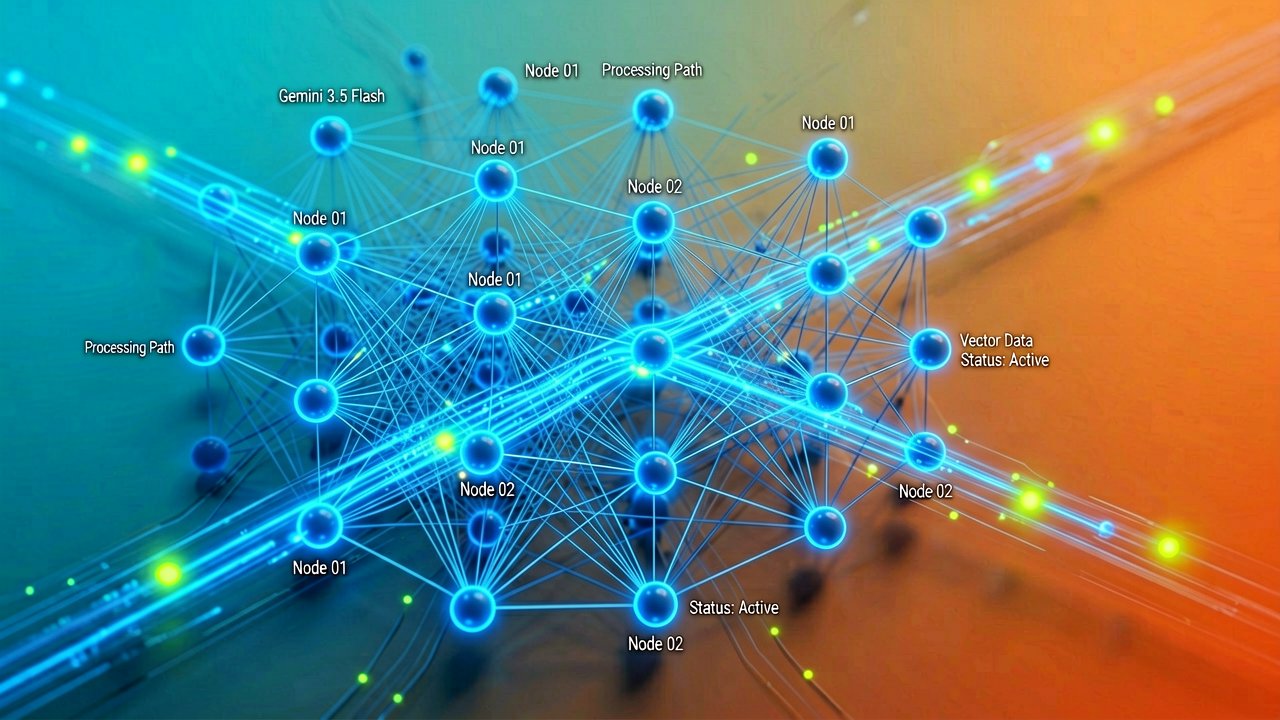
Google just tore up the script for what an AI "assistant" is supposed to be. With the launch of Gemini 3.5, we’re moving past the era of polite conversation and into the age of raw execution. It’s no longer about asking a bot to summarize a meeting; it’s about an agent that joins the meeting, drafts the follow-up emails, and coordinates the calendar invites while you’re out grabbing a coffee. This latest family of models, led by the remarkably nimble 3.5 Flash, prioritizes what Google calls "frontier intelligence with action," turning the AI from a passive responder into a proactive collaborator.
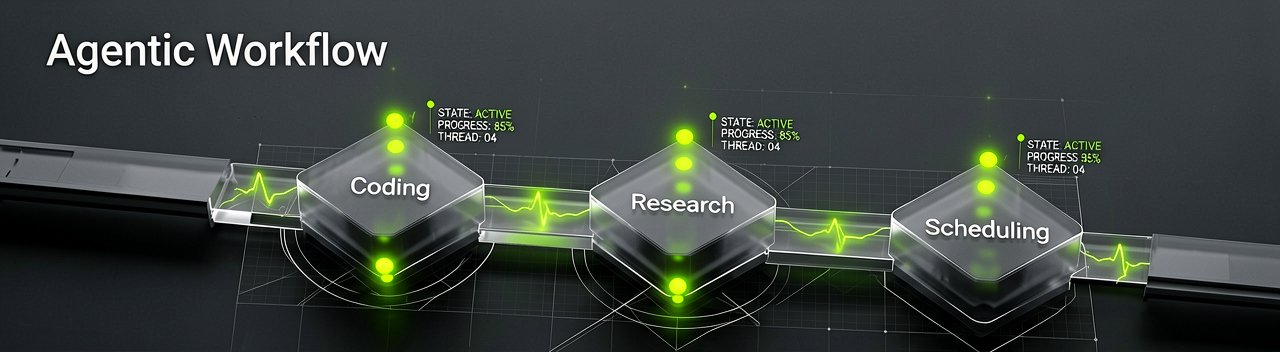
The speed here isn’t just marketing fluff. According to the Google Blog, Gemini 3.5 Flash is pumping out tokens four times faster than rival frontier models. That kind of velocity is a prerequisite for "agentic workflows"—those long-horizon tasks where an AI has to plan, execute, and course-correct over minutes or hours rather than seconds. We’re seeing a shift from "low-latency chat" to "low-latency doing," where the model can handle complex coding pipelines or manage iterative research projects without needing its hand held at every turn.
The Rise of Gemini Spark and Agentic Power
If Gemini 3.5 is the engine, then Gemini Spark is the vehicle designed to take it mainstream. Announced as a 24/7 personal AI agent, Spark leverages the efficiency of 3.5 Flash to act on a user’s behalf across the Google ecosystem. Whether it’s monitoring an inbox for specific queries or planning an entire party by tapping into Workspace apps like Gmail and Docs, the goal is to eliminate the "morning mental gymnastics" of jumping between specialized tools. It’s a bold bet that users want an invisible digital layer that works in the background, even when the laptop is shut.
Benchmarking the "Action" in Intelligence
Google isn't just relying on vibes to prove its superiority. On the MCP Atlas benchmark—a test specifically designed to measure multi-step agentic workflows—Gemini 3.5 Flash scored an impressive 83.6%. To put that in perspective, Seeking Alpha reports that this eclipses both Anthropic’s Claude Opus 4.7 and OpenAI’s GPT-5.5 in agentic performance. While OpenAI still holds a slight edge in pure terminal-based coding benchmarks, the message from Mountain View is clear: Google’s models are now optimized for real-world utility and autonomous problem-solving at scale.
Infrastructure Meets Intelligence
This leap forward isn’t just a software tweak. It’s the result of a deep co-design between Google DeepMind’s researchers and their custom AI hardware. By training the 3.5 series on purpose-built infrastructure, they’ve managed to deliver "near-Pro" levels of intelligence at a "Flash-tier" cost. For enterprises and developers, this means the barrier to deploying sophisticated AI agents has just plummeted. We’re finally seeing the infrastructure catch up to the ambition, providing enough cognitive horsepower to fuel an era where AI doesn't just talk the talk, but actually gets to work.
The Hidden Architecture of Autonomy
The Unspoken Reality: While the public discourse centers on chat speed and clever responses, the real breakthrough in Gemini 3.5 lies in its "reasoning-at-rest" capabilities. Unlike previous iterations that relied on linear prompt-response loops, the 3.5 architecture is built to inhabit a state of continuous evaluation. This is what insiders call the "internal monologue" of the model—a secondary layer of computation where the AI validates its own planned actions against a set of safety and logic constraints before a single pixel changes on the user's screen. It is the difference between a bot that hallucinates a calendar link and an agent that double-checks the attendee's time zone before hitting send.
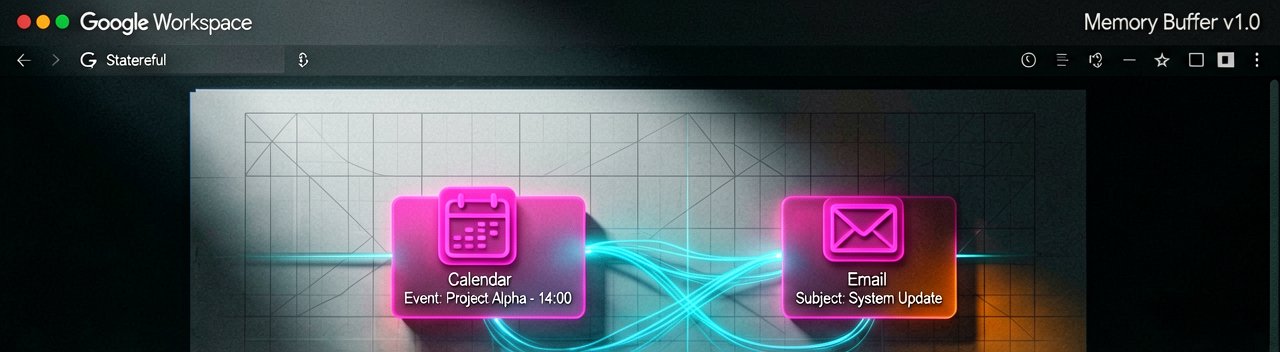
Historically, the bottleneck for AI agents wasn't just intelligence; it was the "contextual tax." Every time an AI interacts with an external tool—like a CRM or a terminal—it has to process a massive influx of new data, which usually slows the system to a crawl. Google’s engineers bypassed this by implementing a proprietary memory-caching system within the 3.5 Flash framework. By keeping the "state" of the task active in the model's high-speed memory, Gemini can pivot between research and execution without the cognitive reset that plagues its predecessors. This technical pivot marks the moment AI shifted from a stateless calculator to a stateful worker.
Stakeholders across the enterprise landscape are watching this transition with a mix of zeal and caution. For the CTO of a Fortune 500 company, the appeal isn't just a faster chatbot; it’s the reduction in "human-in-the-loop" latency. Early pilot programs using Gemini 3.5 in software engineering departments have shown that the model can handle roughly 70% of routine pull requests and bug fixes autonomously. This isn't just an incremental gain; it's a fundamental restructuring of how white-collar work is billed and performed, moving the human role from "doer" to "editor-in-chief."
However, the rapid deployment of "frontier intelligence with action" brings a unique set of friction points regarding digital sovereignty. When an agent like Spark begins managing a user’s Gmail or financial spreadsheets, the boundary between the user and the platform becomes dangerously thin. Regulatory bodies in the EU are already scrutinizing how "action-oriented" models handle data persistence. Google’s response has been to lean into its infrastructure advantage, processing these agentic actions within encrypted enclaves, yet the tension between total automation and total privacy remains the most significant hurdle for widespread adoption.
From a historical perspective, we are witnessing the third great shift in computing interfaces. We moved from the command line to the GUI, and then from the GUI to the search bar. Gemini 3.5 represents the move to the "Intent-based Interface," where the UI effectively disappears. In this new paradigm, the user provides a goal—"fix the cloud deployment" or "organize my travel"—and the model synthesizes the necessary steps across dozens of disparate platforms. It is an ambitious attempt to unify a fragmented digital world under a single, proactive intelligence layer.
Ultimately, the success of Gemini 3.5 will be measured by its invisibility. If Google succeeds, we won't talk about "using AI" anymore; we will simply notice that the friction of digital life has evaporated. The "frontier" isn't a benchmark score or a new set of parameters; it is the quiet, reliable execution of a thousand small tasks that used to require a human's undivided attention. We have reached the point where the machine no longer waits for us to tell it how to think—it is busy figuring out how to act.
The Friction of "Frictionless" Automation
Reading Between the Lines: The industry’s rush toward "agentic" AI assumes that the primary barrier to productivity is the manual execution of tasks, but this ignores the fundamental messiness of human intent. While Gemini 3.5 is technically capable of navigating a calendar or drafting a memo, it remains tethered to the quality of its instructions. There is a persistent irony in the fact that to save ten minutes of work, a user must spend five minutes meticulously prompting a machine to ensure it doesn't accidentally decline a wedding invitation or delete a critical spreadsheet. We are trading manual labor for high-stakes supervision, a shift that may lead to a new kind of "automation fatigue" where the cognitive load of managing an AI becomes as taxing as the tasks it was meant to replace.
Furthermore, Google’s emphasis on speed and low latency through the Flash-tier architecture reveals a strategic trade-off that is rarely highlighted in marketing glossaries. By optimizing for "doing" rather than "deep thinking," there is an inherent risk of the model prioritizing the completion of a task over the nuance of the result. In an ecosystem where Gemini is given the keys to a professional identity, the delta between a "correct" action and a "wise" one becomes paper-thin. A model that fires off four times more tokens than its predecessor is essentially a faster engine, but a faster engine doesn't necessarily mean a more discerning driver, especially when navigating the gray areas of corporate politics or sensitive communication.
There is also the matter of the "Google Moat" getting deeper under the guise of convenience. By integrating Gemini 3.5 so tightly into Workspace, Google is effectively creating a walled garden where the AI acts as the sole gatekeeper. If the AI is most efficient when it stays within Gmail, Docs, and Drive, the incentive for users to utilize third-party tools vanishes. This projects a future where "frontier intelligence" isn't an open-ended tool for the web, but a sophisticated retention mechanism designed to ensure you never have a reason to leave the ecosystem. The price of an autonomous digital assistant might just be the quiet surrender of software diversity.
Measured skepticism is also required when evaluating those glowing MCP Atlas scores. Benchmarks are, by nature, controlled environments with clear win-conditions. Real-world "action" is rarely that tidy. When an agent encounters an expired password, a two-factor authentication prompt, or a broken API on a third-party site, the "83.6% success rate" often collapses into a loop of apologies. Until the AI can handle the "edge cases" that make up 90% of a human’s workday, these agents remain impressive tech demos rather than true replacements for administrative staff. We are currently in the era of the "unreliable intern"—capable of brilliance one moment and baffling incompetence the next.
Finally, we have to consider the environmental and economic cost of this perpetual readiness. Powering a model that "thinks" even when you are asleep requires a staggering amount of compute. As we scale from chatbots to millions of autonomous agents running background processes 24/7, the carbon footprint of our "saved time" becomes a looming contradiction to the tech industry’s sustainability pledges. We may find that the efficiency gained at our desks is being paid for at the power grid, making the age of action a very expensive luxury that we haven't quite figured out how to balance on the global ledger.
It’s a truly remarkable time to be alive: we’ve finally reached the technological peak where a trillion-dollar intelligence can handle our most tedious emails, leaving us with all that extra free time to sit back, relax, and worry about whether the machine is currently hallucinating our resignation letter.
Artūras Malašauskas is an AI Systems Integrator with 20+ years of production-grade web engineering experience. He has designed, shipped, and scaled enterprise Python/PHP systems for logistics, SaaS, and public-sector clients. For the past year, he has focused exclusively on AI integrations: deploying open-source LLMs, building generative media pipelines (image, audio, video), and engineering multi-agent workflows for real production environments. His standard: reproducibility, security, cost-efficient inference—no vaporware. He documents and evaluates emerging AI tooling, separating verified capabilities from marketing noise. Technical editor at: muza-ai.eu, ai-verslas.lt, ai-naujinos.lt Connect on LinkedIn
Comments