The End of the Blank Page: How Google Workspace is Reimagining Productivity

For decades, the "blank page" has been the ultimate productivity killer, a digital desert where ideas go to die before they’re even born. But if you’ve spent any time in Google Workspace lately, you’ve likely noticed that the desert is starting to bloom. Google isn't just tweaking the margins anymore; they’re fundamentally shifting the apps from passive tools into active collaborators. Whether it’s Gemini drafting your emails or Google Vids turning a stale spreadsheet into a cinematic narrative, the goal is clear: less time staring at a blinking cursor and more time actually making things happen.
The most striking change is the sheer speed at which generative AI has moved from a "nice-to-have" experiment to a core feature. We’re seeing a new era where your digital office understands context. According to the Google Keyword Blog, the introduction of Gemini Spark—a 24/7 personal AI agent—marks a pivot toward "agentic" workflows. This isn't just about an AI that can write a polite "thank you" note; it’s about a system that can navigate your digital life, pulling contacts from Gmail, artwork from Drive, and schedules from Docs to plan entire events on your behalf.
From Static Documents to Cinematic Stories
One of the biggest hurdles in any office is the "meeting that could have been a video." Enter Google Vids, an AI-powered video creation app that’s now becoming a core service across Workspace plans. It’s designed to help you scale your message without needing a film degree. You provide a prompt or a file, and Gemini generates a fully editable outline with suggested scenes and royalty-free media. It’s a game-changer for onboarding or sales pitches, effectively turning anyone with a Google account into a storyteller, as detailed by Google Workspace. The latest updates even allow for custom music generation via Lyria and high-quality video clips powered by Veo 3.1, bridging the gap between professional production and everyday office tasks.
The Rise of the Intelligent Canvas
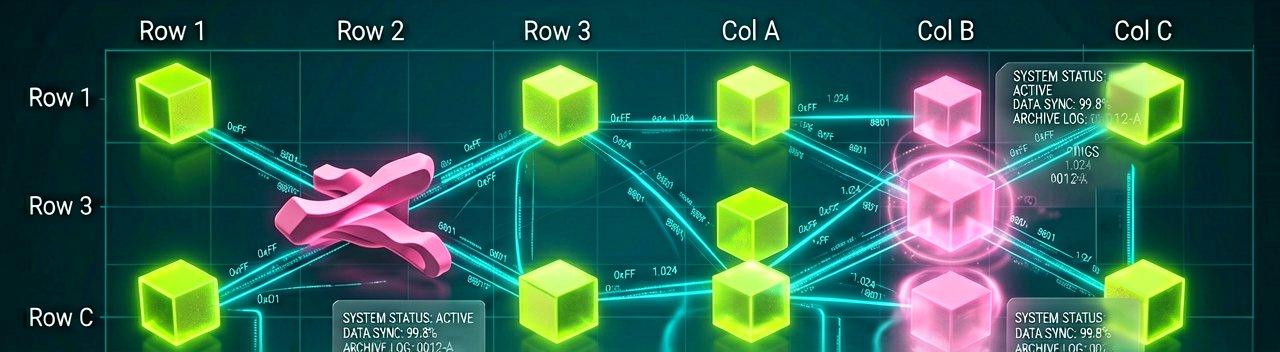
Sheets and Docs are also getting a massive brain transplant. We’re moving beyond simple word processing into what some call the "intelligent canvas." Smart chips and building blocks have evolved from simple links into interactive mini-apps. You can now use "Placeholder chips" to create templates that collaborators fill in or insert "Code blocks" for technical documentation with just a few keystrokes. These features, highlighted by Google Support, make documents more dynamic and automated. Even the dreaded pivot table is succumbing to AI; in Sheets, you can now simply ask Gemini to build them for you, along with filters and dropdowns, turning data analysis into a conversation rather than a chore.
Seamless Integration and Security
Of course, all this "agentic" power doesn't mean much if it creates a security nightmare or breaks the bank. Google has streamlined its pricing, folding many Gemini features directly into standard subscriptions to make these tools accessible to more than just the enterprise elite. Crucially, they’ve also introduced the Agent Payments Protocol (AP2) to keep AI agents from "going rogue" with company funds. As noted by Mashable, these strict limits ensure that while Spark is working 24/7 in the background, it’s only spending what you’ve authorized. It’s a sophisticated balance of automation and control that suggests the future of work isn't just about working faster—it's about working smarter with a very capable digital partner by your side.
The Hidden Architecture of the Agentic Office
Beyond the Interface: What most surface-level reports miss is that Google isn’t just adding a chatbot to its sidebar; it is fundamentally re-architecting the "plumbing" of how information moves between departments. For decades, the primary friction in any organization has been the silo. Marketing data lived in Sheets, project timelines lived in Docs, and client feedback was buried in Gmail threads. The new AI-driven Workspace environment treats these not as separate apps, but as a unified data lake that Gemini can traverse in real-time. This shift from "search-and-find" to "contextual synthesis" represents the most significant change in office ergonomics since the transition from paper to the cloud.
Industry veterans recall the early days of Google Docs as a revolutionary moment for collaboration, but the current evolution moves from "simultaneous editing" to "simultaneous reasoning." By leveraging the Agent Payments Protocol and Gemini Spark, Google is addressing the trust gap that has long plagued enterprise AI. Stakeholders in IT and security have historically been wary of autonomous agents, fearing data leaks or unauthorized actions. The current roadmap shows a deliberate move toward "human-in-the-loop" safeguards, where the AI proposes a complex sequence of tasks—like booking a venue and inviting specific vendors—but waits for a single user click to execute the financial or contractual portions.
The historical context here is vital for understanding the endgame. We are seeing the death of the "monolithic app" experience. In the new Workspace, the specific application you are in matters less than the task you are trying to complete. If you are drafting a project proposal in Docs, the AI can pull live budget data from a Sheet and generate a summary video in Vids without you ever switching tabs. This "interstitial productivity" is designed to keep users in a flow state, reducing the cognitive load that comes with the constant context-switching that has defined the last ten years of digital work.
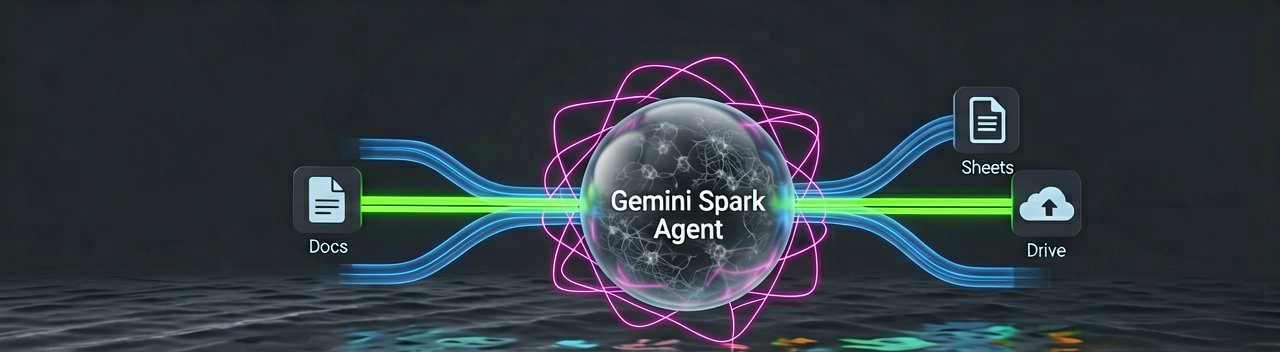
From a competitive standpoint, this is a direct volley at the traditional "walled gardens" of enterprise software. By making Gemini the connective tissue, Google is betting that users will prioritize the ecosystem that requires the least manual data entry. Early adopters in the creative and logistics sectors are already reporting a drastic reduction in "work about work"—those repetitive administrative tasks that eat up nearly 60% of the average workday. The goal isn't just to make a better word processor, but to build an environment where the tools understand the intent behind the task.
There is also a subtle shift in how "expertise" is defined in this new era. As these tools become more capable of handling the technical heavy lifting—be it complex spreadsheet formulas or video editing—the value of a human worker shifts toward prompt engineering, strategic oversight, and ethical vetting. The journalist’s perspective here is that the barrier to entry for high-level production is evaporating. A small startup now has access to the same level of analytical and creative firepower that was once reserved for Fortune 500 companies with massive support staffs.
Ultimately, the success of this transition hinges on the "invisible" updates: the latency improvements in the Gemini 1.5 Pro model and the seamless way smart chips now pull in third-party data from apps like Jira or Salesforce. According to insights from the Google Keyword Blog, the focus remains on ensuring that as the AI becomes more proactive, it remains subservient to the user’s creative vision. This isn't an automated office; it is an augmented one, where the machine handles the friction so the human can focus on the breakthrough.
The Paradox of Frictionless Work
Reading Between the Lines: While Google’s "agentic" vision promises a world where the machine handles the drudgery, it ignores a fundamental psychological reality: friction often breeds focus. By automating the synthesis of data and the drafting of narratives, Workspace risks turning its users into "professional approvers" rather than creators. There is a fine line between an assistant that clears the path and a system that does the thinking for you. When the AI pulls data from a Sheet, drafts a Doc, and generates a Vids presentation in seconds, the human in the loop may lose the critical intimacy with the data that only comes from manual assembly.
Furthermore, there is a glaring contradiction in the promise of "all-in-one" productivity. As Google integrates Gemini deeper into the suite to prevent context-switching, it simultaneously increases our dependency on a single, monolithic ecosystem. The more we rely on proprietary "Smart Chips" and AI-driven cross-app links, the harder it becomes to export that work to a competitor. This creates a new kind of digital inertia; we are trading the freedom of a modular tech stack for the convenience of an automated one. While the Google Keyword Blog champions this as seamlessness, a seasoned skeptic sees it as the ultimate velvet-lined lock-in.
The projected implications for the labor market are equally messy. Google frames these tools as a way to democratize high-level production, giving a solo entrepreneur the "power of a full agency." However, if everyone has access to the same "cinematic" templates and AI-optimized prose, we may soon find ourselves drowning in a sea of high-quality mediocrity. When every sales pitch looks like a Pixar short and every email is perfectly polished, the human element—the quirky, the imperfect, and the genuinely original—becomes the only true currency left. The irony is that in the race to make work effortless, we might be making it harder to stand out.
Finally, we must consider the environmental and hidden operational costs. The computational power required to have Gemini Spark running "24/7" as a personal agent is staggering compared to the static apps of five years ago. Google’s push for efficiency in the office doesn't necessarily translate to efficiency in the data center. As enterprises scale these "agentic workflows," the true cost may eventually be reflected not just in subscription tiers, but in the carbon footprint of every automated "thank you" note sent by an AI on our behalf.
The true miracle of the AI-powered office isn’t that it saves us forty hours a week; it’s that it manages to fill those forty hours with even more sophisticated ways to look busy while the robots do the actual typing.
Artūras Malašauskas is an AI Systems Integrator with 20+ years of production-grade web engineering experience. He has designed, shipped, and scaled enterprise Python/PHP systems for logistics, SaaS, and public-sector clients. For the past year, he has focused exclusively on AI integrations: deploying open-source LLMs, building generative media pipelines (image, audio, video), and engineering multi-agent workflows for real production environments. His standard: reproducibility, security, cost-efficient inference—no vaporware. He documents and evaluates emerging AI tooling, separating verified capabilities from marketing noise. Technical editor at: muza-ai.eu, ai-verslas.lt, ai-naujinos.lt Connect on LinkedIn
Comments