The Compute Crunch: Why Europe Can’t Afford to Play Catch-Up on AI Infrastructure
Europe’s ambitions to become a global AI powerhouse are hitting a hard, silicon-shaped wall. While we’ve been busy drafting the world’s most comprehensive regulatory frameworks, our peers in the U.S. and China have been quietly cornering the market on the actual horsepower—the high-end GPUs and massive data centers—required to run the next generation of models. It’s a classic European conundrum: we have the rules of the road perfectly mapped out, but we’re still looking for a car that can actually handle the speed of the race. If we don’t bridge this "compute gap" soon, our startups won’t just be at a disadvantage; they’ll be forced to build their futures on digital soil owned by foreign hyperscalers.
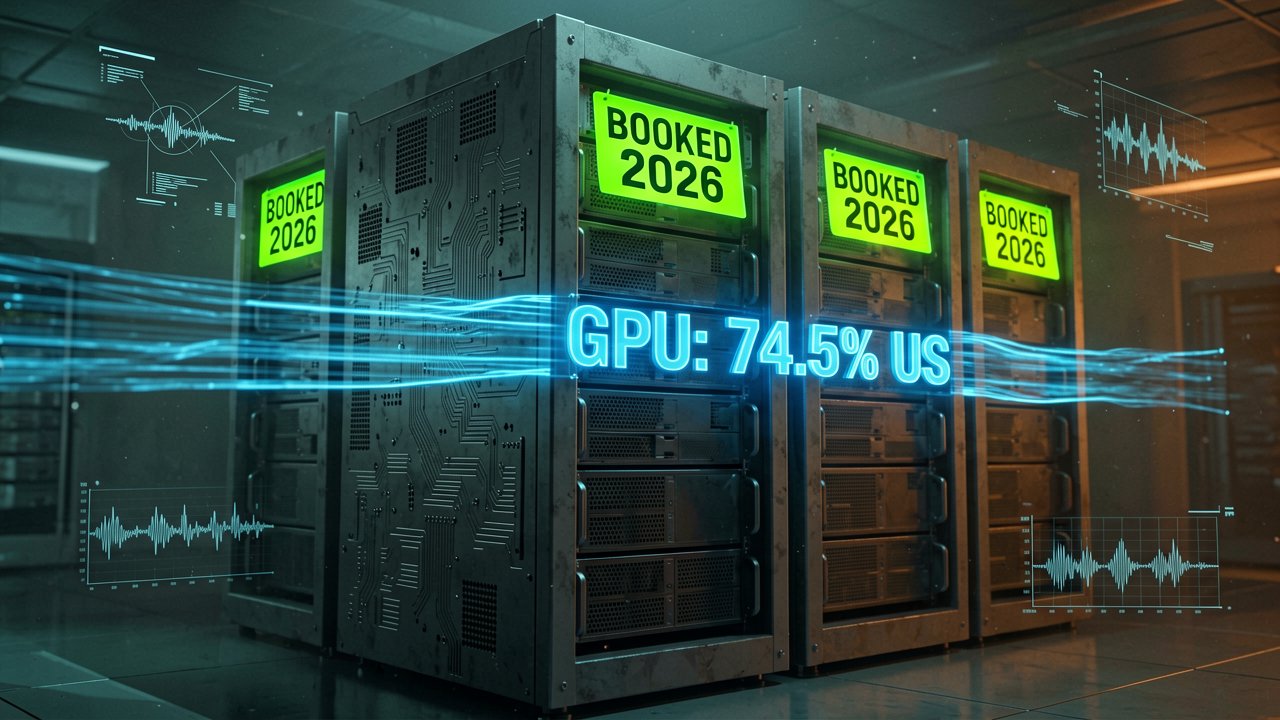
The numbers paint a sobering picture of where we stand today. According to the latest data from Epoch AI, the United States currently commands a staggering 74.5% of the world's AI supercomputing performance, while the entire European Union accounts for a mere 4.8%. This isn't just a minor lag; it’s a systemic dependency. When 70% of the European cloud market is controlled by American firms, our "technological sovereignty" starts to look more like a polite suggestion than a reality. We’re essentially renting the tools of the modern economy from our competitors, often at a premium that stifles local innovation before it can even scale.
From AI Factories to Gigafactories
The European Commission isn't flying totally blind here. Through the EuroHPC Joint Undertaking, the bloc has already started deploying a network of "AI Factories"—high-performance computing hubs specifically designed to give SMEs and startups the juice they need to train large-scale models. Recent announcements highlight the launch of 19 of these facilities, including the EuroHPC JU's focus on building a coordinated ecosystem that moves beyond just hardware to include data labs and shared service standards. These factories are a solid start, but they’re still small-fry compared to the private clusters being built by Big Tech. To truly compete, the new "AI Continent Action Plan" is pivoting toward "Gigafactories"—facilities that aim to host over 100,000 advanced processors, a scale that finally starts to match the sheer industrial weight of our rivals.
The Hardware Hurdle: Chips and Power
Then there’s the issue of the chips themselves. We’ve all seen the headlines about the "Great GPU Shortage," where on-demand capacity for the latest Nvidia hardware is effectively booked out through late 2026. This puts European players in the unenviable position of being "price-takers" in a market where they have zero leverage. Even the most ambitious European strategies, like the EU Chips Act 2.0, are having to pivot from chasing raw manufacturing to focusing on design and equipment. The reality is that building a European "Nvidia" takes decades, not months, and our current path relies heavily on convincing foreign giants to expand their manufacturing presence in places like Dresden.

Beyond the silicon, we’re also staring down an energy crisis that could derail the whole endeavor. Data centers are power-hungry beasts, and electricity prices for European industrial users are often double those in the U.S. It doesn't matter how many GPUs you pack into a building if you can't afford to turn the lights on. For Europe to actually close the compute gap, we need a strategy that treats energy and infrastructure as a single, unified problem. Sovereignty isn't just about having the code; it’s about owning the chips, the data centers, and the power grid that brings them to life.
The Sovereign Silicon Dilemma
What Most Reports Miss: The crisis isn’t just about a lack of chips; it is about a fundamental mismatch between European capital and the sheer scale of the infrastructure required to stay relevant. While private equity in Silicon Valley treats $10 billion data centers as a standard cost of doing business, the European investment landscape remains fragmented and risk-averse. This has created a "valley of death" where home-grown champions like Mistral or DeepL can design world-class architectures, but eventually find themselves forced to migrate their workloads to AWS or Azure because the local infrastructure simply cannot scale at the speed of their growth.
Behind closed doors in Brussels, the conversation has shifted from "regulation first" to an almost desperate search for what insiders call "Compute Sovereignty." Historical precedent suggests Europe thrives when it treats infrastructure as a public utility—think of the trans-European rail networks or the Airbus consortium. However, AI compute is a moving target that doubles in requirement every few months. Policy veterans point out that the current EuroHPC supercomputers, while impressive for academic research, aren't built for the iterative, high-velocity training cycles that commercial startups need. This friction forces European founders to make a binary choice: wait in line for public resources or hand over equity and data to a foreign hyperscaler for immediate access.
Stakeholder perspectives reveal a deepening rift between the "Green Deal" camp and the "Industrial AI" camp. To bridge the compute gap, Europe needs to build massive, power-hungry clusters, yet strict environmental mandates make it incredibly difficult to get the necessary permits for the multi-gigawatt sites required. Leading tech CEOs argue that if the EU doesn't relax these zoning and energy restrictions specifically for AI zones, the "AI Factory" initiative will remain a series of pilot projects rather than a backbone for the economy. There is a growing sense that the continent is trying to win a Formula 1 race while simultaneously debating the environmental impact of the tires.
Moreover, the talent pipeline is leaking. High-end compute engineering is a niche skill set, and currently, the engineers who know how to optimize the interconnects between 50,000 H100s are largely concentrated in a handful of postal codes in California. For Europe to succeed, it must do more than just buy the hardware; it must foster an operational culture that understands the "stack" from the silicon layer up. Without a dedicated effort to repatriate this engineering talent, the continent risks owning the "metal" while remainining entirely dependent on foreign expertise to maintain and operate it.
The historical context of the European semiconductor industry serves as a cautionary tale. Decades ago, Europe held a significant share of the global chip market before specializing into the lithography niche via ASML. While owning the machines that make the chips is a massive strategic advantage, it doesn't provide the day-to-day compute power needed to train a LLM. Analysts at Bruegel have noted that the current strategy relies too heavily on attracting Intel or TSMC to build fabs on European soil, which addresses the supply chain of 2030 but does nothing for the compute deficit of 2026. The gap is immediate, and the solution must be industrial, not just academic.
Ultimately, the "compute gap" is the definitive test of the European Union's ability to act as a single market. If member states continue to compete against each other to land individual data center investments, the resulting infrastructure will remain a patchwork of medium-sized hubs that fail to reach the critical mass seen in the U.S. West Coast or the clusters in Northern Virginia. To survive the next decade of the AI revolution, the continent must treat compute as a unified strategic reserve, much like it does with natural gas or currency stability, moving beyond the rhetoric of sovereignty and into the era of massive, coordinated investment.
The Sovereignty Paradox
Reading Between the Lines: The European strategy to achieve "technological sovereignty" might actually be reinforcing the very dependencies it seeks to dismantle. By funneling billions into attracting American and Asian semiconductor giants to build subsidized "mega-fabs" on European soil, the bloc is effectively betting that physical proximity equals strategic control. However, owning the factory floor is not the same as owning the intellectual property or the roadmap. We risk becoming the world’s high-tech landlord—collecting rent and providing low-cost electricity to foreign entities—while the high-value "intelligence" layer remains firmly anchored in Palo Alto or Beijing.
There is also a glaring contradiction in the European Union’s simultaneous pursuit of the "AI Act" and the "AI Factory" initiative. We are essentially building a massive engine while simultaneously tightening the bolts on the brakes. The regulatory overhead required to ensure compliance for high-risk models creates a "compliance tax" that only the wealthiest firms can afford. For a European startup, the cost of navigating the legal labyrinth can often exceed the cost of the actual compute. This creates a bizarre scenario where the EU subsidizes the hardware with one hand and makes it prohibitively expensive to use the software with the other, stalling the very innovation it claims to be protecting.
Furthermore, the projection that Europe can simply "build its way out" of the compute gap ignores the brutal reality of the global supply chain. Even if the EuroHPC JU successfully deploys every planned cluster, they are still beholden to a single hardware vendor for the underlying architecture. Real sovereignty would require a radical shift toward open-standard hardware, such as RISC-V, yet the current European roadmap remains tethered to proprietary stacks that are updated faster than Brussels can approve a budget. We are chasing a moving target with a procurement process designed for the industrial age of the 1950s.
The geopolitical implications of this gap are equally sobering. If Europe remains a "compute-poor" continent, its ability to set global standards for "Ethical AI" will eventually evaporate. Standards are set by those who build the most capable systems, not by those who write the most eloquent white papers. Without the raw power to train models that rival GPT-5 or its successors, Europe’s role in the AI era will be relegated to that of a sophisticated consumer—or worse, a digital museum where the world’s most advanced regulations are applied to yesterday’s technology.
Finally, we must confront the skepticism surrounding the "Gigafactory" model. Large-scale infrastructure projects in Europe are historically plagued by bureaucratic delays and shifting political priorities. While the U.S. private sector can spin up a data center in eighteen months, European projects often spend that same amount of time just clearing the environmental impact assessments. Unless there is a fundamental overhaul of how we permit and power these digital cathedrals, the "compute gap" won't just be a temporary lag; it will become a permanent feature of the European landscape, leaving the continent to watch the AI revolution through a very high-quality, strictly regulated window.
It turns out that "technological sovereignty" is a lot like a gym membership: paying the dues and owning the equipment is the easy part, but actually putting in the heavy lifting to see results requires a level of discipline that most committees find deeply uncomfortable.
Artūras Malašauskas is an AI Systems Integrator with 20+ years of production-grade web engineering experience. He has designed, shipped, and scaled enterprise Python/PHP systems for logistics, SaaS, and public-sector clients. For the past year, he has focused exclusively on AI integrations: deploying open-source LLMs, building generative media pipelines (image, audio, video), and engineering multi-agent workflows for real production environments. His standard: reproducibility, security, cost-efficient inference—no vaporware. He documents and evaluates emerging AI tooling, separating verified capabilities from marketing noise. Technical editor at: muza-ai.eu, ai-verslas.lt, ai-naujinos.lt Connect on LinkedIn
Comments