The Atom and the Algorithm: How AI is Trimming the Fat from Nuclear Energy
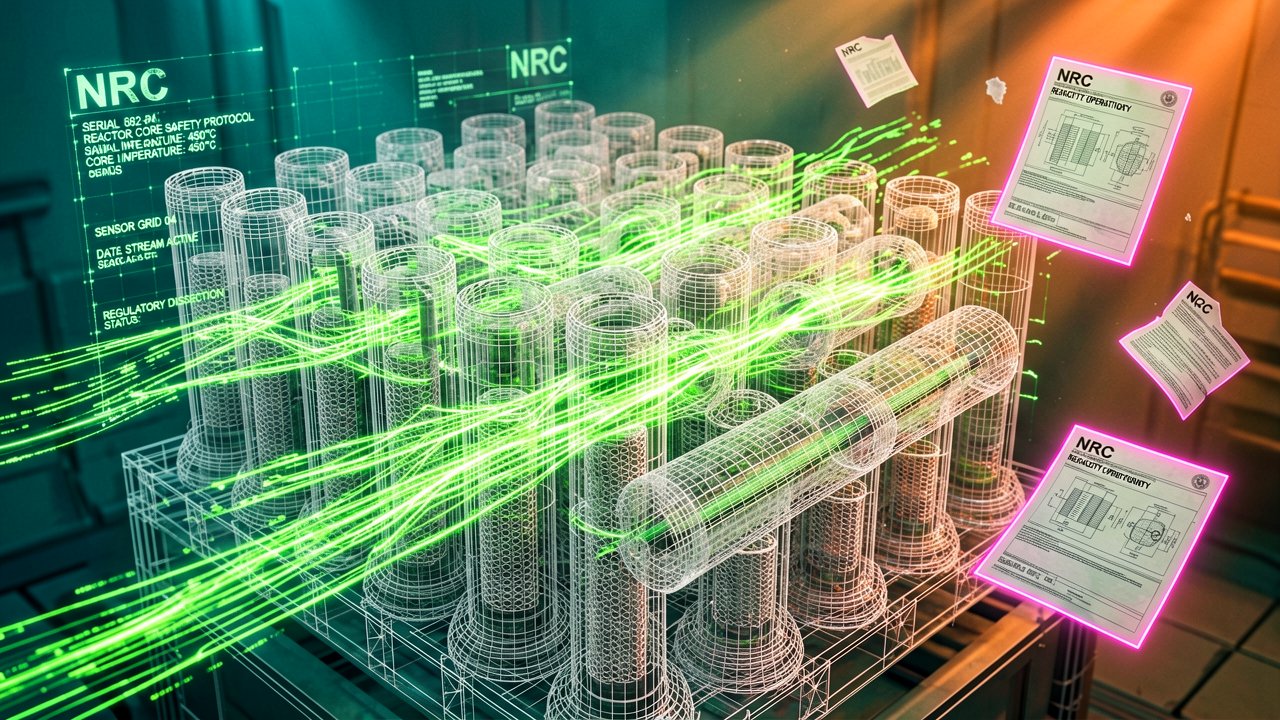
For decades, the nuclear industry has been haunted by the "Iron Triangle" of energy: the brutal trade-off where you can have clean, reliable, or cheap power, but rarely all three at once. Large-scale projects famously balloon in cost and schedule, often leaving investors wary of the massive upfront capital. But a shift is happening under the hood. By leveraging artificial intelligence to overhaul everything from core design to the mountain of regulatory paperwork, the sector isn't just trying to keep up with the clean energy transition—it's trying to lead it. According to the OECD Nuclear Energy Agency, AI is already delivering tangible value by connecting plant performance data directly to operational and economic decision-making at a fleet scale.
It turns out that one of the best ways to make nuclear energy cheaper is to treat the design process like a high-stakes strategy game. Researchers have found that AI can optimize the placement of fuel rods far more efficiently than human engineers, potentially extending fuel life by 5% and saving a single plant millions of dollars annually. This isn't just theoretical; it's about practical, incremental gains that add up across the entire lifecycle of a reactor. When you combine these design efficiencies with AI-driven predictive maintenance—which uses sensors and algorithms to catch component failures before they happen—you're looking at a future where unplanned outages are the exception rather than the rule.
Cutting Through the Red Tape with Machine Learning
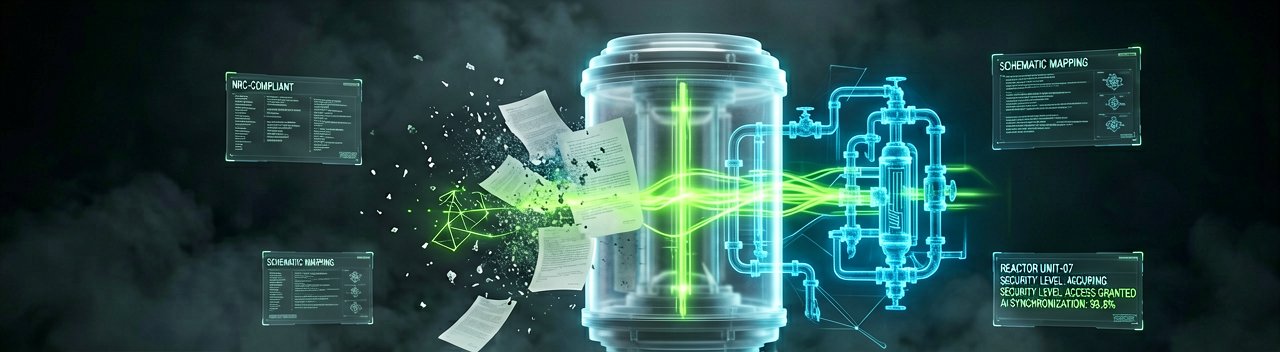
If you ask any developer why nuclear takes so long, they’ll point to the regulatory gauntlet. Licensing a new reactor design is a Herculean task involving thousands of pages of safety documentation that can take years to process. However, the U.S. Department of Energy recently demonstrated a breakthrough using AI to "map" and convert safety analysis documents into NRC-ready licensing applications. What used to take a team of experts six weeks was completed by an AI solution in a single day, as reported by the Department of Energy. This kind of administrative acceleration is arguably just as critical as the engineering itself for getting steel in the ground.
Smarter SMRs and the Digital Twin Advantage
The rise of Small Modular Reactors (SMRs) fits perfectly into this AI-first mindset. Unlike the custom-built behemoths of the past, SMRs are designed for factory-style production, making them ideal candidates for "digital twins." These are virtual replicas of physical plants that use real-time data to simulate every possible operational scenario. Companies like NuScale are already exploring how AI can manage shared fuel pools across multiple reactor modules to squeeze every bit of efficiency out of their systems. This modular, data-driven approach doesn't just reduce the risk of construction delays; it builds a predictable economic model that makes nuclear a much more attractive bet for the private sector.
Ultimately, the goal is to move past the era of "bespoke" nuclear and into an era of "industrialized" nuclear. By automating the most tedious parts of the process—from verifying the integrity of thousands of sensors to drafting regulatory filings—AI acts as a force multiplier. It allows the industry to focus on what actually matters: delivering carbon-free power at a price point that makes sense for the modern grid. While the tech is still evolving, the path forward is clear: the most efficient way to build the next generation of reactors is to let the algorithms do the heavy lifting.
The Hidden Architecture of the AI Revolution
The Real Bottleneck: While headlines often fixate on the futuristic allure of autonomous reactors, seasoned industry insiders know the real war is won in the trenches of supply chain management and component qualification. Historically, a single nuclear-grade valve or pump requires a paper trail long enough to wallpaper a small house. AI is now being quietly deployed to audit these massive supply chains, using computer vision to inspect welds for microscopic defects that human inspectors might miss after a ten-hour shift. This isn't just about safety; it’s about preventing the catastrophic "stop-work" orders that have crippled projects like Vogtle and V.C. Summer, where minor quality control failures snowballed into multi-billion-dollar delays.
From the perspective of the workforce, the integration of AI is sparking a quiet cultural revolution. We are seeing a generational handoff where veteran nuclear engineers, who have relied on analog intuition for decades, are collaborating with data scientists to train neural networks on fifty years of operational logs. This historical data is a goldmine. By feeding "dark data"—old paper records and sensor readings that were never digitized—into modern models, operators are discovering subtle thermal patterns that precede equipment stress. It turns out that the plants themselves have been trying to tell us how to run them more efficiently for years; we just finally have the ears to hear it.
There is also the thorny issue of public perception and the "black box" problem. Regulators are notoriously skeptical of any technology they cannot fully explain or audit. To bridge this gap, the industry is leaning heavily into "Explainable AI" (XAI). Unlike standard deep learning, which can be opaque, XAI provides a clear rationale for why a specific maintenance action was recommended. This transparency is crucial for stakeholders who need to prove to a skeptical public that allowing an algorithm to optimize a cooling system won’t compromise the defense-in-depth philosophy that has defined nuclear safety since the 1970s.
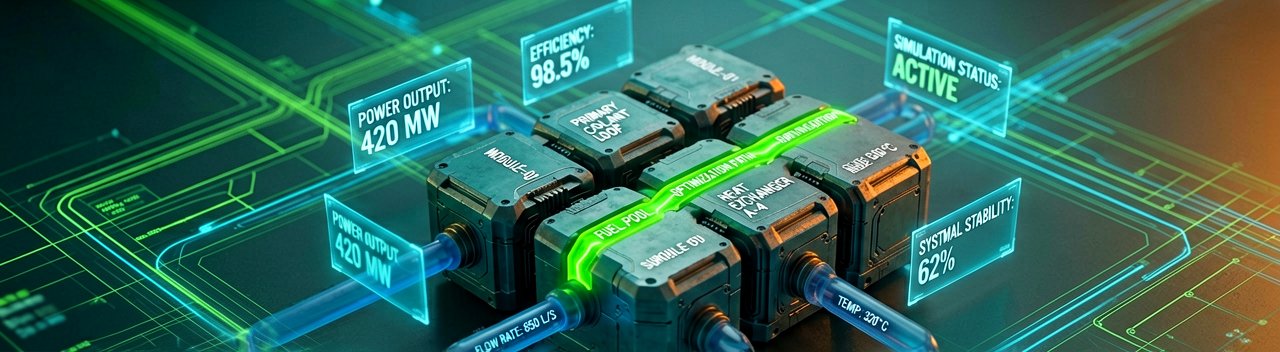
On the economic front, the shift toward AI-driven "Digital Twins" is changing the conversation with private equity. Traditionally, nuclear was seen as a high-risk, low-transparency investment. Now, developers can show potential investors real-time simulations of a plant’s projected 60-year lifecycle under varying market conditions. This level of granularity helps de-risk the project by proving that even if electricity prices fluctuate, the plant’s operational efficiency—honed by AI—will keep it in the black. It transforms a nuclear reactor from a volatile infrastructure project into a predictable, high-tech asset.
Finally, we have to consider the global race for nuclear supremacy. As countries like China and Russia accelerate their reactor deployments, the Western nuclear industry is using AI as a strategic equalizer to offset higher labor costs and more stringent regulatory environments. By automating the most labor-intensive aspects of engineering and compliance, Western firms are attempting to reclaim a competitive edge in the global export market. The goal is to create a "Nuclear-in-a-Box" model where the software is as integral to the sale as the uranium itself, ensuring that the next generation of global energy infrastructure is built on a foundation of verifiable, data-driven safety.
The Friction Between Innovation and Infallibility
Reading Between the Lines: The industry’s rush toward an AI-augmented future ignores a fundamental contradiction: nuclear energy is built on a culture of extreme conservatism, while AI thrives on iterative failure. In a sector where "move fast and break things" can lead to a literal meltdown, the marriage of neural networks and fission reactors is naturally tense. Proponents claim that AI will slash costs, but there is a very real risk that the cost of validating the AI itself—proving to a regulator that an algorithm won't hallucinate a safety solution—could eat up any savings gained from engineering efficiency. We may simply be trading expensive human hours for even more expensive "AI auditor" hours.
Furthermore, the reliance on historical data assumes that the future of nuclear energy will look like its past. Most AI models are trained on data from massive Light Water Reactors, yet the industry is pivoting toward Small Modular Reactors (SMRs) and non-water-cooled designs. Applying "lessons learned" from a 1,000-megawatt behemoth to a 50-megawatt liquid salt reactor is a leap of faith that data science isn't always equipped to handle. If the training data is biased toward a legacy era of nuclear construction, the AI might inadvertently optimize for outdated paradigms, stifling the very innovation it was meant to accelerate.
There is also the uncomfortable reality of the "hollowed-out expert" problem. As we automate the drafting of licensing applications and the monitoring of core physics, we risk creating a generation of nuclear engineers who can operate the software but lack the fundamental "gut feeling" developed by decades of manual oversight. If the AI flags a cooling anomaly, we need humans who understand the thermodynamics deeply enough to double-check the machine, not just button-pushers who trust the dashboard implicitly. Maintaining a pipeline of high-level human expertise in an increasingly automated environment is a looming labor crisis that no algorithm can solve on its own.
Ultimately, the projection that AI will make nuclear "cheap" ignores the fact that the biggest expenses in nuclear aren't just engineering or paperwork—they are political and social. No amount of machine learning can optimize away a local protest or a sudden shift in government subsidies. While AI can certainly make a plant run better, it can’t force a society to want the plant in the first place. The tech is a powerful tool for the boardroom and the control room, but it remains a secondary player in the courtroom and the court of public opinion.
The nuclear industry spent fifty years proving it could build the most complex machines on Earth using nothing but slide rules and sheer stubbornness; it’s only fitting that we’re now spending billions to see if a computer can finally figure out how to fill out the paperwork on time.
Artūras Malašauskas is an AI Systems Integrator with 20+ years of production-grade web engineering experience. He has designed, shipped, and scaled enterprise Python/PHP systems for logistics, SaaS, and public-sector clients. For the past year, he has focused exclusively on AI integrations: deploying open-source LLMs, building generative media pipelines (image, audio, video), and engineering multi-agent workflows for real production environments. His standard: reproducibility, security, cost-efficient inference—no vaporware. He documents and evaluates emerging AI tooling, separating verified capabilities from marketing noise. Technical editor at: muza-ai.eu, ai-verslas.lt, ai-naujinos.lt Connect on LinkedIn
Comments