Wall Street’s New Grunt: Anthropic Launches AI Agent Blueprints for High Finance
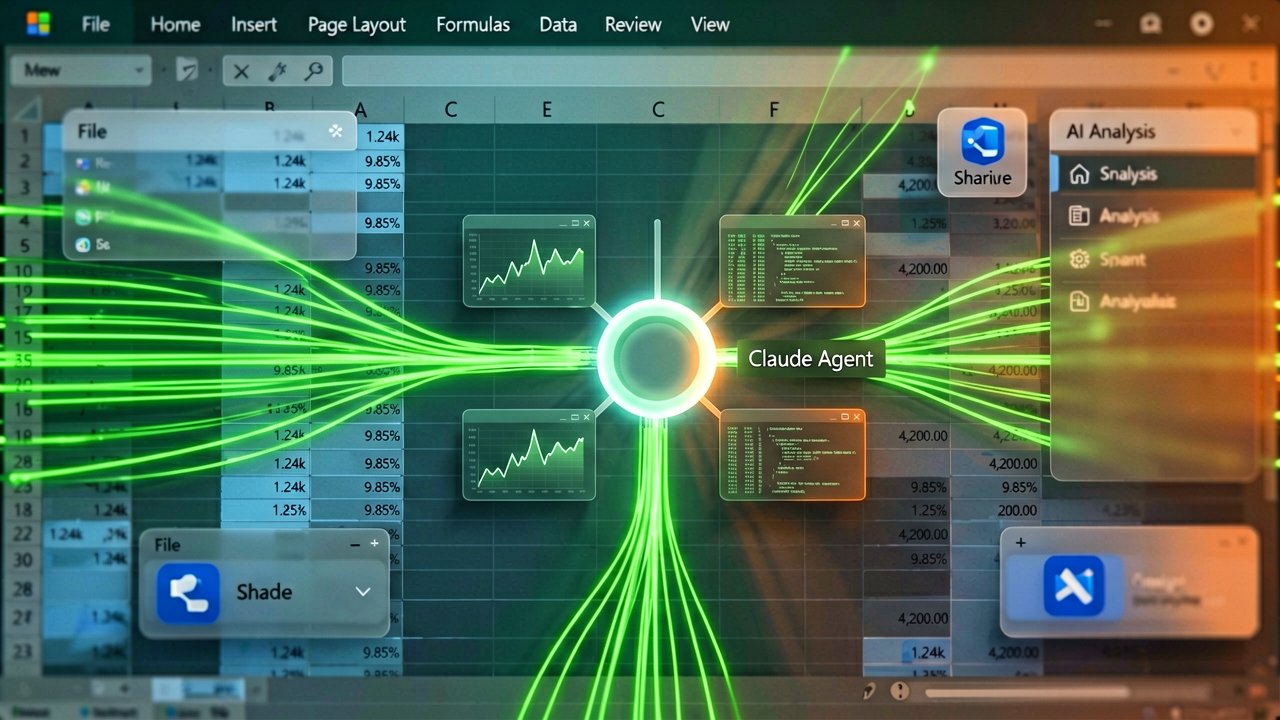
Anthropic isn't just asking Wall Street to chat with its models anymore; it’s handing them the keys to the engine room. This week, the San Francisco-based AI heavyweight dropped a suite of 10 ready-to-run agent templates designed to automate the kind of high-stakes, low-glamour work that keeps junior analysts caffeinated until midnight. From drafting complex pitchbooks to grinding through KYC compliance screenings and month-end financial closes, these aren't generic chatbots. They’re specialized digital coworkers built to live inside the tools finance pros already use.
The rollout, detailed on the official Anthropic blog, marks a strategic pivot from "general intelligence" to vertical execution. These templates ship as plugins for Claude Cowork and Claude Code, or as "cookbooks" for Managed Agents, effectively cutting the deployment time for enterprise-grade AI from months to mere days. By integrating directly with Microsoft 365—Excel, PowerPoint, and Word—Anthropic is ensuring Claude doesn't just sit in a browser tab but actively manipulates the spreadsheets and slide decks that serve as the industry’s lifeblood.
Market Tremors and the End of the "Blank Prompt"
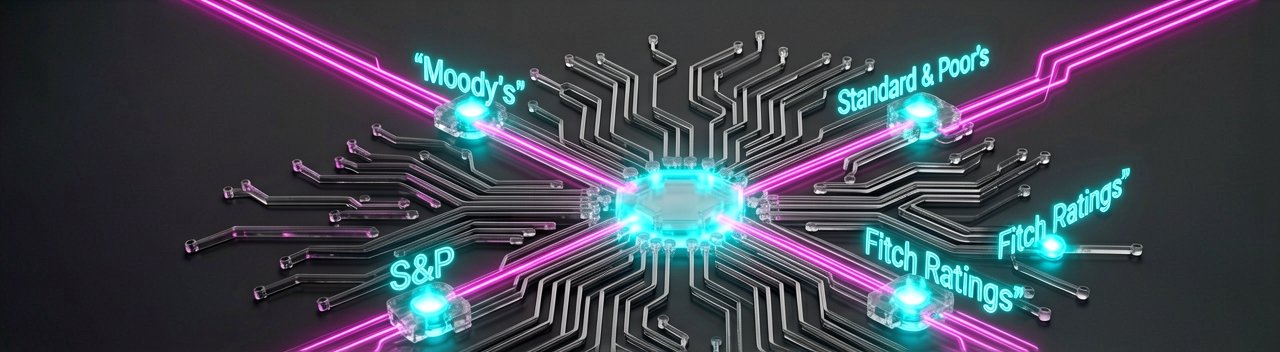
The industry’s reaction was almost instantaneous, and in some corners, predictably nervous. According to reporting from Bloomberg, shares of data giants like FactSet and Morningstar took a noticeable hit following the announcement, as investors weighed the possibility of AI agents eroding the premium on legacy financial research and manual data processing. With connectors for Moody’s, Dun & Bradstreet, and S&P Global already baked in, Claude is being positioned as a central nervous system for financial data rather than just another subscription.
It’s a bold play that moves past the "blank prompt" problem. Instead of wondering what to ask a LLM, a credit officer can now trigger a "Credit Memo" agent that already knows how to pull ratings, analyze risk, and format the final document to firm standards. While the "human-in-the-loop" mantra remains the official party line for compliance reasons, the reality is that the baseline for productivity in finance just shifted. Anthropic is betting that the firms that win won't be the ones with the most analysts, but the ones with the best-tuned agents.
The Architectural Shift: Moving from Chat to Choreography
The hidden friction in high finance: While the headlines focus on the speed of automation, the real story lies in the "plumbing" Anthropic has quietly installed. For years, the bottleneck for AI adoption in banking hasn't been a lack of intelligence, but a lack of agency. A standard LLM can tell you what a 10-K says, but it can’t autonomously reach into a secure database, cross-reference it with internal risk parameters, and then update a live PowerPoint deck for a Monday morning committee meeting. By providing templates that are essentially pre-mapped workflows, Anthropic is attempting to solve the integration debt that has historically turned AI pilots into expensive shelfware.
Historically, the "agentic" dream in fintech was hampered by the "hallucination tax." If a junior analyst makes a typo in a pitchbook, they get a reprimand; if an AI hallucinates a debt-to-equity ratio in a multi-billion dollar merger, the liability is existential. To counter this, these new templates emphasize structured outputs and verifiable citations. Industry insiders note that by grounding Claude in specific datasets from Moody’s and S&P Global, Anthropic is trying to create a "closed-loop" environment. This reduces the model's need to guess, effectively turning the AI into a highly sophisticated search-and-synthesis engine rather than a creative writer.
There is also a significant cultural tension playing out within the "Bulge Bracket" banks. Senior partners are eyeing the massive potential for margin expansion, while middle management is grappling with the reality of oversight. Training a human associate involves a degree of mentorship and a paper trail of accountability that doesn't yet have a perfect digital equivalent. These templates include specific "human-in-the-loop" checkpoints, reflecting a nuanced understanding that, in finance, the most valuable feature of an AI isn't its speed, but its auditability.
Beyond the immediate productivity gains, this move signals a broader war for the "financial desktop." For decades, the Bloomberg Terminal has been the undisputed king of the trader’s desk, largely because of its ecosystem of data and tools. By integrating Claude directly into Microsoft 365, Anthropic is betting that the future of financial work happens in the document, not just the data feed. If Claude becomes the default tool for drafting memos and analyzing credit, the gravity of the financial workflow shifts away from specialized terminals and toward general-purpose productivity suites supercharged by specialized agents.

Finally, the "democratization" of these agents could lead to a significant compression in the middle-market sector. Smaller boutique firms that previously couldn't afford a small army of analysts to conduct deep-dive due diligence now have access to "agentic cookbooks" that level the playing field. This commoditization of research and reporting means the value-add for human advisors will have to move further up the stack—focusing more on relationship management, complex negotiation, and the kind of "gut-feeling" intuition that remains, for now, outside the scope of a template.
The Analyst Paradox: Efficiency vs. Institutional Memory
Reading Between the Lines: The promise of "instant analysts" is a seductive one for CFOs looking to trim overhead, but it overlooks a fundamental reality of the financial apprenticeship model. The grueling, manual labor of a first-year analyst isn't just a hazing ritual; it is how institutional memory is built. By automating the grunt work of drafting pitchbooks and scrubbing data, banks risk creating a "knowledge gap" in their future leadership ranks. If the AI does all the digging, the next generation of Managing Directors may lack the visceral understanding of the data that only comes from staring at a spreadsheet until the numbers start to speak for themselves.
There is also a glaring contradiction in the industry’s push for "transparency" while adopting increasingly opaque "black box" agents. Anthropic emphasizes auditability, yet the very nature of agentic workflows—where one AI calls another, which then fetches data from a third-party API—creates a chain of custody that is nightmare-fuel for compliance officers. We are entering an era where the regulator might be an AI, auditing a process created by an AI, based on data synthesized by an AI. This recursive loop threatens to make the concept of "individual accountability" a relic of the pre-algorithmic age.
Furthermore, the supposed "democratization" of high finance through these templates might actually trigger a new kind of arms race. While boutique firms gain a temporary boost, the largest institutions are already building proprietary "wrappers" around Claude to ensure their agents have an edge that off-the-shelf templates lack. If everyone has access to the same "Goldman-tier" automation, the competitive advantage simply shifts from who has the most efficient process to who has the most expensive, proprietary data to feed into the machine.
We must also view the "integration with Microsoft 365" not just as a convenience, but as a strategic moat. By embedding Claude into the very fabric of Excel and PowerPoint, Anthropic is making itself nearly impossible to extract. This isn't just about utility; it’s about becoming a mandatory tax on financial productivity. The measured skepticism here lies in whether banks are truly gaining an assistant or simply trading their reliance on human labor for a permanent, escalating dependency on a single AI provider's ecosystem.
Ultimately, the success of these agents hinges on their ability to handle the "edge cases"—the moments when the market doesn't behave like the training data. Financial history is littered with the remains of "perfect" models that failed to account for human irrationality or sudden liquidity evaporates. An agent can follow a template for a credit memo, but it cannot yet sense the fear in a CEO’s voice during a private call or the subtle shift in market sentiment that precedes a crash. In the high-stakes world of finance, the most dangerous tool is the one that works perfectly 99% of the time, leading you to fall asleep at the wheel for the 1% that actually matters.
"We’ve finally reached the pinnacle of financial evolution: a world where an AI can generate a fifty-page investment thesis in seconds, which will then be summarized by another AI for a human executive who is too busy prompted-engineering his lunch to actually read it."
Artūras Malašauskas is an AI Systems Integrator with 20+ years of production-grade web engineering experience. He has designed, shipped, and scaled enterprise Python/PHP systems for logistics, SaaS, and public-sector clients. For the past year, he has focused exclusively on AI integrations: deploying open-source LLMs, building generative media pipelines (image, audio, video), and engineering multi-agent workflows for real production environments. His standard: reproducibility, security, cost-efficient inference—no vaporware. He documents and evaluates emerging AI tooling, separating verified capabilities from marketing noise. Technical editor at: muza-ai.eu, ai-verslas.lt, ai-naujinos.lt Connect on LinkedIn
Comments