Incyte Taps Edison Scientific to Turn Drug Discovery into a Learning Machine
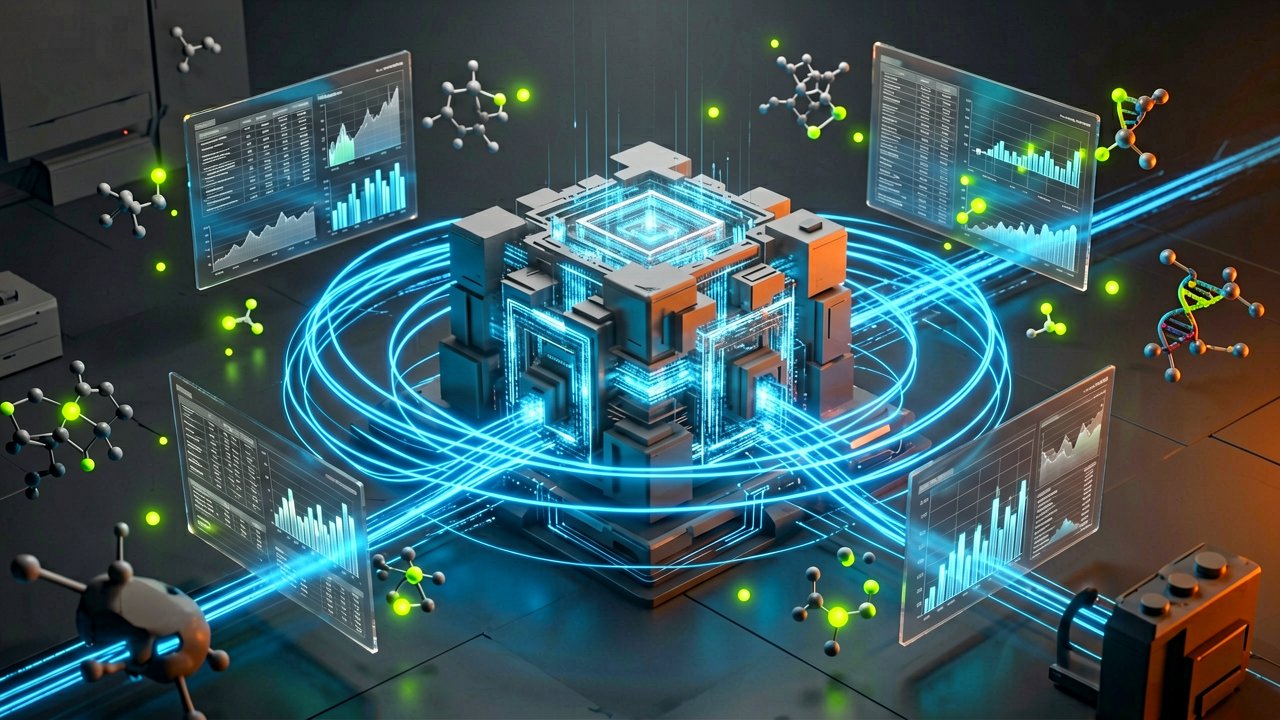
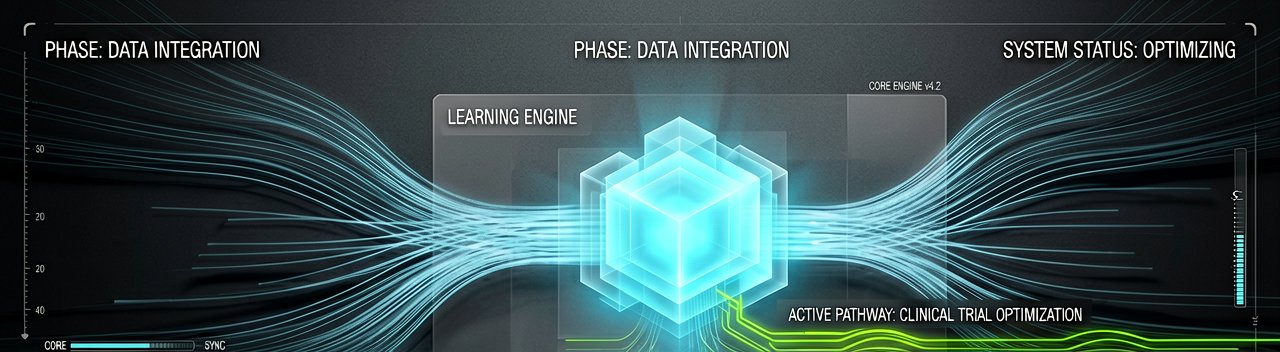
Incyte isn't just looking for another tool to sift through spreadsheets; it’s looking for a brain that grows with every experiment. The Delaware-based biopharma giant has inked a deal with San Francisco’s Edison Scientific to embed an AI agent named Kosmos across its entire research and development pipeline. Unlike traditional software that simply parses datasets, Kosmos is designed to function as an "AI scientist" that learns from translational and clinical data in real time, ideally turning Incyte’s proprietary knowledge into a compounding asset that sharpens its own predictive accuracy.
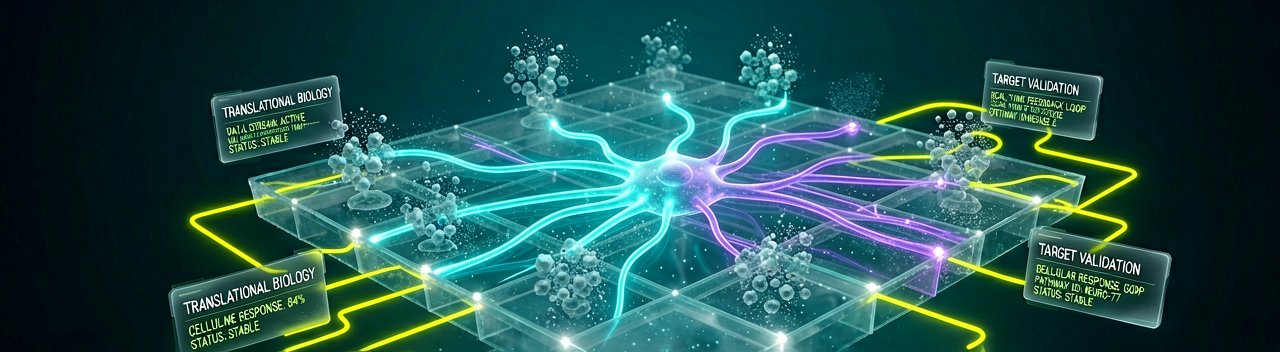
The collaboration will initially focus on the heavy lifting of target discovery, validation, and translational biology—the early stages where most drug candidates often fizzle out. By integrating Edison’s platform directly into research workflows, Incyte aims to bridge the gap between experimental design and clinical outcomes. As reported by Fierce Biotech, the goal is to create a feedback loop where every trial, regardless of its success, informs the next one. This moves the needle from "data analysis" to "organizational learning," a shift that executives believe will improve the consistency of high-stakes scientific decisions.
The Architecture of a Compounding Advantage
What Most Reports Miss: While the headlines focus on "AI efficiency," the true tectonic shift here is the move away from the "siloed data" model that has plagued pharma for decades. Historically, a failed Phase II trial might sit in a digital vault, its nuances lost to the team working on a different molecule three floors away. By deploying Kosmos, Incyte is attempting to centralize its institutional memory into a singular, active agent. According to Edison Scientific, this allows for the real-time synthesis of evidence that can compress months of manual literature review and hypothesis branching into a matter of days.
This isn't Incyte’s first rodeo with artificial intelligence, and that history provides crucial context for why they are doubling down now. Just over a year ago, the company partnered with Genesis Therapeutics to hunt for small molecules, a deal that highlighted their appetite for "AI-native" discovery. Where the Genesis deal was about finding specific keys to fit "hard-to-drug" locks, this pact with Edison feels more like upgrading the entire laboratory’s operating system. It’s a broader, more structural play intended to influence how Incyte handles everything from biomarker data to the way scientists communicate through platforms like Slack and Teams.
For Edison Scientific, which recently pulled in $70 million in funding led by Spark Capital, the Incyte partnership serves as a high-profile validation of their "agentic" approach to biology. They aren't just selling a dashboard; they’re selling a collaborator that participates in scientific workflows. This matches a wider industry trend where "AI-native biopharma" is becoming the new gold standard. As noted in analysis from Investing.com, the market for these technologies is expected to explode as companies realize that speed alone isn't enough—they need a system that minimizes the "quality gap" in decision-making.
There’s a quiet urgency beneath this deal that speaks to the current state of the oncology and autoimmune markets. Incyte’s heavy hitters like Jakafi have been the bedrock of their revenue, but the hunt for the "next big thing" is getting more expensive and statistically riskier. By automating the more tedious aspects of research—reading literature, generating initial hypotheses, and steering investigations mid-run—Incyte is essentially freeing up its human experts to focus on the nuance that AI still can't touch. It’s an expensive bet that the future of drug discovery belongs to whoever can learn from their mistakes the fastest.
The Friction Between Silicon Logic and Biological Reality
Reading Between the Lines: The industry’s rush toward "agentic AI" often conveniently ignores the fact that biological systems do not follow the clean, binary logic of software. While Incyte and Edison Scientific promise a "learning machine," the reality is that much of the data being fed into these models remains incredibly noisy and difficult to replicate. There is an inherent contradiction in the idea that an AI agent can significantly reduce failure rates when those failures are often caused by the fundamental unpredictability of human biology rather than a lack of data synthesis. The risk here is that instead of discovering better drugs, we simply become more efficient at pursuing the wrong hypotheses at a faster clip.
Furthermore, the "AI scientist" narrative creates a potential friction point within the lab itself. For decades, drug discovery has been a craft-based discipline reliant on the intuition of seasoned medicinal chemists and biologists. By attempting to centralize institutional memory into a platform like Kosmos, Incyte is essentially betting that the collective "brain" of the software can eventually outperform the gut instinct of its most veteran staff. If the AI begins recommending targets that contradict human expertise, the resulting internal gridlock could negate any speed gains promised by the technology. This shift from human-led to algorithm-informed research requires a cultural overhaul that no press release can fully capture.
There is also the looming question of the "black box" problem in a highly regulated environment. The FDA and other global regulators are notoriously skeptical of "proprietary algorithms" that cannot clearly explain the provenance of a discovery. If Incyte uses Edison's AI to validate a novel target, they must still be able to show their work in a way that satisfies traditional clinical scrutiny. If the AI’s learning process becomes too complex for human auditors to untangle, the company may find itself with a revolutionary drug candidate that it cannot actually move through the regulatory gauntlet. Skepticism remains the safest posture until we see a molecule discovered by an agent actually clear Phase III trials.
Ultimately, the true test of this partnership won't be found in the efficiency of the Slack integrations or the speed of the literature reviews, but in the clinical "win rate" five years from now. Many biotechs have pivoted to "AI-first" branding only to find that the fundamental bottleneck of clinical trials—the time it takes for a human body to respond to a drug—cannot be solved by a better processor. Incyte is effectively buying an expensive insurance policy against human error, but in the high-stakes world of drug development, the house often wins regardless of how smart your players are.
It turns out that teaching a computer to think like a scientist is surprisingly easy, right up until the moment the computer realizes that biology is mostly a series of expensive accidents that nobody can explain.
Artūras Malašauskas is an AI Systems Integrator with 20+ years of production-grade web engineering experience. He has designed, shipped, and scaled enterprise Python/PHP systems for logistics, SaaS, and public-sector clients. For the past year, he has focused exclusively on AI integrations: deploying open-source LLMs, building generative media pipelines (image, audio, video), and engineering multi-agent workflows for real production environments. His standard: reproducibility, security, cost-efficient inference—no vaporware. He documents and evaluates emerging AI tooling, separating verified capabilities from marketing noise. Technical editor at: muza-ai.eu, ai-verslas.lt, ai-naujinos.lt Connect on LinkedIn
Comments