The Long Road to Vice City: Zelnick Admits GTA VI is 18 Months Behind the Curve
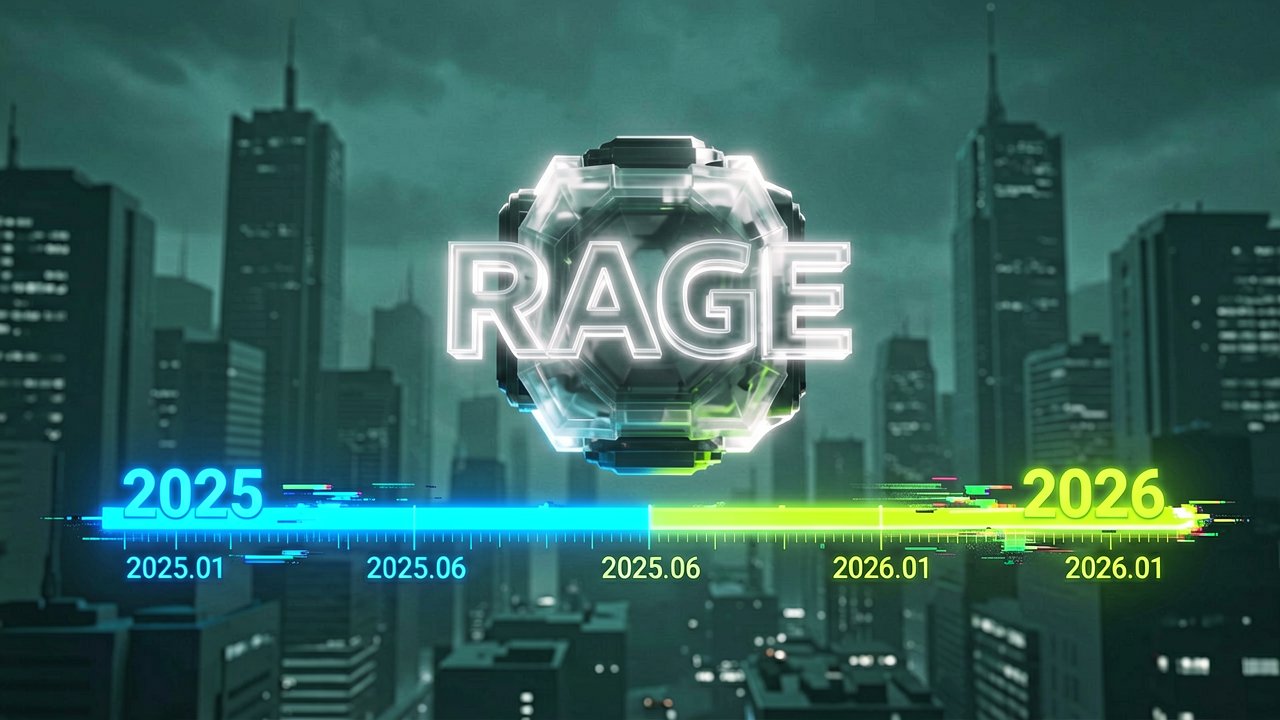
If you’ve been marking your calendar in pencil, you’ve got the right idea. Take-Two Interactive CEO Strauss Zelnick recently dropped a truth bomb that confirms what many of us in the press box had long suspected: Grand Theft Auto VI is currently lagging about 18 months behind its original internal target. Speaking on the Founders podcast, Zelnick wasn't shy about the slip, admitting the game’s timeline has drifted significantly from the lofty goals Rockstar Games first set behind closed doors.
This isn't just about a few weeks of extra polish; we’re looking at a fundamental shift in the release architecture. While the world's most anticipated crime epic was originally eyeing a launch as early as Spring 2025, it’s now officially pinned to November 19, 2026. Zelnick’s "roughly 18 months" admission bridges the gap between those early internal whispers and the reality of a late-2026 debut, a move that suggests the team hit some serious production snags long before the public even saw the first trailer. For a project with a rumored price tag upwards of $1.5 billion, the pressure to deliver "perfection" is clearly overriding the pressure to hit a quarterly earnings goal.
The Perfectionist’s Tax
Behind the Scenes: What most reports miss is that this 18-month drift isn't a sign of a project in crisis, but rather the "Rockstar tax" in action. The developer has a storied history of blowing past deadlines in pursuit of a level of detail that makes other AAA titles look like student projects. Zelnick’s candor reveals that the initial 2025 window was more of a "best-case scenario" than a hard commitment. By the time they publicly pivoted to May 2026—and then eventually to the current November 2026 date—the internal machinery was already struggling to reconcile the sheer scale of the new Leonida setting with the high-fidelity expectations of the PS5 and Xbox Series X|S generation.
From a stakeholder perspective, the math is bruising but logical. When news of the delay first hit, Take-Two’s stock took a 7.4% nosedive, reflecting investor anxiety over a $3 billion revenue hole moving into the next fiscal year. However, Zelnick’s strategy is rooted in the long game. He’s betting that a "spectacular" launch in late 2026 will yield far more than a rushed, buggy debut in 2025 ever could. It’s a calculated risk; the company knows that GTA Online is still a monster that can keep the lights on while the creative leads at Rockstar finish painting their masterpiece.

Historically, Rockstar’s biggest wins have often followed their biggest delays. Red Dead Redemption 2 faced similar internal pushbacks before eventually redefining what an open world could be. By admitting to an 18-month delay, Zelnick is effectively resetting the industry’s clock, signaling that "Grand Theft Auto time" is the only metric that matters. For the fans, it means another year and a half of agonizing over every frame of a trailer, but for the industry, it's a reminder that even the biggest giants sometimes have to stop and catch their breath to ensure they don't stumble at the finish line.
The specificity of the November 19, 2026, date—a Thursday, notably—suggests that the confidence level at the top is finally stabilizing. Zelnick even joked that the world might see a global "sick day" on that date, a nod to the cultural gravity the franchise holds. While we’re still waiting for a third trailer and the inevitable marketing blitz promised for this summer, the CEO's transparency serves as a rare peek behind the curtain of a development cycle that is as secretive as it is ambitious. The road to Vice City is long, winding, and apparently under construction for a bit longer than we hoped.
If you’ve been marking your calendar in pencil, you’ve got the right idea. Take-Two Interactive CEO Strauss Zelnick recently dropped a truth bomb that confirms what many of us in the press box had long suspected: Grand Theft Auto VI is currently lagging about 18 months behind its original internal target. Speaking on the Founders podcast, Zelnick wasn't shy about the slip, admitting the game’s timeline has drifted significantly from the lofty goals Rockstar Games first set behind closed doors.
This isn't just about a few weeks of extra polish; we’re looking at a fundamental shift in the release architecture. While the world's most anticipated crime epic was originally eyeing a launch as early as Spring 2025, it’s now officially pinned to November 19, 2026. Zelnick’s "roughly 18 months" admission bridges the gap between those early internal whispers and the reality of a late-2026 debut, a move that suggests the team hit some serious production snags long before the public even saw the first trailer. For a project with a rumored price tag upwards of $1.5 billion, the pressure to deliver "perfection" is clearly overriding the pressure to hit a quarterly earnings goal.

The Perfectionist’s Tax
Behind the Scenes: What most reports miss is that this 18-month drift isn't a sign of a project in crisis, but rather the "Rockstar tax" in action. The developer has a storied history of blowing past deadlines in pursuit of a level of detail that makes other AAA titles look like student projects. Zelnick’s candor reveals that the initial 2025 window was more of a "best-case scenario" than a hard commitment. By the time they publicly pivoted to May 2026—and then eventually to the current November 2026 date—the internal machinery was already struggling to reconcile the sheer scale of the new Leonida setting.
From a stakeholder perspective, the math is bruising but logical. When news of the delay first hit, Take-Two’s stock took a predictable nosedive, reflecting investor anxiety over a multi-billion dollar revenue hole moving into the next fiscal year. However, Zelnick’s strategy is rooted in the long game. He’s betting that a "spectacular" launch in late 2026 will yield far more than a rushed, buggy debut in 2025 ever could. It’s a calculated risk; the company knows that GTA Online is still a monster that can keep the lights on while the creative leads at Rockstar finish painting their masterpiece.
The specificity of the November 19, 2026 date suggests that the confidence level at the top is finally stabilizing. Zelnick even joked that the world might see a global "sick day" on that date, a nod to the cultural gravity the franchise holds. While we’re still waiting for a third trailer and the marketing blitz promised for this summer, the CEO's transparency serves as a rare peek behind the curtain of a development cycle that is as secretive as it is ambitious. The road to Vice City is long, winding, and apparently under construction for a bit longer than we hoped.
A Culture of Calculated Slippage
Reading Between the Lines: We need to look skeptically at the narrative that this delay is merely about "polishing." To believe that an 18-month slide is just about fixing bugs is to ignore the massive technological pivot Rockstar likely had to make mid-stream. The industry is currently grappling with the limitations of current-gen hardware and the skyrocketing costs of asset creation. It is highly probable that the original 2025 target was based on a version of the RAGE engine that hadn't yet accounted for the complexities of AI-driven NPC density and the seamless transitions between land, sea, and air that the Florida-inspired setting demands.
There is also a glaring contradiction in Zelnick’s messaging regarding workplace culture. While the CEO touts a commitment to efficiency, Rockstar has spent years trying to shed its reputation for "crunch" culture. An 18-month delay might be the ultimate sign that the studio can no longer operate at the breakneck speeds of the past while maintaining human decency. This suggests a systemic shift: Rockstar isn't just late because they're perfectionists; they're late because the "old way" of making games—the 100-hour work weeks—is no longer sustainable in a modern corporate environment or a unionizing industry.
Furthermore, the implications for the wider console market are massive. Sony and Microsoft were likely banking on GTA VI to be the primary driver for "Pro" console refreshes. With the game sliding deeper into late 2026, the mid-gen hardware cycle loses its most potent weapon. If the game slides any further, we aren't just talking about a PS5 game anymore; we're talking about a title that will launch on the cusp of the next generation. Zelnick’s admission proves that in the current climate, even the world's most powerful publisher is no longer the master of its own timeline—the tech and the talent now dictate the pace.
In the end, waiting another eighteen months for Grand Theft Auto VI is probably for the best; it gives us all plenty of time to finally finish the games we bought in 2013 and never actually played.
Artūras Malašauskas is an AI Systems Integrator with 20+ years of production-grade web engineering experience. He has designed, shipped, and scaled enterprise Python/PHP systems for logistics, SaaS, and public-sector clients. For the past year, he has focused exclusively on AI integrations: deploying open-source LLMs, building generative media pipelines (image, audio, video), and engineering multi-agent workflows for real production environments. His standard: reproducibility, security, cost-efficient inference—no vaporware. He documents and evaluates emerging AI tooling, separating verified capabilities from marketing noise. Technical editor at: muza-ai.eu, ai-verslas.lt, ai-naujinos.lt Connect on LinkedIn
Comments