The Great Balancing Act: Beijing’s Uneasy Bet on AI Without the Pink Slips
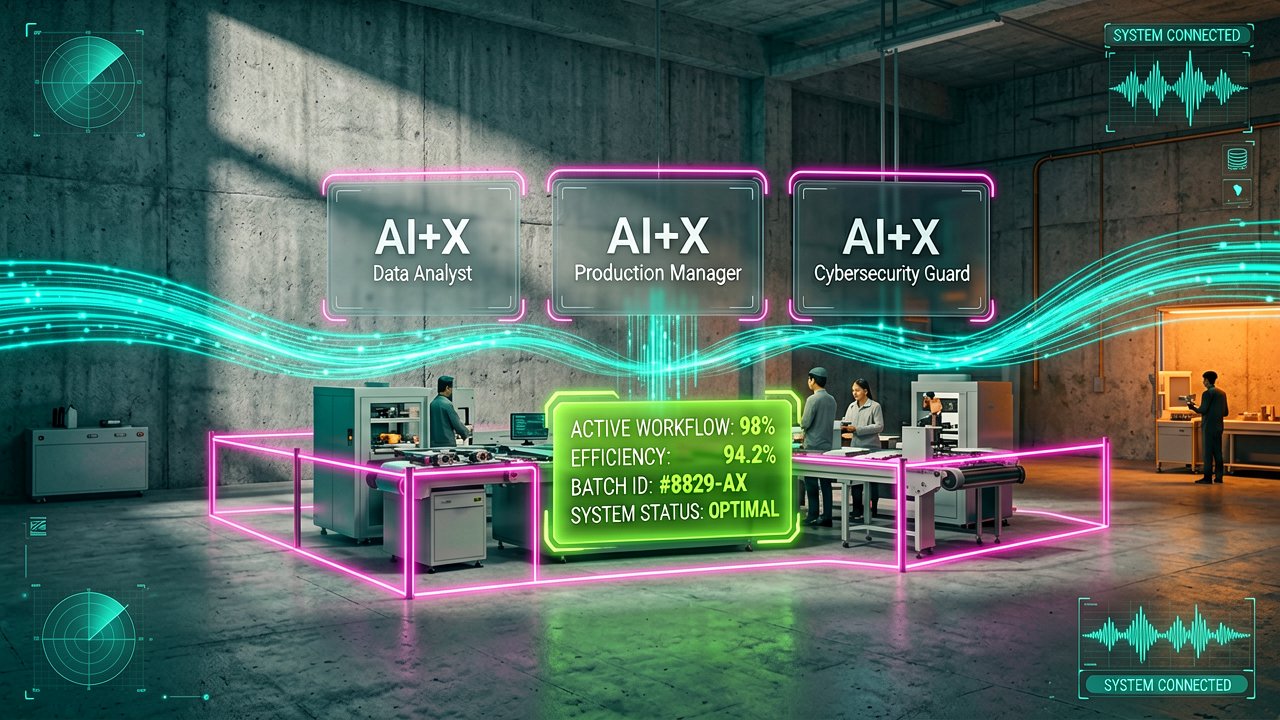
China is walking a high-stakes tightrope, trying to sprint ahead in the global AI race while simultaneously keeping its massive workforce from falling off the edge. While Silicon Valley often treats job displacement as an unfortunate bug in the software of progress, Beijing views it as a systemic risk to social stability. In early 2026, the Xinhua News Agency reported that the Ministry of Human Resources and Social Security is preparing a dedicated policy document to manage AI’s impact on employment, signaling that the government is no longer content with just "hoping" the market sorts itself out.
The anxiety isn’t unfounded. With a record 12.7 million university graduates hitting the job market in 2026, the pressure to create high-quality roles—not just eliminate them through automation—is immense. According to reporting from The Straits Times , Chinese officials are pivoting their strategy toward "harnessing AI for job creation," essentially betting that the technology can upgrade traditional roles rather than simply replacing them. It’s a bold gamble that assumes the "AI plus" initiative can spawn enough new occupations to offset the displacement happening in factories and back-office services.
Legal Guardrails and the Right to Work
In a fascinating turn for the tech sector, China’s courts are increasingly stepping in to remind companies that "efficiency" isn't a get-out-of-jail-free card for firing people. A landmark ruling by the Hangzhou Intermediate People’s Court recently declared that firms can’t just lay off employees because an AI system can do their job cheaper. The court’s logic was clear: technology should liberate labor, not discard it. This legal precedent puts the burden on corporations to prioritize retraining and internal reassignment, a move that contrasts sharply with the more laissez-faire approaches seen in the West.
The Rise of the "Human+AI" Hybrid
Despite the legal friction, the shift is already visible on the ground. Instead of a total robot takeover, we’re seeing the birth of the "AI+X" hybrid role. For instance, in the autonomous driving sector, former taxi and bus drivers are being retrained as remote safety operators, monitoring robotaxi fleets from digital command centers. Research highlighted by SCIO suggests that dozens of new occupations, many tied to AI management and data labeling, could each generate hundreds of thousands of jobs. Whether these new roles can scale fast enough to meet the needs of a maturing economy remains the trillion-yuan question.
The Human Cost of Efficiency: While the official narrative focuses on seamless transitions and state-led retraining, the reality on the factory floors of Guangdong and the cubicles of Beijing is far more granular and fraught. For decades, China’s social contract was built on the implicit promise of steady employment in exchange for rapid industrialization. Now, as the "world’s factory" pivots toward the "world’s intelligent hub," that contract is being redrafted in real-time. Seasoned observers note that the government’s interventionist stance isn't just about economic theory; it is a defensive maneuver to prevent the kind of structural unemployment that historically leads to civil unrest.
Industry insiders suggest that the Ministry of Industry and Information Technology is quietly leaning on tech giants like Baidu and Alibaba to ensure their LLM rollouts include "labor-absorption" metrics. This means that when a company implements an AI solution that displaces workers, they are often expected—if not mandated—to demonstrate where those workers are being reallocated within the broader corporate ecosystem. It is a form of industrial paternalism that prioritizes the collective social fabric over the raw quarterly margins that drive Western tech conglomerates. However, this creates a hidden friction where innovation might be throttled by the weight of maintaining a legacy workforce.
Historical context is vital here, as China has navigated massive labor shifts before, most notably the privatization of state-owned enterprises in the 1990s. Back then, tens of millions were laid off, leading to a decade of painful restructuring. Beijing’s current leadership is determined to avoid a "2.0 version" of that upheaval. By framing AI as a tool for "high-quality development," they are attempting to psychologically rebrand the technology. Instead of a replacement for the human mind, it is marketed as a digital exoskeleton designed to help the aging workforce remain productive longer as the national birth rate continues to decline.
The Skill Gap and the Rural-Urban Divide
The most significant hurdle remains the widening gap between the skill sets of the existing workforce and the demands of an AI-driven economy. While urban Gen-Z graduates are rapidly picking up prompt engineering and data synthesis, the middle-aged assembly line worker in a secondary city faces a much steeper climb. Government-sponsored vocational schools are scrambling to update curricula, but the pace of AI evolution often outstrips the bureaucratic speed of educational reform. This lag creates a "wait-and-see" atmosphere among investors who worry that the labor force might not be ready for the very tools being subsidized.
From the perspective of regional governors, the pressure is twofold: they must attract high-tech investment to meet GDP targets while ensuring that traditional industries, which still provide the bulk of local taxes and jobs, don’t collapse overnight. In provinces like Zhejiang, local authorities are experimenting with "AI transition insurance" and tax credits for firms that maintain their headcount despite full-scale automation. These local experiments often serve as the testing ground for national policy, showing that the "China Model" for AI is less about a single decree and more about a chaotic, localized series of adjustments to keep the peace.
Ultimately, the success of this strategy hinges on the global market’s appetite for Chinese-made AI products. If international demand remains high, the revenue generated can subsidize the social costs of this massive labor transition. But if geopolitical tensions lead to further "de-risking" or export controls on essential hardware, Beijing may find itself with a surplus of sophisticated AI and a surplus of unemployed workers, a combination that would test the limits of even the most robust social engineering. The goal is to reach a state of "dynamic equilibrium" where the speed of innovation never quite outruns the speed of human adaptation.
The Paradox of Managed Progress: There is a seductive logic to the idea that a centralized government can simply dial the knobs of innovation to keep employment levels steady, but this ignores the inherently disruptive nature of the silicon soul. Beijing’s insistence that AI can be "harnessed" without a significant body count of traditional roles assumes that technology will wait for the slowest worker to catch up. In reality, the efficiency gains of Large Language Models and autonomous systems are often zero-sum games; if a bot does the work of five people, keeping those five on the payroll is no longer an economic strategy—it’s a social welfare program masquerading as a business model.
We must also challenge the assumption that "new jobs" will naturally migrate to those displaced. The government’s rosy projections of millions of data labelers and AI supervisors overlook the grim reality of the "gig-ification" of the tech sector. Many of these emerging roles are precarious, low-wage, and arguably more soul-crushing than the manual labor they replace. While a software engineer in Shenzhen might see AI as a co-pilot, a warehouse picker in Henan sees it as a digital overseer that tracks every micro-second of downtime. The contradiction lies in China’s desire to be a "socialist market economy" while deploying the most hyper-capitalist tools ever invented.
Furthermore, the long-term demographic implications are a double-edged sword that Beijing is struggling to sharpen. On one hand, an aging, shrinking population theoretically needs AI to maintain productivity levels. On the other hand, if AI successfully replaces the youth entering the market today, the government faces a generational crisis of "lying flat"—a growing movement of disillusioned youth who opt out of the rat race entirely. If the state forces companies to prioritize human labor over robotic efficiency to solve this, it risks losing its competitive edge against global rivals who have no such qualms about automation. It is a classic trap: innovate and risk the streets, or stagnate and lose the world.
The Ghost in the Growth Machine
There is also the matter of "shadow automation," where firms officially report stable headcounts to satisfy local regulators while quietly shifting the actual workload to automated systems. This creates a statistical mirage that could lead to catastrophic policy failures if the central government bases its next Five-Year Plan on inflated employment data. The skepticism among veteran China watchers is that the official "AI for jobs" narrative serves more as a sedative for the public than a blueprint for the economy. The friction between the tech sector’s need for speed and the Party’s need for stability is reaching a boiling point that no algorithm can easily resolve.
Ultimately, the projection for the next decade suggests a fragmented labor market where the "AI elite" and the "subsidized laborers" live in two different Chinas. The implication is a deepening of the digital divide that could undermine the very "Common Prosperity" goals the leadership has championed. If the goal is to lead the fourth industrial revolution without the social scars of the first three, Beijing is essentially trying to invent a new law of economic physics. Success would redefine global governance; failure would be a sobering reminder that even the most powerful state cannot legislate away the consequences of a fundamental technological shift.
The prevailing hope seems to be that if we just give the robots enough work to do, they’ll eventually get tired enough to let the humans take a turn, though most factory managers suspect that the only thing a robot truly "displaces" is the need for a lunch break and a pension.
Artūras Malašauskas is an AI Systems Integrator with 20+ years of production-grade web engineering experience. He has designed, shipped, and scaled enterprise Python/PHP systems for logistics, SaaS, and public-sector clients. For the past year, he has focused exclusively on AI integrations: deploying open-source LLMs, building generative media pipelines (image, audio, video), and engineering multi-agent workflows for real production environments. His standard: reproducibility, security, cost-efficient inference—no vaporware. He documents and evaluates emerging AI tooling, separating verified capabilities from marketing noise. Technical editor at: muza-ai.eu, ai-verslas.lt, ai-naujinos.lt Connect on LinkedIn
Comments