How Fireshine Games Backed a Winner with Far Far West
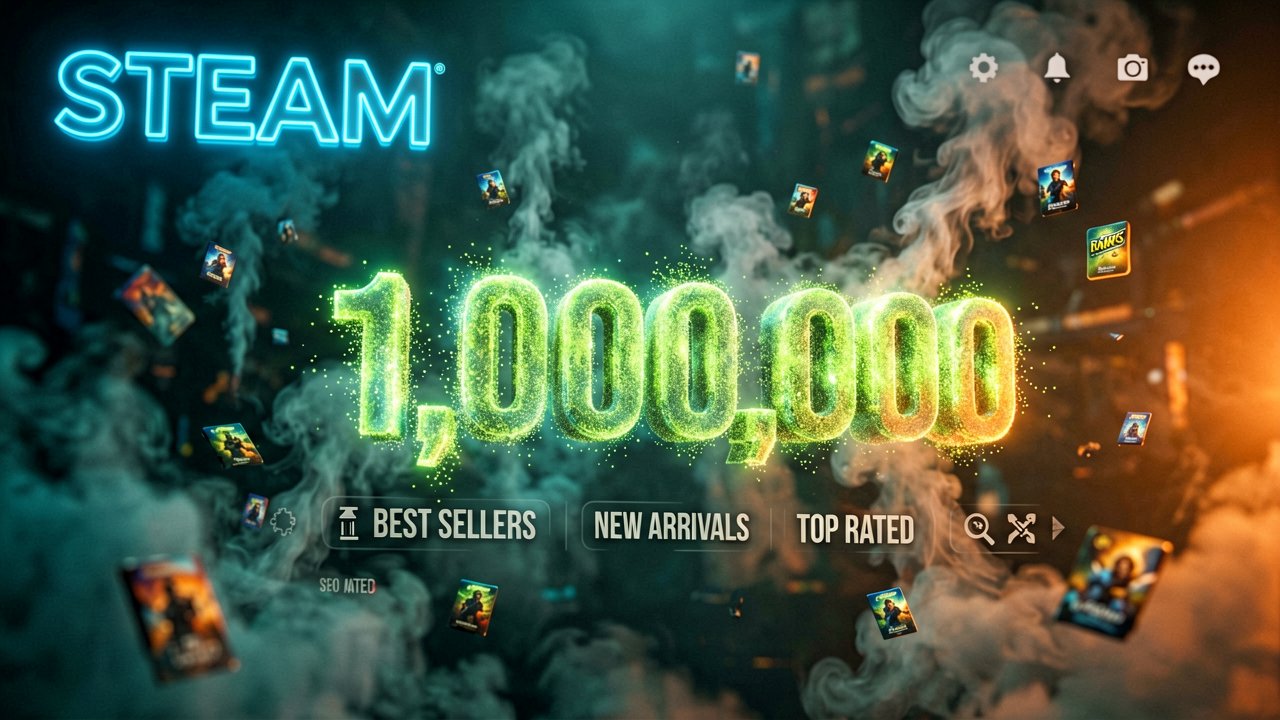
The indie publishing scene is notoriously fickle, often feeling like a high-stakes gamble where only the most fortunate survive. Yet, London-based Fireshine Games seems to have cracked a code that many of its peers are still scrambling to decipher. Their recent collaboration with French developer Evil Raptor on the stylized co-op shooter Far Far West hasn't just hit its targets; it’s practically cleared the saloon. Launched into Steam Early Access in late April 2026, the game rocketed past 100,000 sales in its first 24 hours and hit the staggering one-million-copy milestone in under three weeks, proving that there's still plenty of gold in them thar digital hills.
What makes this success story particularly compelling isn't just the raw data—though a 97% "Overwhelmingly Positive" rating on Steam is nothing to sneeze at—but the surgical precision of the release strategy. Fireshine didn't just throw the title at a wall to see if it stuck. Instead, they leaned into a heavy pre-launch phase that saw over 700,000 wishlists accumulate before the first bounty was ever collected. According to reports from KitGuru, the title's momentum was bolstered by a standout performance during February’s Steam Next Fest, where the game’s blend of supernatural chaos and robotic cowboy charm clearly resonated with a crowd hungry for a polished extraction-style experience without the predatory microtransactions.
Beyond the Numbers: The Human Element of an Indie Hit
What Most Reports Miss: While the financial charts tell a story of rapid growth, the "secret sauce" behind Far Far West lies in the ideological alignment between publisher and developer. Fireshine Games has recently taken a public and somewhat controversial stand against the use of generative AI in core game development. CEO Brian Foote has been vocal about the publisher’s refusal to work with partners who rely on AI-generated art or assets, a sentiment echoed in a deep dive by
The indie publishing scene is notoriously fickle, often feeling like a high-stakes gamble where only the most fortunate survive. Yet, London-based Fireshine Games seems to have cracked a code that many of its peers are still scrambling to decipher. Their recent collaboration with French developer Evil Raptor on the stylized co-op shooter Far Far West hasn't just hit its targets; it’s practically cleared the saloon. Launched into Steam Early Access in late April 2026, the game rocketed past 100,000 sales in its first 24 hours and hit the staggering one-million-copy milestone in under three weeks, proving that there's still plenty of gold in them thar digital hills. What makes this success story particularly compelling isn't just the raw data—though a 97% "Overwhelmingly Positive" rating on Steam is nothing to sneeze at—but the surgical precision of the release strategy. Fireshine didn't just throw the title at a wall to see if it stuck. Instead, they leaned into a heavy pre-launch phase that saw over 700,000 wishlists accumulate before the first bounty was ever collected. According to reports from KitGuru, the title's momentum was bolstered by a standout performance during February’s Steam Next Fest, where the game’s blend of supernatural chaos and robotic cowboy charm clearly resonated with a crowd hungry for a polished extraction-style experience without the predatory microtransactions. What Most Reports Miss: While the financial charts tell a story of rapid growth, the "secret sauce" behind Far Far West lies in the ideological alignment between publisher and developer. Fireshine Games has recently taken a public and somewhat controversial stand against the use of generative AI in core game development. CEO Brian Foote has been vocal about the publisher’s refusal to work with partners who rely on AI-generated art or assets, a sentiment echoed in a deep dive by GamesIndustry.biz. This "human-first" ethos seems to have fostered a high-trust environment with Evil Raptor, an eight-person team whose previous success with Pumpkin Jack gave them the pedigree, but whose vision for a "weird" West required a publisher willing to bank on creativity over algorithms. From a portfolio perspective, Fireshine is positioning itself as a haven for "total bangers" that prioritize gameplay loops over live-service bloat. The game’s $19.99 price point and the absence of loot boxes serve as a refreshing rebuttal to the current industry trend of squeezing players at every turn. Stakeholders within the EG7 group, Fireshine’s parent company, have noted that the game’s success wasn't just a byproduct of luck; it was the result of evaluating momentum across non-traditional signals, such as TikTok engagement and community playtests, rather than just waiting for the Steam algorithm to do the heavy lifting. The historical context here is also vital. Fireshine, formerly known as Sold Out, has spent the last decade evolving from a physical distribution specialist into a digital-first powerhouse. By leveraging their deep roots in retail—seen in their physical partnerships for massive hits like Balatro—they’ve built a war chest that allows them to take "smart, disciplined creative bets." Chief Portfolio Officer Jasper Tanner-Barnes has highlighted that the goal is a strategic roadmap that balances these indie gems with stable physical distribution revenue, a hybrid model that few other mid-sized publishers have managed to perfect. Looking ahead, the road for Far Far West is paved with community-led updates. Evil Raptor has already demonstrated an agile response to player feedback, recently overhauling the game’s progression systems to reduce the grind and doubling down on "quality of life" fixes that players actually asked for. As the game continues its Early Access journey, the partnership between Fireshine and Evil Raptor stands as a blueprint for how a small, passionate team can disrupt the market when backed by a publisher that understands the value of a human touch in an increasingly automated industry. Reading Between the Lines: While the narrative of the "human-made hit" is undeniably attractive, a cold-eyed look at the market suggests that Fireshine’s anti-AI stance might be as much about brand differentiation as it is about artistic purity. In a sea of procedurally generated shovelware, a "crafted" label acts as a premium seal, yet it places immense pressure on Evil Raptor to maintain a pace of content creation that usually requires automation to sustain. The industry is littered with indie darlings that buckled under the weight of their own early success when the small team couldn't keep up with the voracious appetite of a million-strong player base. There is also a palpable tension in the pricing strategy. At twenty dollars, Far Far West is an absolute steal, which drives the high sales volume but leaves little margin for error if development costs balloon during the Early Access period. This lean-and-mean approach works brilliantly when you have a hit, but it highlights the precarious nature of the "total banger" philosophy. If one high-profile title underperforms, the lack of recurring "whale" revenue from microtransactions—the very thing the community praises—could leave the publisher exposed in a way that traditional live-service giants simply aren't. Furthermore, the reliance on Steam Next Fest as a primary launchpad is a strategy that is rapidly reaching its saturation point. As more publishers attempt to replicate the Far Far West playbook, the "festival effect" will inevitably diminish. Fireshine’s current dominance might be less about a repeatable formula and more about a perfect confluence of timing, aesthetic novelty, and a momentary vacuum in the co-op market. Whether this success signals a permanent shift in indie power dynamics or is merely a well-executed flash in the pan depends entirely on how the team handles the inevitable "sophomore slump" of mid-development fatigue. The indie publishing scene is notoriously fickle, often feeling like a high-stakes gamble where only the most fortunate survive. Yet, London-based Fireshine Games seems to have cracked a code that many of its peers are still scrambling to decipher. Their recent collaboration with French developer Evil Raptor on the stylized co-op shooter Far Far West hasn't just hit its targets; it’s practically cleared the saloon. Launched into Steam Early Access on April 28, 2026, the game rocketed past 100,000 sales in its first 24 hours and hit the staggering one-million-copy milestone in under three weeks, proving that there's still plenty of gold in them thar digital hills. What makes this success story particularly compelling isn't just the raw data—though a 97% "Overwhelmingly Positive" rating on Steam is nothing to sneeze at—but the surgical precision of the release strategy. Fireshine didn't just throw the title at a wall to see if it stuck. Instead, they leaned into a heavy pre-launch phase that saw over 700,000 wishlists accumulate before the first bounty was ever collected. According to reports from KitGuru, the title's momentum was bolstered by a standout performance during February’s Steam Next Fest, where the game’s blend of supernatural chaos and robotic cowboy charm clearly resonated with a crowd hungry for a polished extraction-style experience without the predatory microtransactions. What Most Reports Miss: While the financial charts tell a story of rapid growth, the "secret sauce" behind Far Far West lies in the ideological alignment between publisher and developer. Fireshine Games has recently taken a public and somewhat controversial stand against the use of generative AI in core game development. CEO Brian Foote has been vocal about the publisher’s refusal to work with partners who rely on AI-generated art or assets, a sentiment echoed in a deep dive by 
Beyond the Numbers: The Human Element of an Indie Hit

Reading Between the Lines: The Fragility of the "Banger" Model
Success in the games industry is a lot like a high-noon duel: it doesn't matter how fancy your boots are if you're the only one who forgot to load the gun with actual content. Fireshine proved they have the bullets, now they just have to survive the long walk back to the stable without tripping over their own integrity.
Beyond the Numbers: The Human Element of an Indie Hit
Artūras Malašauskas is an AI Systems Integrator with 20+ years of production-grade web engineering experience. He has designed, shipped, and scaled enterprise Python/PHP systems for logistics, SaaS, and public-sector clients. For the past year, he has focused exclusively on AI integrations: deploying open-source LLMs, building generative media pipelines (image, audio, video), and engineering multi-agent workflows for real production environments. His standard: reproducibility, security, cost-efficient inference—no vaporware. He documents and evaluates emerging AI tooling, separating verified capabilities from marketing noise. Technical editor at: muza-ai.eu, ai-verslas.lt, ai-naujinos.lt Connect on LinkedIn
Comments