Out With the ‘Masterpieces,’ In With the Capybaras: Steam Just Purged Its Tag Library

If you’ve recently tried to find a game labeled as a "Masterpiece" or a "Cult Classic" on Steam, you might notice those descriptors have quietly vanished into the digital ether. In a major spring-cleaning effort, Valve has axed 28 official store tags, trading them for 17 new ones that reflect the actual ways we play games today. According to the team at IGN, this rare overhaul isn’t just about tidying up; it’s an attempt to fix a discovery system that had become bogged down by subjective labels and redundant categories that didn’t actually help anyone find their next favorite game.
The biggest losers in this update are the "vibes" and brand-heavy tags. Terms like "Well-Written" and "Masterpiece" were tossed for being too subjective—after all, one person’s narrative triumph is another person’s skip-the-cutscenes chore. Valve also stripped away IP-specific tags like "LEGO," "Warhammer 40K," and "Dungeons & Dragons," reasoning that dedicated franchise pages already handle that heavy lifting. Even "NSFW" and "Mature" got the boot, as reported by Esports.gg, because they were seen as redundant alongside more specific descriptors like "Sexual Content" or "Gore."
The Rise of ‘Bullet Heaven’ and Cozy Chaos
While some old favorites were retired, the new additions show exactly where gaming culture is heading. The most significant arrival is "Bullet Heaven," the community-sanctioned name for the genre popularized by Vampire Survivors. For years, we’ve struggled to name these games without awkward mouthfuls like "reverse bullet hells" or "survivor-likes." Now, Steam has officially codified the term, giving these dopamine-inducing horde-fests a home of their own. Other practical additions include "Organizing," "Cleaning," and "Decorating," acknowledging the massive surge in "cozy" games where the primary goal is simply putting things in the right place.
Niche Trends and Semantic Tweaks
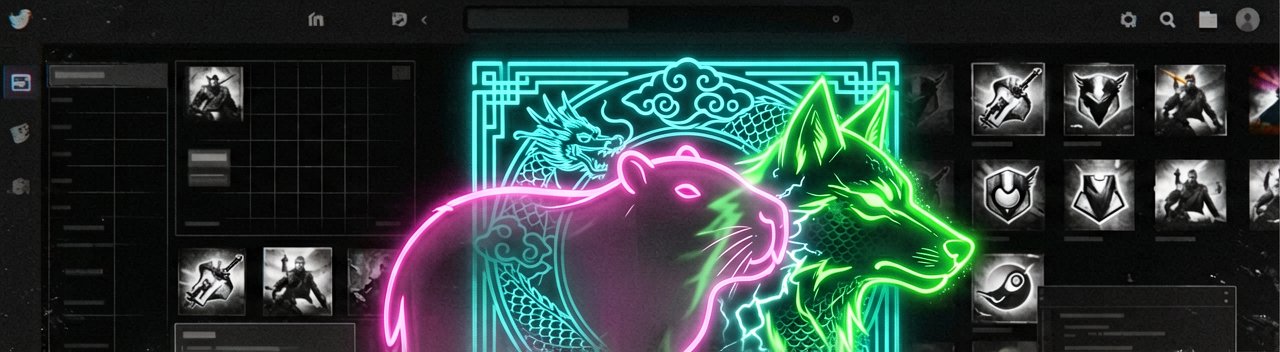
The update also leans into specific cultural and mechanical niches that have grown too large to ignore. Fans of Asian fantasy will be pleased to see "Wuxia" and "Xianxia" get official recognition, and animal lovers now have dedicated tags for "Zoo," "Wolves," and the internet’s favorite rodent, "Capybaras." Beyond just adding new words, Valve did some much-needed housekeeping on existing ones. "Clicker" has been rebranded as the more accurate "Incremental," while "Pool" was changed to "Billiards" to stop players from getting cue sports confused with swimming sims, as noted by WN Hub. It’s a shift toward precision, ensuring that the tags we click actually match the pixels we’re about to buy.

The Metadata Shift: Why Precision Trumps Prestige
Behind the Algorithm: This isn't just a simple case of digital housekeeping; it is a fundamental shift in how Valve views the psychology of the "search." For years, the Steam discovery queue has been plagued by "Masterpiece" inflation, where a vocal fanbase could essentially weaponize subjective tags to boost a game's visibility regardless of its mechanical genre. By stripping away these qualitative labels, Valve is forcing the metadata to be descriptive rather than evaluative. A seasoned developer knows that while "Well-Written" is a lovely compliment, it tells a potential buyer absolutely nothing about whether they’ll be clicking on a dialogue tree or shooting aliens, and that ambiguity was starting to hurt the store’s conversion rates.
From a stakeholder perspective, the removal of brand-specific tags like "Warhammer 40K" and "LEGO" signals a move toward a cleaner, more centralized architecture. Large publishers have long complained about "tag pollution" where unrelated titles would piggyback on popular franchise names to siphon traffic. By funneling these searches through official franchise hubs and developer pages instead, Valve is effectively putting the gatekeeping power back into the hands of the IP holders. It reduces the "wild west" feel of user-applied tags that once defined the platform, bringing it more in line with the curated, professional aesthetic of modern digital storefronts.
The formalization of "Bullet Heaven" is perhaps the most significant nod to the power of community-led linguistic evolution. Historically, genres were dictated by trade magazines or the developers themselves, but the rise of the "survivor-like" happened almost entirely through player discourse on Reddit and Discord. Valve’s decision to adopt the community’s preferred term over their own previous descriptors shows a rare humility for a platform of this scale. They are acknowledging that the players, not the engineers, are the ones who ultimately decide what a genre is called, and codifying that language makes the storefront feel more like a reflection of actual gaming culture.
There is also a clear push toward the "gamification of chores," a trend that has exploded in the post-pandemic era. By adding specific tags for "Cleaning," "Organizing," and "Decorating," Steam is finally providing a dedicated home for the "Zen" gaming movement. Previously, these games were often lumped into a generic "Simulation" or "Casual" bucket where they were easily lost among trucking sims or match-3 mobile ports. Now, the algorithm can specifically target the growing demographic of players who use games as a tool for de-stressing through repetitive, low-stakes digital labor, a market segment that has proven to be incredibly lucrative for indie developers.
Historically, Steam's tagging system was a revolutionary experiment in "folksonomy"—a classification system created by the people using it. However, as the library grew to over 50,000 titles, that experiment began to buckle under the weight of its own contradictions. The move to replace "Clicker" with "Incremental" and "Pool" with "Billiards" suggests that Valve is prioritizing global standardized terminology over regional slang. This linguistic tightening helps the platform function better across different languages and cultures, ensuring that a player in Tokyo and a player in London are looking for the exact same mechanical experience when they filter their search results.
Ultimately, this update represents the professionalization of Steam’s back-end data. While some users might miss the charm of labeling every indie darling a "Cult Classic," the reality of a massive digital marketplace demands high-fidelity data over sentimental descriptors. By focusing on what a game *is* rather than what people *think* of it, Valve is attempting to create a more meritocratic discovery system. This ensures that a game’s success is built on its ability to satisfy a specific mechanical craving, rather than its ability to trend on a subjective and easily manipulated tag cloud.
The Metadata Paradox: When Order Breeds Obscurity
Reading Between the Lines: While Valve’s pivot toward clinical precision is framed as a win for discovery, there is a distinct risk that stripping away the "soul" of user tags will sanitize the storefront into a sterile spreadsheet. By removing subjective labels like "Cult Classic" or "Masterpiece," Steam is effectively betting that players search for games based on mechanical components rather than emotional resonance. This assumption ignores a fundamental truth of the medium: players often don't know they want a "bullet heaven" until they find something described as "addictive" or "soul-crushing." In the quest to eliminate tag pollution, Valve may inadvertently be killing the serendipity that allowed weird, unclassifiable gems to rise to the top of the pile.
The contradiction in this "precision" strategy is most evident in the brand-new niche tags like "Capybaras" or "Wolves." On one hand, Valve claims to be removing redundant or hyper-specific tags to streamline the interface, yet they have introduced animal-specific filters that are the very definition of hyper-niche. This suggests that the "cleanup" isn't actually about reducing the total volume of tags, but rather about shifting the power of categorization from the community's creative whims to a rigid, commerce-driven taxonomy. It’s a cynical move that prioritizes SEO-friendly keywords over the organic, often chaotic descriptors that gave the Steam community its unique editorial voice.
Furthermore, the rebranding of "Clicker" to "Incremental" or "Pool" to "Billiards" reveals a preoccupation with semantic purity that might backfire. In the digital age, common usage usually trumps dictionary definitions. Most casual gamers looking for a game where they click a cookie for ten hours are going to type "clicker" into the search bar, not "incremental." By forcing these high-brow technical terms onto low-brow genres, Valve risks creating a disconnect between how people actually talk and how the algorithm listens. It is a classic case of engineers trying to fix a "messy" human system with a "perfect" logical one, often forgetting that the users are the ones who have to navigate the resulting friction.
Looking ahead, the long-term implication of this purge is a storefront that feels increasingly like a supermarket shelf and less like a boutique record store. When every game is categorized by its "Organizing" or "Cleaning" mechanics rather than its "Well-Written" narrative, the platform shifts from a place of cultural discovery to a utility for habit-fulfillment. This change benefits the established "cozy" or "bullet heaven" formulas that can be easily tagged and sorted, but it leaves little room for the experimental titles that intentionally defy categorization. The metadata may be cleaner, but the artistic landscape of the store might end up looking a lot more uniform as a result.
Steam has finally achieved the impossible: a world where you can find a game about washing a digital van in seconds, but you’ll have to check a third-party review to find out if the story is actually any good—because in the eyes of the algorithm, a 'Masterpiece' is just a 'Product' that hasn't been properly categorized yet.
Artūras Malašauskas is an AI Systems Integrator with 20+ years of production-grade web engineering experience. He has designed, shipped, and scaled enterprise Python/PHP systems for logistics, SaaS, and public-sector clients. For the past year, he has focused exclusively on AI integrations: deploying open-source LLMs, building generative media pipelines (image, audio, video), and engineering multi-agent workflows for real production environments. His standard: reproducibility, security, cost-efficient inference—no vaporware. He documents and evaluates emerging AI tooling, separating verified capabilities from marketing noise. Technical editor at: muza-ai.eu, ai-verslas.lt, ai-naujinos.lt Connect on LinkedIn
Comments