Beyond the Resume: Cercli’s New AI Agent Promises to Fix the Recruiting Lag

The "black hole" of recruitment—that frustrating lag where resumes sit unread and feedback goes to die—is a problem as old as the modern office. Cercli, a Dubai-based startup founded by former Careem operators, is making a global bet that it can finally plug that gap. This week, the company launched Cera, an AI-powered hiring agent designed to handle the heavy lifting of candidate evaluation. Far from just another digital filing cabinet, Cera is an "AI-native" recruiter that writes job descriptions, ranks applicants, and even coordinates interviews within a unified system. It’s an ambitious step for a firm that’s rapidly scaling its "Rippling for MENA" vision into a global product suite.
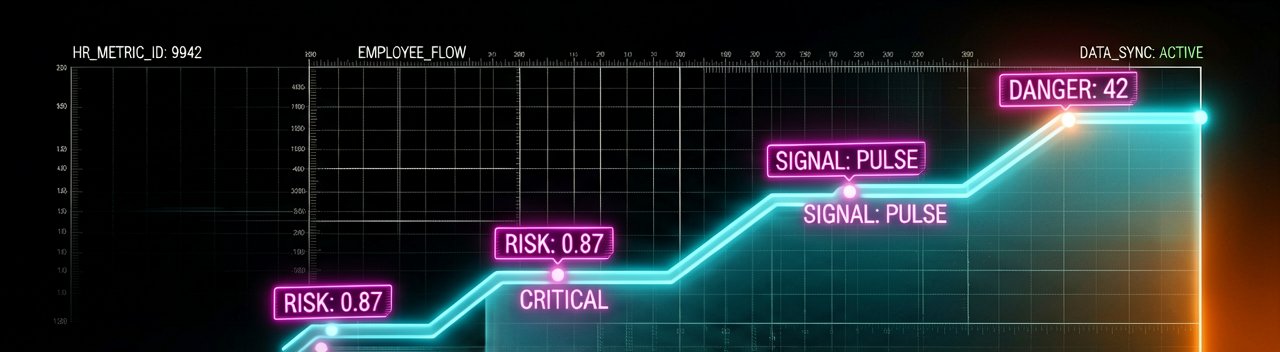
What’s interesting here isn't just the automation; it’s the integration. While most applicant tracking systems (ATS) are passive databases where data goes to hide, Cercli has built Cera directly into its existing HR and payroll stack. According to Zawya, the agent creates structured candidate summaries that highlight strengths and "risk signals"—like role stability or career progression—well before a human recruiter even takes their first sip of coffee. By automating the screening and scoring process against specific job criteria, Cercli claims it can help teams focus only on the candidates who actually fit, rather than drowning in a sea of low-relevance profiles.
Closing the Recruitment Loop
The timing for such a launch is critical. As companies move toward globally distributed teams, the friction of managing disparate tools for hiring, payroll, and compliance has become a major bottleneck. Cercli, which recently secured $12 million in Series A funding led by Picus Capital, is positioning itself as the connective tissue for these fragmented operations. The new Cera agent doesn't just find talent; it schedules the interviews and gathers instant, structured feedback the moment the session ends. It’s a move intended to turn recruitment from a slow, administrative slog into a data-driven decision process.
From Candidate to Paycheck
By housing the entire lifecycle—from the first application to the final payroll run—under one roof, Cercli is attempting to solve the data silos that usually plague HR departments. Cera is essentially the front door to this ecosystem. While the tech world is currently flooded with "AI agents," Cercli's edge lies in its operational DNA. The founders, Akeed Azmi and David Reche, saw firsthand how fragmented systems slowed down growth at Careem. Their latest release suggests they aren't just looking to build a better search tool, but a full-scale engine that handles every hire with the same consistency as a monthly payroll.
The Strategy Behind the Software
The Shift from Tooling to Agency: What most reports miss is that Cercli isn’t just adding a chatbot to a sidebar; they are pivoting toward a model where the software performs labor rather than just recording it. In the traditional SaaS model, a recruiter spends hours "feeding the machine" by inputting data and moving cards across a digital board. Cera flips this dynamic by acting as a proactive participant that scouts and filters before the human element enters the frame. This shift reflects a broader trend in the enterprise space where "AI-native" features are replacing the clunky, menu-heavy interfaces of the last decade.
For seasoned HR directors, the appeal of Cera lies in its ability to mitigate "decision fatigue." When a company scales, the quality of hiring often dips because the sheer volume of applicants overwhelms the people in charge of the process. By using an agent to identify "risk signals" and map candidate skills against historical team performance data, Cercli is attempting to industrialize the intuition of a high-level headhunter. It’s a move that brings the sophisticated automation usually reserved for Fortune 500 companies down to the mid-market and startup level.
Stakeholder perspectives suggest that the true value of this global rollout is the removal of geographical bias. Because Cera evaluates candidates based on structured criteria and objective data points, it can theoretically level the playing field for talent in emerging markets. This is particularly relevant for Cercli’s home turf in the MENA region, where the talent pool is vast but often fragmented across different educational systems and professional standards. The agent provides a unified benchmark that makes a candidate from Riyadh as readable and comparable as one from Berlin or New York.
From a historical context, the "unified platform" dream has been the holy grail of HR tech since the early 2000s, yet most attempts resulted in bloated "all-in-one" suites that did everything poorly. Cercli’s approach differs because it centers the experience around the data flow. By integrating hiring directly with payroll and compliance, they eliminate the "data leakage" that happens when information is manually moved from a recruitment tool to an onboarding system. This ensures that the promises made during the interview process—regarding salary, benefits, and roles—are hard-coded into the employee’s record from day one.
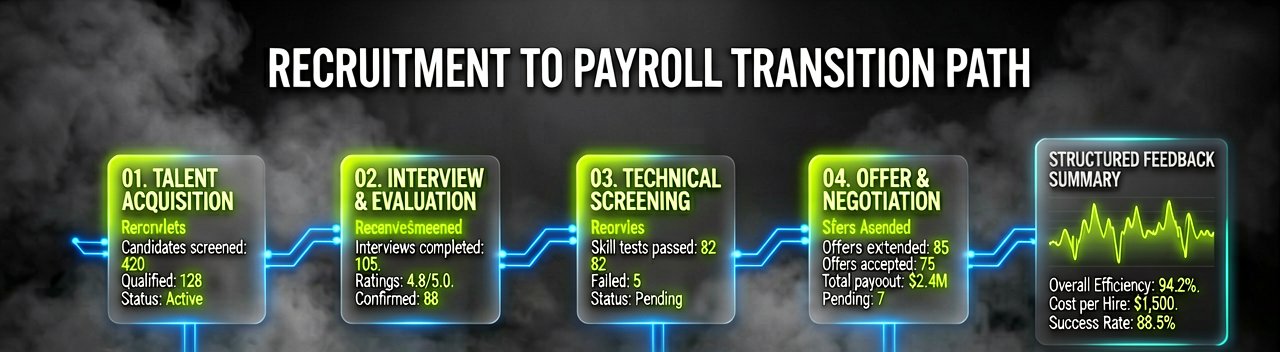
However, the global launch of Cera also signals a challenge to established players like Greenhouse and Workday. Cercli is banking on the fact that modern companies are tired of paying for multiple subscriptions that don't talk to each other. By bundling an AI recruiter that actually performs tasks with a robust payroll engine, they are positioning themselves as an operational necessity rather than a discretionary expense. The focus is no longer just on "hiring faster," but on creating a seamless transition from a candidate's first click to their first paycheck.
Ultimately, the success of Cera will depend on how well it handles the nuances of human conversation and culture. While the agent can automate the logic of a hire, the "cultural fit" remains the final frontier for human recruiters. Cercli seems aware of this, designing the agent to act as a filter and coordinator rather than a final judge. This collaborative approach allows the AI to handle the mundane administrative tasks while leaving the high-stakes emotional and cultural vetting to the hiring managers who will actually be working with the new recruits.
The Friction of "Frictionless" Hiring
Reading Between the Lines: While the narrative of AI-driven efficiency is intoxicating, there is a persistent irony in the quest to automate human resources: the more we automate, the more we risk sanitizing the very "human" elements that make a workforce effective. Cercli’s Cera agent promises to eliminate the administrative lag, but it simultaneously introduces a new layer of algorithmic gatekeeping. The assumption that an AI can accurately identify "risk signals" or "role stability" assumes that past career patterns are perfect predictors of future performance, potentially penalizing non-linear thinkers or those whose career gaps were born of necessity rather than lack of ambition.
There is also a functional contradiction in the "unified stack" philosophy. By merging recruitment, payroll, and compliance into a single AI-governed ecosystem, companies gain immense speed but sacrifice the checks and balances that separate departments provide. If the same system that screens a candidate also sets their payroll and compliance parameters, the margin for systemic error becomes razor-thin. A glitch or a biased training set in the hiring agent doesn't just result in a bad hire; it ripples through the company’s entire financial and legal infrastructure before a human ever intervenes.
Furthermore, the global rollout of an AI recruiter must contend with the "uncanny valley" of candidate experience. While Cercli aims to fix the recruitment black hole, there is a risk of replacing it with a polished, digital mirror. Candidates may find themselves optimizing resumes for an AI’s specific scoring logic rather than demonstrating genuine capability, leading to a "dead internet" version of the job market where bots apply to jobs and bots screen them. For Cercli to win, Cera must prove it can distinguish between a high-quality professional and a candidate who has simply mastered the art of algorithmic seduction.
From a market perspective, Cercli is entering a crowded arena where every legacy player is slapping an "AI" sticker on their existing database. The skepticism here lies in whether a "Rippling for MENA" can truly transcend its regional roots to handle the wildly different labor laws and cultural hiring nuances of a global market. Speed is a great selling point, but in the world of HR, speed often collides with the messy reality of local regulations. Cercli’s ability to maintain this pace without succumbing to the weight of global compliance complexity will be the true test of its "AI-native" architecture.
Projecting forward, the implication of agents like Cera is a world where the "Human" in Human Resources becomes an increasingly premium, high-level function. If AI handles the sourcing, the ranking, and the scheduling, the HR professional’s role shifts from a generalist to a specialized adjudicator. This transition may leave mid-level recruiters in a precarious position, as the tasks that once defined their workday are swallowed by a software license. The efficiency gains for the company are clear, but the cost may be a hollowing out of the traditional recruitment career path.
In the end, we are hurtling toward a future where a robot will read your resume, a bot will schedule your interview, and an algorithm will calculate your worth—leaving the humans involved with just enough free time to wonder why they still feel so busy.
Artūras Malašauskas is an AI Systems Integrator with 20+ years of production-grade web engineering experience. He has designed, shipped, and scaled enterprise Python/PHP systems for logistics, SaaS, and public-sector clients. For the past year, he has focused exclusively on AI integrations: deploying open-source LLMs, building generative media pipelines (image, audio, video), and engineering multi-agent workflows for real production environments. His standard: reproducibility, security, cost-efficient inference—no vaporware. He documents and evaluates emerging AI tooling, separating verified capabilities from marketing noise. Technical editor at: muza-ai.eu, ai-verslas.lt, ai-naujinos.lt Connect on LinkedIn
Comments