The Memory Gap: Redis Stakes Its Claim on the AI Agent Runtime with Iris

For months, the tech industry has been obsessed with the raw horsepower of large language models, but any developer in the trenches will tell you that a smart brain is useless if it’s constantly suffering from amnesia. Redis isn't just watching this struggle from the sidelines; with the launch of the Iris platform, the company is positioning itself as the essential "context engine" that bridges the gap between high-level reasoning and fragmented enterprise data. By integrating new tools like the Redis Context Retriever and Redis Agent Memory with its existing caching and search stack, Redis is betting that the real winner in the AI race won't just be the smartest model, but the one that never loses its place in the conversation.
The core philosophy behind Iris, as explained in a recent update from Redis, is that AI agents don't actually have an intelligence problem—they have a context problem. When an agent tries to answer a nuanced business question, it often has to juggle stale exports, brittle API pulls, and a short-term memory that resets every time a session ends. Iris attempts to solve this by providing a unified layer that sits between the agent and the data, serving up structured and unstructured information at the sub-millisecond speeds that have made Redis a staple of modern web infrastructure. This isn't just a minor feature update; it’s a calculated pivot to become the operational "state" for the next generation of autonomous software.
The Architecture of Persistence
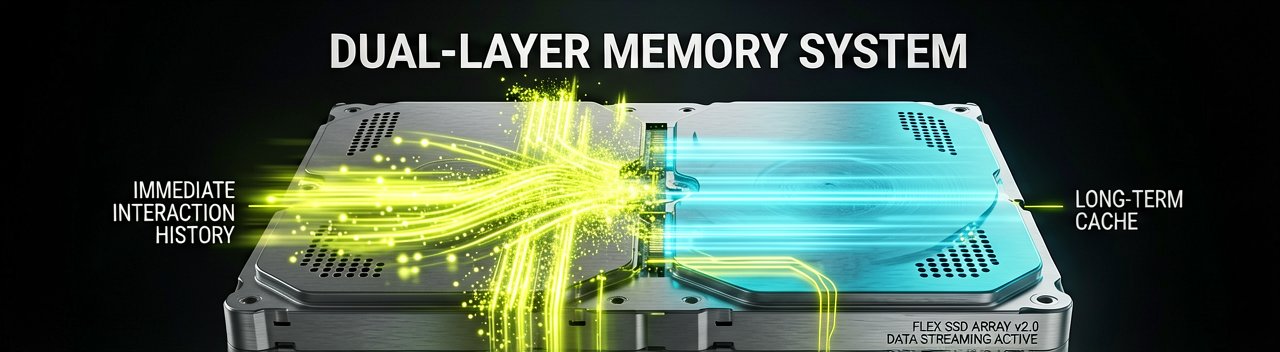
Behind the Scenes: The engineering reality of "agentic" AI is far messier than the glossy demos suggest, often requiring developers to stitch together separate vector databases, session caches, and streaming pipelines just to keep a single chatbot from hallucinating. Redis Iris aims to collapse this "complexity tax" by offering a single runtime that handles both the short-term turn-taking of a voice agent and the long-term history required for a customer support bot to remember a user’s preferences from six months ago. According to reporting from SiliconANGLE, this dual-layered approach to memory—managing immediate interaction history alongside a durable long-term cache—is what allows agents to actually "learn" and adapt over time rather than just reacting to the latest prompt.
One of the more subtle but critical shifts in this release is the introduction of the Redis Context Retriever, which moves beyond simple keyword or vector search. It allows developers to define a semantic model of their business—mapping out how customers relate to orders, tickets, and policy documents—and then auto-generates tools that agents can discover and call on their own. This effectively treats enterprise data as a navigable map rather than a dark warehouse, reducing the need for the fragile "text-to-SQL" shortcuts that often lead to security risks or incorrect results in production environments. By enforcing row-level filters server-side, Redis is also addressing the enterprise anxiety surrounding data governance in an AI-first world.

The business case for Iris is bolstered by a significant installed base, with data cited by IT Brief Asia suggesting that roughly 43% of enterprise AI agent stacks are already running on some form of Redis infrastructure. This gives the company a massive head start in the battle for the "AI runtime," as teams are increasingly desperate to avoid adding yet another specialist product to their already bloated tech stacks. For these organizations, shifting from a simple caching role to a full-fledged context engine is a logical evolution that leverages their existing expertise and cloud deployments.
From a cost-efficiency perspective, the launch also includes a new Flex SSD-based version of Redis, designed to handle the massive volumes of data that AI agents consume without the eye-watering costs associated with pure in-memory storage. As AI agents move from experimental pilots into live operations, the ability to manage larger data contexts at a lower price point becomes a "make or break" factor for CFOs. By tackling the three-headed monster of latency, cost, and context fragmentation, Redis is making a clear statement: the intelligence of an agent is only as good as the memory it stands on.
The Friction of "Zero-Latency" Intelligence
Reading Between the Lines: The industry’s rush to crown Redis as the definitive memory layer for AI agents ignores a fundamental architectural tension: speed is not a proxy for accuracy. While Redis Iris promises to eliminate the "latency tax" that makes current AI agents feel sluggish and disconnected, it places an enormous burden on the quality of the metadata being fed into the Context Retriever. An agent that retrieves the wrong data in half a millisecond is simply being wrong faster. The marketing pitch suggests a seamless bridge between raw data and agentic action, but the reality for most enterprises remains a "garbage in, garbage out" problem that no amount of in-memory optimization can fully mask.
There is also a growing contradiction in the "unified runtime" strategy that Iris promotes. By encouraging developers to collapse their caching, vector search, and long-term memory into a single platform, Redis is effectively pitching a return to the monolithic architectures that the cloud-native movement spent a decade trying to dismantle. While this simplifies the developer experience today, it creates a massive gravity well of vendor lock-in. If the "state" of your entire AI workforce lives exclusively within a proprietary Redis environment, the cost of migrating to a more specialized reasoning engine or a different data model in the future becomes prohibitively expensive, regardless of the touted Flex SSD savings.
Furthermore, we must look at the psychological gap between what an enterprise wants—absolute control—and what an LLM-based agent actually does—probabilistic guessing. Redis claims that its semantic modeling will reduce hallucinations by providing better "grounding," yet according to technical critiques from TechCrunch, even the most robust context window can be ignored by a model that decides to prioritize its pre-trained weights over its provided memory. Iris provides the library, but it cannot force the agent to read the books correctly. This suggests that the next bottleneck won't be data retrieval, but the "reasoning overhead" of the models themselves as they struggle to parse the massive volumes of context Redis is now capable of delivering.
Looking ahead, the success of Iris will likely hinge on whether "statefulness" remains a database problem or evolves into a model-native feature. If the next generation of models from OpenAI or Anthropic develops significantly larger "infinite" context windows or internal long-term weights, the need for an external memory layer like Iris could evaporate as quickly as it arrived. For now, Redis is capitalizing on a temporary deficiency in model architecture, betting that the world will always need a fast, reliable middleman to keep the robots from losing their minds between API calls.
Building an AI agent today is like hiring a genius with the memory of a goldfish; Redis is essentially selling them a very fast, very expensive notebook and hoping they don’t lose it in the lunchroom.
Artūras Malašauskas is an AI Systems Integrator with 20+ years of production-grade web engineering experience. He has designed, shipped, and scaled enterprise Python/PHP systems for logistics, SaaS, and public-sector clients. For the past year, he has focused exclusively on AI integrations: deploying open-source LLMs, building generative media pipelines (image, audio, video), and engineering multi-agent workflows for real production environments. His standard: reproducibility, security, cost-efficient inference—no vaporware. He documents and evaluates emerging AI tooling, separating verified capabilities from marketing noise. Technical editor at: muza-ai.eu, ai-verslas.lt, ai-naujinos.lt Connect on LinkedIn
Comments