Brands Risk 'Digital Invisibility' as Akamai Rolls Out AI Search Tool

The rules of engagement for the internet are being rewritten, and Akamai is handing out the new playbook. With its latest launch of AI Brand Presence, the cloud and security giant is sounding a loud alarm for enterprises: the old-school SEO strategy is no longer enough. As AI agents—think Perplexity or OpenAI’s SearchBot—increasingly act as the "middlemen" between consumers and companies, brands that don't adapt risk becoming ghosts in their own markets. Akamai reports a staggering 300% year-over-year surge in AI bot traffic, a clear signal that the web is shifting from human browsing to machine-mediated discovery.
At the heart of the issue is the "zero-click" reality. When a user asks an AI for the best winter boots or the latest mortgage rates, the AI often provides a direct answer without sending the user to a website. If a brand’s data isn't structured for these machines to digest instantly, the AI simply skips it or, worse, hallucinates the details. Patrick Sullivan, CTO of Security Strategy at Akamai, puts it bluntly: "If you're not the primary source of truth for the AI models your customers trust, you effectively don't exist."
What Most Reports Miss: The Invisible War for Citations
Behind the Scenes: While much of the buzz around AI focuses on chatbot cleverness, the real battle is happening at the "edge" of the network where content meets the scrapers. What many seasoned tech reporters are seeing is a strategic pivot from blocking bots to grooming them. Akamai’s new tool doesn't just watch the traffic; it translates a site’s content into machine-readable formats on the fly. This "context delivery" ensures that when an LLM comes knocking, it gets a clean, authoritative data set rather than a messy pile of HTML designed for human eyes.
This isn't just about vanity metrics; it's about survival in a landscape where referral traffic from AI chatbots is reportedly 96% lower than traditional search. Stakeholders in the publishing and e-commerce sectors are particularly vulnerable, as they face nearly seven times more AI-driven bot traffic than other industries. For these businesses, the risk isn't just a lack of clicks—it's the "hallucination gap," where an AI might misquote a price or misrepresent a product feature because it couldn't find a structured source of truth.
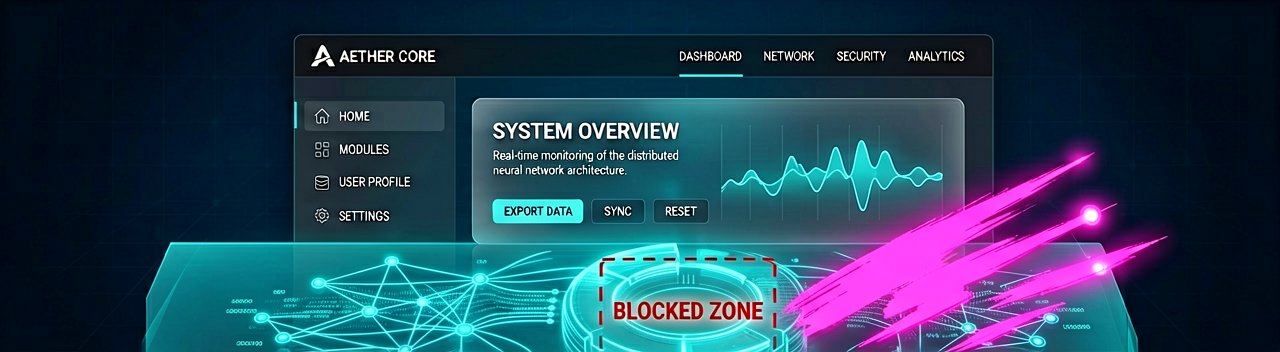
The historical context here is crucial. For twenty years, digital strategy was built on the assumption that humans would click links. Today, Akamai’s data shows that nearly 60% of searches now end without a single click. This seismic shift is forcing a "clean up" of the internet. Brands are now being pressured to provide a "digital twin" of their website—one version for people to look at and a structured, invisible version for the AI to ingest. It's a dual-track existence that requires a level of technical agility most legacy CMS systems simply weren't built to handle.
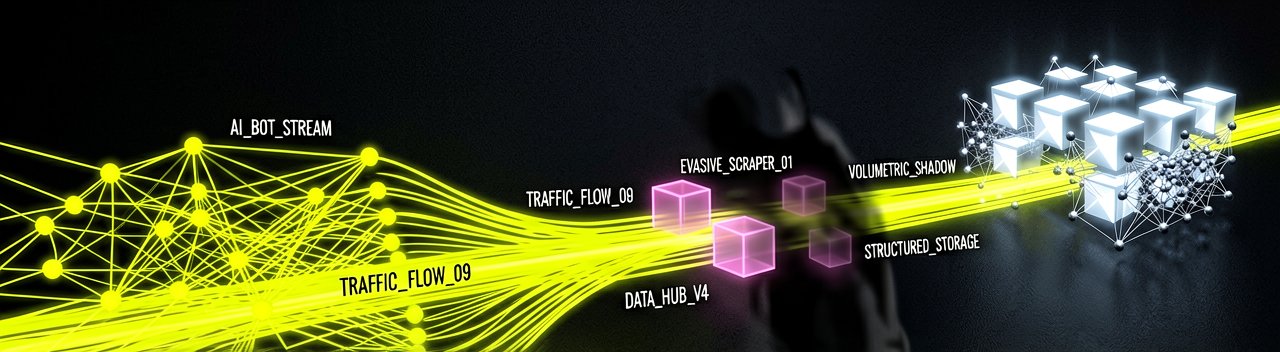
Furthermore, the rise of "evasive scrapers" has complicated the relationship between brands and AI. According to experts at Akamai, even if a brand blocks a specific AI bot, the model may still find that brand’s data through third-party scrapers that ignore "robots.txt" files. This makes the visibility dashboard in the new tool—which identifies exactly which models are visiting and what they are consuming—the most critical feature for any CMO who wants to understand their "share of voice" in the age of agentic search.
Ultimately, Akamai’s move reflects a broader industry realization: the internet is no longer a destination, but a data source. By using their edge network to serve as a real-time translator, Akamai is attempting to prevent a total collapse of brand visibility. Early testing of the platform showed an 85% increase in citations and a 364% boost in brand presence for Akamai themselves. For the rest of the corporate world, the message is clear: optimize for the machines now, or watch your brand disappear from the conversation entirely.
The rules of engagement for the internet are being rewritten, and Akamai is handing out the new playbook. With its latest launch of AI Brand Presence, the cloud and security giant is sounding a loud alarm for enterprises: the old-school SEO strategy is no longer enough. As AI agents—think Perplexity or OpenAI’s SearchBot—increasingly act as the "middlemen" between consumers and companies, brands that don't adapt risk becoming ghosts in their own markets. Akamai reports a staggering 300% year-over-year surge in AI bot traffic, a clear signal that the web is shifting from human browsing to machine-mediated discovery.
At the heart of the issue is the "zero-click" reality. When a user asks an AI for the best winter boots or the latest mortgage rates, the AI often provides a direct answer without sending the user to a website. If a brand’s data isn't structured for these machines to digest instantly, the AI simply skips it or, worse, hallucinates the details. Patrick Sullivan, CTO of Security Strategy at Akamai, puts it bluntly: "If you're not the primary source of truth for the AI models your customers trust, you effectively don't exist."
What Most Reports Miss: The Invisible War for Citations
Behind the Scenes: While much of the buzz around AI focuses on chatbot cleverness, the real battle is happening at the "edge" of the network where content meets the scrapers. What many seasoned tech reporters are seeing is a strategic pivot from blocking bots to grooming them. Akamai’s new tool doesn't just watch the traffic; it translates a site’s content into machine-readable formats on the fly. This "context delivery" ensures that when an LLM comes knocking, it gets a clean, authoritative data set rather than a messy pile of HTML designed for human eyes.
This isn't just about vanity metrics; it's about survival in a landscape where referral traffic from AI chatbots is reportedly 96% lower than traditional search. Stakeholders in the publishing and e-commerce sectors are particularly vulnerable, as they face nearly seven times more AI-driven bot traffic than other industries. For these businesses, the risk isn't just a lack of clicks—it's the "hallucination gap," where an AI might misquote a price or misrepresent a product feature because it couldn't find a structured source of truth.
The historical context here is crucial. For twenty years, digital strategy was built on the assumption that humans would click links. Today, Akamai’s data shows that nearly 60% of searches now end without a single click. This seismic shift is forcing a "clean up" of the internet. Brands are now being pressured to provide a "digital twin" of their website—one version for people to look at and a structured, invisible version for the AI to ingest. It's a dual-track existence that requires a level of technical agility most legacy CMS systems simply weren't built to handle.
Furthermore, the rise of "evasive scrapers" has complicated the relationship between brands and AI. According to experts at Akamai, even if a brand blocks a specific AI bot, the model may still find that brand’s data through third-party scrapers that ignore "robots.txt" files. This makes the visibility dashboard in the new tool—which identifies exactly which models are visiting and what they are consuming—the most critical feature for any CMO who wants to understand their "share of voice" in the age of agentic search.
Ultimately, Akamai’s move reflects a broader industry realization: the internet is no longer a destination, but a data source. By using their edge network to serve as a real-time translator, Akamai is attempting to prevent a total collapse of brand visibility. Early testing of the platform showed an 85% increase in citations and a 364% boost in brand presence for Akamai themselves. For the rest of the corporate world, the message is clear: optimize for the machines now, or watch your brand disappear from the conversation entirely.
Reading Between the Lines: The Irony of Machine-First Marketing
Reading Between the Lines: There is a profound irony in the fact that we are now building tools to help us talk to machines so that those machines can talk to us. While Akamai frames this as a revolutionary service for brand preservation, a skeptical eye might view it as a sophisticated form of ransom. For decades, companies optimized their sites for Google’s algorithms, effectively subsidizing the search engine’s utility with free metadata. Now, we are entering an era where brands may have to pay for "translator" services just to ensure an AI doesn't lie about their product specifications.
The contradiction lies in the supposed efficiency of AI search. If these models are truly intelligent, they shouldn't require a bespoke "brand pulse" feed to understand a simple webpage. By creating a specific lane for AI data delivery, we are admitting that the Large Language Model is an incredibly fragile reader. We are essentially building a second, hidden internet—a digital "backstage"—to feed the ravenous appetite of scrapers that are simultaneously cannibalizing the traffic that previously paid the bills.
Furthermore, the projection of "brand presence" within an AI response is a shaky metric at best. Being cited by an AI is one thing; being recommended is another. Even if Akamai successfully feeds the correct data into ChatGPT or Perplexity, there is no guarantee the AI’s subjective ranking logic won't favor a competitor for reasons entirely unrelated to data quality. This creates a perpetual arms race where the goalpost isn't human satisfaction, but the inscrutable "confidence score" of a black-box model.
This shift also signals the end of "serendipitous discovery." In the old web, a user might click a link for a specific fact and stay for the brand’s unique aesthetic or secondary content. In the AI-mediated web, the brand is reduced to a footnote or a snippet of JSON. We are trading the richness of human-centric web design for the clinical efficiency of a database query, and Akamai’s tool is the first major infrastructure play to acknowledge that the human visitor is no longer the primary customer.
“We’ve spent thirty years teaching humans how to use the internet, only to realize we now need to spend the next thirty teaching the internet how to ignore the humans and just talk to itself in the corner.”
Artūras Malašauskas is an AI Systems Integrator with 20+ years of production-grade web engineering experience. He has designed, shipped, and scaled enterprise Python/PHP systems for logistics, SaaS, and public-sector clients. For the past year, he has focused exclusively on AI integrations: deploying open-source LLMs, building generative media pipelines (image, audio, video), and engineering multi-agent workflows for real production environments. His standard: reproducibility, security, cost-efficient inference—no vaporware. He documents and evaluates emerging AI tooling, separating verified capabilities from marketing noise. Technical editor at: muza-ai.eu, ai-verslas.lt, ai-naujinos.lt Connect on LinkedIn
Comments