Why We Can Rely on Papal Intelligence in the Age of Algorithms
While Silicon Valley is busy measuring the "intelligence" of large language models by how well they can pass the bar exam or summarize a meeting, Pope Francis is asking a much more uncomfortable question: can these machines actually be trusted with the "human"? It’s a bit surreal to see a 13th-century institution leading the charge on 21st-century ethics, but the Vatican has quietly become the most consistent moral compass we’ve got in the tech world. By the time Francis stepped onto the stage at the Guardian-reported G7 summit in 2024—becoming the first pontiff to do so—he wasn't just there for the photo op. He was there to remind world leaders that if we let algorithms decide who gets a loan or who survives a drone strike, we aren't just being "efficient"—we’re abdicating our humanity.
The core of this "Papal Intelligence" isn't about being anti-tech; it's about being pro-person. The Vatican’s push for what they call "algorethics" recognizes that no code is truly neutral. Every line of script carries the biases of its creators, whether they intended it or not. When the Pope warns that AI is "neither objective nor neutral," he’s pointing out the high-stakes reality that a machine can’t understand mercy, context, or the human capacity for change. According to Vatican News, he specifically highlighted how automated judicial systems might lock a person into their past data, ignoring the messy, beautiful reality that people can grow and redeem themselves. It turns out, when it comes to the soul of the machine, we might need the guys who’ve spent centuries thinking about the soul of the human.
The Rome Call and the New Guardrails
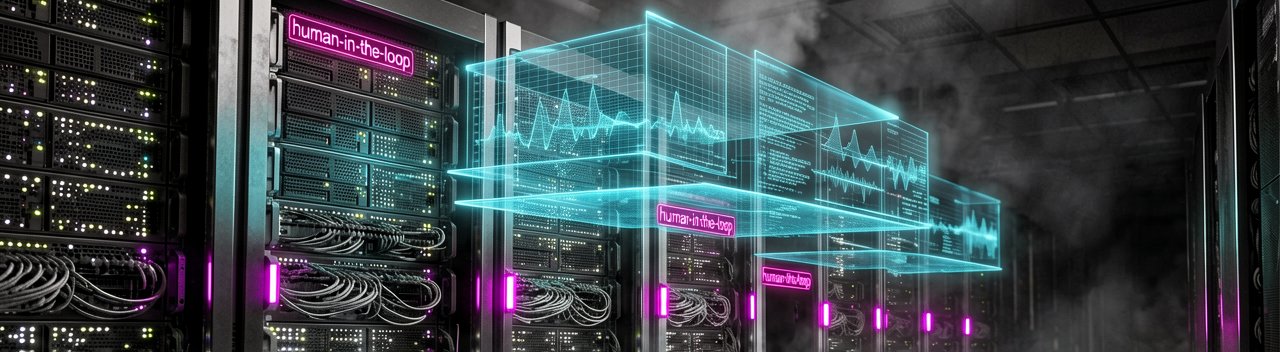
This isn't just talk from the pulpit; the Church is putting its signature where it counts. The Rome Call for AI Ethics has already brought tech titans like Microsoft and IBM to the table, forcing a conversation about transparency and accountability that most regulators are still struggling to draft. The Vatican’s stance is clear: we can't afford a future where "efficiency" is the only metric for success. By championing a ban on lethal autonomous weapons and demanding human-in-the-loop control, they're creating a framework that values human dignity over quarterly earnings. In an era of "move fast and break things," a little bit of ancient wisdom might be exactly the guardrail we need to keep from breaking ourselves.
The Architectural Shift: Moving Beyond Code to Conscience
Behind the Scenes: The Vatican’s foray into AI isn't a sudden pivot born of a viral puffer jacket meme; it is the culmination of a decade-long internal dialogue at the Pontifical Academy for Life. While the general public often views the Church as a reactionary force, tech insiders who have visited the Apostolic Palace describe a surprisingly sophisticated operation. These reporters find theologians sitting shoulder-to-shoulder with data scientists, debating the "ontology of the digital." They aren't just worried about robots taking jobs; they are worried about "datafication"—the process by which a human being is reduced to a mere set of predictable behaviors for the sake of profit or surveillance.
The brilliance of the "Papal Intelligence" model lies in its ability to force a consensus among stakeholders who rarely agree. When Microsoft and IBM signed the Rome Call, it wasn't just a PR stunt. It represented a rare moment where corporate interests acknowledged that the "black box" of AI needs a moral lock. Industry veterans argue that while government regulations like the EU AI Act provide the "what," the Vatican provides the "why." This philosophical backing gives engineers a framework to push back against aggressive product timelines that might otherwise compromise safety or inclusivity.
Historically, the Church has navigated many scientific revolutions, from the Copernican shift to the Industrial Revolution, often with a rocky start. However, the current strategy is proactive rather than reactive. By framing AI as a "tool for peace" or a "risk to fraternity," the Pope is using a universal language that resonates even in secular tech hubs. This approach bridges the gap between technical feasibility and social desirability, ensuring that the marginalized—those often invisible to Silicon Valley’s training sets—are at the center of the development cycle.
The nuance that seasoned analysts emphasize is the concept of "meaningful human oversight." This isn't just about having a person click 'OK' on an automated decision. It is about maintaining "human agency" in a way that prevents us from becoming subordinates to our own creations. In the Vatican’s view, a world where an algorithm determines medical care or criminal sentencing without a deep, empathetic human review is a world that has lost its moral compass. They are effectively lobbying for a future where technology serves the common good rather than just the interests of the highest bidder.
Ultimately, the reliability of this Papal intervention stems from its lack of a profit motive. Unlike venture capitalists or political leaders seeking re-election, the Holy See operates on a timeline of centuries. This long-term perspective allows them to highlight the "intergenerational justice" of AI—asking what kind of digital world we are leaving for those who haven't been born yet. It’s a sobering counter-narrative to the "disruptive" ethos of modern tech, reminding us that some things, like dignity and justice, should never be disrupted.
The Paradox of Divine Data Governance
Reading Between the Lines: There is a delicious irony in an institution defined by infallible dogma lecturing the tech world on the dangers of algorithmic certainty. Critics are quick to point out that the Vatican itself is no stranger to the "black box" of decision-making, yet this is precisely why their skepticism of AI is so potent. They recognize the scent of a rival religion. By positioning "algorethics" as a check on Silicon Valley, the Church is effectively engaging in a turf war over who gets to define the "universal truth" for the next millennium. It’s a battle between the ancient hierarchy of the spirit and the new hierarchy of the silicon chip.
However, the skepticism shouldn't just be directed at the Church’s motives, but at the tech industry’s sudden piety. When corporate giants sign onto the Rome Call, we have to wonder if they are seeking genuine ethical guardrails or merely a "blessed" shield against more stringent government regulation. It is much easier to agree to vague principles of "human dignity" than it is to comply with hard-coded laws that might decimate a business model built on invasive data harvesting. The danger here is that Papal Intelligence becomes a form of "ethics washing," where a photo with the Pontiff replaces the hard work of transparent engineering.
Furthermore, there is the massive practical contradiction of implementation. The Vatican speaks of "inclusive" AI that protects the marginalized, yet the hardware required to run these massive models is currently fueling an environmental and labor crisis in the Global South. A truly "pro-person" algorithm is a ghost in the machine if the machine itself is built on exploitative cobalt mining and astronomical water consumption for cooling server farms. For the Church’s message to hold its weight, it will eventually have to move past the ethics of the code and address the brutal materiality of the hardware that hosts it.
The projection for the next decade suggests a widening gap between this "Ethical AI" and the "Commercial AI" that actually runs our lives. We may end up in a two-tiered digital reality: one where the elite enjoy "human-certified" services—vetted by ethical frameworks and overseen by actual people—and another where the masses are managed by low-cost, unvetted black boxes. If the Vatican isn't careful, its push for human-centric AI could inadvertently become a luxury brand, making human empathy the most expensive commodity on the market.
Despite these frictions, the Papal intervention remains our best shot at a "soft power" check on the industry. Because the Church doesn't care about quarterly growth, it can afford to be the annoying voice in the room asking if a technology should exist at all, rather than just how to make it 5% more efficient. In a world where "can we build it?" has replaced "should we build it?", having a 2,000-year-old institution acting as a speed bump is probably the only thing keeping the hype cycle from flying off the cliff entirely.
It’s a peculiar comfort to know that as we hurtle toward a future governed by unpredictable machine logic, our best hope for a "human" safeguard is a man who still wears a cassock and communicates primarily through Latin—proving that sometimes the only way to fix a modern bug is to call in the world's oldest tech support.
Artūras Malašauskas is an AI Systems Integrator with 20+ years of production-grade web engineering experience. He has designed, shipped, and scaled enterprise Python/PHP systems for logistics, SaaS, and public-sector clients. For the past year, he has focused exclusively on AI integrations: deploying open-source LLMs, building generative media pipelines (image, audio, video), and engineering multi-agent workflows for real production environments. His standard: reproducibility, security, cost-efficient inference—no vaporware. He documents and evaluates emerging AI tooling, separating verified capabilities from marketing noise. Technical editor at: muza-ai.eu, ai-verslas.lt, ai-naujinos.lt Connect on LinkedIn
Comments