Beyond the Sideline: How AI is Rewriting the Playbook of Sport Science

There was a time when a "gut feeling" was the most sophisticated tool in a coach's arsenal. You’d watch a star player favor a slightly stiff hamstring during warmups, trade a knowing glance with the trainer, and hope for the best. Fast forward to 2026, and that intuition has been bolstered—or in some cases, replaced—by a relentless stream of silicon-powered insights. Artificial intelligence isn’t just a buzzword in the locker room anymore; it’s the quiet architect behind the scenes, crunching billions of data points to ensure that the human body performs at its absolute limit without breaking.
The shift is palpable. We've moved past simple step-counters into an era of "Performance Intelligence." Modern platforms are now capable of synthesizing everything from sleep cycles and GPS tracking to real-time biomechanical stress markers. It's about finding the signal in the noise. By leveraging deep learning architectures like Convolutional Neural Networks, teams can now identify movement patterns that precede an injury with startling precision, often hitting accuracy rates north of 90% in sports like soccer and basketball. This isn't just about playing harder; it's about playing smarter by knowing exactly when a player is one sprint away from a season-ending tear.
The Rise of the Digital Athlete
One of the most ambitious projects currently reshaping the field is the development of the "Digital Athlete." By running millions of simulations through cloud-based AI, organizations can now stress-test an athlete’s physiological limits in a virtual environment before they ever step onto the turf. This proactive approach to injury mitigation, as noted by researchers at PatSnap, represents a fundamental move from reactive treatment to predictive prevention. The goal is to extend careers by managing the "workload" with a granularity that a human eye simply can't perceive, accounting for variables like weather, surface tension, and cumulative muscle fatigue.
Closing the Interpretation Gap
However, more data doesn't always mean better decisions. The industry is currently wrestling with "black box" models—algorithms that spit out a recommendation without explaining why. This has led to a surge in Explainable AI (XAI), a subset of tech designed to make these machine-learning verdicts transparent for coaches and medical staff. According to a recent scoping review in AI and Ethics, the focus is shifting toward building trust through interpretability. After all, a manager is much more likely to bench their star striker if the AI can point to a specific drop in mechanical efficiency rather than just a vague "high risk" score.
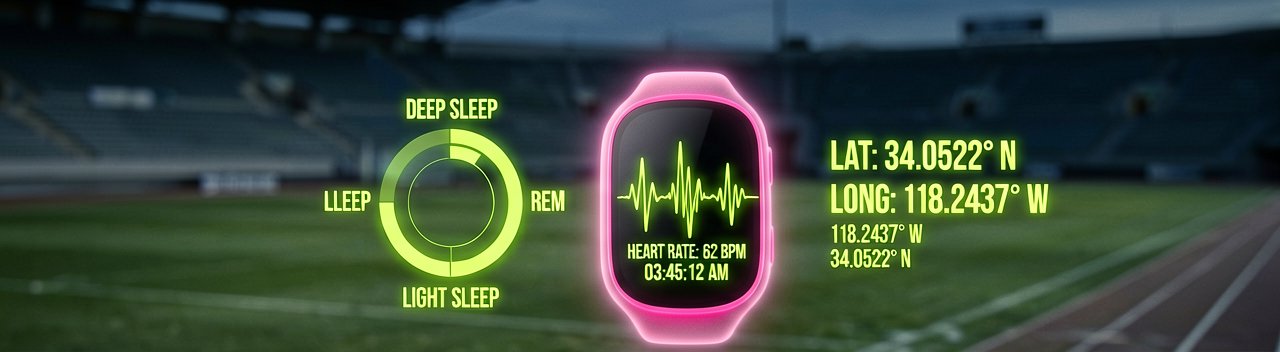
Ultimately, the marriage of AI and sport science is less about replacing the human element and more about supercharging it. Whether it's through automated video assistants that flag tactical lapses in real-time or wearable sensors that monitor a player's mental resilience, the technology acts as a force multiplier. It allows the practitioners to stop being data entry clerks and start being high-level strategists. The game remains a human endeavor, but the "gut feeling" is now powered by the most advanced processors on the planet.
The Hidden Architecture of Peak Performance
What Most Reports Miss: The glitzy headlines often focus on the "robot coach" narrative, but the real revolution is happening in the unglamorous trenches of data normalization. For decades, sport science was a fragmented discipline where the nutritionist’s spreadsheets didn't talk to the strength coach’s weight-room logs. AI is finally acting as the universal translator, forced to make sense of "dirty data" gathered from disparate wearable brands, manual input logs, and high-speed optical cameras. This synthesis allows for a holistic view of the athlete that was previously impossible to maintain across a grueling 82-game season.
From the perspective of a front-office executive, the shift toward AI is as much a financial hedge as it is a competitive advantage. When a franchise invests $200 million in a single player, that athlete becomes the organization's most volatile asset. Using machine learning to shave even 5% off the injury rate isn't just about winning games; it’s about protecting the balance sheet. We are seeing teams move away from generic "load management" toward bespoke recovery protocols where the AI suggests specific caloric adjustments or sleep hygiene tweaks based on the day's eccentric muscle loading.
Historically, the resistance to these tools came from a place of professional preservation. Veterans of the industry feared that black-box algorithms would render their decades of experience obsolete. However, the current trend is one of "augmented coaching." Instead of replacing the trainer, AI is filtering the noise, surfacing only the most critical deviations in a player's baseline. This allows a medical team of five to effectively monitor a roster of fifty with the same intimacy once reserved for individual Olympic athletes.
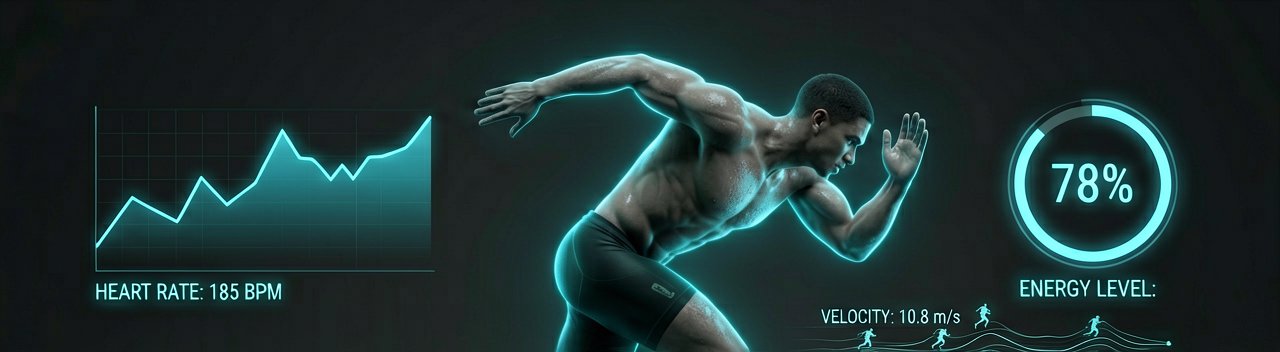
There is also an emerging ethical frontier regarding "biometric scouting." As AI models become more predictive, teams are beginning to look at the physiological durability of draft prospects through a predictive lens. This raises thorny questions about player privacy and whether a "red flag" from an algorithm—perhaps indicating a genetic predisposition to certain types of fatigue—could unfairly tank a young athlete's career before it starts. The tension between institutional gain and individual data rights is the next great battleground in the sport science community.
In the high-stakes world of professional cycling and Formula 1, this tech has already matured into "digital twin" modeling. Engineers simulate thousands of race scenarios, adjusting for aerodynamic drag and metabolic efficiency in real-time. This level of precision is now migrating to team sports like rugby and American football, where the sheer number of moving parts makes human calculation insufficient. By the time the whistle blows, the AI has already played the game ten thousand times in the cloud, identifying the narrow corridors of success and the high-risk zones of failure.
Ultimately, we are witnessing the death of the "one-size-fits-all" training camp. The future of sport science is hyper-individualized, driven by algorithms that understand every athlete’s unique mechanical signature. While the spirit of the game remains unpredictable, the biological variables that once felt like "bad luck" are being systematically decoded. The edge no longer goes to the team that works the hardest, but to the one that best interprets the invisible data points flowing from their players' bodies.
The Paradox of Predictability
Reading Between the Lines: The industry’s infatuation with predictive modeling rests on the shaky assumption that human performance is a closed system that can be solved like a game of chess. We treat "workload management" as a holy grail, yet we often ignore the "human noise" that refuses to be quantified. An algorithm can track a player’s high-speed yardage and heart rate variability, but it remains remarkably blind to the psychological weight of a contract year or the sleep deprivation of a new parent. By over-relying on silicon-based intuition, teams risk creating "fragile" athletes who are optimized for a spreadsheet but lack the grit to perform when the game deviates from the projected script.
There is also the uncomfortable reality of the "false positive" trap. In the rush to avoid injuries, the AI-driven approach has led to an era of hyper-caution that arguably dilutes the product on the field. If an algorithm flags a superstar as being in the "red zone" for fatigue, the default move is to bench them. However, we have yet to reconcile how much of "peak performance" is actually an act of psychological defiance over physical limits. By sanitizing the risk, we may be inadvertently capping the very ceiling of athletic greatness that these tools were supposed to help us reach.
Furthermore, the democratization of this technology is creating a bizarre arms race where everyone has the same "secret" edge. When every team in a league uses the same high-end biometric sensors and the same cloud-based analysis platforms, the advantage shifts back to the one variable the machines can't fix: raw talent and luck. We are spending millions of dollars to reach a state of technical parity, effectively spending a fortune just to stay exactly where we started. The "edge" is becoming increasingly expensive and remarkably thin, leading to a landscape where the most valuable person in the building might eventually be the one brave enough to ignore the computer.
The projection of these tools into youth sports is perhaps the most cynical implication of the AI boom. We are already seeing "performance tracking" trickle down to the high school level, where teenagers are being data-mined before they’ve even finished growing. This creates a feedback loop where young athletes may be discouraged from certain sports or positions because an early-stage algorithm decided their biomechanical "efficiency" wasn't up to par. We risk optimizing the joy out of the game in favor of a career-pathing model that treats twelve-year-olds like depreciating assets.
Skepticism is also warranted regarding the "accuracy" claims of many proprietary black-box systems. In the absence of peer-reviewed validation, many sport-tech startups operate on "trust us" marketing. When a multimillion-dollar decision is based on a proprietary metric like a "Readiness Score," we have to ask whether we are following science or merely a very expensive form of digital astrology. The lack of standardized benchmarks means that a "high risk" flag on one platform might be a "green light" on another, leaving coaching staffs in a state of high-tech confusion.
Looking ahead, the true test for AI in sport science won't be its ability to collect data, but its ability to handle the irreducible chaos of sport. The most sophisticated neural network in the world still can’t predict a freak collision or a moment of spontaneous genius. As we lean further into the digital dugout, the greatest challenge will be maintaining the humility to admit that, at the end of the day, a ball is still round and human beings are still gloriously, frustratingly unpredictable.
"We’ve finally reached the pinnacle of modern sport: we spend ten million dollars on an AI to tell us the star player is tired, only for the player to tell us he’s fine, and the coach to play him anyway because his job depends on winning Tuesday night."
Artūras Malašauskas is an AI Systems Integrator with 20+ years of production-grade web engineering experience. He has designed, shipped, and scaled enterprise Python/PHP systems for logistics, SaaS, and public-sector clients. For the past year, he has focused exclusively on AI integrations: deploying open-source LLMs, building generative media pipelines (image, audio, video), and engineering multi-agent workflows for real production environments. His standard: reproducibility, security, cost-efficient inference—no vaporware. He documents and evaluates emerging AI tooling, separating verified capabilities from marketing noise. Technical editor at: muza-ai.eu, ai-verslas.lt, ai-naujinos.lt Connect on LinkedIn
Comments