The CEO Behind Grand Theft Auto Says He’s Pro-AI—But Don’t Expect a Robot to Design Your Next Heist
Strauss Zelnick, the CEO of Take-Two Interactive, is planting a flag in the ground: he’s all-in on artificial intelligence, just don’t expect it to replace the human magic that makes Grand Theft Auto a cultural juggernaut. While Silicon Valley hype-men might suggest that AI will soon let anyone "push a button" to create a blockbuster, Zelnick isn't buying the narrative that tools alone create hits. Instead, he views AI as an evolutionary step in a long history of machine learning that his studios have already pioneered.
The veteran executive clarified that while Take-Two is "actively embracing generative AI" with hundreds of internal pilots, these efforts are focused squarely on efficiency rather than replacing the creative core. In a recent interview with PC Gamer, Zelnick argued that datasets are fundamentally "backward-looking," whereas the kind of creativity required for a massive hit like GTA VI must be "forward-looking." He notes that asset creation is a necessary but insufficient condition for hit creation, emphasizing that a high-quality clone generated by an LLM is still just a clone.
The "Handcrafted" Guardrail
What Most Reports Miss: While the CEO talks a big game about AI efficiency, he has been surprisingly firm about keeping generative tools away from the development of Grand Theft Auto VI. Zelnick has confirmed that the world of Leonida is being built entirely by hand, neighborhood by neighborhood, to maintain the "meticulous attention to detail" that defines the Rockstar brand. This isn't just about tradition; it’s a strategic defense of Take-Two’s intellectual property. By ensuring the game is handcrafted, the company avoids the legal murky waters of AI-generated content, which currently lacks the same copyright protections as human-made art.
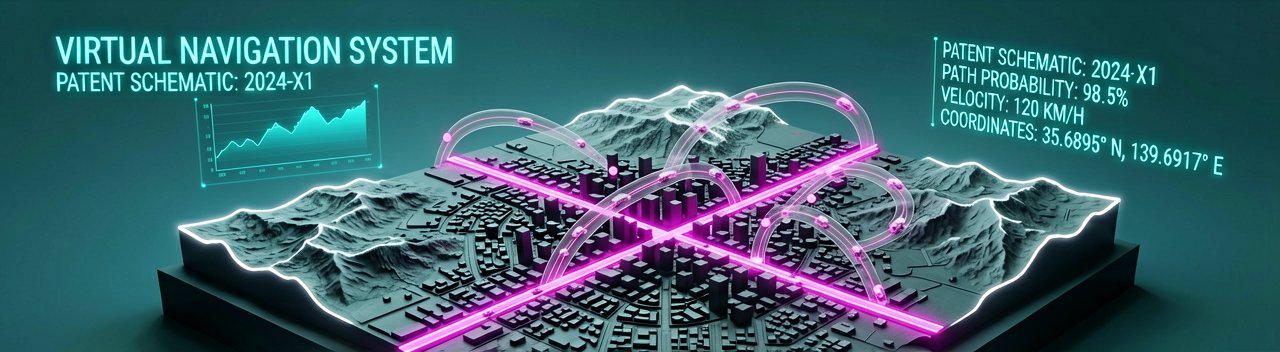
However, the "pro-AI" stance isn't just lip service to investors. While the creative vision remains human, Rockstar has been quietly filing patents for revolutionary AI-driven technologies that focus on immersion rather than content generation. According to Wccftech, these include "Virtual Navigation" systems that give NPCs unique driving personalities and "Virtual Character Locomotion" that uses data-driven blocks to blend movements like fatigue or injury in real-time. This is AI as a scalpel, not a sledgehammer—enhancing the "brain" of the world without letting a bot write the script.
This dual-track strategy reveals a seasoned reporter's favorite trope: the tension between corporate efficiency and artistic prestige. Zelnick is effectively using AI to stabilize the business side—think Zynga’s AI prediction engines for churn or automated QA bots—while insulating his "prestige" titles from the perception of being "derivative" or "AI-slop." It’s a calculated move to reassure nervous investors after tools like Google’s Project Genie caused a temporary dip in share prices, proving that Take-Two can lead in tech without sacrificing its soul.
Ultimately, Zelnick’s philosophy treats AI as a sophisticated version of the calculator: it speeds up the math, but it doesn't decide which problem is worth solving. He often points to the "paperless office" promise of the 1970s as a cautionary tale, noting that despite digital advances, we use more paper and employ more people than ever. In his eyes, AI will likely make game development more productive, but the bar for what constitutes a "hit" will simply rise accordingly, keeping human "taste" and "originality" as the final, irreplaceable gatekeepers of the industry.
Strauss Zelnick, the CEO of Take-Two Interactive, is planting a flag in the ground: he’s all-in on artificial intelligence, just don’t expect it to replace the human magic that makes Grand Theft Auto a cultural juggernaut. While Silicon Valley hype-men might suggest that AI will soon let anyone "push a button" to create a blockbuster, Zelnick isn't buying the narrative that tools alone create hits. Instead, he views AI as an evolutionary step in a long history of machine learning that his studios have already pioneered.
The veteran executive clarified that while Take-Two is "actively embracing generative AI" with hundreds of internal pilots, these efforts are focused squarely on efficiency rather than replacing the creative core. In a recent interview with PC Gamer, Zelnick argued that datasets are fundamentally "backward-looking," whereas the kind of creativity required for a massive hit like GTA VI must be "forward-looking." He notes that asset creation is a necessary but insufficient condition for hit creation, emphasizing that a high-quality clone generated by an LLM is still just a clone.

The "Handcrafted" Guardrail
What Most Reports Miss: While the CEO talks a big game about AI efficiency, he has been surprisingly firm about keeping generative tools away from the development of Grand Theft Auto VI. Zelnick has confirmed that the world of Leonida is being built entirely by hand, neighborhood by neighborhood, to maintain the "meticulous attention to detail" that defines the Rockstar brand. This isn't just about tradition; it’s a strategic defense of Take-Two’s intellectual property. By ensuring the game is handcrafted, the company avoids the legal murky waters of AI-generated content, which currently lacks the same copyright protections as human-made art.
However, the "pro-AI" stance isn't just lip service to investors. While the creative vision remains human, Rockstar has been quietly filing patents for revolutionary AI-driven technologies that focus on immersion rather than content generation. According to Wccftech, these include "Virtual Navigation" systems that give NPCs unique driving personalities and "Virtual Character Locomotion" that uses data-driven blocks to blend movements like fatigue or injury in real-time. This is AI as a scalpel, not a sledgehammer—enhancing the "brain" of the world without letting a bot write the script.
This dual-track strategy reveals a seasoned reporter's favorite trope: the tension between corporate efficiency and artistic prestige. Zelnick is effectively using AI to stabilize the business side—think Zynga’s AI prediction engines for churn or automated QA bots—while insulating his "prestige" titles from the perception of being "derivative" or "AI-slop." It’s a calculated move to reassure nervous investors after tools like Google’s Project Genie caused a temporary dip in share prices, proving that Take-Two can lead in tech without sacrificing its soul.
The Productivity Paradox
Reading Between the Lines: There is a glaring contradiction in the industry-wide claim that AI will lower the cost of game development while making everything "bigger and better." History suggests that when tools become more efficient, developers don't bank the savings; they simply raise the ceiling of complexity. If AI allows a developer to create a city street in half the time, the studio doesn't finish the game early—they build two cities, or they spend the saved hours perfecting the way a puddle reflects neon light. For a behemoth like Take-Two, AI is less likely to result in cheaper games and more likely to result in even more bloated, hyper-detailed worlds that require the same massive headcount to manage.
There is also the matter of "Zelnick’s Law" regarding hits being inherently unpredictable. By admitting that AI is backward-looking, he is acknowledging a fundamental risk of the technology: it can only iterate on what has already been done. In an industry currently suffering from "sequel fatigue" and a lack of fresh IP, leaning too heavily on tools that synthesize existing data could lead to a feedback loop of mediocrity. The irony is that the more the industry adopts these tools to "de-risk" development, the more it risks producing a sea of technically perfect, emotionally hollow experiences that all feel vaguely the same.
Furthermore, the "pro-AI" stance serves as a convenient shield against labor criticisms. By framing AI as a tool for "efficiency," executives can subtly signal to the market that they are prepared for a future with less human friction, even if they aren't firing people en masse today. It creates a psychological environment where human talent is forced to compete with the perceived infinite scalability of software. While Zelnick insists that the human element is irreplaceable for a hit, the definition of what constitutes a "human" contribution is being sliced thinner every year, leaving the industry in a precarious state where the artists are tasked with "fixing" what the machine broke.
In the end, we’re being told that AI will finally allow us to build digital worlds of infinite depth and realism, which is fantastic news for anyone who ever looked at a three-hundred-million-dollar masterpiece and thought, "This really needs more procedurally generated garbage bins." It turns out the future of gaming looks a lot like the past: humans doing all the hard work while the machines take credit for the chores.
Artūras Malašauskas is an AI Systems Integrator with 20+ years of production-grade web engineering experience. He has designed, shipped, and scaled enterprise Python/PHP systems for logistics, SaaS, and public-sector clients. For the past year, he has focused exclusively on AI integrations: deploying open-source LLMs, building generative media pipelines (image, audio, video), and engineering multi-agent workflows for real production environments. His standard: reproducibility, security, cost-efficient inference—no vaporware. He documents and evaluates emerging AI tooling, separating verified capabilities from marketing noise. Technical editor at: muza-ai.eu, ai-verslas.lt, ai-naujinos.lt Connect on LinkedIn
Comments