UiPath Plants a Flag in Seoul: Data Sovereignty Meets the Agentic Era

UiPath isn’t just dipping a toe into the East Asian market; it’s diving headfirst with the launch of its Automation Cloud in South Korea. Announced on May 19, 2026, this move brings the company’s heavy-hitting automation suite to Microsoft Azure’s Korea region, solving the perennial headache of data residency for local firms. By hosting services domestically, UiPath is effectively stripping away the regulatory red tape that once slowed cloud adoption in the country’s high-stakes sectors like finance and the public sector.
This isn't your standard "lift and shift" cloud expansion, though. The real story here is how this infrastructure serves as a launchpad for agentic automation—a shift from simple, deterministic task-bots to AI agents that can actually think, plan, and pivot. According to The Elec, the partnership with Microsoft specifically targets regulated industries where data cannot leave national borders, ensuring that even the most "sovereign" data can now be handled by autonomous AI workflows. It's a calculated bet that South Korean enterprises are tired of the "experimental" phase of AI and are ready for large-scale implementation.
Bridging the Gap Between Thinking and Doing
The "agentic" part of the equation is what sets this apart from the RPA of yesterday. While traditional bots follow a rigid script, these new AI agents—built on the UiPath Platform for agentic automation—can understand intent and manage multi-step tasks across different interfaces. In a market where two-thirds of customers have historically preferred on-premises setups due to strict privacy rules, providing a localized cloud option that mimics that level of control is a massive win for flexibility.
Why South Korea, Why Now?
The appetite for this tech in the region is demonstrably high. Data from an IDC InfoBrief suggests that nearly 67% of South Korean organizations are planning to integrate agentic AI within the next year. By localizing the Automation Cloud, UiPath claims it can slash deployment times from months to mere weeks, allowing these companies to hit the ground running. It’s a clear signal that for global tech leaders, respecting national data sovereignty isn't just a legal hoop to jump through—it’s a competitive advantage.

The Sovereign Shift: Beyond the Buzzwords
What Most Reports Miss: The launch in South Korea isn't just a geographical expansion; it’s a strategic pivot designed to break a long-standing deadlock in the APAC region. For years, South Korea’s "Data Sovereignty" laws—specifically the stringent requirements for Financial Cloud and public sector certifications—acted as a protective moat that favored domestic vendors. By planting the Automation Cloud directly onto Microsoft Azure’s Seoul-based data centers, UiPath is effectively bypassing the latency and compliance hurdles that previously made global cloud platforms a tough sell for the KOSPI 200 giants. It is a classic "Trojan Horse" maneuver, where infrastructure compliance serves as the delivery mechanism for high-level AI.
Historically, South Korean enterprises have been risk-averse, opting for on-premises installations to maintain absolute control over sensitive data. This cultural preference for "air-gapped" systems often stifled the agility required for modern generative AI. However, the tide has turned as local leaders realize that keeping everything on-site creates a bottleneck for large language model (LLM) integration. UiPath’s localized cloud offers a middle ground: the security of domestic residency combined with the raw compute power and rapid-fire updates of a SaaS environment. This hybrid trust model is the secret sauce that has finally convinced conservative C-suites to migrate their core workflows to the cloud.
Stakeholder perspectives reveal a shift from "can we do this?" to "how fast can we scale?" Local IT leaders are no longer just looking for digital secretaries to handle data entry. Instead, they are eyeing the "Agentic" capabilities to solve the demographic crisis looming over the Korean workforce. With a shrinking labor pool, the ability for an AI agent to handle complex, end-to-end insurance claims or supply chain logistics without constant human hand-holding is viewed as a national economic necessity. UiPath is positioning its platform not just as a productivity tool, but as a workforce stabilization strategy.
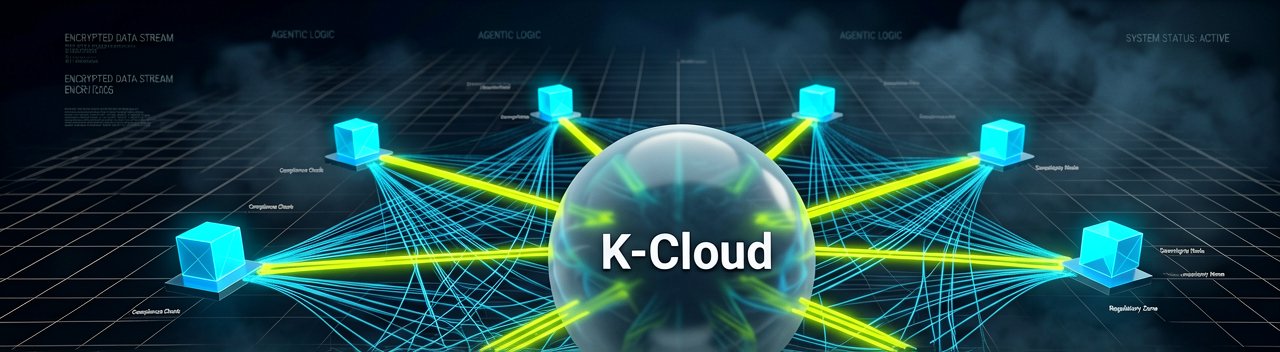
The technical nuance of this rollout also lies in its integration with the "K-Cloud" ecosystem. By aligning with local Azure regions, UiPath ensures that data transit stays within a high-speed, low-latency loop, which is critical for real-time agentic decision-making. If an AI agent has to wait for a round-trip to a data center in Singapore or Japan to decide its next move, the efficiency gains of automation evaporate. This local proximity allows agents to operate at the speed of business, making the "Agentic" promise a reality rather than a conceptual demo.
Finally, we are seeing a shift in the regulatory landscape itself. The South Korean government has recently signaled a more pragmatic approach to AI governance, emphasizing "responsible innovation" over blanket restrictions. UiPath’s commitment to localized infrastructure aligns perfectly with these evolving guidelines, giving them a first-mover advantage over competitors who are still trying to figure out their regional data strategies. This move ensures that as South Korea writes its new AI playbook, UiPath is already baked into the foundational architecture of its most critical industries.
The ripple effects of this launch will likely force other global SaaS providers to follow suit, turning Seoul into a primary battleground for the next generation of enterprise AI. It marks the end of the "one-size-fits-all" global cloud and the beginning of a highly localized, sovereignty-aware era of automation. In this new landscape, the players who respect national borders while offering borderless innovation will be the ones who dominate the market.
The Friction Between Autonomy and Oversight
Reading Between the Lines: While the marketing gloss paints a picture of seamless "agentic" harmony, the reality of deploying autonomous agents in a hyper-regulated environment like South Korea is fraught with technical and philosophical contradictions. UiPath is promising a world where AI agents plan and execute complex workflows independently, yet this sits in direct opposition to the rigid, "check-the-box" compliance culture that dominates Seoul’s financial districts. There is a fundamental tension between the unpredictable nature of an AI agent—which might find a creative, non-linear path to a solution—and the ironclad audit trails required by local regulators. It remains to be seen if a digital agent can truly be "autonomous" if every single micro-decision must be logged and justified for a government inspector.
Furthermore, the heavy reliance on Microsoft Azure for this "sovereign" cloud expansion introduces a different kind of dependency. While it solves the residency issue by keeping data on Korean soil, it trades local hardware silos for a massive cloud monolith. For many Korean enterprises, "data sovereignty" is often a polite euphemism for "reducing reliance on Western tech giants." By tying their automation future to a platform that still ultimately reports back to a Redmond-based ecosystem, local firms are essentially trading one form of lock-in for another. The irony is that the move to achieve national digital independence is being powered by the very global infrastructure it seeks to compartmentalize.
There is also the question of the "Agentic Gap"—the distance between what the software can technically do and what the human workforce is culturally ready to delegate. In South Korea's high-context, hierarchical corporate environments, decision-making power is rarely surrendered easily. Introducing agents that can "pivot" or "re-plan" challenges the traditional top-down management style. We may see a scenario where the technology is ready for agentic automation, but the organizational charts act as a digital handbrake, forcing these sophisticated AI entities to perform the same mundane, repetitive tasks that the old-school bots handled years ago.
Finally, we must scrutinize the "rapid deployment" claim. Reducing setup time from months to weeks sounds impressive on a balance sheet, but speed is often the enemy of security in the world of AI. In the rush to capitalize on the agentic trend, there is a risk that firms will overlook the "hallucination" risks inherent in agentic reasoning. If a sovereign AI agent makes a localized error in a high-frequency trading environment or a public service portal, the fallout won't just be a technical glitch; it will be a national headline. UiPath’s success will hinge less on the location of its servers and more on its ability to prove that its agents won't go rogue in the pursuit of efficiency.
"We’ve spent decades teaching humans to act like predictable machines so we could audit them, and now we’re spending millions to teach machines to act like unpredictable humans—all while keeping the servers in Seoul just in case the AI decides it needs a local lawyer."
Artūras Malašauskas is an AI Systems Integrator with 20+ years of production-grade web engineering experience. He has designed, shipped, and scaled enterprise Python/PHP systems for logistics, SaaS, and public-sector clients. For the past year, he has focused exclusively on AI integrations: deploying open-source LLMs, building generative media pipelines (image, audio, video), and engineering multi-agent workflows for real production environments. His standard: reproducibility, security, cost-efficient inference—no vaporware. He documents and evaluates emerging AI tooling, separating verified capabilities from marketing noise. Technical editor at: muza-ai.eu, ai-verslas.lt, ai-naujinos.lt Connect on LinkedIn
Comments