Cursor Drops Composer 2.5: A Deep Reinforcement Learning Play for Massive Coding Tasks
The folks at Cursor aren’t just content with being the favorite "VS Code fork" of the AI era; they’re effectively building their own brain for the IDE. With the launch of Composer 2.5, the team has introduced a model specifically tuned for those long-running, multi-step coding grinds that usually cause smaller models to lose the plot. By leaning heavily into 25 times more synthetic reinforcement learning (RL) tasks than its predecessor, the new model aims to tackle complex instruction following and sustained tool use without the constant "false starts" that plague typical AI coding agents.
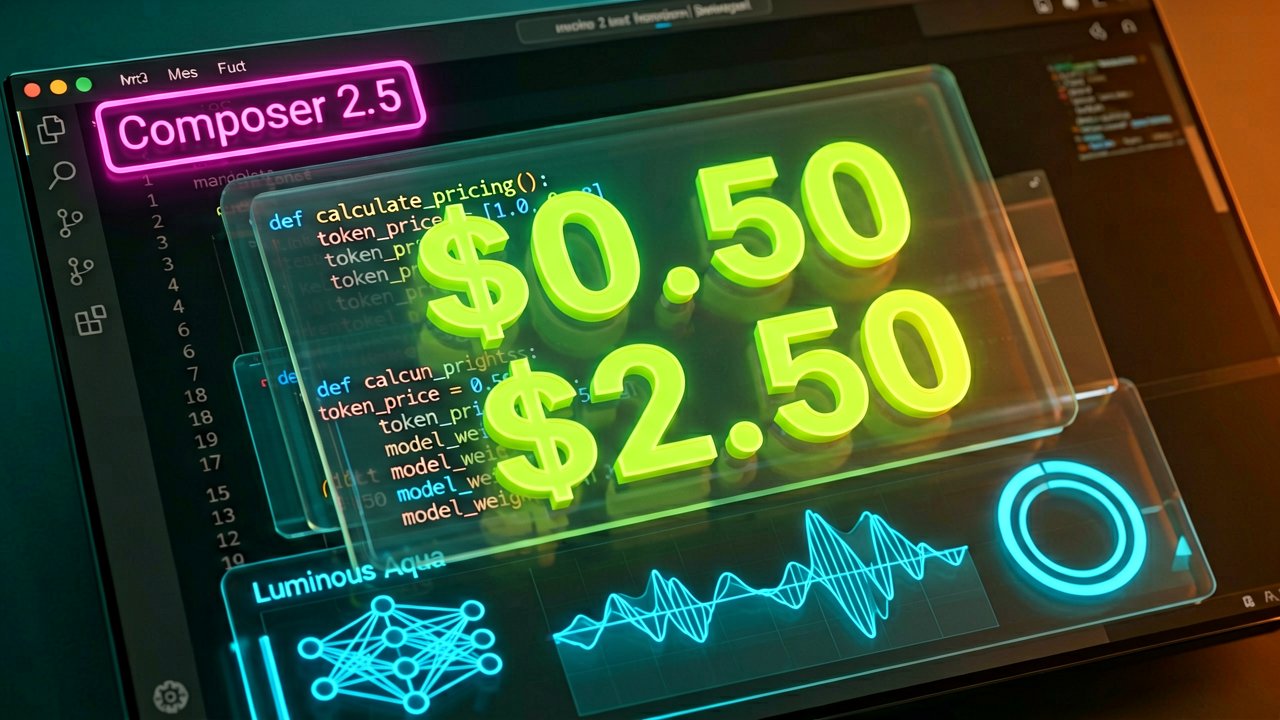
What makes this release particularly punchy is the economics. Cursor is positioning Composer 2.5 as a "frontier-level" rival to giants like Claude 4.7 and GPT-5.5 but at a fraction of the price. According to the official Cursor blog, the Standard tier is priced at a mere $0.50 per million input tokens and $2.50 per million output tokens. This aggressive pricing—roughly one-tenth the cost of competing frontier models—suggests Cursor is trying to move AI coding from an expensive experiment to a standard, always-on operating cost for engineering teams.
Under the Hood: Synthetic Tasks and SpaceX Collaboration
Technically, Composer 2.5 still shares the same open-source foundation as the previous version—Moonshot’s Kimi K2.5—but the secret sauce is in the post-training. Cursor reportedly spent 85% of its compute budget on its own RL pipeline, emphasizing "targeted RL" with textual feedback. This allows the model to calibrate its effort and communication style more naturally, making it feel less like a rigid script and more like a collaborator. Early benchmarks shared by Jake Handy show the model hitting nearly 80% on SWE-Bench Multilingual, placing it within spitting distance of Anthropic’s top-tier offerings.
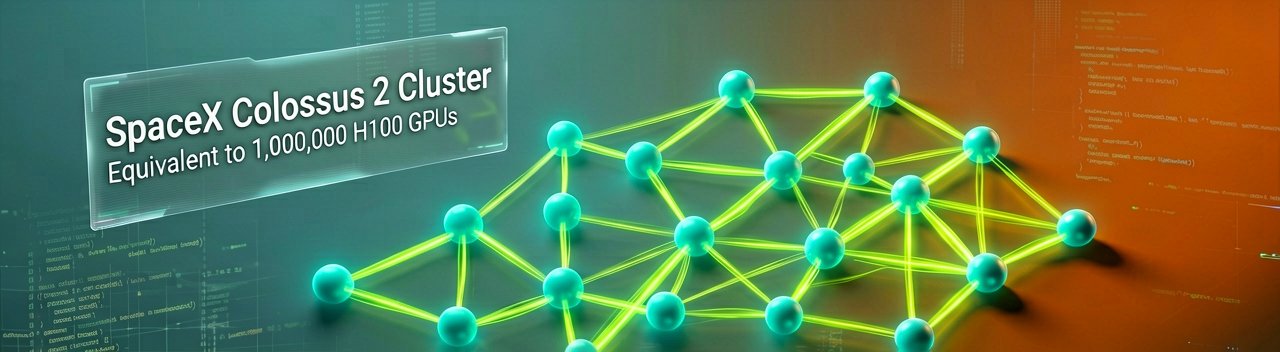
Perhaps the most ambitious news tucked into this launch is the active partnership with SpaceX AI. Cursor has confirmed they are now training a significantly larger model from scratch using the Colossus 2 cluster, which utilizes a staggering million H100-equivalents. While Composer 2.5 is the current workhorse, this collaboration signals that Cursor is looking to fully own its model layer rather than perpetually relying on third-party API providers.
The User Experience and Rollout
For those already living in the Cursor ecosystem, the "Fast" variant of Composer 2.5 remains the default interactive choice, though it carries a higher price tag of $3.00 for input and $15.00 for output per million tokens. To sweeten the deal and encourage migration, Cursor has announced a promo that doubles usage quotas for the first week. It’s a calculated move to get developers to stress-test the model's ability to handle massive file edits and complex terminal commands in real-time. As reported by PANews, the focus here isn't just on numbers, but on making the "calmer collaboration loop" a reality for developers tired of prompt-baiting their AI.
The folks at Cursor aren’t just content with being the favorite "VS Code fork" of the AI era; they’re effectively building their own brain for the IDE. With the launch of Composer 2.5, the team has introduced a model specifically tuned for those long-running, multi-step coding grinds that usually cause smaller models to lose the plot. By leaning heavily into 25 times more synthetic reinforcement learning (RL) tasks than its predecessor, the new model aims to tackle complex instruction following and sustained tool use without the constant "false starts" that plague typical AI coding agents.
What makes this release particularly punchy is the economics. Cursor is positioning Composer 2.5 as a "frontier-level" rival to giants like Claude 4.7 and GPT-5.5 but at a fraction of the price. According to the official Cursor blog, the Standard tier is priced at a mere $0.50 per million input tokens and $2.50 per million output tokens. This aggressive pricing—roughly one-tenth the cost of competing frontier models—suggests Cursor is trying to move AI coding from an expensive experiment to a standard, always-on operating cost for engineering teams.
Under the Hood: Synthetic Tasks and SpaceX Collaboration
Technically, Composer 2.5 still shares the same open-source foundation as the previous version—Moonshot’s Kimi K2.5—but the secret sauce is in the post-training. Cursor reportedly spent 85% of its compute budget on its own RL pipeline, emphasizing "targeted RL" with textual feedback. This allows the model to calibrate its effort and communication style more naturally, making it feel less like a rigid script and more like a collaborator. Early benchmarks shared by Jake Handy show the model hitting nearly 80% on SWE-Bench Multilingual, placing it within spitting distance of Anthropic’s top-tier offerings.

Perhaps the most ambitious news tucked into this launch is the active partnership with SpaceX AI. Cursor has confirmed they are now training a significantly larger model from scratch using the Colossus 2 cluster, which utilizes a staggering million H100-equivalents. While Composer 2.5 is the current workhorse, this collaboration signals that Cursor is looking to fully own its model layer rather than perpetually relying on third-party API providers.
The User Experience and Rollout
For those already living in the Cursor ecosystem, the "Fast" variant of Composer 2.5 remains the default interactive choice, though it carries a higher price tag of $3.00 for input and $15.00 for output per million tokens. To sweeten the deal and encourage migration, Cursor has announced a promo that doubles usage quotas for the first week. It’s a calculated move to get developers to stress-test the model's ability to handle massive file edits and complex terminal commands in real-time. As reported by PANews, the focus here isn't just on numbers, but on making the "calmer collaboration loop" a reality for developers tired of prompt-baiting their AI.
What Most Reports Miss: The Vertical Integration of Intent
Behind the Scenes: While the headlines are fixated on the token price drop, the real story is Cursor's move toward "intent-based" engineering. By allocating 85% of their compute budget to a proprietary reinforcement learning pipeline, the Cursor team is essentially admitting that general-purpose LLMs like GPT-4o or Claude 3.5 Sonnet aren't enough. These models are built to talk; Cursor is building a model that knows how to do. This shift focuses on long-horizon tasks—the kind of messy, 40-file refactors where standard agents typically hallucinate or "loop" themselves into a corner.
The technical nuance here lies in "targeted RL with text feedback." Most models are rewarded based on a binary "did the code run?" signal, but Cursor is rewarding its model for the way it communicates its logic and handles errors. This creates a "calmer collaboration loop" where the AI is less prone to the "false start" tool calls that annoy senior developers. It’s a subtle distinction that moves the needle from a helpful autocomplete to a junior developer you can actually trust with a background task while you grab coffee.
The economics are equally tactical. By using Moonshot’s Kimi K2.5 as a base rather than building from zero, Cursor skipped the most expensive part of the process—initial pretraining—and went straight to the refinement stage. This "reskinning" controversy, which surfaced on platforms like , misses the point of the startup's strategy. They aren't trying to win the general intelligence race; they are trying to own the developer's desktop by delivering the highest "Outcome ROI" at a price point that makes "AI-first" development a financial no-brainer for CTOs.
Historical context matters here too. Cursor's rapid ascent—hitting $300 million in ARR—was built on being the best VS Code fork. But the SpaceX partnership changes the stakes entirely. Gaining access to the Colossus 2 cluster, which xAI touts as the world's largest AI supercomputer, suggests that the "Kimi-as-a-base" era is just a bridge. Cursor is preparing to move into a phase of full vertical integration, where the model and the IDE are co-designed on hardware that most AI startups can't even dream of accessing.
This path toward autonomy isn't just about writing code faster; it's about shifting the "burden of precision" from the human to the machine. As CEO Michael Truell has noted in various forums, the goal is to evolve programming away from esoteric syntax toward a higher level of "what" rather than "how." Composer 2.5 is the most practical step toward that future yet, proving that the model layer is commoditizing so quickly that the real moat is how well the AI understands the developer's specific workflow and codebase history.
For the average engineer, this means the threshold for "agentic" coding has just dropped. We are moving away from the era of "button mashing" and into one where we manage a fleet of background processes that actually understand the ripple effects of a single file change across a massive repository. The double-usage promo for the first week is a classic "land and expand" play, intended to lock in the next generation of power users before the larger, SpaceX-trained "frontier" model inevitably shifts the goalposts once again.
The folks at Cursor aren’t just content with being the favorite "VS Code fork" of the AI era; they’re effectively building their own brain for the IDE. With the launch of Composer 2.5, the team has introduced a model specifically tuned for those long-running, multi-step coding grinds that usually cause smaller models to lose the plot. By leaning heavily into 25 times more synthetic reinforcement learning (RL) tasks than its predecessor, the new model aims to tackle complex instruction following and sustained tool use without the constant "false starts" that plague typical AI coding agents.
What makes this release particularly punchy is the economics. Cursor is positioning Composer 2.5 as a "frontier-level" rival to giants like Claude 4.7 and GPT-5.5 but at a fraction of the price. According to the official Cursor blog, the Standard tier is priced at a mere $0.50 per million input tokens and $2.50 per million output tokens. This aggressive pricing—roughly one-tenth the cost of competing frontier models—suggests Cursor is trying to move AI coding from an expensive experiment to a standard, always-on operating cost for engineering teams.
Under the Hood: Synthetic Tasks and SpaceX Collaboration
Technically, Composer 2.5 still shares the same open-source foundation as the previous version—Moonshot’s Kimi K2.5—but the secret sauce is in the post-training. Cursor reportedly spent 85% of its compute budget on its own RL pipeline, emphasizing "targeted RL" with textual feedback. This allows the model to calibrate its effort and communication style more naturally, making it feel less like a rigid script and more like a collaborator. Early benchmarks shared by Jake Handy show the model hitting nearly 80% on SWE-Bench Multilingual, placing it within spitting distance of Anthropic’s top-tier offerings.
Perhaps the most ambitious news tucked into this launch is the active partnership with SpaceX AI. Cursor has confirmed they are now training a significantly larger model from scratch using the Colossus 2 cluster, which utilizes a staggering million H100-equivalents. While Composer 2.5 is the current workhorse, this collaboration signals that Cursor is looking to fully own its model layer rather than perpetually relying on third-party API providers.
The User Experience and Rollout
For those already living in the Cursor ecosystem, the "Fast" variant of Composer 2.5 remains the default interactive choice, though it carries a higher price tag of $3.00 for input and $15.00 for output per million tokens. To sweeten the deal and encourage migration, Cursor has announced a promo that doubles usage quotas for the first week. It’s a calculated move to get developers to stress-test the model's ability to handle massive file edits and complex terminal commands in real-time. As reported by PANews, the focus here isn't just on numbers, but on making the "calmer collaboration loop" a reality for developers tired of prompt-baiting their AI.
What Most Reports Miss: The Vertical Integration of Intent
Behind the Scenes: While the headlines are fixated on the token price drop, the real story is Cursor's move toward "intent-based" engineering. By allocating 85% of their compute budget to a proprietary reinforcement learning pipeline, the Cursor team is essentially admitting that general-purpose LLMs like GPT-4o or Claude 3.5 Sonnet aren't enough. These models are built to talk; Cursor is building a model that knows how to do. This shift focuses on long-horizon tasks—the kind of messy, 40-file refactors where standard agents typically hallucinate or "loop" themselves into a corner.
The technical nuance here lies in "targeted RL with text feedback." Most models are rewarded based on a binary "did the code run?" signal, but Cursor is rewarding its model for the way it communicates its logic and handles errors. This creates a "calmer collaboration loop" where the AI is less prone to the "false start" tool calls that annoy senior developers. It’s a subtle distinction that moves the needle from a helpful autocomplete to a junior developer you can actually trust with a background task while you grab coffee.
The economics are equally tactical. By using Moonshot’s Kimi K2.5 as a base rather than building from zero, Cursor skipped the most expensive part of the process—initial pretraining—and went straight to the refinement stage. This "reskinning" controversy, which surfaced on platforms like , misses the point of the startup's strategy. They aren't trying to win the general intelligence race; they are trying to own the developer's desktop by delivering the highest "Outcome ROI" at a price point that makes "AI-first" development a financial no-brainer for CTOs.
Historical context matters here too. Cursor's rapid ascent—hitting $300 million in ARR—was built on being the best VS Code fork. But the SpaceX partnership changes the stakes entirely. Gaining access to the Colossus 2 cluster, which xAI touts as the world's largest AI supercomputer, suggests that the "Kimi-as-a-base" era is just a bridge. Cursor is preparing to move into a phase of full vertical integration, where the model and the IDE are co-designed on hardware that most AI startups can't even dream of accessing.
This path toward autonomy isn't just about writing code faster; it's about shifting the "burden of precision" from the human to the machine. As CEO Michael Truell has noted in various forums, the goal is to evolve programming away from esoteric syntax toward a higher level of "what" rather than "how." Composer 2.5 is the most practical step toward that future yet, proving that the model layer is commoditizing so quickly that the real moat is how well the AI understands the developer's specific workflow and codebase history.
For the average engineer, this means the threshold for "agentic" coding has just dropped. We are moving away from the era of "button mashing" and into one where we manage a fleet of background processes that actually understand the ripple effects of a single file change across a massive repository. The double-usage promo for the first week is a classic "land and expand" play, intended to lock in the next generation of power users before the larger, SpaceX-trained "frontier" model inevitably shifts the goalposts once again.
The Pragmatic Skeptic: Benchmarks vs. Burnout
Reading Between the Lines: The industry’s sudden obsession with "cheap tokens" masks a much more volatile reality: the diminishing returns of human oversight. While Cursor’s aggressive pricing for Composer 2.5 is a win for startup margins, it creates a dangerous incentive to flood codebases with automated refactors simply because they are affordable. The risk here isn't just "cheap code"; it's the accumulation of "shadow technical debt" where the model’s logical shortcuts, reinforced by synthetic RL, become baked into core infrastructure before a human has even finished their morning stand-up.
Furthermore, the reliance on synthetic data—Cursor boasts 25x more RL tasks—raises questions about the "model collapse" bogeyman. If the AI is primarily learning from its own successful simulations rather than the messy, idiosyncratic reality of human-written legacy systems, we might see a model that is brilliantly efficient at writing new code but increasingly tone-deaf when tasked with navigating a decade-old monolithic enterprise app. The "calm collaboration" Cursor promises might actually just be the silence of a model that has stopped asking for help because it is overconfident in its own synthetic logic.
There is also a glaring contradiction in the SpaceX partnership. By leveraging the Colossus 2 cluster, Cursor is moving from "lightweight IDE wrapper" to "heavyweight compute player." This pivot requires a massive capital expenditure that eventually has to be passed back to the user. One has to wonder how long the "one-tenth the price of OpenAI" narrative can survive once the bills for a million H100s start hitting the balance sheet. The current low-cost model feels less like a sustainable business shift and more like a classic "blitzscaling" land grab to starve out competitors like GitHub Copilot.
Ultimately, the projection for Cursor isn't just about becoming a model provider, but about becoming the "OS for Engineering." If they succeed in making the model the primary agent of change in the IDE, they effectively commoditize the developer’s specific knowledge. The implication is a world where seniority is measured not by how well you can write a complex algorithm, but by how well you can police the output of a model that is running ten times faster than you can think. It is a transition from being a craftsman to being a high-stakes air traffic controller.
We’ve finally reached the era where the AI is so cheap and fast that we can afford to let it make mistakes at a rate that would get a human fired by lunch—at least now the technical debt is being generated at wholesale prices.
Artūras Malašauskas is an AI Systems Integrator with 20+ years of production-grade web engineering experience. He has designed, shipped, and scaled enterprise Python/PHP systems for logistics, SaaS, and public-sector clients. For the past year, he has focused exclusively on AI integrations: deploying open-source LLMs, building generative media pipelines (image, audio, video), and engineering multi-agent workflows for real production environments. His standard: reproducibility, security, cost-efficient inference—no vaporware. He documents and evaluates emerging AI tooling, separating verified capabilities from marketing noise. Technical editor at: muza-ai.eu, ai-verslas.lt, ai-naujinos.lt Connect on LinkedIn
Comments