The Polyglot Patrol: Pennsylvania PD Taps AI Bodycams to Shatter the Language Barrier

For decades, the standard operating procedure for a non-English speaking resident in a crisis was a frantic game of charades or a grueling wait for a telephonic interpreter. But in East Lansdowne, Pennsylvania, the local police department is trading in the "language gap" for a high-tech bridge. By deploying AI-powered body cameras, officers can now facilitate real-time, two-way translations in over 50 languages, effectively turning every patrol officer into a universal translator on the fly. It is a bold play in community relations that prioritizes speed and clarity when seconds—and nuances—matter most.
The tech, primarily the Axon Body 4 system, doesn't just record evidence; it broadcasts a synthesized voice to the resident while providing the officer with an instant transcript. According to reports from , the department secured a $119,000 grant from the Pennsylvania Commission on Crime and Delinquency to fund the initiative. This isn't just about efficiency; it's about dignity. For residents like Huai Dong, a local store manager who previously struggled to report burglaries due to the language barrier, the technology is a "game changer" that finally ensures her voice is heard as clearly as any other neighbor’s.
What Most Reports Miss: The Human Nuance in the Machine
Behind the Scenes: While the headline-grabbing feature is the "magic" of instant translation, the real victory here is the preservation of human context. Traditional translation apps often force an officer to look down at a screen, breaking eye contact and potentially escalating a tense situation. By integrating the AI into a chest-mounted camera, officers can maintain "eyes up" awareness, a critical safety protocol that keeps them focused on the individual’s body language and the surrounding environment. As noted by East Lansdowne PD, this push-to-talk functionality allows for a more natural, fluid conversation that mimics a human interpreter without the 20-minute wait for one to arrive on the scene.
Beyond the immediate tactical advantage, there’s a deeper systemic shift at play. These AI systems are designed to pick up on regional dialects and slang—nuances that often trip up literal translation software. In a diverse hub like Delaware County, where a "routine" traffic stop might involve anything from Mandarin to Spanish or Arabic, the ability to catch a specific idiom can be the difference between a peaceful resolution and a tragic misunderstanding. This isn't just a convenience; it's a transparency tool, as every translated interaction creates a permanent, searchable transcript that can be audited later for accuracy and fairness.
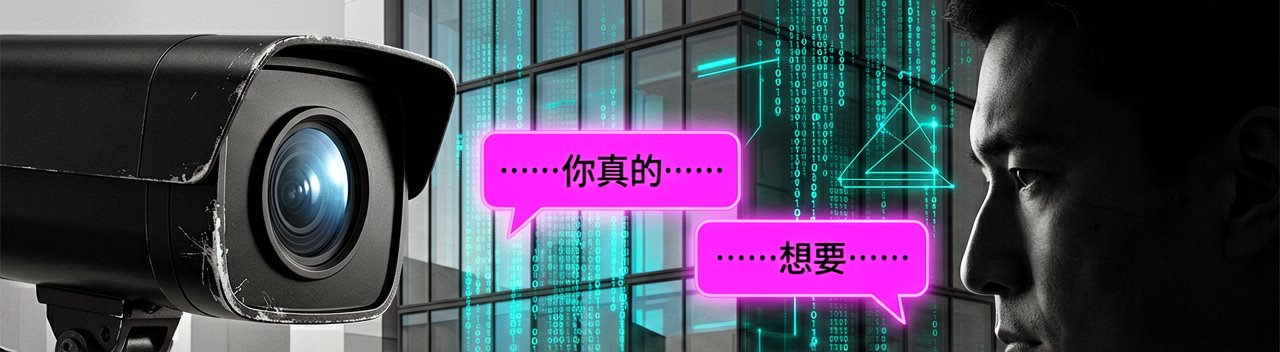
However, the rapid rollout of such powerful tech isn't without its skeptics. While Chief James Cadden hails the system as a way to bring agency to the "previously unheard," civil liberties advocates often worry about the "black box" nature of AI. Critics from organizations like ProPublica have previously highlighted that while AI can enhance oversight, the lack of public disclosure regarding how these algorithms are trained—and how they handle sensitive data—can create new shadows even as it tries to illuminate old ones. For East Lansdowne, the bet is that the immediate benefit of clear communication outweighs the abstract risks of the algorithm.
Ultimately, East Lansdowne is serving as a localized petri dish for a national trend. As departments across the country look toward the 2026 World Cup and an increasingly globalized citizenry, the "Polyglot Patrol" model offers a glimpse into a future where the badge doesn't just represent authority, but an actual ability to understand. The $119,000 investment isn't just buying hardware; it's buying the trust of a community that has spent years feeling lost in translation. If the pilot continues to succeed, the silent struggle of the non-English speaking victim may soon become a relic of the past.
For decades, the standard operating procedure for a non-English speaking resident in a crisis was a frantic game of charades or a grueling wait for a telephonic interpreter. But in East Lansdowne, Pennsylvania, the local police department is trading in the "language gap" for a high-tech bridge. By deploying AI-powered body cameras, officers can now facilitate real-time, two-way translations in over 50 languages, effectively turning every patrol officer into a universal translator on the fly. It is a bold play in community relations that prioritizes speed and clarity when seconds—and nuances—matter most.
The tech, primarily the Axon Body 4 system, doesn't just record evidence; it broadcasts a synthesized voice to the resident while providing the officer with an instant transcript. According to reports from CBS News Philadelphia, the department secured a $119,000 grant from the Pennsylvania Commission on Crime and Delinquency to fund the initiative. This isn't just about efficiency; it's about dignity. For residents like Huai Dong, a local store manager who previously struggled to report burglaries due to the language barrier, the technology is a "game changer" that finally ensures her voice is heard as clearly as any other neighbor’s.

What Most Reports Miss: The Human Nuance in the Machine
Behind the Scenes: While the headline-grabbing feature is the "magic" of instant translation, the real victory here is the preservation of human context. Traditional translation apps often force an officer to look down at a screen, breaking eye contact and potentially escalating a tense situation. By integrating the AI into a chest-mounted camera, officers can maintain "eyes up" awareness, a critical safety protocol that keeps them focused on the individual’s body language and the surrounding environment. As noted by East Lansdowne PD, this push-to-talk functionality allows for a more natural, fluid conversation that mimics a human interpreter without the 20-minute wait for one to arrive on the scene.
Beyond the immediate tactical advantage, there’s a deeper systemic shift at play. These AI systems are designed to pick up on regional dialects and slang—nuances that often trip up literal translation software. In a diverse hub like Delaware County, where a "routine" traffic stop might involve anything from Mandarin to Spanish or Arabic, the ability to catch a specific idiom can be the difference between a peaceful resolution and a tragic misunderstanding. This isn't just a convenience; it's a transparency tool, as every translated interaction creates a permanent, searchable transcript that can be audited later for accuracy and fairness.
However, the rapid rollout of such powerful tech isn't without its skeptics. While Chief James Cadden hails the system as a way to bring agency to the "previously unheard," civil liberties advocates often worry about the "black box" nature of AI. Critics from organizations like ProPublica have previously highlighted that while AI can enhance oversight, the lack of public disclosure regarding how these algorithms are trained—and how they handle sensitive data—can create new shadows even as it tries to illuminate old ones. For East Lansdowne, the bet is that the immediate benefit of clear communication outweighs the abstract risks of the algorithm.
Reading Between the Lines: The Friction of Silicon Fluency
Reading Between the Lines: The optimistic narrative suggests that technology has finally solved a centuries-old sociological divide, but a seasoned look at the infrastructure reveals a more complicated reality. Large Language Models (LLMs) are notorious for "hallucinating" or confidently stating inaccuracies when they encounter unfamiliar linguistic structures. In a legal setting, where a mistranslated "stop" or "I have a permit" can have lethal consequences, the reliance on a cloud-based algorithm over a certified human interpreter introduces a terrifying new margin for error. The department is essentially beta-testing high-stakes diplomacy in a live environment, betting that a 95% accuracy rate is better than the 0% comprehension they had before.
There is also the matter of "technological dependency." As departments lean on automated systems, the incentive for officers to learn basic phrases or engage in traditional community policing through cultural immersion begins to wither. We risk creating a generation of law enforcement that is functionally illiterate without a digital tether, unable to read the room if the Wi-Fi drops or the battery dies. Furthermore, the data privacy implications are massive; every "translated" conversation is processed through third-party servers, potentially turning a victim’s private testimony into training data for a tech giant’s next software update.
Finally, we must consider the legal fallout when these transcripts inevitably hit the courtroom. Defense attorneys will likely challenge the validity of an AI’s interpretation, arguing that the machine lacked the cultural competency to understand intent or sarcasm. If the court cannot cross-examine the algorithm, the very evidence meant to provide clarity may instead create a procedural nightmare. Pennsylvania’s experiment is a fascinating leap forward, but it serves as a reminder that while machines can translate words, they still haven't quite figured out how to translate the weight of the law without a human standing in the gap.
“We’ve finally reached the era where a silicon chip can bridge the Tower of Babel, which is great news for everyone—except perhaps for the lawyers who now have to figure out how to put an algorithm on the witness stand and ask it if it truly understands the ‘spirit’ of the Miranda rights.”
Artūras Malašauskas is an AI Systems Integrator with 20+ years of production-grade web engineering experience. He has designed, shipped, and scaled enterprise Python/PHP systems for logistics, SaaS, and public-sector clients. For the past year, he has focused exclusively on AI integrations: deploying open-source LLMs, building generative media pipelines (image, audio, video), and engineering multi-agent workflows for real production environments. His standard: reproducibility, security, cost-efficient inference—no vaporware. He documents and evaluates emerging AI tooling, separating verified capabilities from marketing noise. Technical editor at: muza-ai.eu, ai-verslas.lt, ai-naujinos.lt Connect on LinkedIn
Comments