Sigma Defies the "SaaS Winter" with $80M Series E at $3B Valuation

While much of the enterprise software world is still shivering through a protracted "SaaS winter," Sigma Computing just turned up the heat. The cloud analytics heavyweight announced a fresh $80 million Series E today, effectively doubling its valuation to $3 billion in just twelve months. Led by Princeville Capital, the round is a rare victory lap in a market that has recently favored belt-tightening over bold valuation jumps.
The cap table for this round reads like a "who’s who" of strategic heavy hitters, with Databricks Ventures, ServiceNow Ventures, and Workday Ventures all buying in. It’s not just a cash grab; it’s a tactical alignment. By bringing on the venture arms of the very platforms it integrates with, Sigma is cementing its position as the connective tissue for modern data stacks. Existing backers like Altimeter Capital and Spark Capital also doubled down, signaling that those who know the books best are the most eager to keep the party going.
The $200M ARR Engine
The "why" behind the $3 billion price tag isn't particularly mysterious if you look at the growth metrics. Sigma hit a massive $200 million annual recurring revenue (ARR) milestone in April 2026, a 100% year-over-year climb from the $100 million mark it hit in early 2025. In an era where "growth at any cost" has been replaced by "efficient scale," Sigma is managing to do both, reportedly adding 1.1 million new active users in the last fiscal year alone while maintaining the kind of operating discipline that makes CFOs swoon.
Behind the scenes, this funding isn't just about padding the bank account; it's the war chest for Sigma’s aggressive pivot into what CEO Mike Palmer calls "agentic analytics." While legacy BI tools were built to show you what happened, Sigma’s new focus is on autonomous AI agents that can actually do something about it. These agents live directly on top of the cloud data warehouse, allowing users to move from passive observation to active execution without ever leaving the spreadsheet-like interface that made the platform a hit in the first place.
What most reports miss is the sheer scale of the displacement happening here. Sigma isn't just fighting with Tableau or Looker for a slice of the BI pie; it's gunning for the 70+ fragmented SaaS applications that typically clutter an enterprise's workflow. By enabling "vibe-coded" applications—essentially no-code apps built on live warehouse data—Sigma is positioning itself as the primary interface for the AI-driven enterprise. It’s a bold bet that the future of work isn't a dashboard, but a unified operating layer where data and action are inseparable.
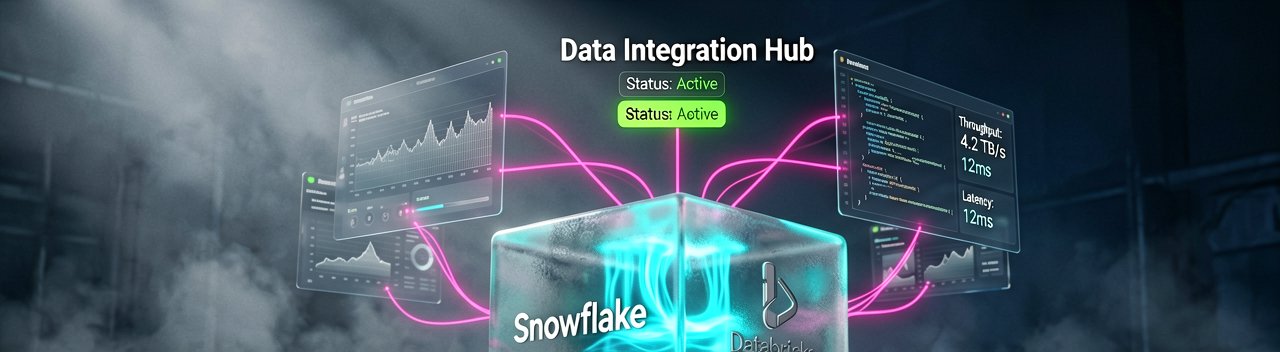
The involvement of Databricks and Snowflake Ventures in recent rounds underscores a fundamental shift in the power dynamics of the data stack. These warehouse giants recognize that their storage is only as valuable as the applications sitting on top of it. By backing Sigma, they are essentially subsidizing the creation of a "user-friendly" front door to their complex back-end systems. For Sigma, this means they don't just have customers; they have an ecosystem of multi-billion dollar partners who are financially incentivized to see them win.
As we look toward the back half of 2026, the conversation around Sigma will inevitably shift from "how much can they raise" to "when will they exit." With $200 million in ARR and a $3 billion valuation, the company has officially entered the IPO "red zone." While the current public markets remain finicky for tech debuts, Sigma’s combination of triple-digit growth and strategic AI integration makes them one of the few names capable of breaking the current listing drought when the window finally creaks open.
While much of the enterprise software world is still shivering through a protracted "SaaS winter," Sigma Computing just turned up the heat. The cloud analytics heavyweight announced a fresh $80 million Series E today, effectively doubling its valuation to $3 billion in just twelve months. Led by Princeville Capital, the round is a rare victory lap in a market that has recently favored belt-tightening over bold valuation jumps.
The cap table for this round reads like a "who’s who" of strategic heavy hitters, with Databricks Ventures, ServiceNow Ventures, and Workday Ventures all buying in. It’s not just a cash grab; it’s a tactical alignment. By bringing on the venture arms of the very platforms it integrates with, Sigma is cementing its position as the connective tissue for modern data stacks. Existing backers like Altimeter Capital and Spark Capital also doubled down, signaling that those who know the books best are the most eager to keep the party going.
The $200M ARR Engine
The "why" behind the $3 billion price tag isn't particularly mysterious if you look at the growth metrics. Sigma hit a massive $200 million annual recurring revenue (ARR) milestone in April 2026, a 100% year-over-year climb from the $100 million mark it hit in early 2025. In an era where "growth at any cost" has been replaced by "efficient scale," Sigma is managing to do both, reportedly adding 1.1 million new active users in the last fiscal year alone while maintaining the kind of operating discipline that makes CFOs swoon.
The Strategic Pivot: From Dashboards to "Agentic Analytics"
Behind the scenes, this funding isn't just about padding the bank account; it's the war chest for Sigma’s aggressive pivot into what CEO Mike Palmer calls "agentic analytics." While legacy BI tools were built to show you what happened, Sigma’s new focus is on autonomous AI agents that can actually do something about it. These agents live directly on top of the cloud data warehouse, allowing users to move from passive observation to active execution without ever leaving the spreadsheet-like interface that made the platform a hit in the first place.
What most reports miss is the sheer scale of the displacement happening here. Sigma isn't just fighting with Tableau or Looker for a slice of the BI pie; it's gunning for the 70+ fragmented SaaS applications that typically clutter an enterprise's workflow. By enabling "vibe-coded" applications—essentially no-code apps built on live warehouse data—Sigma is positioning itself as the primary interface for the AI-driven enterprise. It’s a bold bet that the future of work isn't a dashboard, but a unified operating layer where data and action are inseparable.
The involvement of Databricks and Snowflake Ventures in recent rounds underscores a fundamental shift in the power dynamics of the data stack. These warehouse giants recognize that their storage is only as valuable as the applications sitting on top of it. By backing Sigma, they are essentially subsidizing the creation of a "user-friendly" front door to their complex back-end systems. For Sigma, this means they don't just have customers; they have an ecosystem of multi-billion dollar partners who are financially incentivized to see them win.
The Skeptic's Lens: Growth vs. Gravity
Reading Between the Lines: While a $3 billion valuation in this climate feels like a triumphant return to the "up-and-to-the-right" era of 2021, the math requires a healthy dose of scrutiny. At $200 million ARR, a $3 billion tag puts Sigma at a 15x forward multiple. In a public market where even the most "efficient" SaaS companies are lucky to trade at 8x or 10x, Sigma is carrying a heavy "AI premium" that they will eventually have to justify to public investors who are far less sentimental than venture capitalists.
There is also the inherent contradiction in the "agentic analytics" promise. Sigma’s core appeal has always been its spreadsheet-like familiarity for humans; by pivoting toward autonomous agents, they risk complicating the very simplicity that drove their 1.1 million user adoption. If the "agents" start doing the heavy lifting, the user interface—Sigma’s crown jewel—becomes secondary. This creates a strategic tension: they are building tools to replace the manual workflows that currently make their software so indispensable.
Furthermore, the strategic investment from ServiceNow and Workday is a double-edged sword. While it provides immediate distribution and validation, it also paints a target on Sigma's back. These incumbents aren't known for playing nice indefinitely; they are investing to learn the roadmap. If Sigma’s "vibe-coding" and agentic layers begin to successfully siphon off seats from Workday or ServiceNow’s core platforms, those strategic partners could quickly pivot from being benevolent backers to aggressive competitors with much deeper pockets.
Ultimately, Sigma is racing against the clock of market saturation. Doubling valuation in a year is impressive, but it sets a high bar for the next milestone. To hit a Series F or a successful IPO, they’ll need to prove that "agentic analytics" isn't just the buzzword of the week, but a sustainable revenue driver that can keep growth at 100% even as the base gets larger. It’s a high-wire act where the safety net is made of expensive, AI-branded silk.
In the tech world, doubling your valuation in a year is the ultimate flex, though it does leave one wondering if the AI agents were the ones doing the accounting. We’ve reached a point where 'spreadsheet-style' is the new 'disruptive,' proving once again that corporate America will pay any price to avoid learning how to write actual code.
Artūras Malašauskas is an AI Systems Integrator with 20+ years of production-grade web engineering experience. He has designed, shipped, and scaled enterprise Python/PHP systems for logistics, SaaS, and public-sector clients. For the past year, he has focused exclusively on AI integrations: deploying open-source LLMs, building generative media pipelines (image, audio, video), and engineering multi-agent workflows for real production environments. His standard: reproducibility, security, cost-efficient inference—no vaporware. He documents and evaluates emerging AI tooling, separating verified capabilities from marketing noise. Technical editor at: muza-ai.eu, ai-verslas.lt, ai-naujinos.lt Connect on LinkedIn
Comments