That's Amazing! The Tech Breakthroughs Defying Every Prediction in 2026
If you thought the AI hype cycle was going to fizzle out, think again—2026 has decided to prove everyone wrong by shifting from "cool chatbots" to technology that actually feels like magic. We've officially entered the era where the digital and physical worlds aren't just shaking hands; they’re merging in ways that make science fiction look like a dull documentary. From "impossible" hardware to biology being rewritten like computer code, the sheer pace of innovation right now is enough to give even the most jaded Silicon Valley veteran a serious case of whiplash. It’s not just about faster gadgets anymore; it’s about a fundamental rewrite of what human ingenuity can actually pull off when we stop playing it safe.
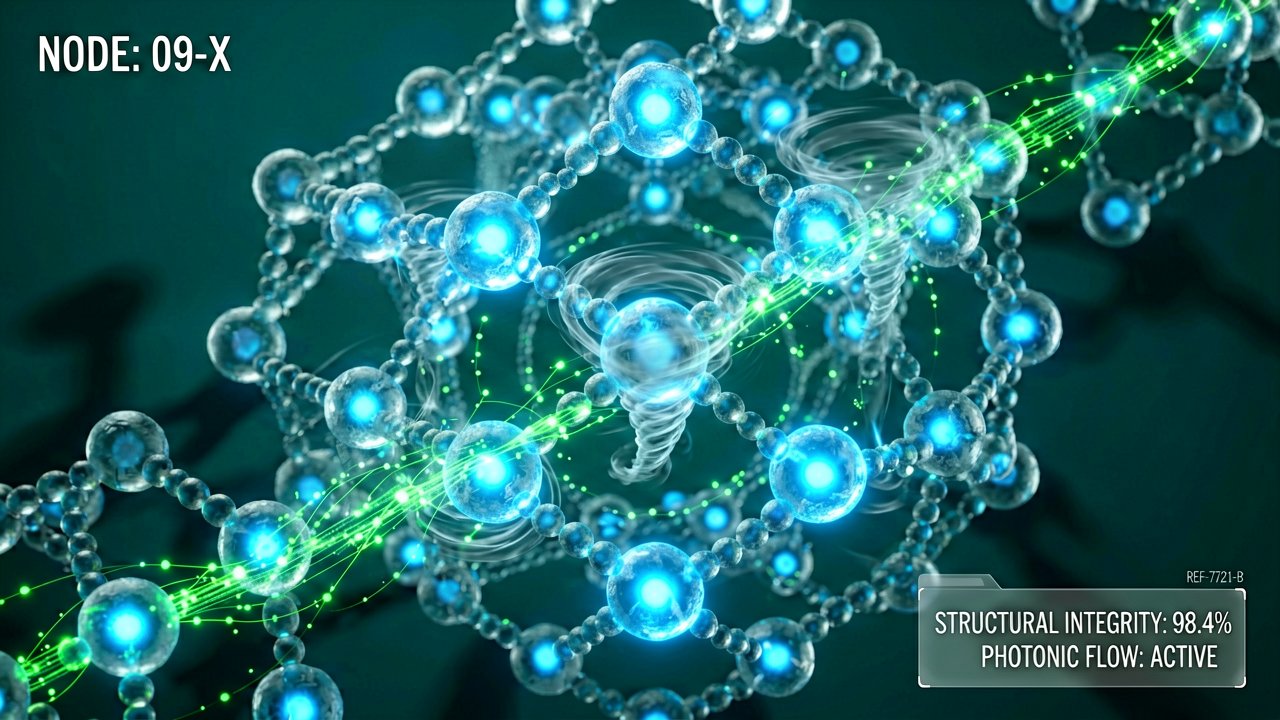
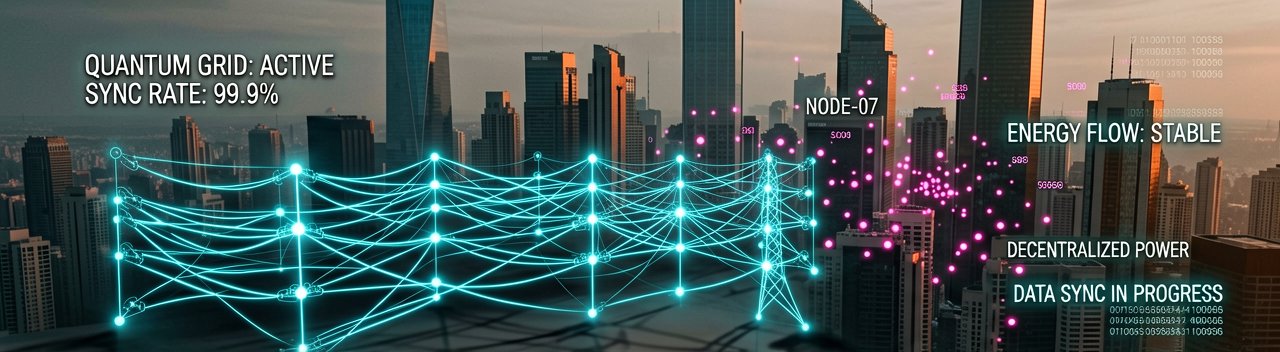
Take the energy sector, for instance, where we've finally hit a point that seemed like a pipe dream just a few years ago. Renewable energy is officially set to overtake coal as the world's dominant power source this year, a milestone driven by solar efficiency gains that are frankly staggering. But the real "wow" factor isn't just the scale; it's the weird science behind it. Researchers are now using "optical tornadoes"—swirling beams of light—and quantum-powered batteries that charge using the strange laws of physics rather than messy chemistry, as reported by ScienceDaily. We’re moving toward a grid that isn't just "green," but one that is actively managed by autonomous agents capable of balancing a chaotic web of decentralized power in real-time, making the old centralized models look like relics of the steam age.
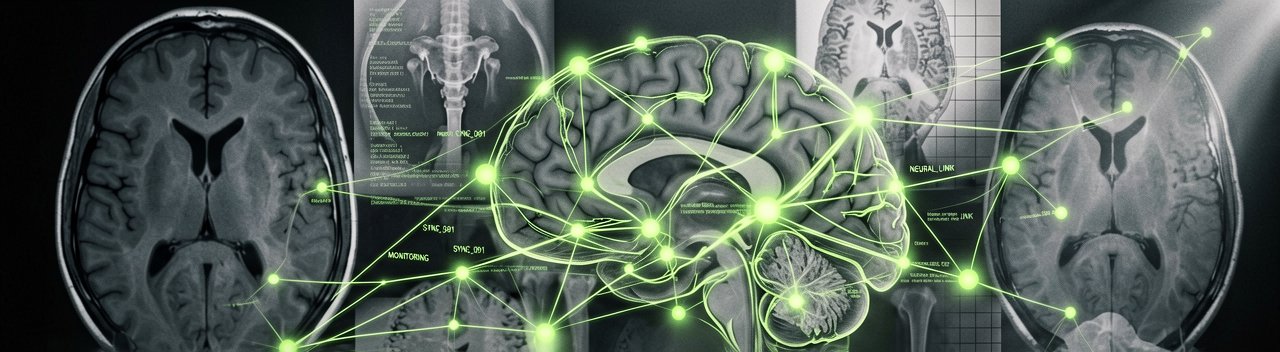
And then there’s the stuff happening inside our own bodies and the very chips we build. We’re seeing a massive shift toward neuromorphic computing—chips designed to mimic the human brain’s architecture to run AI with a fraction of the power traditional silicon requires. On the biotech front, the "third biotechnology revolution" is in full swing, with synthetic biology reaching a stage where we can design and mass-produce drugs, fuels, and even food as if we were snapping LEGO bricks together. According to the latest insights from MIT Technology Review, we’re even seeing the first personalized gene-editing treatments for infants, turning once-deadly genetic quirks into manageable history. It’s a wild, slightly terrifying, and utterly amazing time to be watching the horizon.
The Rise of the "Impossible" LED
One of the most mind-bending stories of the month comes out of the University of Cambridge, where scientists have managed to create an "impossible" LED. By electrically powering insulating nanoparticles—materials that usually don't conduct electricity at all—they've opened the door to a completely new way of generating light. This isn't just a win for brighter screens; it’s a total rethink of material science that could lead to ultra-efficient displays and lighting systems we haven't even named yet.
Quantum Computing Hits the Mainstream
Quantum computing has spent decades as a "ten years away" technology, but 2026 is the year it finally stepped into the sunlight. We aren't just talking about lab experiments anymore; companies are now integrating quantum-assisted optimizers into mainstream workflows. Whether it's simulating molecular interactions for instant drug discovery or solving logistics problems that would melt a standard supercomputer, the quantum era hasn't just arrived—it's already started rearranging the furniture of the global economy.
Space Exploration's New Golden Age
While we're busy fixing things on Earth, the view from above is just as crowded. Between NASA’s Nancy Grace Roman Space Telescope prepping to hunt for dark energy and SpaceX’s Starship becoming a regular fixture in the lunar neighborhood, the "final frontier" is starting to feel a lot more local. We’re even seeing missions heading to the moons of Mars to bring back samples, proving that our reach is finally starting to catch up with our ambition.
The Hidden Architecture of Innovation
Beyond the Hype Cycle: While the headlines focus on the shiny finish of these new technologies, the real story lies in the grueling, decade-long slog of material science and infrastructure overhauls that finally hit a tipping point this year. We are witnessing the culmination of the "silent revolution," where boring improvements in battery density and heat dissipation have finally enabled the radical hardware we see today. For years, engineers were stuck in a loop of diminishing returns, but the sudden convergence of generative design—AI-building-AI—has shattered those ceilings. It is a fundamental shift in the manufacturing philosophy that moves us away from mass production toward hyper-efficient, algorithmic optimization.
Industry stakeholders are currently locked in a fierce debate over the "Open vs. Closed" paradigm of these breakthroughs. On one side, the corporate giants argue that the sheer cost of building neuromorphic fabs and quantum cooling arrays requires a proprietary moat to ensure safety and ROI. On the other, a growing coalition of independent researchers and open-source advocates warns that locking this "digital magic" behind paywalls will create a permanent technological underclass. This friction isn't just about money; it’s about who gets to decide the trajectory of human evolution as we integrate these systems into our biology and our infrastructure.
Historically, we’ve seen this movie before—the early days of the internet and the mobile revolution were marked by similar anxieties and grand promises. However, the stakes in 2026 are uniquely high because the feedback loop is faster than ever. In previous cycles, it took decades for a lab breakthrough to reach a consumer's pocket, but the current pipeline is so compressed that the gap between "impossible" and "ubiquitous" has shrunk to eighteen months. This acceleration is putting immense pressure on global regulators who are still trying to understand the ethics of 2023, let alone the quantum-driven reality of today.
The geopolitical landscape is also being quietly reshaped by what insiders call "Compute Sovereignty." Nations are no longer just fighting over oil or territory; they are scrambling to secure the supply chains for the specialized isotopes needed for quantum processors and the rare-earth elements that fuel the green grid. A seasoned observer can see that the recent surge in space missions isn't just about scientific curiosity—it is a strategic race to secure off-planet resources that will dictate which superpower leads the next century of tech dominance. The moon has become the new "high ground" in a very literal sense.
What the mainstream reports often miss is the psychological toll of this rapid transition. As these technologies automate the complex and enhance the physical, we are seeing a massive shift in how humans value their own expertise. The artisan, the coder, and the doctor are all finding themselves in a world where their primary value isn't their knowledge—which the machines now have in spades—but their judgment and empathy. This "Emotional Economy" is the unexpected byproduct of the high-tech surge, proving that the more digital our world becomes, the more we end up craving the authentically human.
Ultimately, the "That's Amazing!" factor isn't just about the gadgets themselves, but the fact that we haven't broken the system yet. Despite the warnings of doom-scrollers and luddites, the integration of these technologies has been surprisingly resilient, largely because the tech has become more intuitive and less invasive. We are moving toward an era of "Invisible Tech," where the most powerful tools are the ones we don't even realize we are using. It is a quiet, profound transformation that is rewriting the rules of the game while we are still learning how to play.
The Reality Check: Friction in the Machine
Reading Between the Lines: For all the breathless excitement surrounding our current "magic" era, a cold-eyed look at the data suggests we are building a house of cards on a foundation of unprecedented energy demand. The contradiction is glaring: we are touting a green energy revolution while simultaneously deploying AI and quantum clusters that consume electricity at a rate that threatens to outpace our newest solar farms. We speak of "invisible tech" and seamless integration, yet the physical reality involves massive, heat-spewing data centers that require more water for cooling than the mid-sized cities they serve. The industry’s greatest trick has been convincing the public that the "cloud" is weightless, when in fact, it has never been heavier.
There is also the uncomfortable matter of "innovation fatigue." While the technical pipeline has indeed compressed, human adaptability has not. We are projecting a future where gene-editing and neuromorphic interfaces are standard, but we ignore the historical precedent that societal pushback usually arrives exactly when a technology becomes "ubiquitous." We assume the transition to an Emotional Economy will be a soft landing for the displaced workforce, yet we lack the social infrastructure to support a world where a machine can simulate empathy better than a tired human. The assumption that technological progress is synonymous with social stability is perhaps the most dangerous myth of the Silicon Valley era.
Furthermore, the race for "Compute Sovereignty" is creating a fractured digital landscape that mirrors the Cold War, but with more efficient surveillance. As nations build their own proprietary quantum stacks and AI guardrails, the dream of a unified, global internet is effectively dead. We are moving toward a "Splinternet" where your experience of reality is determined by your geographic coordinates and which superpower’s chips are running your local grid. This fragmentation doesn't just hinder scientific collaboration; it ensures that the "That's Amazing!" moments of the future will be increasingly siloed, localized, and used as tools of geopolitical leverage rather than universal advancement.
We must also address the "Black Box" problem that remains unsolved despite our leaps in efficiency. We are entrusting the management of our electrical grids and medical diagnoses to autonomous agents that we cannot fully audit. The irony is that as our tools become more powerful, they become less transparent, leaving us in a position where we are effectively governed by algorithms we treat as infallible deities because we’ve lost the ability to trace their logic. It is a peculiar form of progress to build a world so advanced that its creators can no longer explain how it works on a Tuesday morning.
Measured skepticism suggests that the real "breakthrough" of the next few years won't be a new chip or a lunar base, but rather the first major systemic failure that forces us to reckon with these contradictions. Whether it's a quantum-decryption crisis or a localized grid collapse driven by AI over-optimization, the friction is building. The tech isn't just "shaking hands" with the physical world; it’s putting it in a headlock, and eventually, something has to give. The brilliance of the innovation is undeniable, but the hubris accompanying it is equally spectacular.
"We’ve successfully taught sand to think, light to swirl, and atoms to calculate our grocery deliveries; now we just have to figure out how to keep the toaster from demanding a seat on the board of directors."
Artūras Malašauskas is an AI Systems Integrator with 20+ years of production-grade web engineering experience. He has designed, shipped, and scaled enterprise Python/PHP systems for logistics, SaaS, and public-sector clients. For the past year, he has focused exclusively on AI integrations: deploying open-source LLMs, building generative media pipelines (image, audio, video), and engineering multi-agent workflows for real production environments. His standard: reproducibility, security, cost-efficient inference—no vaporware. He documents and evaluates emerging AI tooling, separating verified capabilities from marketing noise. Technical editor at: muza-ai.eu, ai-verslas.lt, ai-naujinos.lt Connect on LinkedIn
Comments