The GPU Squeeze: Meta Reshuffles Thousands as AI Becomes the Only Game in Town

Mark Zuckerberg isn't just betting the house on artificial intelligence; he's rearranging the furniture while the neighbors watch through the window. According to an internal memo from Chief People Officer Janelle Gale, Meta is reassigning 7,000 employees into new AI-focused "pods" and organizations, a move that signals a fundamental rewiring of the social media giant’s DNA. This isn't your typical corporate reshuffle; it’s a pivot toward what the company calls "AI-native design principles," which prioritizes flatter structures and smaller, leaner teams that can supposedly move faster without the baggage of middle management. This massive internal migration, first reported by The New York Times , is landing just as a much colder wind blows through Menlo Park: the company is simultaneously prepping to cut roughly 8,000 jobs, or 10% of its workforce, this week.
The math here is as brutal as it is clear. Meta's capital expenditure for 2026 is projected to hit a staggering $145 billion, nearly double what it spent just last year. In Zuckerberg’s world, every dollar saved on a human salary is a dollar that can be fed into the insatiable hunger of a H100 GPU cluster. While profitable divisions are seeing their headcounts slashed, teams like the newly formed Superintelligence Labs and Applied AI Engineering are being bolstered by the thousands. According to details shared with Bloomberg, these reassigned workers will focus on high-stakes projects like autonomous AI agents and "AI-powered apps" intended to keep Meta competitive against the likes of OpenAI and Google.
Flatter Teams, Heavier Workloads
Meta’s new "pods" are a far cry from the sprawling engineering departments of the past decade. The goal is to eliminate management layers and give individual "AI builders" more ownership over their work. It sounds empowering on paper, but on the ground, the vibe is reportedly more "nihilistic resignation" than "startup energy." Employees are even pushing back against new internal software designed to track mouse movements and keystrokes to train AI agents, a project some have dubbed the "Employee Data Extraction Factory." It seems the very tools these 7,000 workers are being moved to build are the ones being used to measure their own productivity.
The $145 Billion Trade-off
By shifting 7,000 roles and cutting 8,000 others, Meta is effectively trading its legacy as a human-centric social network for a future as an AI infrastructure powerhouse. Zuckerberg has been candid with staff, noting that projects which once required 100 people can now—or soon will—be handled by 10. The message is unmistakable: if you aren't building the AI, or using it to replace your own tasks, your role is a variable cost waiting to be optimized. With 14,000 roles effectively removed when accounting for cancelled open positions, Meta is proving that in the age of generative intelligence, talent is only as valuable as the compute power it supports.

Inside the Machine: The Cultural Cost of Meta’s Silicon Pivot
Behind the Scenes: The internal vibe at Menlo Park has shifted from the "Year of Efficiency" to what employees are now calling the "Era of the Algorithm." While the 7,000-person reassignment looks like a strategic chess move on a balance sheet, it represents a massive psychological rupture for a workforce that, until recently, was told the Metaverse was the ultimate destination. Now, those same engineers who were building digital legs for avatars are being told to drop everything and figure out how to shave milliseconds off large language model latency. The pivot is so abrupt that entire product roadmaps for Instagram and WhatsApp are being scrapped in favor of "AI-first" features that many internal critics worry are being rushed to satisfy investors rather than users.
The move to "AI-native pods" isn't just about speed; it’s a direct assault on the traditional management hierarchy that Zuckerberg now views as a bottleneck. By flattening the organization, Meta is effectively turning its workforce into a massive data-labeling and fine-tuning engine. Senior engineers, many of whom have spent a decade climbing the corporate ladder, now find themselves working in small, high-pressure groups where the primary KPI is how quickly they can integrate Llama-4 into existing consumer surfaces. This "lean" approach has created a stark divide between the "AI-haves"—those moved into the prestigious Superintelligence Labs—and the "AI-have-nots" who remain in legacy maintenance roles, waiting for the next round of layoffs.
Stakeholder perspectives are equally polarized. On Wall Street, analysts are cheering the $145 billion CAPEX forecast as a sign of Meta's "alpha" status in the AI arms race, believing that the company's massive user data moat gives it a unique advantage in training proprietary models. However, institutional investors are quietly expressing concern about the "human capital burn rate." The loss of 8,000 employees alongside the reshuffling of 7,000 others represents a loss of institutional knowledge that cannot be easily replaced by a neural network. There is a growing fear that Meta is hollowing out its core product expertise to chase a technology that hasn't yet proven it can generate a direct return on investment comparable to targeted advertising.
Historically, this isn't Meta's first radical pivot, but it is certainly its most desperate. In 2012, the company successfully navigated the transition from desktop to mobile, and in 2021, it rebranded entirely to chase the Metaverse. But those transitions were about where people would spend their time; this transition is about who—or what—will be doing the work. The "Employee Data Extraction Factory," where staff are essentially training the tools that will eventually automate their own roles, marks a cynical turning point in the relationship between Silicon Valley and its labor force. It’s no longer about building tools for humans, but rather using humans to build tools that bypass the need for them.
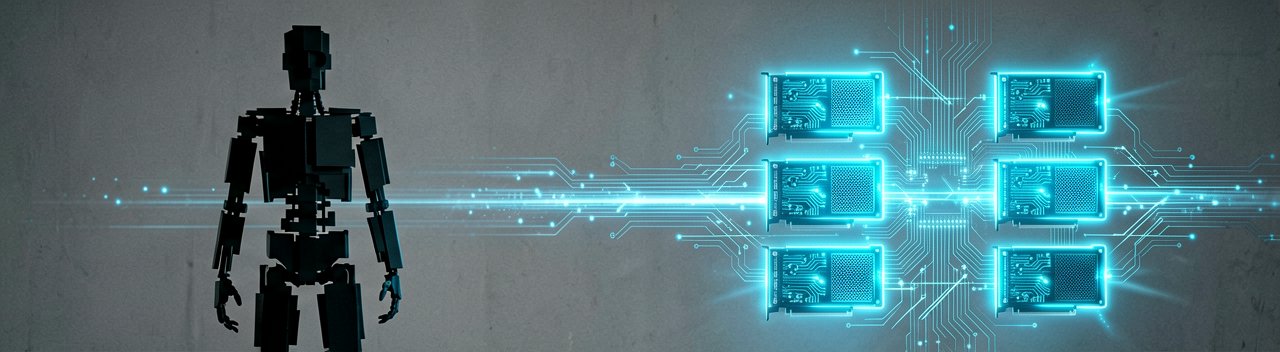
The technical debt being accrued during this reshuffle is also a ticking time bomb. By forcing thousands of employees into new roles overnight, Meta is breaking long-standing developer workflows and security protocols. Internal memos suggest that the rush to deploy "AI agents" has led to a "move fast and break things" mentality that feels like a throwback to 2009, but with much higher stakes. When you’re dealing with generative models that can hallucinate or leak sensitive data, the "break things" part of the mantra becomes a liability that no amount of GPU clusters can easily fix.
Ultimately, Zuckerberg is betting that the efficiency of AI will eventually outpace the creativity of a larger, more expensive human workforce. The 7,000 reassigned employees are the pioneers of this new frontier, but they are also the test subjects for a corporate experiment in radical downsizing through automation. If the gamble pays off, Meta becomes the undisputed utility of the AI age. If it fails, the company will have spent $145 billion to dismantle the very teams that made it a social media powerhouse in the first place.
The Silicon Paradox: Efficiency at Any Cost
Reading Between the Lines: There is a glaring contradiction in Meta’s claim that it is "flattening" its structure to empower builders while simultaneously investing billions in automated oversight tools. Zuckerberg’s narrative paints a picture of a streamlined, meritocratic utopia where "pods" of engineers move with the agility of a garage startup. However, the reality of reassigning 7,000 people—many of whom may lack deep specialization in machine learning—suggests a move driven more by optics and brute-force labor allocation than by surgical talent management. We are witnessing a massive re-skilling experiment being conducted in real-time, under the looming shadow of a 10% workforce reduction that serves as a grim incentive for compliance.
The skepticism lies in whether "AI-native design" is a genuine architectural shift or simply a high-tech euphemism for extreme austerity. By replacing middle managers with "AI agents" and monitoring software, Meta is effectively turning its creative campus into a high-end digital factory. This assumes that software development is a linear assembly line that can be optimized through keystroke tracking, ignoring the fact that the most valuable breakthroughs in tech often emerge from the very "inefficiencies"—the water-cooler moments and cross-departmental tangents—that this new structure is designed to eliminate. The risk is that in the rush to build the ultimate intelligence, Meta may accidentally extinguish the human spark that made its platforms culturally relevant in the first place.
Projecting the implications forward, Meta’s $145 billion gamble sets a dangerous precedent for the rest of the industry. If the market rewards Zuckerberg for trading human capital for H100 clusters, every other CEO in Silicon Valley will feel pressured to follow suit, regardless of their company's actual AI readiness. This could lead to a "hollowed-out" tech sector where companies possess incredible compute power but lack the diversified human perspective needed to steer that power ethically or creatively. We are watching the potential birth of a corporate monoculture where the only metric that matters is the ratio of GPUs to employees, a calculation that views people as the ultimate bottleneck to be solved.
Furthermore, the reliance on internal AI to train future AI creates a feedback loop that could lead to stagnation. If Meta’s "builders" are merely fine-tuning models based on data generated by their own internal processes, the company risks a form of digital inbreeding. Without the unpredictable, messy input of a wide-ranging human workforce, the innovation curve might plateau just as the costs of maintaining this massive infrastructure become unbearable. Meta is betting that the intelligence of the machine will eventually surpass the collective wisdom of the 8,000 people it just let go, a wager that assumes artificial intelligence is a substitute for human intuition rather than a mere extension of it.
It turns out the "Year of Efficiency" was just a polite way of saying that Mark Zuckerberg finally found a way to replace his middle managers with a script that doesn’t ask for a holiday bonus or a standing desk. We’ve reached the point where the only thing more expensive than a world-class engineer is the electricity required to make them obsolete.
Artūras Malašauskas is an AI Systems Integrator with 20+ years of production-grade web engineering experience. He has designed, shipped, and scaled enterprise Python/PHP systems for logistics, SaaS, and public-sector clients. For the past year, he has focused exclusively on AI integrations: deploying open-source LLMs, building generative media pipelines (image, audio, video), and engineering multi-agent workflows for real production environments. His standard: reproducibility, security, cost-efficient inference—no vaporware. He documents and evaluates emerging AI tooling, separating verified capabilities from marketing noise. Technical editor at: muza-ai.eu, ai-verslas.lt, ai-naujinos.lt Connect on LinkedIn
Comments