U.Va.’s New AI Pilots: More Than Just Prompt Engineering
The University of Virginia isn't just watching the AI revolution from the sidelines; it's actively retooling its curriculum to ensure students don't get left behind in a world of LLMs and algorithmic decision-making. This fall, the College of Arts and Sciences is rolling out three distinct, single-credit pilot courses designed to bridge the gap between technical "how-to" and the heavy ethical lifting required by modern tech. These aren't your typical dry computer science lectures; they're high-touch, interdisciplinary deep dives into how AI is actually reshaping the sciences, humanities, and arts. According to reports from the Cavalier Daily, the initiative is a joint venture with the university’s new AI Literacy and Action Lab, aimed at turning students into critical thinkers rather than just passive users.
What makes these courses stand out is their breadth. Instead of a one-size-fits-all approach, U.Va. is tailoring literacy to the specific needs of different fields. For the scientists, there’s "AI in the Sciences: Tools, Limits and Opportunity," which tackles the practical utility and the inherent boundaries of using models in research. Over in the humanities, students are exploring "Reading and Writing with LLMs," a course that’s likely to be a battleground for discussions on authorship and original thought. The arts aren't ignored either, with a project-based course titled "Yeou Agnt: Composition, Agency and the AI Corpus," where students actually build their own AI agents to explore creative boundaries. It’s a bold move that acknowledges AI literacy as a foundational skill—one that Dean of Libraries Leo Lo suggests might eventually find its way into general education requirements.
The New AI Literacy and Action Lab
At the heart of this academic push is the AI Literacy and Action Lab, which officially signed its charter earlier this spring. The lab’s philosophy, as noted by university leadership, is built on "teaching AI by doing, not just studying." It serves as a central hub where faculty and librarians—who act as facilitators and coaches—work together to embed AI competency directly into the existing coursework. This isn’t just about making sure students know how to use ChatGPT to summarize a paper; it’s about five core competencies: technical knowledge, ethical awareness, critical thinking, practical skills, and a fundamental understanding of societal impact. By pairing students with experts through these pilot projects, the university is gambling that hands-on experimentation is the best way to navigate a technology that’s moving faster than most institutions can handle.
Interdisciplinary Innovation Across Grounds
The push for AI fluency isn't limited to the new pilots. U.Va. has been quietly weaving these threads through various departments for a while now. From "Artificial Intelligence and the Future of Work" in the Economics department to "The Ethics of Artificial Intelligence" at the McIntire School of Commerce, the university is covering its bases. There’s a clear sense that the institution wants to avoid a siloed approach where only the engineers understand the "black box" of AI. Instead, by bringing librarians into the mix to help evaluate information and encouraging students to surface their own ethical questions through case-based discussions, U.Va. is trying to build a culture of "informed judgment" that will serve its graduates long after the current crop of AI tools has been replaced by the next big thing.
The Architects of Algorithmic Agency
Beyond the Syllabus: What most surface-level reports miss is that these pilots aren't just about software; they represent a fundamental shift in U.Va.’s pedagogical philosophy. For decades, the university has leaned on the "Jeffersonian" ideal of the citizen-scholar, but the rise of generative models has forced a re-evaluation of what a "citizen-scholar" looks like in a digital age. Faculty members leading these courses aren't just acting as lecturers; they're operating as navigators in a landscape where the ground shifts every time OpenAI or Google drops a new update. This requires a level of syllabus flexibility that is notoriously rare in high-tier academia, where curriculum changes typically move at a glacial pace.
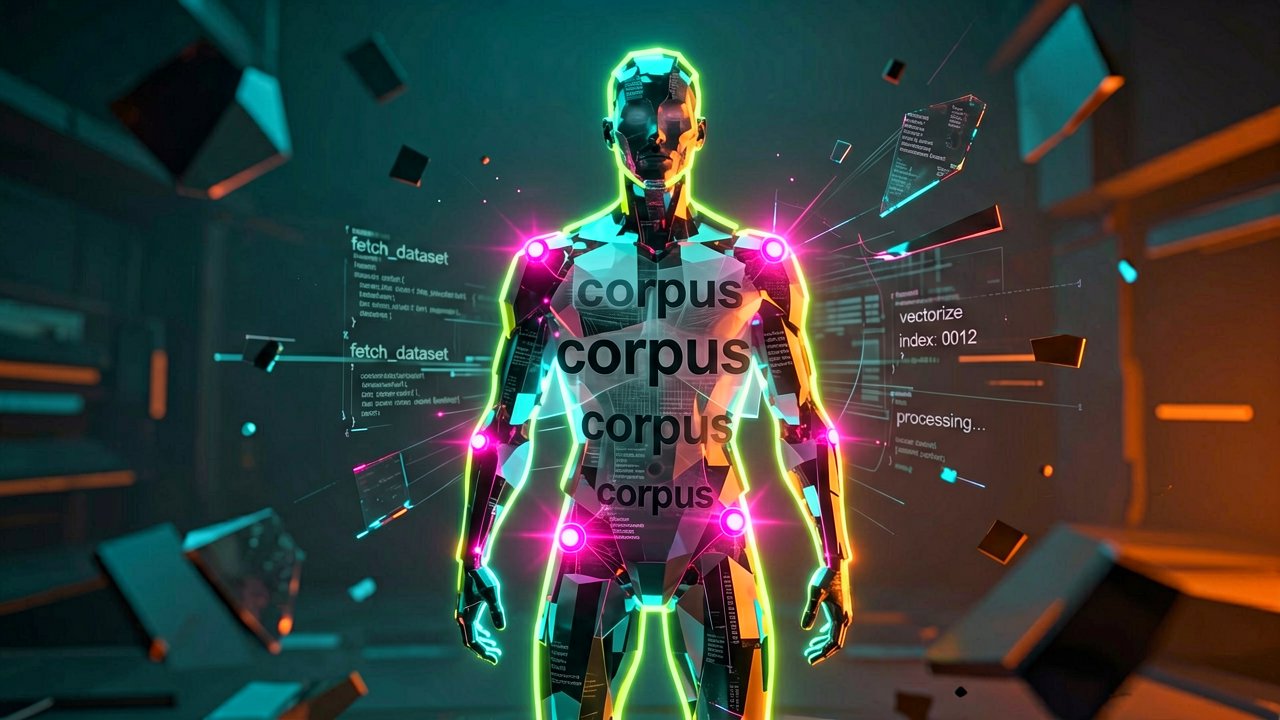
The "Yeou Agnt" course in the arts, for instance, serves as a fascinating case study in reclaiming agency. Rather than simply prompting a pre-built model to generate an image or a song, students are tasked with understanding the "corpus"—the massive, often problematic datasets that these machines are trained on. By building their own agents, students move from being consumers of a black-box product to becoming architects of their own creative tools. This shift in perspective is crucial because it demystifies the "magic" of AI, exposing the biases and human-made structures that underpin the technology.
Stakeholders from the U.Va. Library have been particularly vocal about the "Action Lab" model, emphasizing that literacy must include the ability to identify machine-generated misinformation. In the "Reading and Writing with LLMs" course, the focus is less on how to generate text and more on how to interrogate it. There is a deep-seated historical anxiety in the humanities regarding the "death of the author," and these pilots are tackling that head-on. By forcing students to confront the ethics of attribution and the loss of the human voice, the university is essentially using AI as a mirror to reflect back the value of human critical thought.
From a technical standpoint, the science-focused pilot is perhaps the most pragmatic of the three. It acknowledges that AI is already a permanent fixture in modern research, yet it warns against the "hallucinations" that can lead to false scientific conclusions. Faculty involved in the sciences pilot are pushing for a standard where AI is treated like a powerful, yet occasionally unreliable, laboratory instrument. This requires a double-blind approach to literacy: knowing when to leverage the machine's processing power and when to trust one’s own empirical observations. It is a delicate balance between efficiency and scientific integrity.

The historical context here is also worth noting. U.Va. has long been a bastion of the liberal arts, and there was initial internal skepticism about whether "AI literacy" belonged in a traditional College of Arts and Sciences. However, the success of the Data Science school’s growth likely paved the way for this cross-pollination. These courses represent a bridge between the specialized technical world and the broader student body, ensuring that the "AI divide" doesn't become a permanent fixture on Grounds. It is a strategic move to ensure that a degree from the university remains relevant in a market where "AI fluency" is rapidly becoming a non-negotiable requirement.
Ultimately, the success of these pilots will be measured by how they influence the broader general education curriculum. Dean Leo Lo and the Lab's leadership are looking at these three courses as the "vanguard" for a much larger rollout. If these single-credit pilots prove that students can handle the ethical and technical load, it’s highly likely we’ll see AI literacy requirements embedded into every major from History to Chemistry. This is the first step in a long-term institutional pivot, transforming the university into an incubator for a new kind of digitally literate graduate who views AI as a tool for inquiry rather than a replacement for it.
The Literacy Paradox: Education or Compliance?
Reading Between the Lines: The university’s pivot toward "AI literacy" rests on the comfortable assumption that exposure inevitably leads to mastery, but this overlooks the inherent tension between academic rigor and algorithmic convenience. There is a palpable irony in teaching students to "critically interrogate" a technology that is designed, at its very core, to automate away the friction of thinking. While U.Va.’s pilots aim to cultivate a generation of discerning users, they also risk institutionalizing a dependency on tools that prioritize statistical probability over creative truth. The danger isn't necessarily that students will fail to understand AI, but that they will become so fluent in its outputs that they lose the ability to recognize when the machine’s efficiency has quietly replaced their own unique intellectual struggle.
There is also a significant contradiction in the "Reading and Writing with LLMs" approach. On one hand, the course encourages students to explore the creative potential of these models; on the other, the university’s honor code remains a looming shadow over every keystroke. By introducing these tools into the humanities, U.Va. is essentially inviting a Trojan horse into the classroom. The boundary between "collaborating with an agent" and "outsourcing cognition" is a moving target that no single-credit course can fully pin down. We are watching a prestige institution attempt to regulate a fire while simultaneously handing out matches, hoping that a few lectures on "agency" will prevent a total wildfire of academic integrity issues.
Projecting forward, the broader implication of these pilots is the potential "vocationalization" of the liberal arts. If the College of Arts and Sciences begins to measure its success by how "AI-ready" its graduates are for the job market, it risks drifting away from the pursuit of knowledge for its own sake. The pragmatic move—integrating AI to ensure career viability—is a defensive one, born of a fear that a traditional education is no longer enough. However, if every student is trained to use the same suite of LLMs and generative tools, the university may inadvertently produce a standardized workforce rather than the radical, independent thinkers it claims to champion. True literacy might actually require knowing when to turn the machine off entirely.
Furthermore, the reliance on the AI Literacy and Action Lab as a central hub suggests a centralized authority over what constitutes "correct" AI use. This top-down approach to literacy can stifle the messy, grassroots experimentation that historically drives technological breakthroughs. In the science pilot, the focus on the "limits" of AI is a necessary safeguard, yet it reflects a deep-seated institutional anxiety about losing control over the scientific method. The university is essentially trying to build a cage around a technology that is evolving faster than the curriculum can be printed, leading to a perpetual state of academic catch-up where the "literacy" being taught is already outdated by the time the credits are awarded.
"We are currently spending millions of dollars to teach our brightest young minds how to politely ask a glorified calculator not to lie to them, all while hoping the calculator doesn't eventually decide that the students are the ones who are redundant."
Artūras Malašauskas is an AI Systems Integrator with 20+ years of production-grade web engineering experience. He has designed, shipped, and scaled enterprise Python/PHP systems for logistics, SaaS, and public-sector clients. For the past year, he has focused exclusively on AI integrations: deploying open-source LLMs, building generative media pipelines (image, audio, video), and engineering multi-agent workflows for real production environments. His standard: reproducibility, security, cost-efficient inference—no vaporware. He documents and evaluates emerging AI tooling, separating verified capabilities from marketing noise. Technical editor at: muza-ai.eu, ai-verslas.lt, ai-naujinos.lt Connect on LinkedIn
Comments